
Esports Career in India: 7 Jobs Beyond Being a Pro Player (2026)
Table of Contents
Introduction
Here is the conversation that happens in thousands of Indian households every year. A student says they want a career in esports. The parent says that is not a real job. The student means they want to be a professional player. The parent imagines a teenager playing games instead of studying.
Both of them are missing the bigger picture.
India’s esports industry is now a structured, commercially active sector. The government formally recognised esports under the Ministry of Youth Affairs and Sports. The market is projected to cross ₹2,000 crore by 2026. Companies like NODWIN Gaming, Skyesports, and GodLike Esports are real employers with payroll, HR departments, and defined career ladders.
And here is the part most people do not know: the majority of jobs in esports have nothing to do with being a professional player.
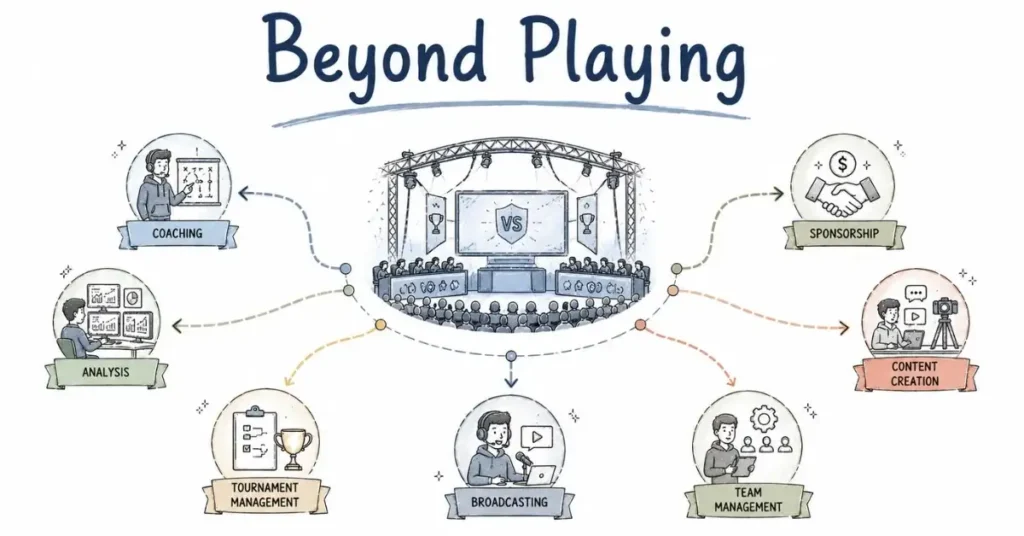
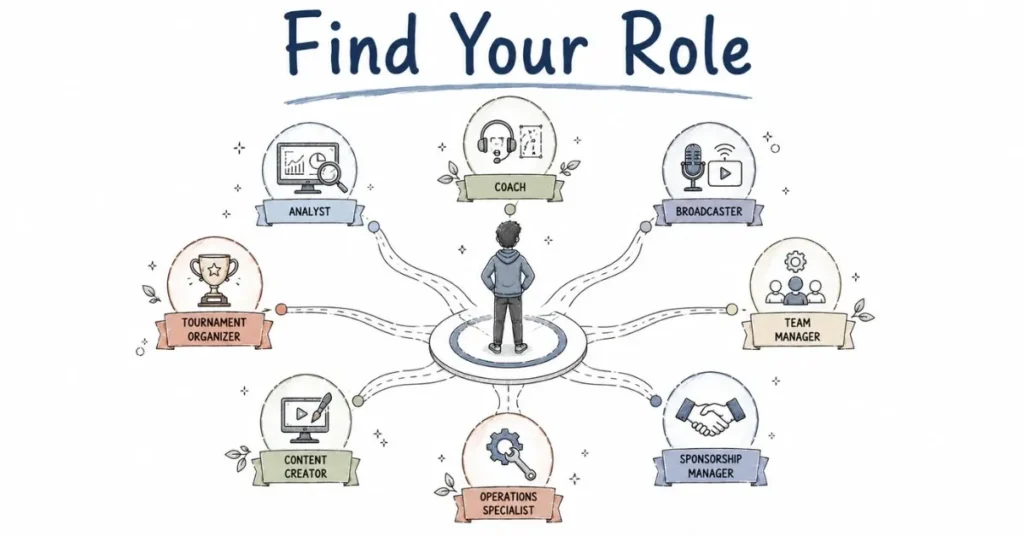
For every player on a team, there is a coach, an analyst, a team manager, a tournament organizer, an event broadcast team, a social media manager, and a content creator. The player is the visible tip of an industry that runs on a much larger workforce behind the scenes.
This guide covers seven of those jobs who they suit, what they pay, and how to get into them.
The State of Esports in India: Why This Matters Now
Before the career paths, some context worth understanding.
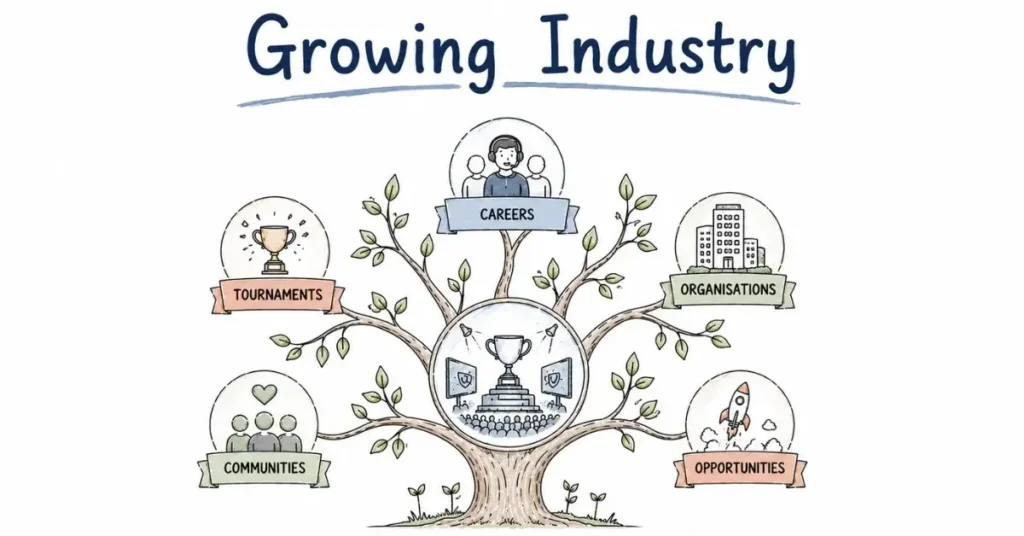
India’s esports market was valued at approximately USD 239 million in 2025 and is projected to reach USD 1.09 billion by 2034. The Indian government included esports in the National Games for the first time in 2022. Several state governments Tamil Nadu, Maharashtra, Bihar now include esports in their official sports calendars.abhyashsuchi+1
This regulatory recognition matters for careers because it means esports organisations can formally register as sports entities, apply for government funding, hire coaches and managers as sports professionals, and attract corporate sponsors who previously avoided the space due to legal ambiguity.
The games driving the most organised career activity in India right now are BGMI (Battlegrounds Mobile India), Valorant, Counter-Strike 2, FIFA/EA FC, and mobile titles like Free Fire and Call of Duty Mobile. Each of these has tournament circuits, team structures, and the associated support roles that make careers possible.
Career 1: Esports Coach
What the job is:
An esports coach works with a competitive team to improve their performance. This involves analysing the team’s gameplay through VOD review (watching recorded matches frame by frame), developing strategies for specific opponents, running structured practice sessions, and managing the psychological side of competition helping players handle pressure, losses, and team conflict.
At a professional organisation, the coaching staff typically includes a head coach, an assistant coach, and sometimes a mental performance coach. At smaller or semi-professional teams, one person handles all of these functions.
Who it suits:
This role fits former competitive players who have deep knowledge of one specific game but whose playing career has plateaued or ended. Communication and patience matter as much as game knowledge coaching is a people job as much as a tactical job.
What it pays:
Level | Monthly Income |
Part-time / Community coaching | ₹10,000 – 25,000 |
Semi-pro team coach | ₹30,000 – 60,000 |
Professional team coach | ₹75,000 – 1,50,000 |
Head coach at top-tier org | ₹1,50,000 – 3,00,000+ |
How to get started:
Begin by coaching for free on Discord communities for your game. Document results before-and-after statistics, rank improvements, tournament placements. One documented case study of measurable improvement is worth more than any certificate. After three to five free coaching relationships, start charging. After six months of paid coaching, approach semi-professional teams directly.
Career 2: Esports Analyst
What the job is:
Analysts focus on data and opponent research. They break down enemy teams’ tendencies which strategies they run in specific situations, where their individual players are strongest and weakest, how they behave under pressure. They also track their own team’s performance data and present findings to coaches and players in a structured, usable format.
This is a role that requires both game knowledge and data literacy. You need to understand what the numbers mean in a game context a 62% win rate on a specific map means something different depending on the opponents faced and the strategies used.
Who it suits:
Players or ex-players who are analytical by nature, enjoy data work, and communicate clearly. A background in statistics or data analysis is a genuine advantage here and increasingly expected at top-tier organizations.
What it pays: ₹25,000 – 60,000 per month at semi-professional level, ₹60,000 – 1,20,000 at professional organizations.
Tools to learn:
Tracker.gg, Mobalytics, DemoViewer (CS2), Google Sheets for tracking and visualization, and basic data analysis concepts mean, median, standard deviation, trend analysis.
Career 3: Esports Tournament Manager
What the job is:
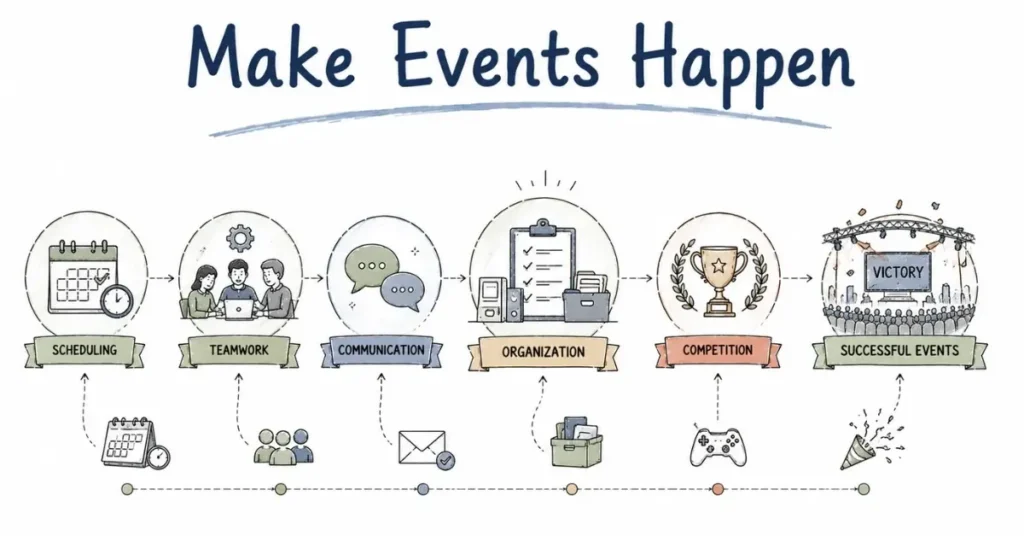
Tournament managers plan and run competitive events. This includes bracket management, scheduling, ruleset creation and enforcement, player communication, anti-cheat coordination, and for offline events venue logistics, stage setup, technical infrastructure, and broadcast coordination.
At a company like NODWIN Gaming, a tournament manager might run a 256-team online qualifier one week and coordinate logistics for a ₹50 lakh LAN event the following month. The scale varies enormously, but the core skills organization, communication under pressure, and attention to detail remain constant.
Who it suits:
People with a project management or events background who also understand esports. You do not need to be a top player. You need to be the person who notices that the bracket software crashed 20 minutes before a match and already has a backup plan.
What it pays: ₹4 – 6 LPA at entry level, ₹6 – 12 LPA with two to three years of experience, ₹12 – 20 LPA for senior event directors at large organisations.
How to get started:
Run a small tournament yourself 16 to 32 teams, any popular game, Discord-based, free entry. Use Battlefy or Toornament for bracket management. Document the process. Then do it again, bigger. Three self-organised events on your resume gives you something concrete to discuss in an interview with NODWIN or Skyesports.
Career 4: Esports Broadcaster / Caster
What the job is:
Casters provide live commentary during esports matches either as a play-by-play caster (describing what is happening in real time) or as a colour commentator (providing strategic context, historical references, and personality). Hosts manage event shows, player interviews, and segments between matches.
This career is highly visible and competitive. The top Indian casters many of whom built audiences through YouTube and Twitch before moving into professional broadcast work earn significant income. Entry-level casters often work for free or near-free for a long time before paid opportunities arrive.
Who it suits:
People with genuine entertainment value, a clear speaking voice, and deep knowledge of one or more games. A broadcast journalism or media background helps but is not required. What matters is whether people want to listen to you for two hours.
What it pays:
Level | Monthly Income |
Community / volunteer casting | ₹0 – 10,000 |
Regional tournament caster | ₹15,000 – 40,000 |
National tournament caster | ₹40,000 – 1,00,000 |
Top-tier professional caster | ₹1,00,000 – 3,00,000+ |
How to get started:
Record yourself casting a VOD (recorded match) and upload it to YouTube. Do this every week for three months. Your first recordings will sound rough that is expected and fine. Approach tournament organisers at the three-month mark with your best clips. Most regional tournaments accept volunteer casters and that experience is where the craft gets built.
Career 5: Esports Team Manager
What the job is:
Team managers handle everything that allows players and coaches to focus on competition. This includes travel logistics, accommodation, contract management, sponsor relationship management, player welfare, scheduling, and communication between the team and the organisation’s leadership.
Think of it as the operations role inside a sports organisation. The coach focuses on performance. The manager focuses on everything else that affects performance.
Who it suits:
Organised, calm-under-pressure people who enjoy logistics and people management. A background in operations, HR, or event management translates directly into this role. You do not need to be a competitive player you need to be reliable, communicative, and good at making things run smoothly.
What it pays: ₹3.5 – 5 LPA at entry level, ₹6 – 12 LPA for experienced managers at established organisations. Top-tier org managers at companies like GodLike or S8UL earn ₹12 – 18 LPA.
Career 6: Esports Content Creator / Social Media Manager
What the job is:
Esports organizations need constant content match highlights, player profiles, behind-the-scenes footage, social media posts, YouTube series, and brand campaigns. Content creators produce this material. Social media managers run the organization’s accounts, build audience engagement, and coordinate with sponsors on branded content.
This is one of the most accessible entry points into the esports industry for people without a competitive playing background. If you understand content creation, video editing, and social media strategy and can apply those skills to esports organizations need you.
Who it suits:
People with a digital marketing, media production, or content creation background who are also genuine esports enthusiasts. Understanding the culture is not optional content that feels inauthentic to the gaming community performs poorly and damages the brand.
What it pays: ₹2.5 – 4 LPA for entry-level social media roles, ₹5 – 10 LPA for experienced content producers, ₹10 – 18 LPA for creative leads at major esports organisations.
Tools to know: Adobe Premiere Pro or DaVinci Resolve (video editing), Adobe After Effects (motion graphics), Canva (quick social assets), and strong working knowledge of Instagram, YouTube, and Twitter/X analytics.
Career 7: Esports Business Development and Sponsorship Manager
What the job is:
This role is responsible for bringing money into the organisation. Sponsorship managers identify brands that want to reach gaming audiences, pitch partnership packages, negotiate contracts, and manage ongoing sponsor relationships. Business development managers look for new revenue streams merchandise, licensing, event hosting, and broadcast rights.
This is one of the highest-paying career paths in esports that most people never consider. As Indian esports attracts mainstream brands Pepsi, Intel, Red Bull, Jio have all sponsored major Indian esports events organisations need people who can manage these relationships professionally.
Who it suits:
People with a sales, marketing, or business development background who understand the esports landscape. The ability to pitch to a CMO of a non-gaming brand and explain why esports sponsorship delivers ROI is a specific, valuable skill.
What it pays: ₹5 – 8 LPA at entry level, ₹10 – 20 LPA for experienced sponsorship managers, ₹20 – 35 LPA for senior BD roles at organisations like NODWIN Gaming.
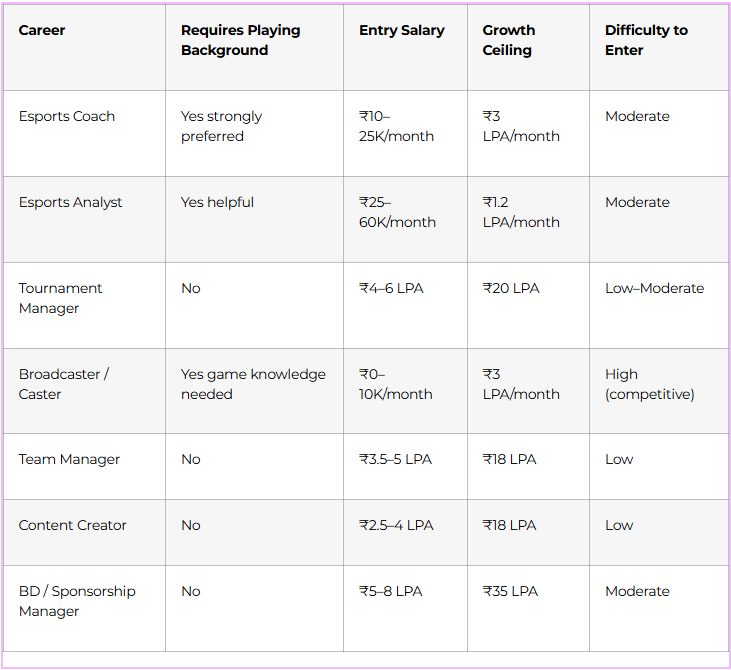
Comparing All Seven Career Paths
The Organisations Hiring for These Roles in India
NODWIN Gaming (Delhi-NCR) India’s largest esports tournament organiser. Hires tournament managers, broadcast staff, content creators, and business development professionals regularly.
Skyesports (Chennai) major tournament organiser with a focus on mobile esports. Strong presence in South India.
GodLike Esports (Mumbai) one of India’s top professional esports teams. Hires coaches, analysts, team managers, and content creators.
S8UL (Mumbai) a large esports and content organisation. Known for content-first approach; hires content creators and social media professionals actively.
Velocity Gaming (Bengaluru) professional Valorant team with coaching and analyst roles.
Orangutan Gaming BGMI team with support staff roles.
Qlan an Indian esports platform connecting players, teams, and tournaments. Hires product and operations staff with esports knowledge.
The Honest Starting Point
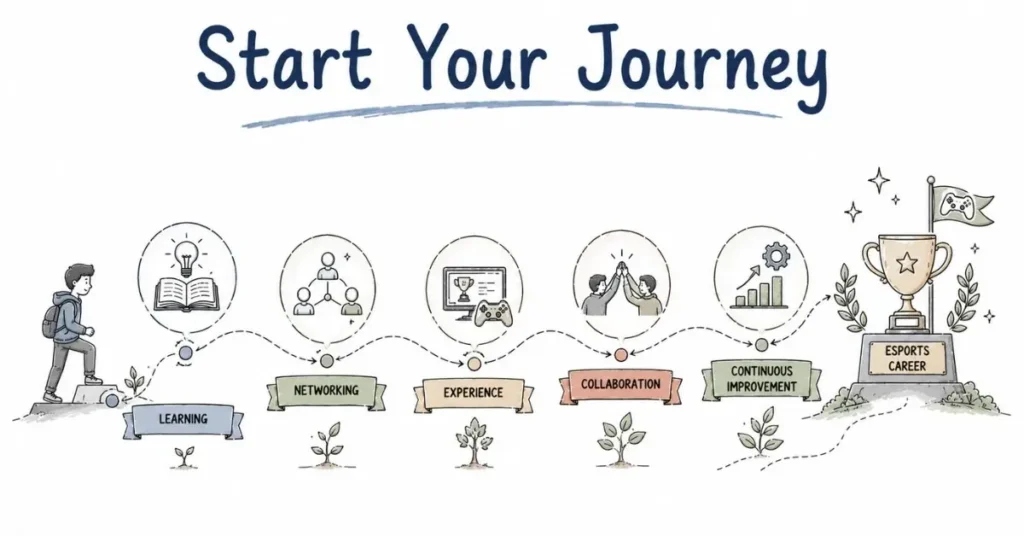
None of these seven careers starts with a job application. They all start with a body of work.
A coach starts by coaching. An analyst starts by posting analytical content. A tournament manager starts by running a small tournament. A caster starts by recording themselves over a VOD.
The esports industry in India is young enough that the people making hiring decisions know almost everyone active in the ecosystem. Showing up at events, in communities, in Discord servers, in content is how you get noticed before a formal job posting exists.
Pick the path that fits your background. Build something real in that direction over the next 90 days. That 90-day head start is worth more than any degree or certificate in an industry that hires on demonstrated ability.