
Blockchain Career Guide : Crypto & Web3 Developer Jobs
Table of Contents
Introduction: Why Blockchain Careers Are Booming in India
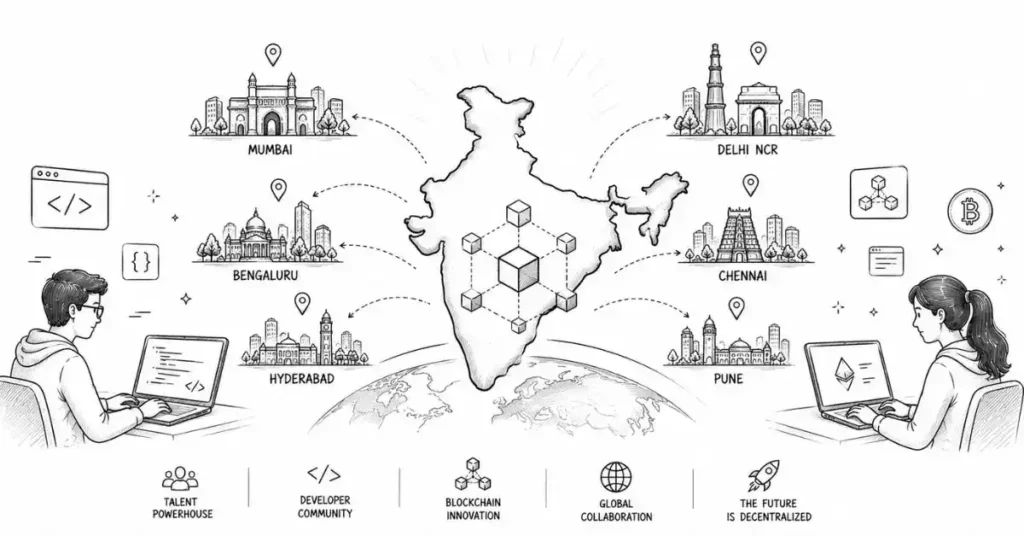
India is rapidly becoming the world’s largest Web3 developer hub, with over 4.7 million developers joining GitHub in 2024 alone—that’s 17% of all new Web3 developers globally. This explosive growth isn’t just about numbers; it represents a fundamental shift in how technology careers are evolving in India. If you’re a student or professional wondering whether blockchain is worth pursuing, the answer is clearer than ever: blockchain careers offer some of the highest salaries in tech, with entry-level positions starting at ₹5-7 lakhs and senior roles commanding ₹25+ lakhs annually.
The Indian government’s increasing acceptance of blockchain technology, combined with global companies establishing development centers in Bangalore, Hyderabad, Pune, and Delhi, has created thousands of job opportunities. Companies like WazirX, CoinDCX, ZebPay, and Unocoin are actively hiring, while international firms like Coinbase, Tether, and FalconX are recruiting Indian talent for remote positions. Whether you’re fresh out of college or looking to switch careers, blockchain offers multiple entry points—from coding-intensive developer roles to non-technical positions in marketing, community management, and compliance.
In this comprehensive guide, you’ll discover everything needed to launch your blockchain career: the various roles available, required skills, learning pathways, certifications, salary expectations, and actionable steps to land your first job. We’ll focus specifically on opportunities relevant to Indian professionals, ensuring you understand not just what blockchain careers exist, but how to actually break into this exciting field.
Understanding the Blockchain Career Landscape
What Makes Blockchain Different from Traditional Tech Jobs?
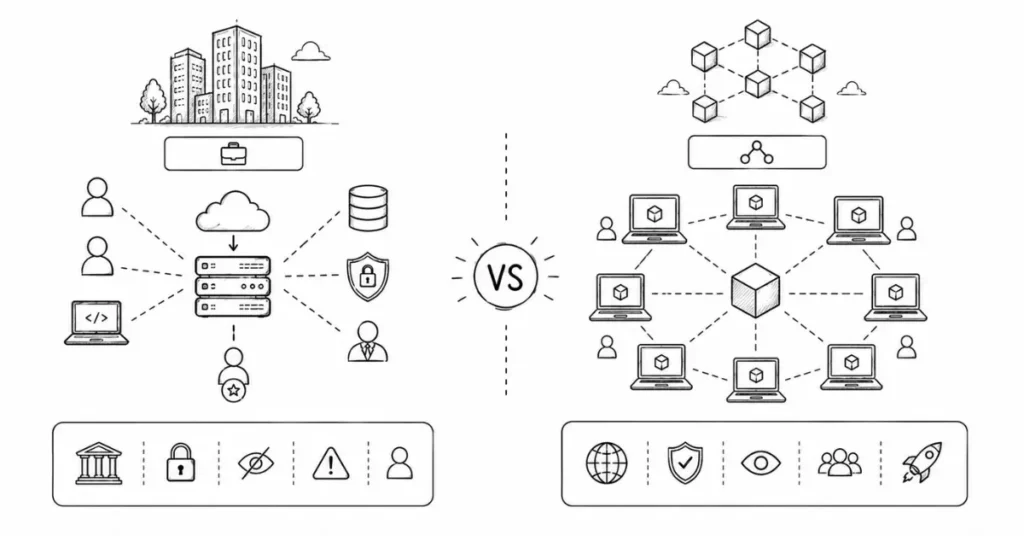
Blockchain careers differ fundamentally from conventional software development roles. While traditional developers build centralized applications controlled by single entities, blockchain developers create decentralized systems where no single party has complete control. This philosophical shift requires understanding distributed systems, cryptography, consensus mechanisms, and economic incentives—concepts rarely covered in standard computer science curricula.
The demand for blockchain professionals has surged by over 500%, with salaries typically 50-100% higher than equivalent traditional developer positions. This premium exists because blockchain combines multiple disciplines: software engineering, cryptography, economics, and security. A smart contract developer, for instance, must write code that handles real financial value, making security paramount. One bug in a smart contract can result in millions of dollars in losses, which is why companies pay premium salaries for skilled professionals.
The Indian Advantage in Global Blockchain Markets
India’s position as the second-largest crypto developer base globally offers unique advantages. The cost of living in Indian cities allows professionals to compete for international remote positions while earning significantly more than local market rates. A blockchain developer in Bangalore earning $60,000-80,000 annually from a US-based company enjoys purchasing power equivalent to someone earning ₹40-50 lakhs in a domestic role.
Additionally, India’s strong educational foundation in mathematics and engineering provides an excellent base for blockchain development. Indian Institute of Technology (IIT) graduates and students from top engineering colleges are particularly well-positioned, with institutions like IIT Kanpur now offering specialized Ethereum developer programs.
Major Blockchain Career Paths
1. Blockchain Development Roles
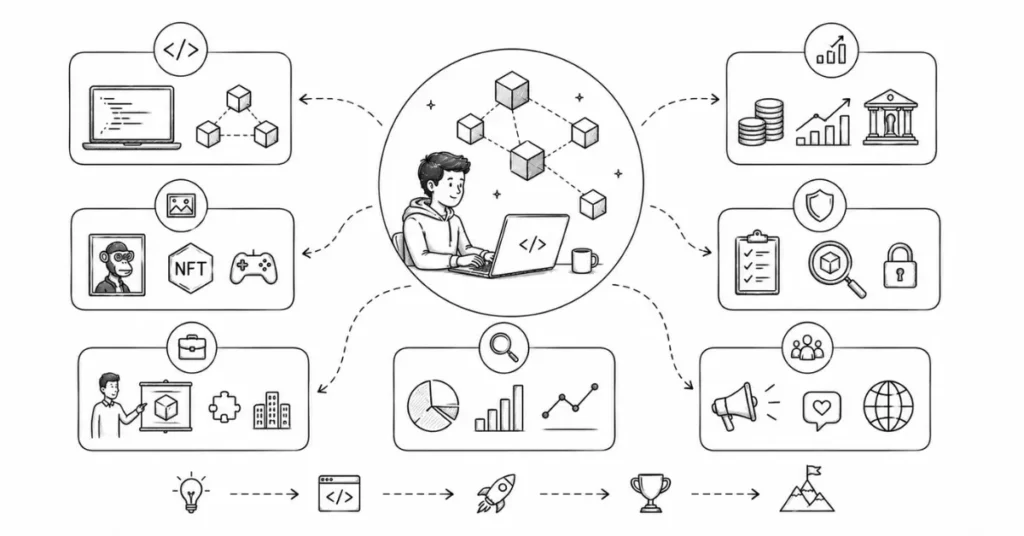
Core Blockchain Developer: These professionals work on blockchain protocols themselves—the fundamental infrastructure that powers cryptocurrencies and decentralized applications. They typically program in languages like C++, Go, or Rust and focus on consensus algorithms, network protocols, and core blockchain functionality. In India, core blockchain engineers earn ₹10+ lakhs annually, with experienced professionals commanding ₹15-20 lakhs.
Smart Contract Developer: Perhaps the most in-demand role, smart contract developers write self-executing code that runs on blockchains like Ethereum. Using Solidity (the primary smart contract language), they create decentralized applications (dApps), DeFi protocols, and NFT systems. Entry-level smart contract developers in India earn ₹5.5-11.4 lakhs, while senior developers with proven track records can earn ₹15-25 lakhs.
Web3 Frontend Developer: These developers build user interfaces that interact with blockchain networks. They need traditional frontend skills (JavaScript, React, Vue) plus Web3-specific knowledge (Web3.js, Ethers.js, wallet integration). This role offers an excellent entry point for existing web developers wanting to transition into blockchain, with salaries ranging from ₹6-12 lakhs depending on experience.
Blockchain Full-Stack Developer: Combining frontend, backend, and smart contract skills, full-stack blockchain developers are incredibly valuable. They can build complete decentralized applications from smart contracts to user interfaces. Companies actively seek these versatile professionals, offering packages of ₹12-20 lakhs for mid-level positions.
2. DeFi (Decentralized Finance) Specialists
DeFi has revolutionized traditional financial services by removing intermediaries through smart contracts. DeFi careers include protocol developers who build lending platforms and decentralized exchanges, DeFi analysts who assess protocol risks and yields, and DeFi product managers who strategize product development. These roles typically pay ₹8-18 lakhs in India, with senior positions at major protocols earning significantly more.
3. NFT and Digital Asset Careers
The NFT boom created entirely new career categories. NFT developers create smart contracts for minting and trading digital assets, while NFT platform architects design marketplace infrastructure. Beyond technical roles, NFT careers include art curators who select collections for platforms, marketing specialists who promote NFT projects, and community managers who engage collectors. NFT-related positions in India pay ₹6-20 lakhs depending on the role, with community managers often receiving token bonuses alongside salary.
4. Blockchain Security and Auditing
Security professionals are critical in blockchain because smart contract vulnerabilities can lead to massive financial losses. Smart contract auditors review code for security flaws, earning ₹8-18 lakhs in India with experienced auditors commanding premium rates. Security specialists also conduct penetration testing, vulnerability assessments, and risk analysis. Given the high stakes, companies often pay auditors by project, with complex audits earning ₹2-5 lakhs per engagement
5. Blockchain Business and Strategy Roles
Blockchain Consultant: These professionals advise enterprises on blockchain implementation, use cases, and strategy. They need technical understanding plus business acumen to translate blockchain benefits into ROI. Consultants in India earn ₹18+ lakhs annually.
Blockchain Project Manager: Managing blockchain development teams requires understanding both traditional project management and blockchain-specific challenges like DAO governance and community coordination. Project managers earn ₹10-15 lakhs in Indian companies.
Blockchain Analyst: Analysts research market trends, evaluate protocols, perform on-chain analysis, and provide investment insights. This role suits those interested in finance and data analysis, offering salaries of ₹7-13 lakhs.
6. Non-Technical Blockchain Careers
Crypto Marketing Specialist: Marketing professionals promote blockchain projects through content, social media, and community engagement. Indian crypto companies like WazirX and CoinDCX actively hire marketing talent, offering ₹5-12 lakhs depending on experience.
Community Manager: Discord and Telegram communities are crucial for crypto projects. Community managers facilitate discussions, answer questions, and build loyalty. This role requires strong communication skills and cultural awareness, paying ₹6-15 lakhs plus potential token allocations.
Legal and Compliance Specialist: As regulations evolve, companies need professionals who understand crypto law, AML/KYC requirements, and compliance frameworks. Legal specialists earn ₹8-18 lakhs in India’s growing crypto compliance sector.
Technical Writer and Educator: Creating documentation, tutorials, and educational content for blockchain projects pays ₹6-12 lakhs. Strong writers who can explain complex technical concepts simply are highly valued.
Essential Skills for Blockchain Careers
Technical Skills Foundation
Programming Languages:
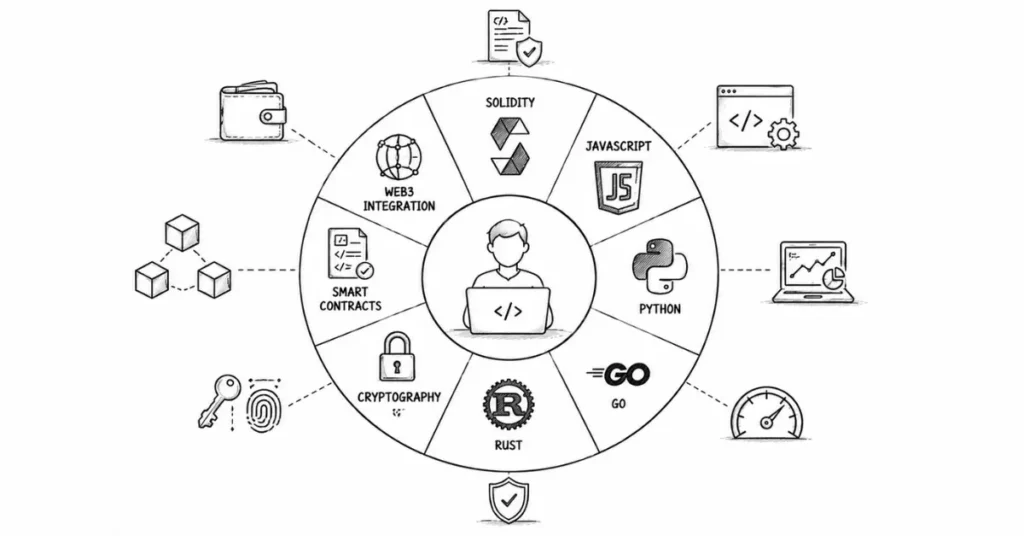
- Solidity: The primary language for Ethereum smart contracts, absolutely essential for smart contract developers
- JavaScript/TypeScript: Required for Web3 frontend development and dApp interfaces
- Python: Used for blockchain analysis, automation, and backend services
- Go (Golang): Popular for building blockchain infrastructure and core protocols
- Rust: Increasingly important for high-performance blockchains like Solana
Blockchain Fundamentals:
- Understanding distributed ledger technology and how blockchains achieve consensus
- Knowledge of cryptographic principles including hashing, public-key cryptography, and digital signatures
- Familiarity with different consensus mechanisms (Proof of Work, Proof of Stake, etc.)
- Understanding of blockchain architecture, nodes, and network topology
Smart Contract Development:
- Writing, testing, and deploying Solidity smart contracts
- Using development frameworks like Truffle, Hardhat, and Remix
- Understanding gas optimization and contract security best practices
- Familiarity with EVM (Ethereum Virtual Machine) architecture
Web3 Integration:
- Using Web3.js or Ethers.js libraries to connect frontends with blockchains.
- Implementing wallet connections (MetaMask, WalletConnect)
- Working with decentralized storage (IPFS) and oracles (Chainlink)
- Understanding JSON-RPC APIs and blockchain nodes
Non-Technical Skills
Problem-Solving: Blockchain development involves complex challenges with limited documentation. Strong analytical thinking helps troubleshoot issues independently.
Security Mindset: Unlike traditional development where bugs cause inconvenience, blockchain bugs can cost millions. Every line of code requires security-first thinking.
Continuous Learning: Blockchain technology evolves rapidly. Successful professionals dedicate time weekly to learning new protocols, tools, and best practices.
Communication: Technical roles require explaining complex concepts to non-technical stakeholders. Marketing and community roles need exceptional written and verbal communication.
Community Engagement: The blockchain space is open-source and collaborative. Participating in GitHub projects, Discord communities, and developer forums builds reputation and networks.
Educational Pathways and Certifications
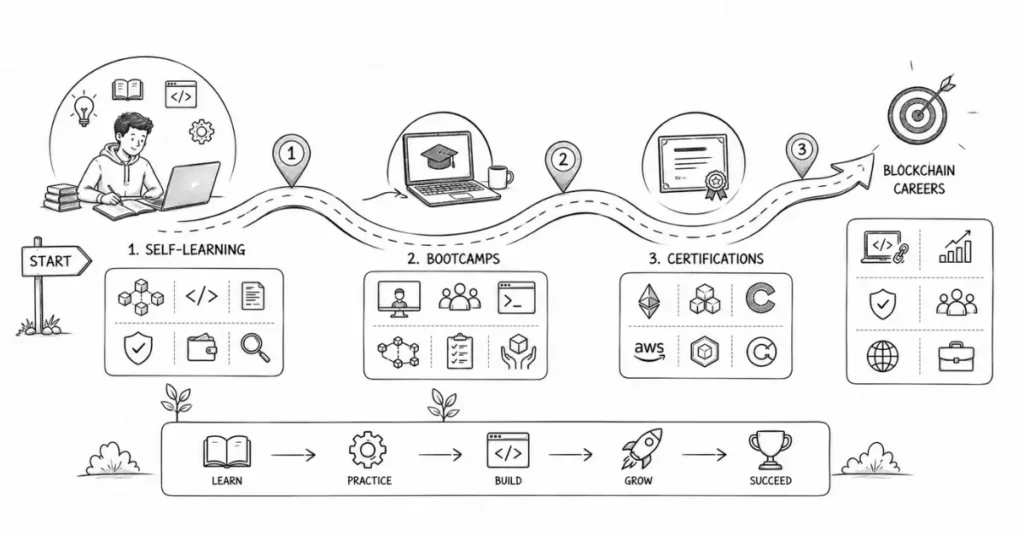
Self-Learning Path (3-6 Months)
For self-motivated learners, numerous free and affordable resources exist:
Phase 1: Blockchain Fundamentals (4-6 weeks)
- Start with free courses on blockchain basics from Coursera or edX
- Understand Bitcoin’s whitepaper and Ethereum’s architecture
- Learn cryptography fundamentals through Khan Academy
Phase 2: Programming Foundation (6-8 weeks)
- If new to programming, complete a JavaScript or Python course
- Practice coding fundamentals through HackerRank or LeetCode
- Build simple projects to solidify understanding
Phase 3: Smart Contract Development (8-12 weeks)
- Follow Cyfrin Updraft’s free Solidity course
- Complete CryptoZombies interactive tutorials
- Build 3-5 practice projects: simple token, NFT contract, basic DeFi protocol
Phase 4: Portfolio Building (4-6 weeks)
- Deploy contracts to testnets (Goerli, Sepolia)
- Create GitHub repository showcasing projects
- Write documentation explaining your code and design choices
Bootcamp Programs (3-6 Months)
Structured bootcamps offer intensive training with mentorship and job placement support:
Metana Web3 Solidity Bootcamp: This 16-22 week program includes personalized instruction, code reviews, and job guarantees. Based in India, Metana provides weekly one-on-one sessions with senior engineers and offers three years of career support in premium tiers. The program costs vary but includes job placement assistance and access to their employer network.
Henry Harvin Blockchain Course: Offering 60 hours of live online sessions plus 192 hours of self-paced learning, this course covers Bitcoin, Ethereum, Hyperledger, cryptocurrency, and DApps. Priced at ₹59,000 for live sessions, it includes NSDC certification and lifetime free upgrades.
GUVI Certified Blockchain Professional: An IIT-Madras incubated program offering weekend live classes over 3 months, covering 10 modules with project training and GitHub portfolio development. The course costs ₹89,999 and provides globally recognized certification.
Professional Certifications
Certified Blockchain Developer (CBD): Offered by Blockchain Council, this certification validates smart contract development and blockchain architecture skills. It’s recognized by employers globally and demonstrates serious commitment to the field.
Certified Ethereum Developer: Specific to Ethereum development, this certification covers Solidity, Web3, and dApp development. IIT Kanpur offers specialized Ethereum developer programs for students.
Blockchain Architect Certification: For those pursuing architectural roles, this certification demonstrates ability to design enterprise blockchain solutions and evaluate different blockchain platforms.
Tools and Technologies You'll Use
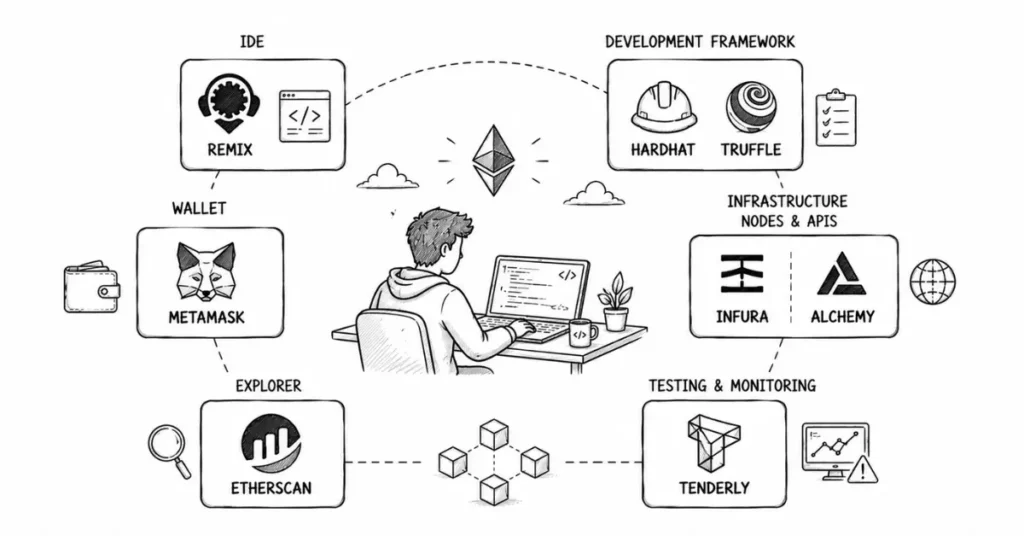
Development Environments
Remix IDE: A browser-based development environment perfect for beginners learning Solidity. It requires no installation and includes built-in debugging tools.
Truffle Suite: A comprehensive development framework including Truffle (testing framework), Ganache (local blockchain), and Drizzle (frontend library).
Hardhat: The most popular professional development environment, offering advanced debugging, flexible testing, and plugin ecosystem.
Development Environments
Infura/Alchemy: These services provide hosted Ethereum nodes, eliminating the need to run your own infrastructure. They offer free tiers suitable for learning and development.
MetaMask: The most popular Ethereum wallet, essential for testing dApps and managing crypto assets.
Testnets: Development networks like Goerli and Sepolia allow testing without spending real money. Always test thoroughly on testnets before mainnet deployment.
Analysis and Monitoring Tools
Etherscan: Blockchain explorer for viewing transactions, contracts, and network statistics. Essential for debugging and verification.
Tenderly: Advanced debugging and monitoring platform showing detailed transaction traces and gas analysis.
DappRadar/DeFi Llama: Analytics platforms tracking dApp usage, Total Value Locked (TVL), and market trends.
Salary Expectations Across Roles and Experience Levels
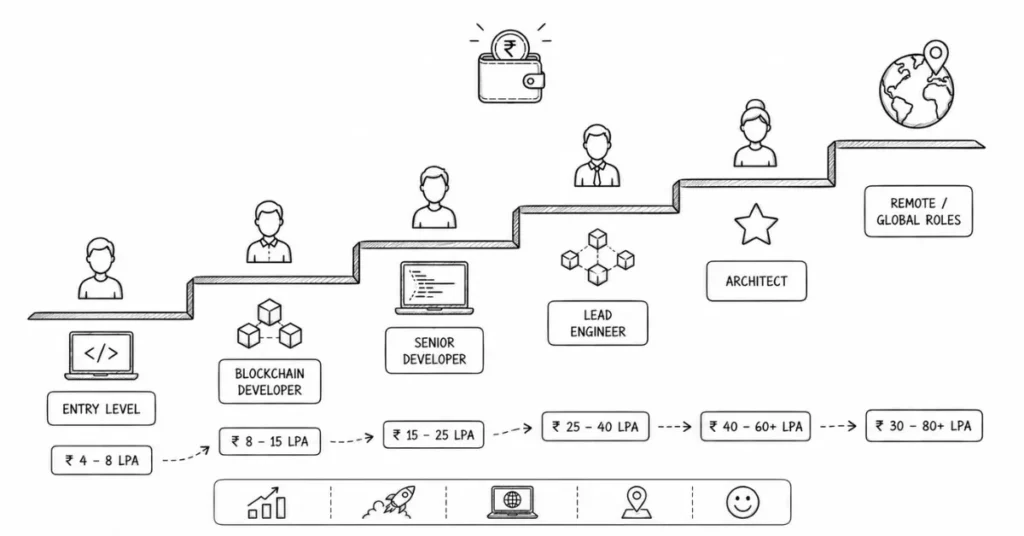
Entry-Level Positions (0-2 Years)
Fresh graduates and career switchers can expect starting salaries of ₹5-7.1 lakhs annually in Indian companies. Blockchain interns typically earn ₹3-5 lakhs, offering valuable experience and often converting to full-time roles. Entry-level smart contract developers start at ₹5.5-7.5 lakhs, while junior blockchain analysts earn ₹5-7 lakhs.
Remote positions with international companies pay significantly higher—$48,000-60,000 annually (₹40-50 lakhs)—even for entry-level roles. However, these positions typically require stronger portfolios and proven project experience.
Mid-Level Professionals (3-5 Years)
With 3-5 years of experience, blockchain developers in India earn ₹10-16.5 lakhs depending on skills and company. Smart contract developers with strong Solidity skills command ₹11-15 lakhs. DeFi specialists and security auditors in this range earn ₹12-18 lakhs given the specialized knowledge required.
Mid-level professionals can also pursue freelance opportunities, with complex smart contract projects paying ₹1.5-3 lakhs per engagement. Building a portfolio of successful projects enables transitioning to high-paying contract work.
Senior-Level Experts (5+ Years)
Senior blockchain developers with 5+ years of experience earn ₹16.5-25 lakhs in Indian companies. Blockchain architects—who design entire system architectures—command ₹25-35 lakhs. Blockchain consultants with domain expertise and client management skills earn ₹18-30 lakhs.
The highest earners are senior professionals working remotely for international Web3 companies, earning $80,000-150,000+ annually (₹65 lakhs-1.2 crores). These positions require exceptional technical skills, strong English communication, and proven track records of successful project delivery.
Location-Based Variations
Salaries vary significantly by city. Bangalore offers the highest blockchain salaries averaging ₹6.27 lakhs for entry-level positions, followed by Pune (₹8.29 lakhs), Delhi (₹6.74 lakhs), Mumbai (₹6.46 lakhs), and Hyderabad (₹4.14 lakhs). However, remote work is increasingly common in blockchain, reducing location dependency.
How to Get Started: 30-60-90 Day Action Plan
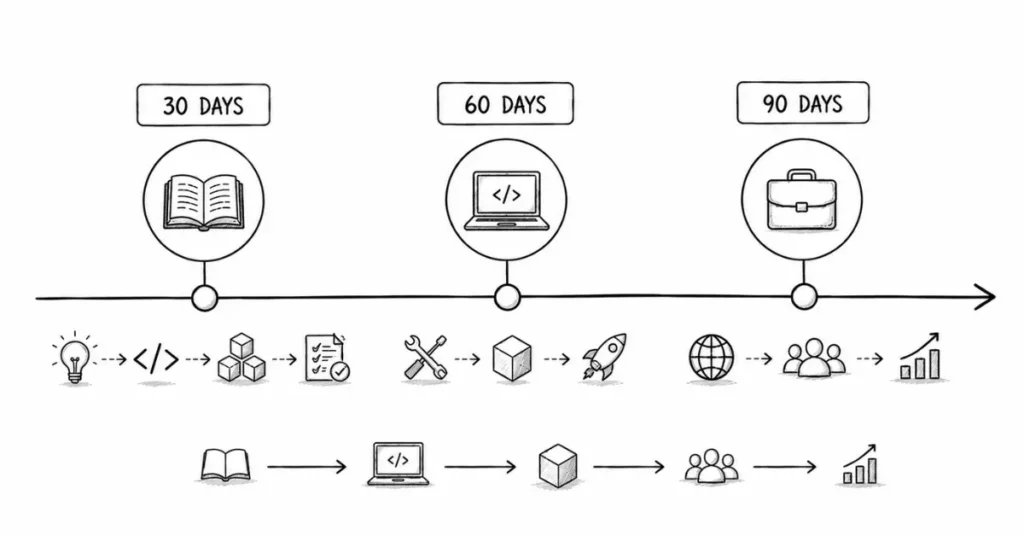
Days 1-30: Foundation Building
Week 1-2: Learn Blockchain Basics
- Complete a free blockchain fundamentals course (Coursera, edX)
- Read Bitcoin and Ethereum whitepapers to understand core concepts
- Join Reddit communities r/ethdev and r/CryptoCurrency to understand the space
- Follow blockchain thought leaders on Twitter/X for daily insights
Week 3-4: Choose Your Path
- Assess whether you’re drawn to development, analysis, marketing, or business roles
- If technical: Begin learning Solidity through CryptoZombies or Cyfrin Updraft
- If non-technical: Study successful crypto marketing campaigns and community management strategies
- Set up essential accounts: GitHub, MetaMask wallet, testnets
Days 31-60: Skill Development
Week 5-6: Deep Learning
- If developer: Complete 2-3 Solidity tutorial projects, deploying to testnets
- If analyst: Learn to read blockchain explorers and understand on-chain metrics
- Study existing successful projects in your chosen niche (DeFi, NFTs, etc.)
- Begin contributing to open-source projects on GitHub
Week 7-8: Portfolio Creation
- Developers: Build 1-2 original projects showcasing your skills
- Analysts: Write analysis pieces on Medium about protocol performance
- Marketers: Create sample campaign strategies for existing projects
- Document everything professionally on GitHub and LinkedIn
Days 61-90: Job Search and Networking
Week 9-10: Professional Presence
- Polish LinkedIn profile highlighting blockchain focus and projects
- Create a personal website or portfolio showcasing your work
- Write blog posts or tutorials demonstrating expertise
- Engage actively in Discord communities of projects you admire
Week 11-12: Active Job Search
- Apply to positions on CryptoJobsList, Web3.career, and AngelList India
- Reach out to recruiters at Indian crypto companies (WazirX, CoinDCX, ZebPay)
- Attend blockchain meetups and conferences in your city
- Consider internships or apprenticeships to gain experience
Top Companies Hiring Blockchain Talent in India
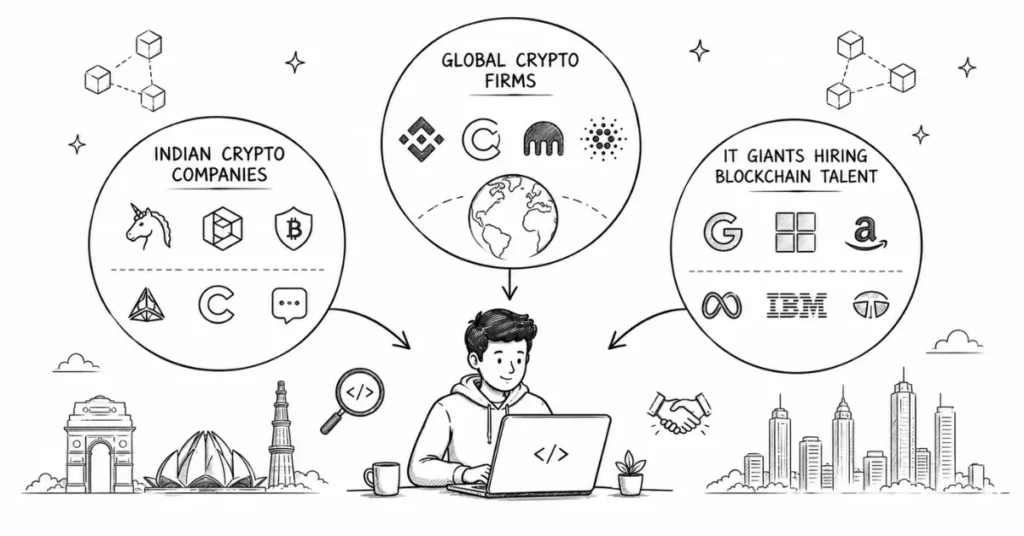
Indian Crypto Companies
WazirX: One of India’s largest cryptocurrency exchanges, actively expanding teams in technology, marketing, and compliance. They hire blockchain developers, product managers, and customer support specialists.
CoinDCX: A leading Indian crypto platform offering comprehensive blockchain career opportunities from development to business analysis. They provide competitive salaries and equity compensation.
ZebPay: Pioneering Indian crypto exchange offering roles in development, marketing, customer support, and compliance. Known for fostering learning environments for blockchain newcomers.
Unocoin: Bitcoin-focused service seeking blockchain developers, business analysts, and financial experts. Good entry point for professionals interested in Bitcoin technology specifically.
International Companies with Indian Operations
Coinbase: Global cryptocurrency platform hiring emerging talent in India. Offers exposure to international best practices and competitive compensation.
Tether: Major stablecoin issuer actively recruiting in Bangalore and Delhi across engineering, product, and business roles. Salaries range from $36,000-156,000 depending on position and experience.
FalconX: Institutional crypto platform hiring operations analysts and business development roles in India. Focuses on experienced professionals.
Tech Giants Exploring Blockchain
TCS, Accenture, Tech Mahindra: India’s IT giants have established blockchain practices, offering opportunities to work on enterprise blockchain solutions. Salaries range from ₹6-20 lakhs depending on role and experience.
Challenges and How to Overcome Them
Challenge 1: Regulatory Uncertainty
India’s cryptocurrency regulations have been evolving, creating uncertainty for professionals. Solution: Focus on building blockchain skills applicable beyond cryptocurrency—supply chain, healthcare, and enterprise blockchain face minimal regulatory concerns. Stay informed through official government channels and industry associations.
Challenge 2: Lack of Formal Education Programs
Few Indian universities offer comprehensive blockchain degrees. Solution: Leverage online bootcamps, certifications, and self-learning resources. Practical project experience often weighs more than formal degrees in blockchain hiring.
Challenge 3: Fast-Paced Technology Evolution
Blockchain technology evolves rapidly, with new protocols and tools emerging constantly. Solution: Dedicate 4-5 hours weekly to learning through newsletters, podcasts, and documentation. Join developer communities where knowledge sharing happens real-time.
Challenge 4: Security Responsibility
Smart contract bugs can cause massive financial losses, creating pressure. Solution: Adopt security-first mindset from day one. Use established patterns, conduct thorough testing, and seek peer reviews before deploying to mainnet. Consider specializing in security auditing where this skill becomes your primary value.
Future Outlook: Where Blockchain Careers Are Headed
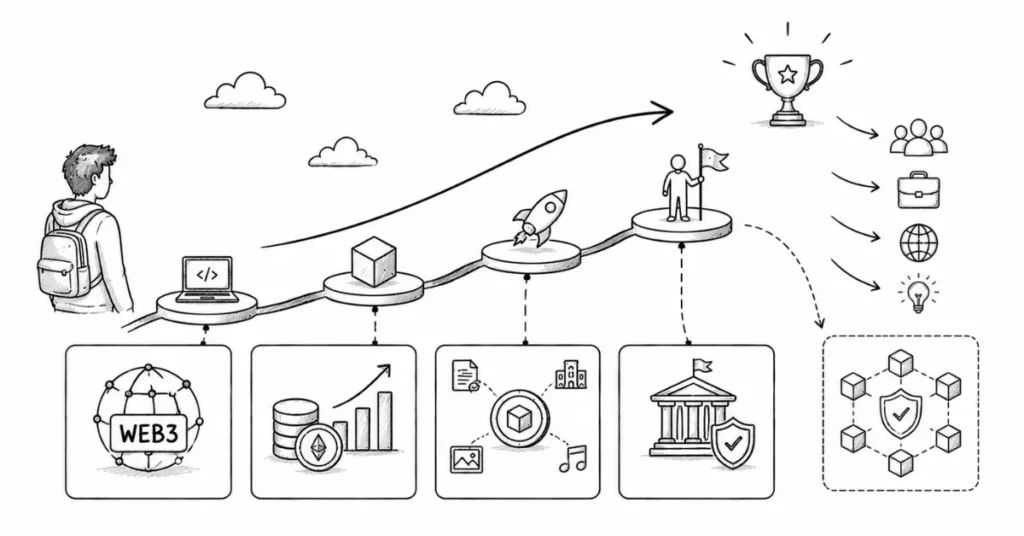
India is projected to become the world’s largest Web3 developer hub by 2028, with developer growth outpacing all other nations. This growth is fueled by several factors: strong technical education foundation, cost-competitive development talent, and increasing government acceptance of blockchain for non-currency use cases.
Investor confidence has surged with a 109% increase in Web3 funding compared to 2023, indicating robust ecosystem growth. This capital influx will create thousands of new blockchain positions across development, marketing, operations, and management.
Emerging opportunities include:
- Government blockchain projects: Supply chain tracking, land records, and identity management
- Enterprise blockchain solutions: Private blockchains for corporations
- Web3 gaming: Play-to-earn games and metaverse development
- Decentralized social media: Alternatives to traditional platforms
- Real-world asset tokenization: Bringing physical assets onto blockchains
The average blockchain developer salary in India is expected to grow 15-20% annually over the next five years as demand continues outpacing supply. Professionals who build strong foundations now will be positioned to capture the highest-value opportunities as the industry matures.
Take Your First Step Today
Blockchain careers offer exceptional opportunities for Indian professionals willing to invest time in learning this transformative technology. Whether you’re drawn to the technical challenge of writing smart contracts, the strategic thinking required for DeFi protocol design, or the creative community-building aspects of NFT projects, there’s a path for you.
The key is starting now. Choose a learning resource today—perhaps Cyfrin Updraft’s free Solidity course or a blockchain fundamentals MOOC. Set up your MetaMask wallet and deploy a simple smart contract to a testnet. Join a blockchain Discord community and introduce yourself. These small actions compound into career-changing momentum.
Remember that everyone currently working in blockchain was once a beginner wondering where to start. The difference between those who succeed and those who don’t isn’t innate talent—it’s consistent action toward a clear goal. With India’s position as an emerging Web3 superpower, there’s never been a better time to begin your blockchain career journey.