
Supply Chain Management 101: Beginner's Guide
Table of Contents
Introduction: Making Sense of Supply Chain Management
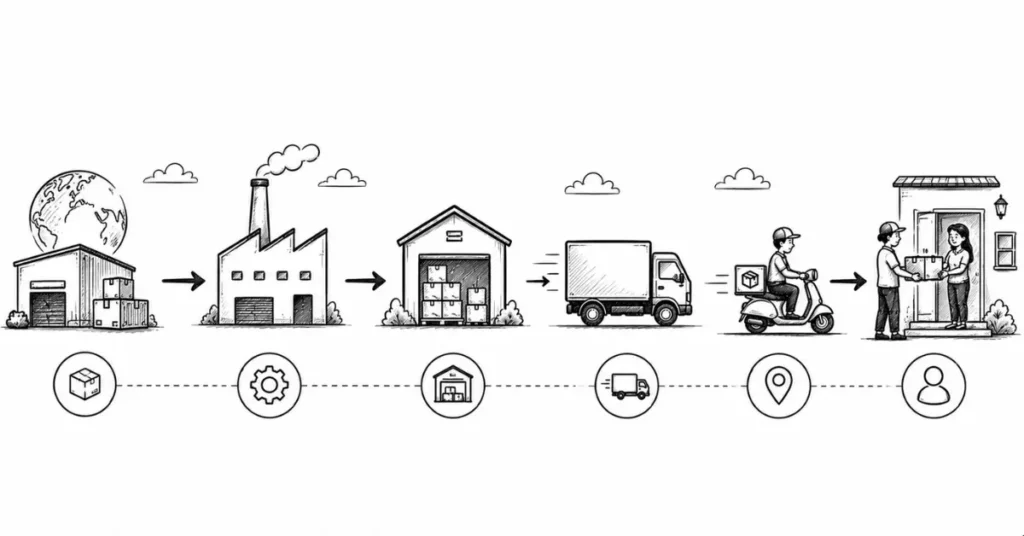
Remember the last time you ordered food on Swiggy or bought something from Amazon? Within hours sometimes minutes your order arrived at your doorstep. Behind that simple transaction lies an intricate dance of planning, coordination, and execution that we call supply chain management.
If you’re reading this, you’re probably curious about what supply chain professionals actually do, or you’re considering a career in this field but aren’t sure where to start. Don’t worry supply chain management isn’t as complicated as it sounds. By the end of this article, you’ll understand the fundamental concepts that drive this ₹5.55 billion industry in India, and you’ll know whether this career path is right for you.
Let me break down everything in simple terms, just like I’d explain it to a friend over chai.
What Exactly is Supply Chain Management?
At its core, supply chain management is about getting the right product, to the right place, at the right time, in the right quantity, at the right cost. Sounds simple? That’s the beauty the concept is straightforward, but executing it efficiently requires skill, strategy, and constant problem-solving.
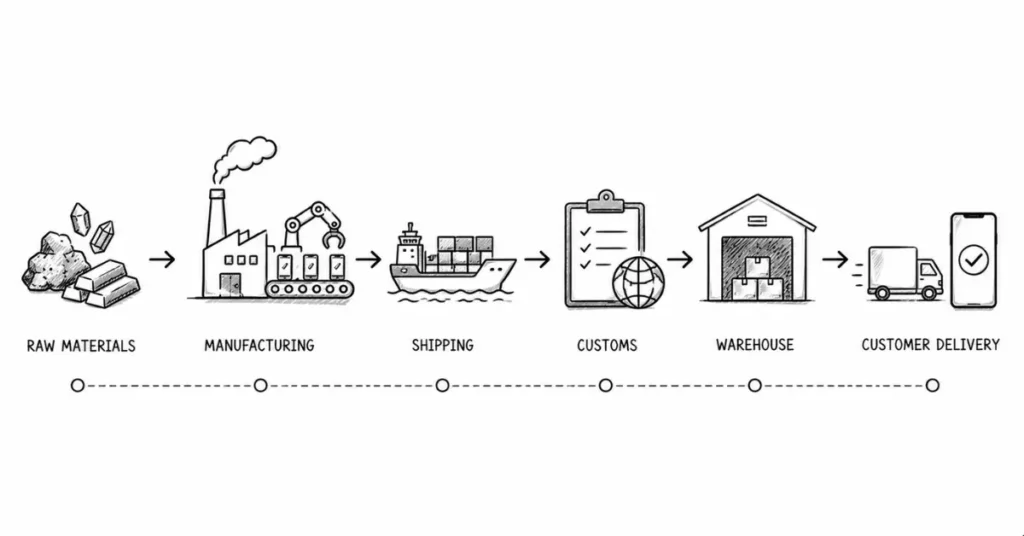
Think of your favorite smartphone. Before it reached your hands, here’s what happened:
- Someone extracted rare earth metals from mines
- Factories in different countries manufactured various components screens, processors, batteries
- These parts traveled to an assembly plant (often in China or Vietnam)
- The finished phone was shipped to India
- It cleared customs and reached a distribution center
- Finally, it moved to a warehouse, then to a store or directly to you
Every step in this journey is part of the supply chain. Supply chain management is the art and science of coordinating all these steps seamlessly.
The Five Core Pillars of Supply Chain Management
Supply chain management consists of five interconnected stages. Understanding these is fundamental to grasping how the entire system works.
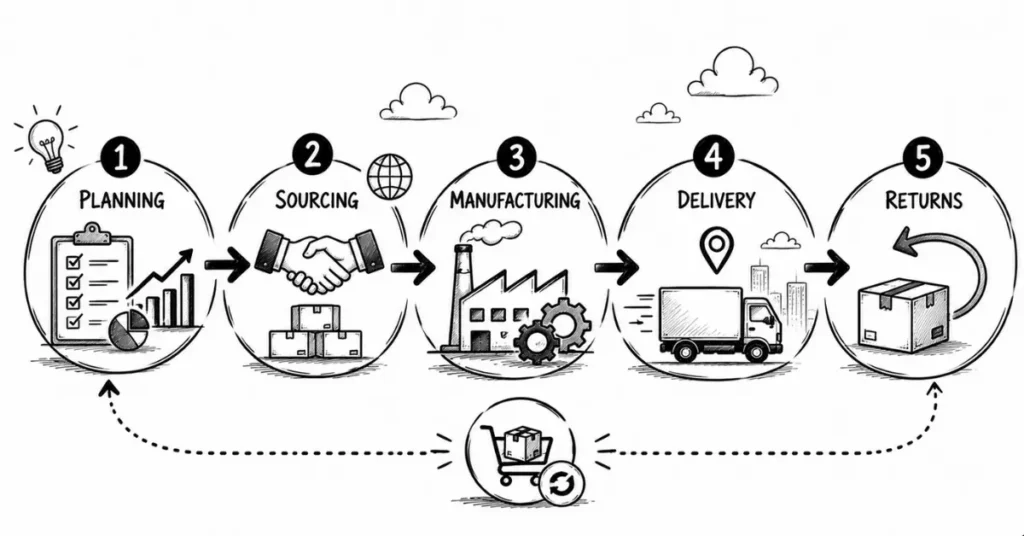
1. Planning: The Foundation of Everything
Before anything moves, someone needs to plan. Planning involves forecasting demand—predicting how much of a product customers will buy.
Real-world example: During Diwali, Cadbury needs to predict chocolate demand. Too little production means lost sales. Too much means excess inventory that might expire. Supply chain planners analyze past Diwali sales, market trends, economic conditions, and even weather patterns to make accurate forecasts.
Key activities in planning:
- Demand forecasting using historical data
- Production planning and scheduling
- Capacity planning (do we have enough resources?)
- Sales and operations planning (S&OP) to align different departments
Who does this: Demand Planners, Supply Chain Analysts, Production Planners
2. Sourcing: Finding the Best Suppliers
Once you know what you need, you must figure out where to get it. Sourcing—also called procurement—involves finding suppliers, negotiating prices, and building relationships.
Real-world example: A clothing brand needs fabric for its winter collection. The procurement team researches fabric suppliers, compares quality and prices, negotiates payment terms, and ensures the fabric meets quality standards. They might source cotton from Gujarat, zippers from China, and buttons from Maharashtra.
Key activities in sourcing:
- Supplier identification and evaluation
- Price negotiation and contract management
- Quality assurance and supplier audits
- Managing vendor relationships
- Strategic sourcing to reduce costs without compromising quality
Who does this: Procurement Executives, Sourcing Managers, Vendor Development teams
Critical skill: Negotiation isn’t about being aggressive—it’s about finding win-win solutions where both your company and the supplier benefit.
3. Manufacturing: Transforming Raw Materials into Products
This is where raw materials become finished goods. Manufacturing operations must balance speed, quality, and cost.
Real-world example: Maruti Suzuki’s Gurugram plant receives steel sheets, engines, electronics, and thousands of other components. Their production line assembles these parts into cars. Supply chain professionals ensure parts arrive exactly when needed (not too early to clog the warehouse, not too late to stop production), maintain quality standards, and optimize production schedules.
Key activities in manufacturing:
- Production scheduling to maximize efficiency
- Inventory management for work-in-progress items
- Quality control at various production stages
- Maintenance planning to prevent equipment breakdowns
- Lean manufacturing to eliminate waste
Who does this: Production Planners, Manufacturing Managers, Quality Control teams
Important concept: Just-in-Time (JIT) – Many modern manufacturers receive parts exactly when needed rather than storing large inventories. This reduces costs but requires excellent coordination with suppliers.
4. Delivery: Getting Products to Customers
Also called logistics or distribution, this stage involves storing finished goods and transporting them to customers.
Real-world example: After Hindustan Unilever manufactures soap in their factory, it goes to regional distribution centers across India. From there, it moves to local warehouses, then to retail stores or directly to your home if you ordered online. Each movement must be tracked, timed, and optimized to reduce costs.
Key activities in delivery:
- Warehouse management and inventory storage
- Order processing and fulfillment
- Transportation planning and route optimization
- Last-mile delivery coordination
- Tracking and visibility systems
Who does this: Logistics Coordinators, Warehouse Managers, Transportation Planners, Distribution Managers
The last-mile challenge: Getting products from the local hub to individual customers’ doors is often the most expensive and complex part. This is why companies like Amazon and Flipkart invest heavily in delivery optimization.
5. Returns: Managing Reverse Logistics
Products sometimes get returned they’re damaged, wrong size, or customers change their minds. Managing returns efficiently is crucial for customer satisfaction and cost control.
Real-world example: You order a shirt online, but it doesn’t fit. You initiate a return. The supply chain team must arrange pickup, inspect the product, decide if it can be resold or needs to be discarded, process your refund, and potentially restock the item. This “reverse supply chain” is often more complex than forward logistics.
Key activities in returns:
- Return authorization and pickup coordination
- Product inspection and quality assessment
- Refurbishment or disposal decisions
- Restocking or liquidation
- Warranty management
Who does this: Customer Service teams, Returns Managers, Quality Assessment teams
Growing importance: With e-commerce return rates sometimes exceeding 30%, managing reverse logistics efficiently can significantly impact profitability.
Supply Chain Management vs Logistics: Clearing the Confusion
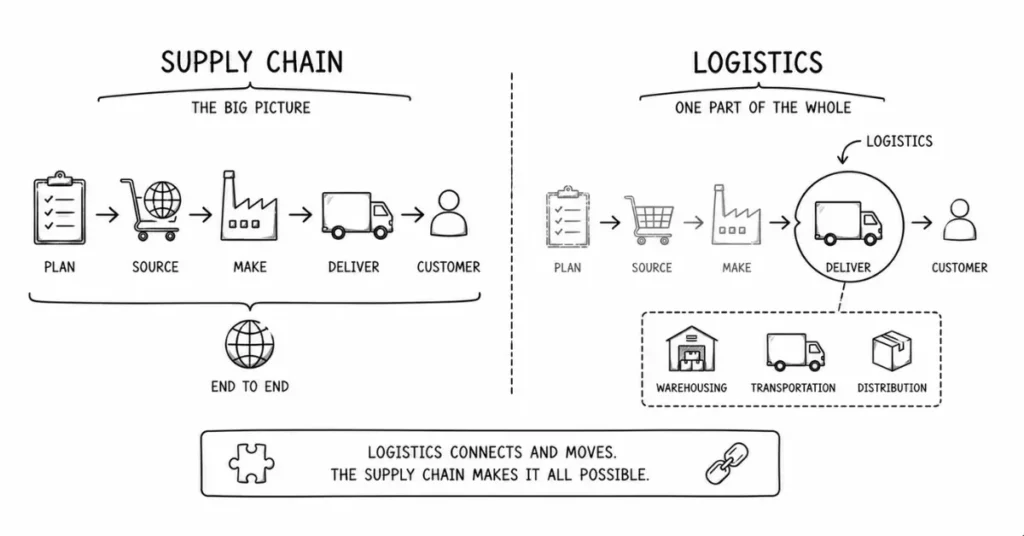
People often use “supply chain management” and “logistics” interchangeably, but they’re not the same thing.
Logistics is a subset of supply chain management focused specifically on:
- Transportation (moving goods from point A to B)
- Warehousing (storing goods efficiently)
- Inventory management (tracking what you have)
- Order fulfillment (getting orders to customers)
Supply Chain Management is the bigger picture that includes:
- Everything in logistics, PLUS
- Strategic planning and forecasting
- Supplier relationship management
- Manufacturing coordination
- Customer relationship management
- Technology integration across all stages
Simple analogy: If supply chain management is a complete movie, logistics is one important scene. You can’t have a good movie without that scene, but the scene alone doesn’t make the complete story.
Career implication: A logistics manager focuses on efficient movement and storage. A supply chain manager thinks about how all pieces from suppliers to customers work together strategically.
Key Supply Chain Concepts Every Beginner Should Know
Let me introduce you to terms you’ll encounter frequently in this field:
Lead Time
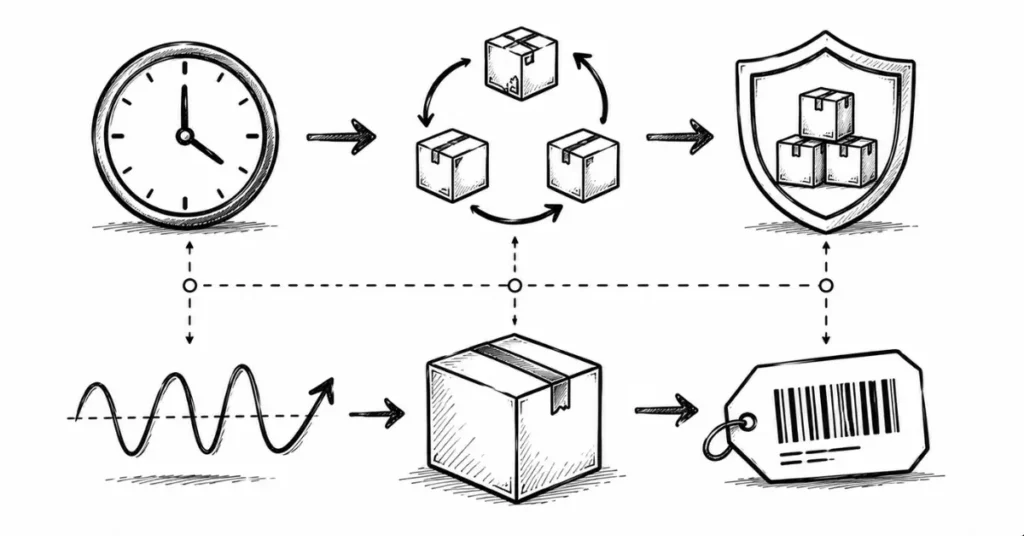
The time between placing an order and receiving it. If you order phone components from China and they arrive in 45 days, that’s your lead time. Reducing lead time is a constant goal because it means faster response to demand changes.
Inventory Turnover
How many times you sell and replace inventory in a period. High turnover is generally good—it means products aren’t sitting idle. Calculate it as: Sales / Average Inventory. If your store sells ₹10 lakhs worth of products annually and maintains ₹2 lakhs average inventory, your turnover is 5 times per year.
Safety Stock
Extra inventory kept “just in case” demand spikes or supply gets delayed. It’s your buffer against uncertainty. Too much safety stock ties up money; too little risks stockouts.
Bullwhip Effect
A fascinating phenomenon where small demand changes at the retail level cause increasingly large fluctuations upstream. If a retailer orders 10% more, their wholesaler might order 20% more from the manufacturer, who then orders 30% more raw materials. Understanding and preventing this effect is crucial for supply chain efficiency.
Economic Order Quantity (EOQ)
The optimal order size that minimizes total costs (ordering costs + holding costs). There’s a sweet spot between ordering frequently in small amounts (high ordering costs) and ordering rarely in large amounts (high storage costs).
SKU (Stock Keeping Unit)
A unique identifier for each distinct product. A blue shirt in size M is a different SKU from the same shirt in size L or a different color. Large retailers manage thousands of SKUs.
Why Companies Invest Heavily in Supply Chain Management
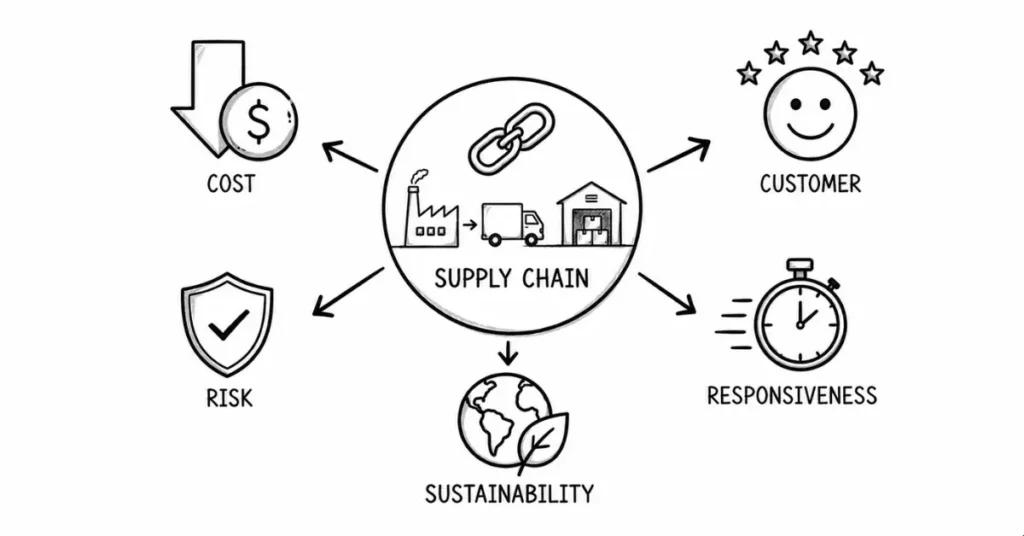
You might wonder: why do companies hire entire teams for supply chain management? Can’t they just order what they need and ship what they sell?
Here’s why supply chain management matters tremendously:
- Cost Reduction
Supply chain costs typically represent 40-50% of a product’s final price. Even small improvements—negotiating 2% better supplier prices, reducing transportation costs by 5%, or improving inventory efficiency—translate to millions in savings for large companies. - Customer Satisfaction
When products arrive on time and in perfect condition, customers are happy. When they don’t, customers leave negative reviews and switch to competitors. In today’s world of same-day and next-day delivery expectations, supply chain excellence is a competitive advantage. - Market Responsiveness
Companies with efficient supply chains can respond quickly to market changes. When a product suddenly becomes popular, they can scale production and distribution rapidly. When demand drops, they can adjust without being stuck with excess inventory. - Risk Management
Supply chains face constant risks—natural disasters, geopolitical issues, supplier bankruptcies, quality problems. Good supply chain management includes contingency planning and risk mitigation strategies. - Sustainability
Modern consumers care about environmental impact. Optimized supply chains reduce transportation emissions, minimize waste, and support sustainable sourcing practices.
Real-World Supply Chain Success Stories
Understanding theory is important, but seeing how companies apply these concepts brings it to life:
Amazon’s Supply Chain Dominance
Amazon’s ability to deliver products incredibly fast comes from sophisticated supply chain management. They use predictive algorithms to stock local warehouses with products likely to sell in each area before customers even order them. They’ve optimized warehouse layouts so workers take fewer steps. They negotiate bulk transportation rates. Every tiny efficiency compounds into their market-leading delivery speeds.
Zara’s Fast Fashion Model
While competitors take months from design to store, Zara does it in weeks. Their integrated supply chain—owning production facilities, using sophisticated demand sensing, and managing distribution tightly—lets them respond to fashion trends incredibly quickly. This supply chain agility is their primary competitive advantage.
Flipkart’s Logistics Network
During initial years, Flipkart realized India’s logistics infrastructure couldn’t support e-commerce growth. So they built their own supply chain network—Ekart. This vertical integration gave them control over delivery quality and speed, contributing significantly to their success.
Common Supply Chain Challenges
Supply chain management isn’t all smooth sailing. Here are challenges professionals face daily:
Demand Variability
Customer demand constantly fluctuates due to seasons, trends, economic conditions, and competitor actions. Predicting these changes accurately is part science, part art.
Supply Disruptions
Suppliers face their own challenges—raw material shortages, quality issues, financial problems, natural disasters. The COVID-19 pandemic dramatically highlighted how fragile global supply chains can be.
Inventory Balancing
Too much inventory ties up cash and risks obsolescence. Too little causes stockouts and lost sales. Finding the right balance is a perpetual challenge.
Cost Pressures
Customers want low prices, fast delivery, and perfect quality. Achieving all three simultaneously requires constant optimization.
Technology Integration
Different systems—procurement software, warehouse management, transportation planning, customer orders—must communicate seamlessly. Integration challenges are common.
Talent Shortage
India’s growing economy creates high demand for skilled supply chain professionals, but supply hasn’t kept pace. This talent gap creates opportunities for newcomers willing to learn.
Supply Chain Across Different Industries
Supply chain principles apply everywhere, but implementation varies by industry:
E-commerce (Amazon, Flipkart)
Focus on speed, accuracy, and managing high return rates. Heavy technology investment in automation and tracking systems.
Manufacturing (Maruti, Tata Motors)
Emphasis on production planning, supplier coordination for just-in-time delivery, and quality management across complex supplier networks.
FMCG (HUL, ITC)
Wide distribution networks reaching even remote areas, managing perishable goods with limited shelf life, and balancing freshness with inventory costs.
Pharmaceuticals (Sun Pharma, Cipla)
Strict regulatory compliance, temperature-controlled storage (cold chain), quality documentation, and managing expiration dates rigorously.
Fashion Retail (Zara, H&M)
Managing seasonal inventory, predicting trends, handling diverse SKUs, and balancing current season sales with clearance of previous inventory.
Understanding these industry-specific nuances helps you target your career direction.
Technology's Growing Role in Supply Chain
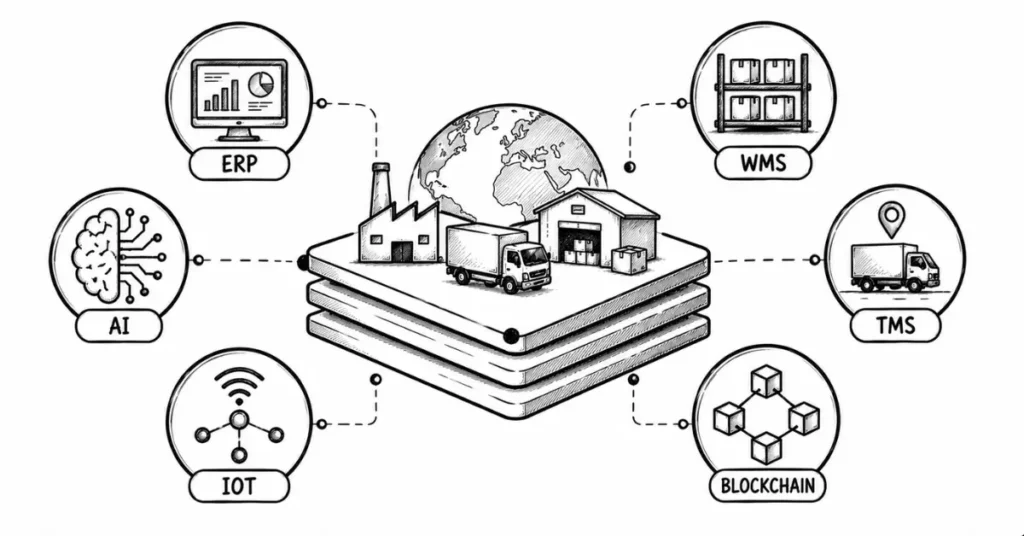
Modern supply chains are increasingly technology-driven:
Enterprise Resource Planning (ERP) Systems
Platforms like SAP, Oracle, and Microsoft Dynamics integrate all supply chain functions into one system, providing real-time visibility and coordination.
Warehouse Management Systems (WMS)
Software that optimizes storage locations, picking routes, and inventory tracking within warehouses.
Transportation Management Systems (TMS)
Tools that plan optimal routes, consolidate shipments, and track deliveries in real-time.
Artificial Intelligence and Machine Learning
AI improves demand forecasting accuracy, identifies patterns humans might miss, and automates routine decisions.
IoT (Internet of Things)
Sensors track shipment conditions, monitor equipment health, and provide real-time location data.
Blockchain
Emerging technology for supply chain transparency, preventing counterfeits, and ensuring traceability—particularly important in pharmaceuticals and luxury goods.
You don’t need to be a programmer, but understanding these technologies and being comfortable learning new software is increasingly important for supply chain careers.
Essential Metrics: How Supply Chain Performance is Measured
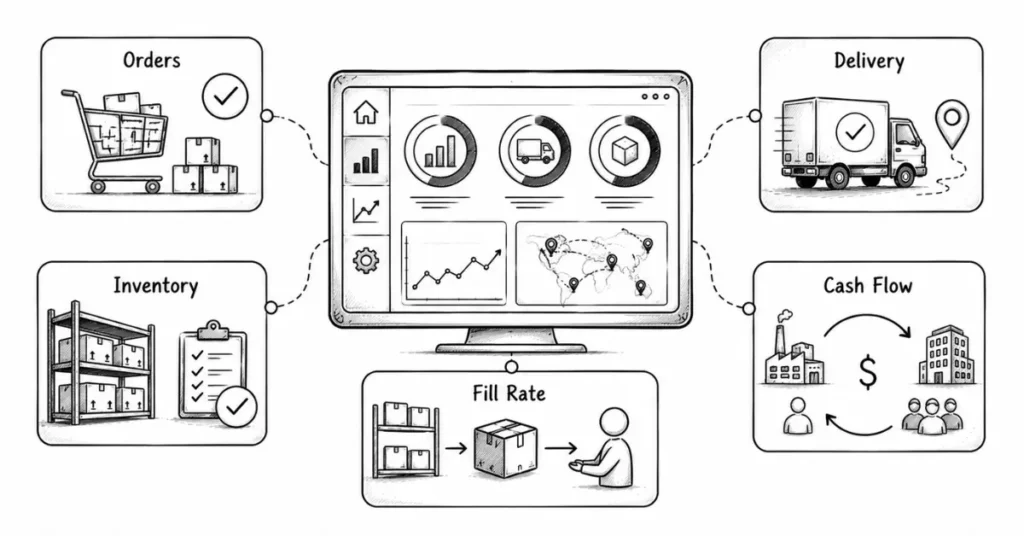
Companies track specific metrics to evaluate supply chain performance. Understanding these helps you speak the language of supply chain management:
Perfect Order Rate
Percentage of orders delivered on time, complete, undamaged, with correct documentation. A 95% perfect order rate means 5 out of every 100 orders have some issue.
On-Time Delivery (OTD)
Percentage of deliveries that arrive by the promised date. Industry benchmarks vary, but 95%+ is generally considered good.
Inventory Accuracy
How well physical inventory matches system records. High accuracy (98%+) is crucial for reliable operations.
Order Cycle Time
Time from receiving a customer order to delivery. Faster is generally better, but must balance cost.
Fill Rate
Percentage of customer demand satisfied from available inventory. A 90% fill rate means 10% of demand results in backorders or stockouts.
Supply Chain Cost as Percentage of Sales
Total supply chain expenses divided by revenue. Lower is better, but not at the expense of service quality.
Cash-to-Cash Cycle Time
How long money is tied up in inventory before converting back to cash through sales. Shorter cycles improve cash flow.
Getting Started: Your First Steps
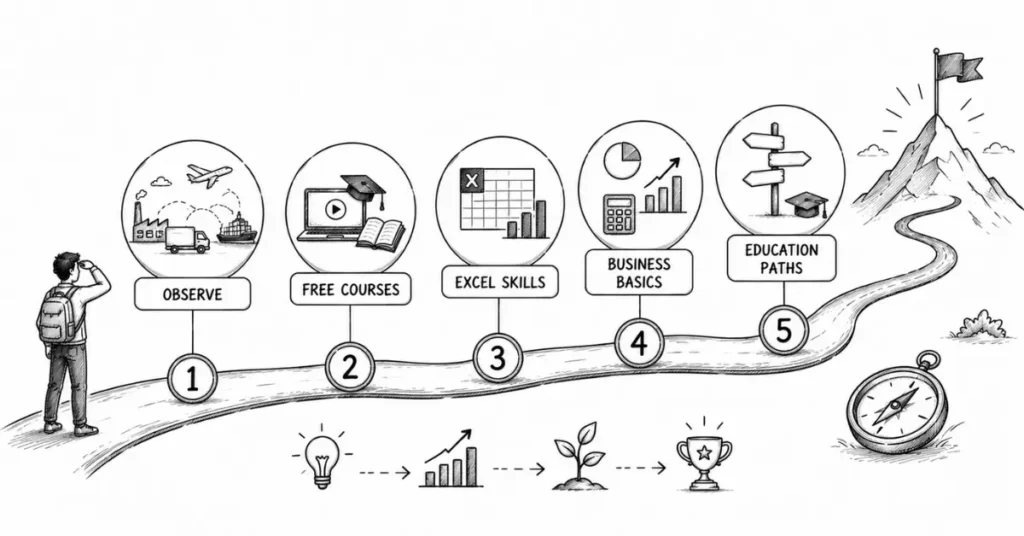
If supply chain management sounds interesting, here’s how to begin exploring it:
- Observe Supply Chains Around You
Next time you buy something, think about its journey. Where was it made? How did it reach the store? What happens if you return it? This curiosity is foundational. - Take Free Online Courses
Platforms like Coursera, edX, and NPTEL offer introductory supply chain courses. Start with one to see if you enjoy the content. - Read Industry Content
Follow supply chain blogs, join LinkedIn groups, read about how companies like Amazon optimize their operations. - Develop Analytical Skills
Supply chain management involves lots of data analysis. Get comfortable with Excel—learn pivot tables, VLOOKUP, and basic formulas. - Understand Business Basics
Study fundamental business concepts—profit margins, cash flow, customer satisfaction. Supply chain decisions always balance multiple business objectives. - Consider Your Education Path
Depending on your background, you might pursue an MBA with operations specialization, professional certifications like APICS, or entry-level roles that provide on-the-job training.
Is Supply Chain Management Right for You?
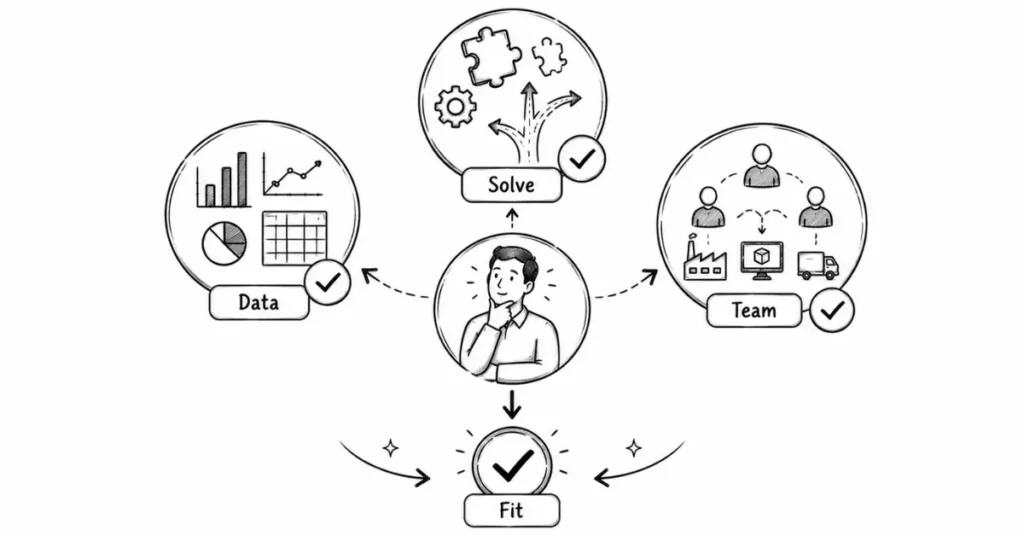
This career suits you if you:
- Enjoy solving practical problems with tangible outcomes
- Like working with numbers and data, but also people
- Appreciate the “big picture” and how different parts connect
- Can handle ambiguity and changing situations
- Want a career with clear growth paths and strong earning potential
- Prefer work that directly impacts business success
This career might not suit you if you:
- Prefer creative work without much structure
- Dislike dealing with numbers and data
- Get frustrated by constant problem-solving and troubleshooting
- Prefer working in isolation without cross-functional collaboration
- Want work with immediate, visible outcomes (supply chain improvements often take time to manifest)
What's Next?
You now understand supply chain fundamentals the five core stages, key concepts, why it matters, and how it operates across industries. This foundation prepares you to explore specific career paths within supply chain management.
Supply chain management isn’t just about moving boxes and managing spreadsheets. It’s about solving puzzles that impact millions of people. Every product you’ve ever used went through a supply chain. The professionals who make those supply chains work efficiently are problem-solvers, strategists, negotiators, and leaders.
The Indian supply chain sector is growing at 11.12% annually, creating thousands of new opportunities for skilled professionals. Whether you’re a student choosing your career path or a professional considering a change, supply chain management offers stability, growth, and the satisfaction of making tangible business impact.
Ready to dive deeper? Explore our detailed guides on entry-level supply chain careers, essential skills, and certification paths to plan your journey into this dynamic field.