
Freelancing & Consulting Opportunities
Table of Contents
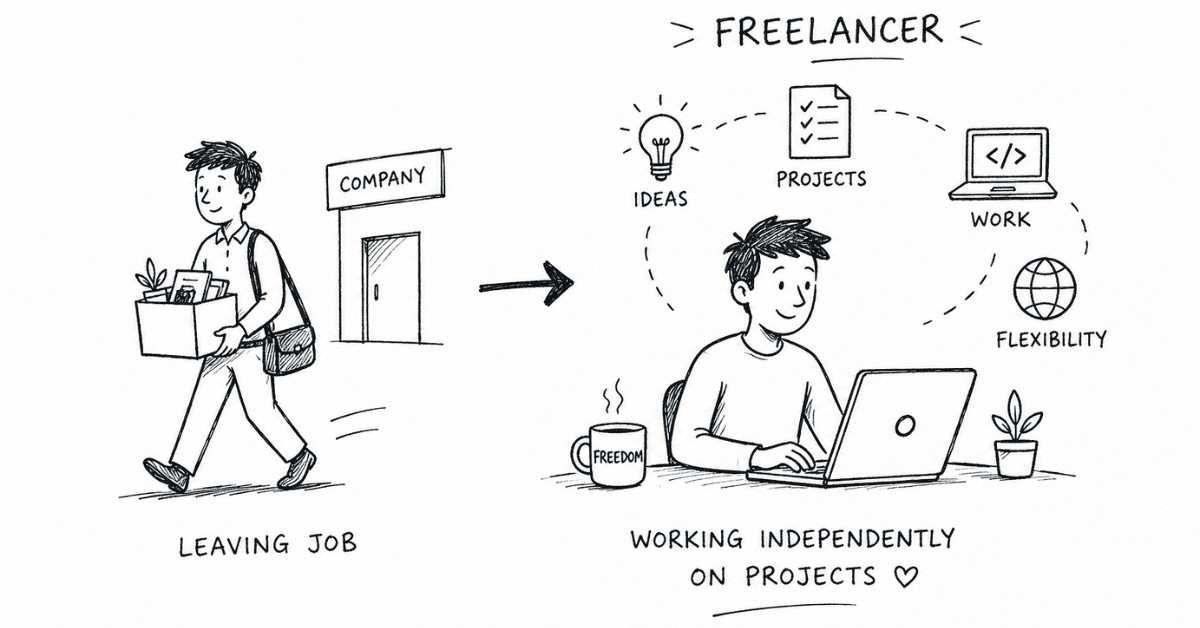
Freelancing for Electrical Engineers: Consulting & Independent Career Guide
After working 8 years as a power systems engineer, Raj (name changed) made an unconventional choice. Instead of continuing the corporate ladder, he started independent consulting advising small industries on energy efficiency, designing electrical systems for commercial buildings, conducting power quality audits. Today, he earns more than his previous salary, works on diverse projects, and controls his schedule. He built what many engineers dream of but few pursue: an independent professional practice.
Freelancing and consulting in electrical engineering isn’t as visible as software freelancing (Upwork, Fiverr dominate headlines), but substantial opportunities exist. Industrial clients need electrical system design but can’t afford full-time engineers. Startups need PCB design but not permanently. Small manufacturers need automation consultation. Renewable energy projects need technical advisory. Real estate developers need electrical contractors. And experienced electrical engineers can serve these needs independently.
This comprehensive guide explores freelancing and consulting for electrical engineers: what services you can offer, how to find clients, pricing strategies, legal and financial setup, challenges and rewards, and whether independent practice is right for you. Whether you’re considering full-time freelancing, side income, or eventual consulting career, this roadmap shows the possibilities beyond traditional employment.
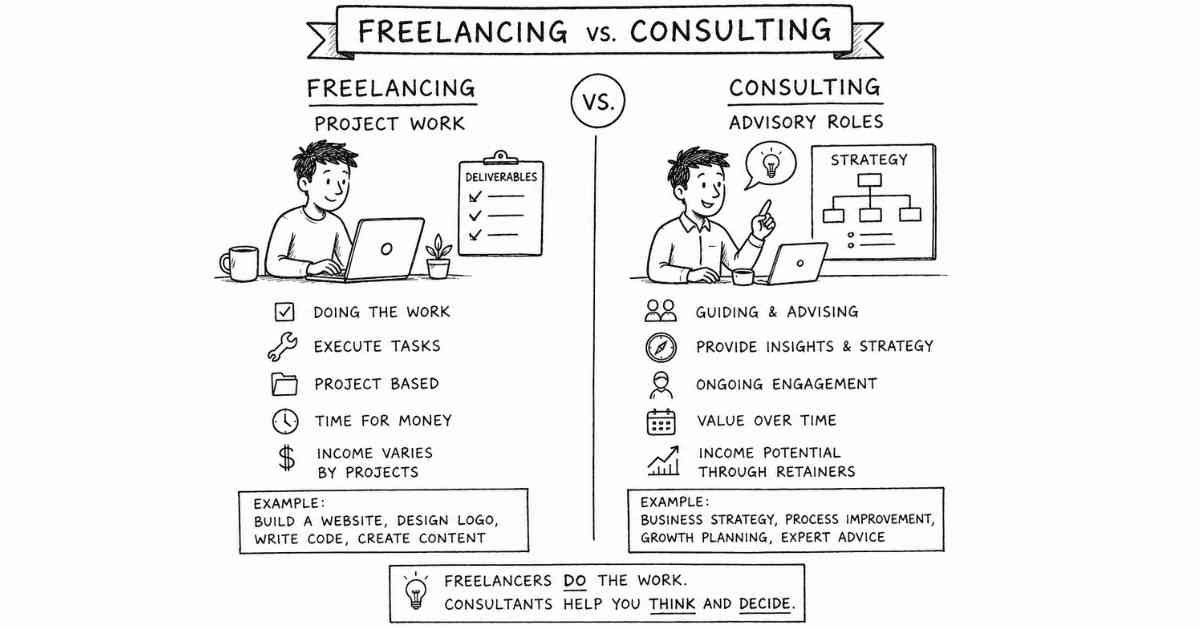
Understanding Freelance vs Consulting
Freelancing
Definition: Project-based work for multiple clients, typically shorter engagements, specific deliverables
Characteristics:
- Task/project focused (design this circuit, model this system)
- Multiple simultaneous clients common
- Often remote work
- Shorter relationships (weeks to months)
- Defined scope and deliverables
- Platform-based or direct clients
Examples:
- PCB design projects
- Circuit simulation work
- CAD drawings for electrical systems
- PLC programming projects
- Technical report writing
Consulting
Definition: Advisory services based on expertise, often longer-term relationships, strategic guidance
Characteristics:
- Expertise and advice focused
- Often on-site or hybrid work
- Longer engagements (months to years)
- Deeper client relationships
- May include implementation oversight
- Typically direct clients (not platforms)
Examples:
- Energy efficiency consulting for industries
- Power systems advisory for utilities
- Automation system design and implementation guidance
- Renewable energy project consultation
- Expert witness services
Overlap: In practice, many independent electrical engineers do both—project work and advisory
Services Electrical Engineers Can Offer
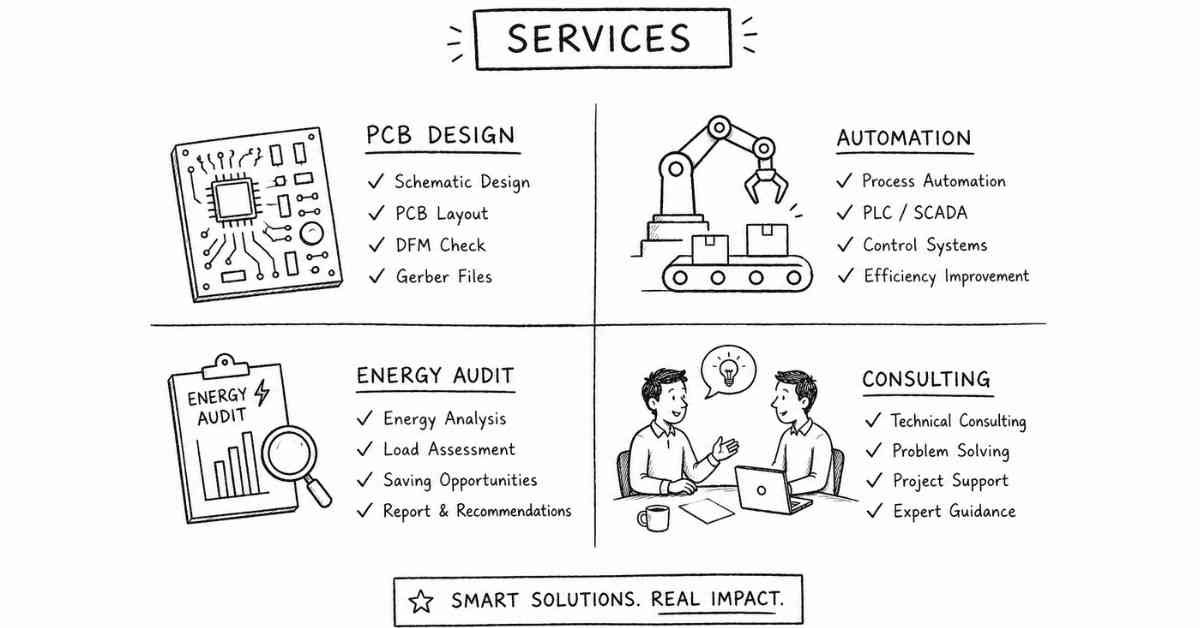
Design Services
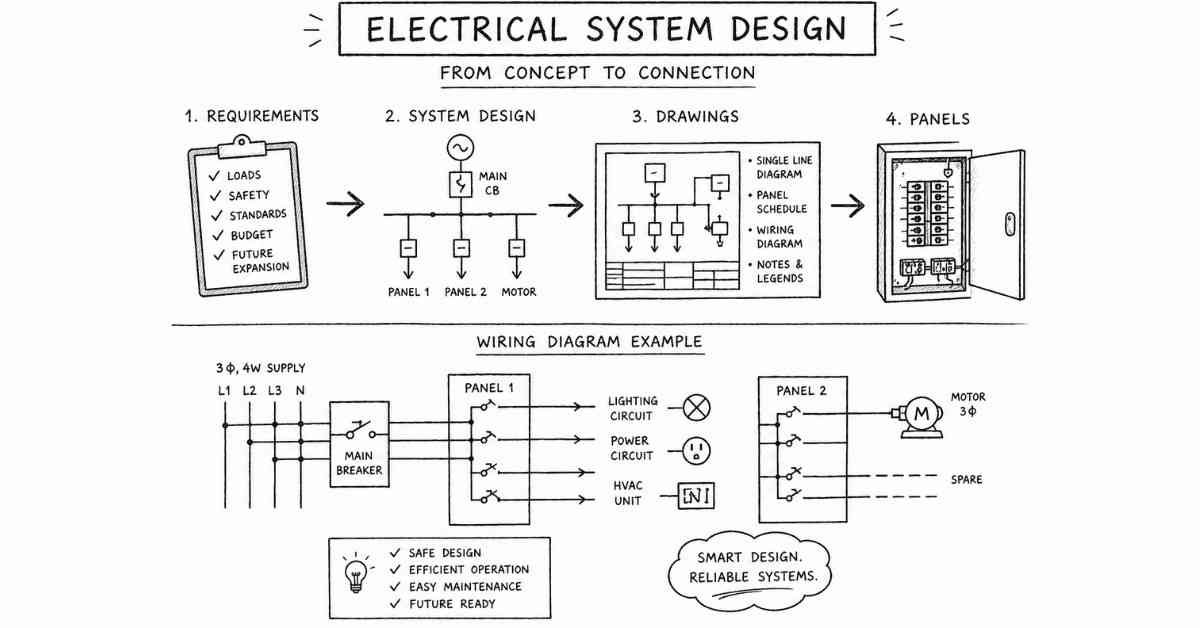
Electrical System Design:
- Building electrical systems (residential, commercial, industrial)
- Power distribution design
- Lighting design and calculations
- Grounding and protection schemes
- Load calculations and panel schedules
Clients: Architects, builders, real estate developers, facility owners
Circuit and PCB Design:
- Analog and digital circuit design
- PCB layout
- Prototype development
- Design validation and testing
Clients: Startups, product companies, inventors, other engineers
Power Systems Studies:
- Load flow analysis
- Short circuit studies
- Protection coordination
- Arc flash studies
- Harmonic analysis
Clients: Industries, utilities, engineering consultancies
Automation System Design:
- PLC programming
- SCADA development
- Control panel design
- Process automation
Clients: Manufacturing companies, machine builders
Analysis and Simulation
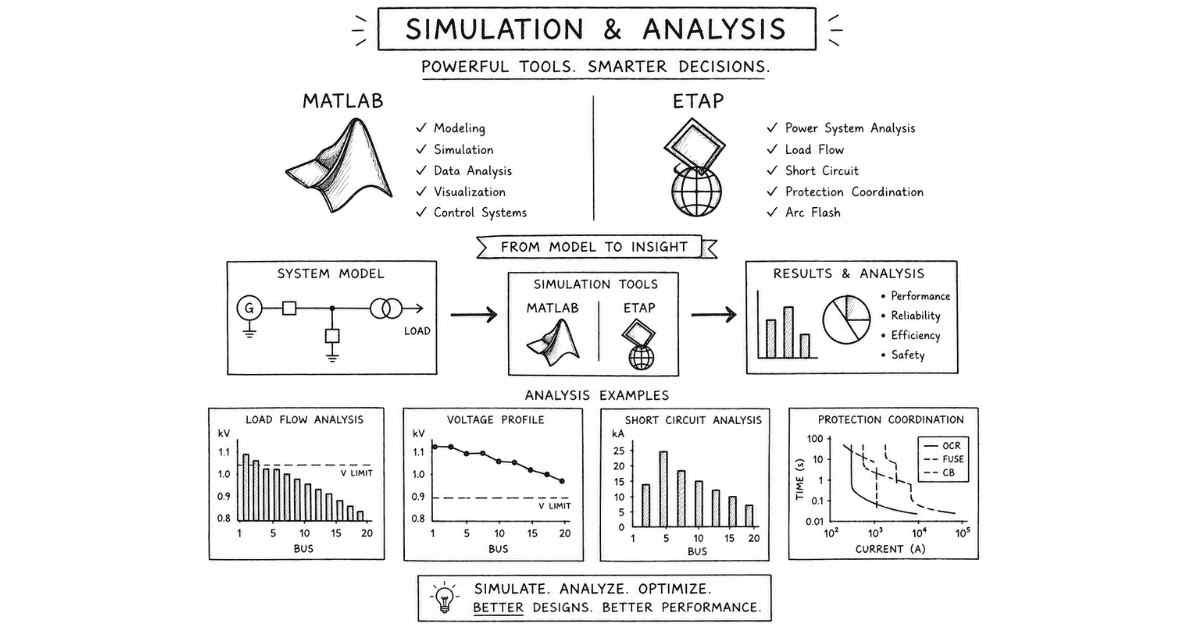
ETAP/PSCAD Modeling: Power system modeling for clients without software/expertise
MATLAB/Simulink Projects: System simulation, algorithm development
Thermal Analysis: Electrical equipment thermal studies
EMC/EMI Analysis: For product development companies
Clients: Engineering firms, product companies, research organizations
Testing and Commissioning Support
Field Services:
- Equipment commissioning
- Testing and validation
- Troubleshooting support
- Site audits
Clients: EPC companies, end users, equipment suppliers (when their teams overloaded)
Energy and Sustainability Services
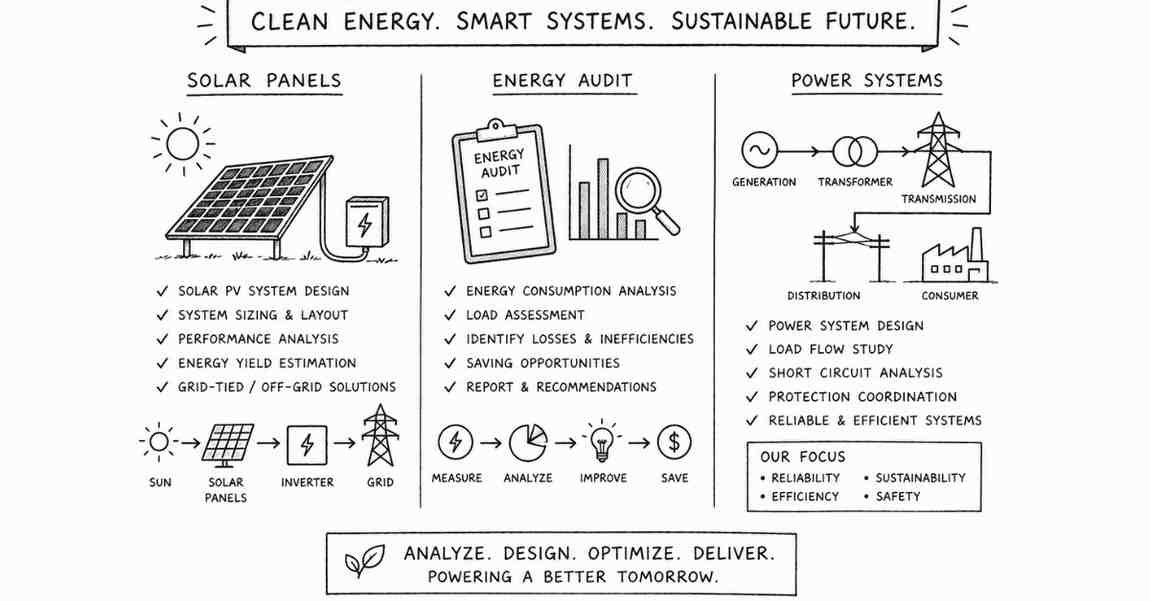
Energy Audits:
- Industrial energy consumption analysis
- Efficiency improvement recommendations
- ROI calculations
- Report preparation
Solar PV Design:
- Rooftop solar system design
- Feasibility studies
- Proposal preparation for installers
Power Quality Studies:
- Voltage sag/swell analysis
- Harmonic measurements
- Power factor improvement
Clients: Industries, commercial buildings, solar companies
Training and Education
Corporate Training:
- ETAP training
- PLC programming courses
- Power systems fundamentals
- AutoCAD Electrical training
Online Course Creation:
- Udemy courses
- YouTube educational content (ad revenue)
- Membership sites
Clients: Companies, individuals, educational platforms
Documentation Services
Technical Writing:
- Equipment manuals
- Standard operating procedures
- Technical specifications
- Tender documents
CAD Drafting:
- Electrical drawings
- Single-line diagrams
- Panel layouts
- As-built documentation
Clients: Engineering firms, manufacturers, contractors
Expert Services
Expert Witness: Legal cases involving electrical systems/accidents (requires significant experience)
Technical Due Diligence: For investors evaluating companies/projects
Standards Compliance: Helping companies meet electrical codes and standards
Clients: Law firms, investment firms, companies
Finding Clients
Online Platforms
International Platforms:
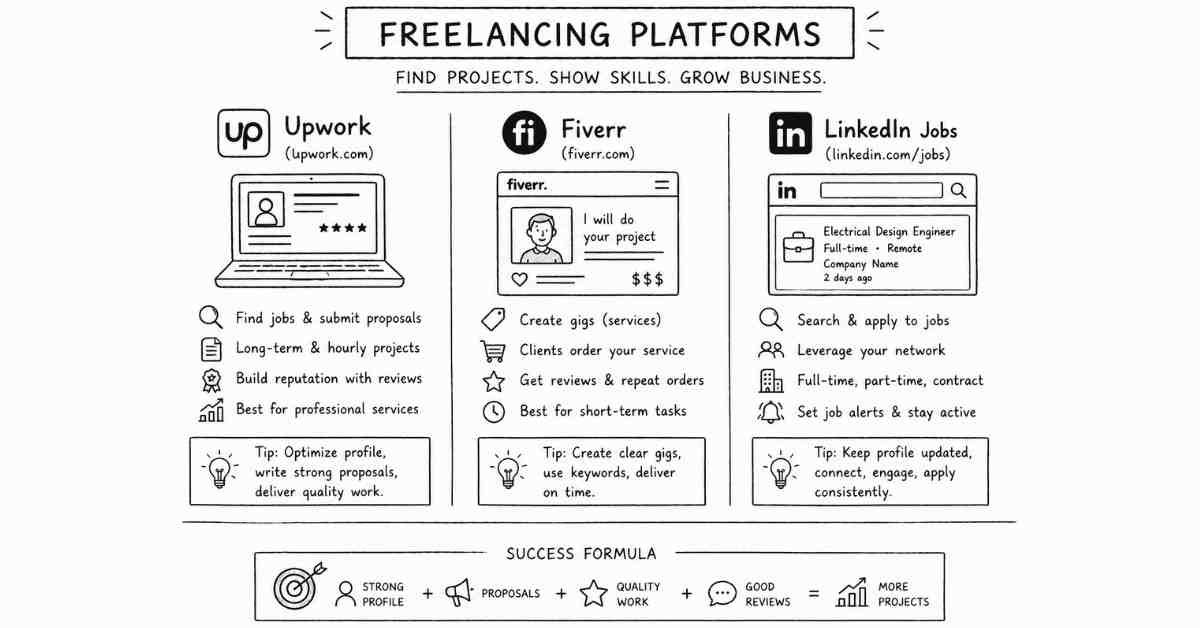
- Upwork: Largest freelancing platform; electrical design, PCB, circuit projects available
- Freelancer: Similar to Upwork
- Fiverr: Can offer specific services (circuit design, PLC programming)
- Toptal: Premium platform for top freelancers (vetted, high-paying)
Reality: Competition high from global engineers; need strong portfolio; payment in USD advantageous
India-Specific Platforms:
- Truelancer: Indian freelancing platform
- WorkNHire: Growing Indian platform
- Various gig platforms: Emerging market
Caution: Platforms take 10-20% commission; build own client base eventually
Direct Client Acquisition
Networking:
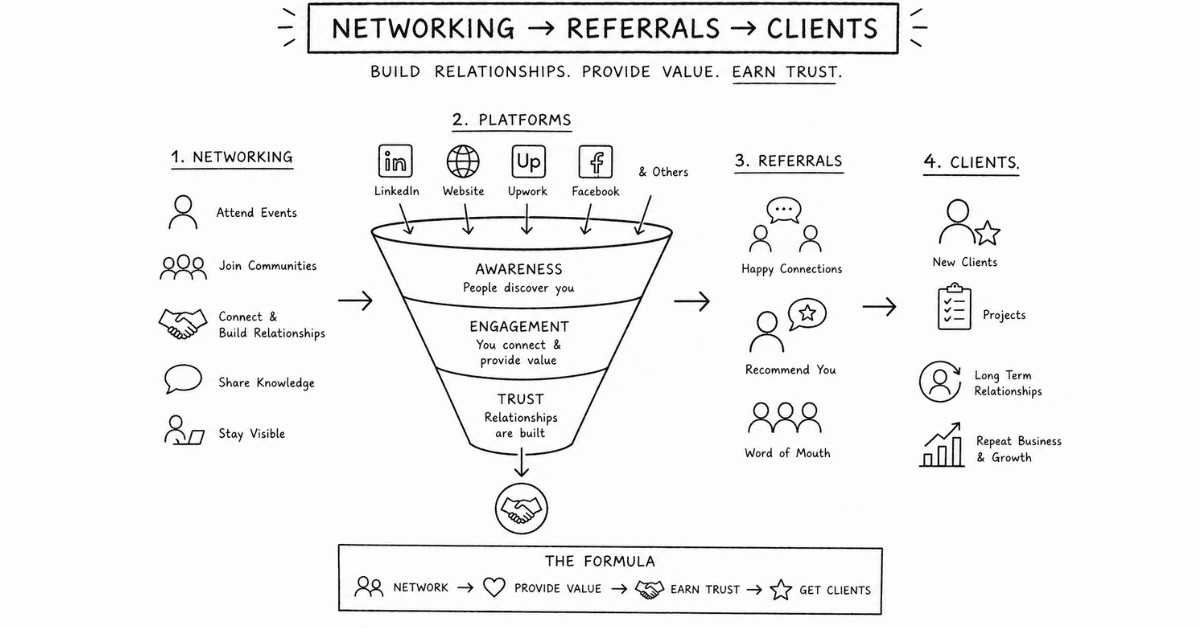
- LinkedIn: Showcase expertise, connect with potential clients, share technical content
- Industry Events: Conferences, seminars, trade shows meet decision-makers
- Professional Associations: IEEE, IEI, industry groups
- Alumni Networks: College alumni in industry
Referrals:
- Past employers (consulting for them)
- Colleagues and friends
- Satisfied clients (best source)
- Build reputation referrals follow
Cold Outreach:
- Identify potential clients (industries, developers, consultancies)
- Personalized emails/LinkedIn messages
- Offer value upfront (free initial consultation, audit)
- Follow up persistently but professionally
Local Market:
- Small industries in your city
- Real estate developers
- Electrical contractors (subcontracting design work)
- Architects and builders
- Manufacturing units
Content Marketing:
- Technical blog demonstrating expertise
- YouTube channel (electrical concepts, tutorials)
- LinkedIn articles
- Case studies of past work
Builds credibility—clients find you
Specialized Directories
List on:
- Justdial, Sulekha (Indian business directories)
- Google My Business (local SEO)
- Industry-specific directories
- Consultant directories
Pricing Your Services
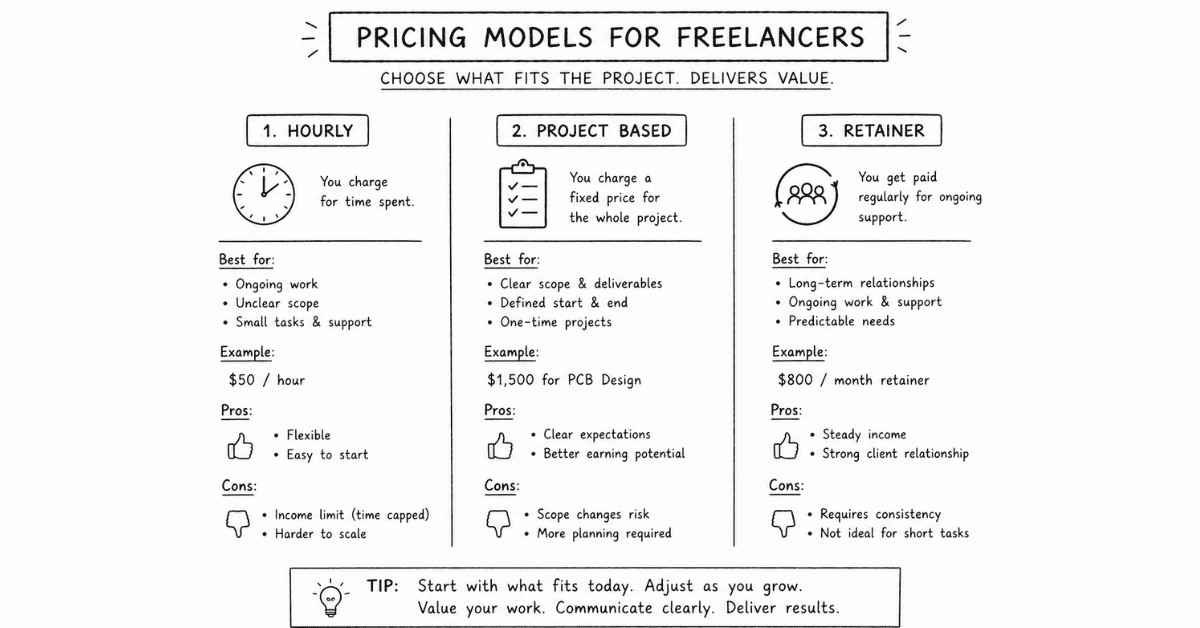
Pricing Models
Hourly Rate:
- ₹500-2,000/hour depending on experience and specialization
- Simple and flexible
- Clients sometimes hesitate (unlimited hours fear)
- Need accurate time tracking
Project-Based:
- Fixed price for defined scope
- Clients prefer (known cost)
- Requires detailed scoping upfront
- Most common for design projects
Retainer:
- Monthly fee for ongoing availability/advisory
- Predictable income for you
- Guaranteed availability for client
- Works for long-term consulting relationships
Value-Based:
- Price based on value delivered (energy savings, cost reduction)
- Highest potential earnings
- Requires strong business case presentation
- Example: Energy audit that saves client ₹10 lakhs annually charge ₹2-3 lakhs
Rate Guidelines (India, 2026)
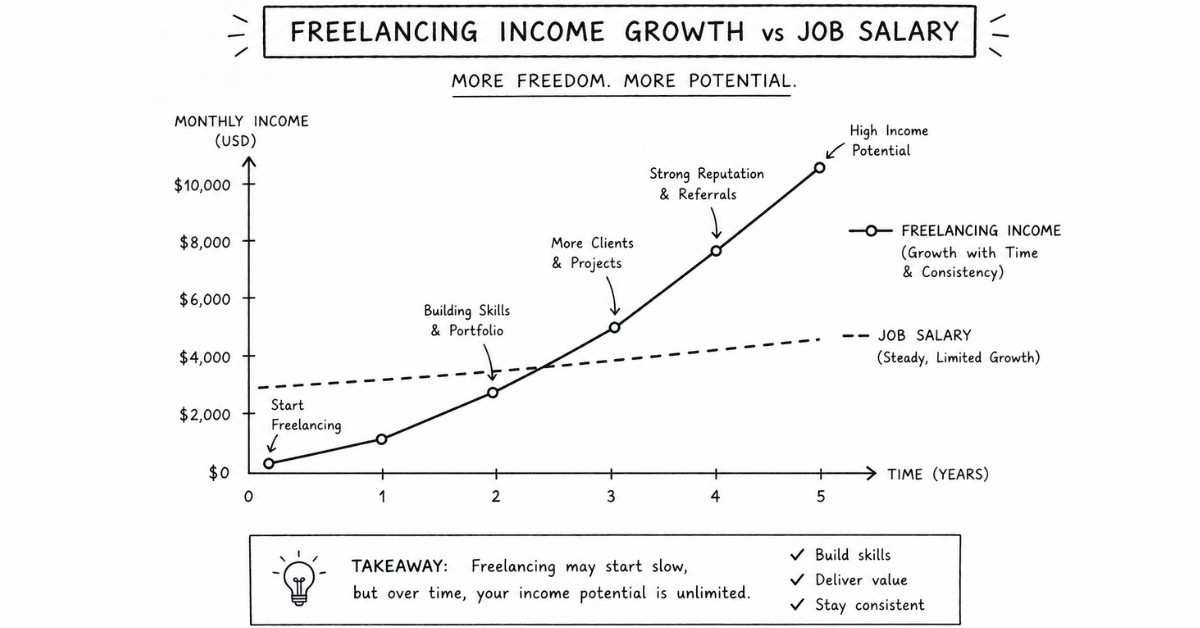
Early Career (3-5 years experience):
- Hourly: ₹500-1,000
- Simple PCB design: ₹5,000-15,000
- Basic electrical system design: ₹10,000-30,000
- PLC programming project: ₹15,000-40,000
Mid-Career (5-10 years experience):
- Hourly: ₹1,000-2,000
- Complex circuit design: ₹20,000-60,000
- Industrial electrical system: ₹40,000-1,50,000
- Power systems study: ₹50,000-2,00,000
- Energy audit: ₹30,000-1,00,000
- Automation system design: ₹60,000-2,50,000
Senior (10+ years, specialized expertise):
- Hourly: ₹2,000-5,000+
- Major projects: ₹2,00,000-10,00,000+
- Retainers: ₹50,000-2,00,000/month
- Expert witness: ₹3,000-10,000/hour
Factors Affecting Pricing:
- Your experience and expertise
- Project complexity
- Timeline urgency
- Client budget (corporate vs small business)
- Market rates in your specialization
- Your reputation and portfolio
Pricing Strategy:
- Start competitive to build portfolio
- Increase rates as demand grows
- Premium for rush work
- Discounts for long-term clients/retainers
- Don’t undervalue cheap signals low quality
Legal and Financial Setup
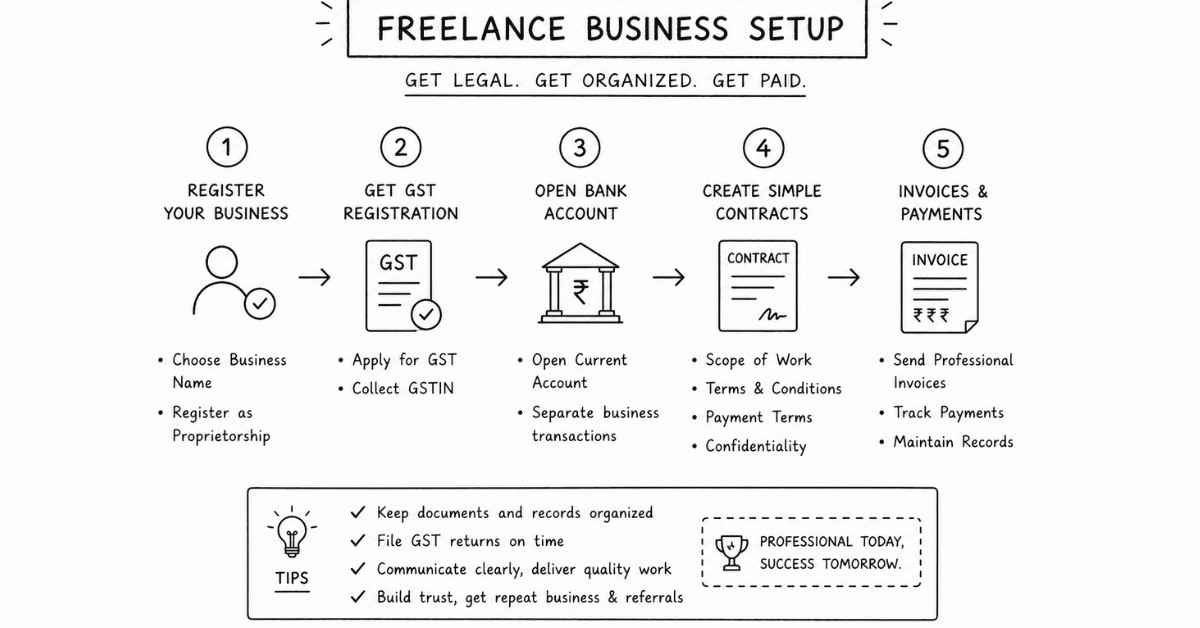
Business Structure
Sole Proprietorship (Simplest):
- Operate as individual
- No registration needed initially
- Income taxed as personal income
- Unlimited personal liability
- Good for: Starting out, testing waters
Partnership:
- If collaborating with other engineers
- Partnership deed required
- Shared profits and liability
- More complex taxation
Private Limited Company/LLP:
- Separate legal entity
- Limited liability protection
- More credibility with large clients
- Complex setup and compliance
Consider when: Scaling significantly, hiring employees
Required Registrations
GST Registration (Mandatory if turnover >₹20 lakhs/year for services):
- Enables invoicing with GST
- Large clients prefer GST-registered vendors
- Monthly/quarterly returns filing
- Can be complex—consider CA help
Professional Tax: State-dependent
Income Tax:
- File as business income
- Maintain books of accounts
- Deduct business expenses
- Advance tax payment quarterly
Shop & Establishment License: If operating from office (not home)
Professional Indemnity Insurance: Highly recommended (protects against claims from errors)
Banking and Payments
Separate Business Account: Professional, easier accounting
Payment Methods:
- Bank transfer (most common for Indian clients)
- PayPal, Wise (for international clients platform fees)
- Payment gateways (Razorpay, Instamojo) for online payments
- Checks (still used by some traditional clients)
Payment Terms:
- 50% advance, 50% on delivery (common for projects)
- Net 30/45 days (for corporate clients)
- Monthly billing (for retainers)
- Milestone-based for long projects
Chasing Payments: Reality of freelancing set clear terms, follow up persistently, learn from slow-payers
Contracts and Agreements
Essential for Every Project:
- Scope of work (detailed deliverables)
- Timeline and milestones
- Payment terms
- Revisions allowed
- Intellectual property ownership
- Confidentiality clause
- Termination terms
- Liability limitations
Get Legal Template: Invest in proper contract template from lawyer modify for each project
Protect Yourself: Contracts prevent scope creep, payment disputes, legal issues
Managing Freelance Business
Time Management
Client Work:
- Billable hours priority
- Deep work blocks (minimize distractions)
- Buffer time for revisions, communications
Business Development:
- Marketing and networking
- Proposal writing
- Client calls
- Critical: Need ongoing pipeline even when busy
Administration:
- Invoicing and accounting
- Contract management
- Email and communications
- Taxes and compliance
Personal Time:
- Easy to overwork when home is office
- Set boundaries—work hours, weekend policies
- Take breaks and vacations (even as solopreneur)
Tools:
- Project Management: Trello, Asana, Notion
- Time Tracking: Toggl, Clockify
- Invoicing: Zoho Invoice, FreshBooks
- Accounting: Zoho Books, QuickBooks (or hire CA)
- Communication: Email, Slack, Zoom
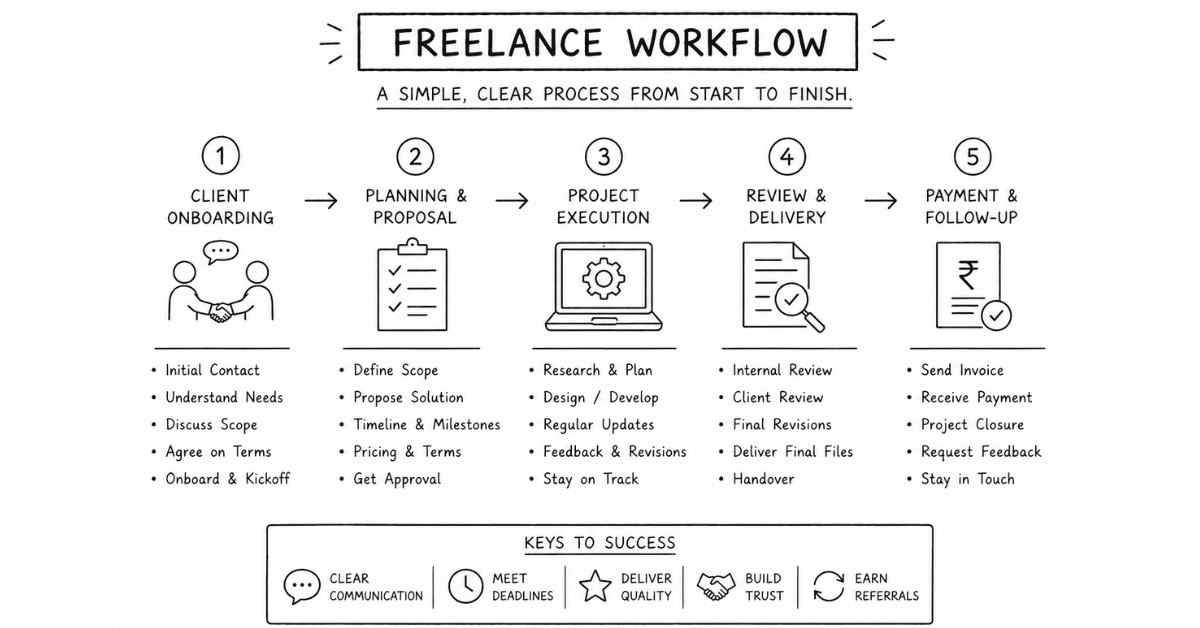
Workflow and Productivity
Client Onboarding:
- Initial consultation (understand requirements)
- Detailed proposal (scope, timeline, pricing)
- Contract signing
- Advance payment
- Kickoff meeting
Project Execution:
- Regular updates to client
- Milestone reviews
- Change requests handled formally (scope + pricing adjustment)
- Quality delivery
Project Closure:
- Final delivery and documentation
- Final payment collection
- Feedback/testimonial request
- Future work discussion
Continuous Improvement:
- Learn from each project
- Update portfolio
- Refine processesInvest in skill upgrades
Building Your Reputation
Portfolio Development
Showcase Your Work:
- Website with project case studies
- Before/after examples (energy audits, optimization)
- Technical drawings and designs (with client permission)
- Testimonials and reviews
- Metrics (cost saved, efficiency improved, etc.)
Online Presence:
- Professional LinkedIn profile
- Technical blog or YouTube channel
- GitHub (for code/simulation projects)
- Active in professional forums
Specialization
Generalist vs Specialist:
- Early: May need to be generalist (get diverse work)
- Eventually: Specialize for premium pricing
Lucrative Specializations:
- Solar PV design (high demand)
- Industrial energy efficiency
- Automation and PLC programming
- High voltage systems
- Renewable energy integration
- Battery energy storage systems
- EV charging infrastructure
Position as Expert: Write, speak, teach in your specialization—builds authority
Client Relationships
Deliver Excellence:
- Quality work (non-negotiable)
- Meet deadlines
- Clear communication
- Handle issues professionally
- Go slightly beyond expectations
Long-term Relationships:
- Repeat clients are gold (no acquisition cost)
- Easier to work with (know each other)
- Referrals to other clients
- Retainer possibilities
Ask for Referrals: Satisfied clients happy to refer—just ask
Challenges and How to Handle
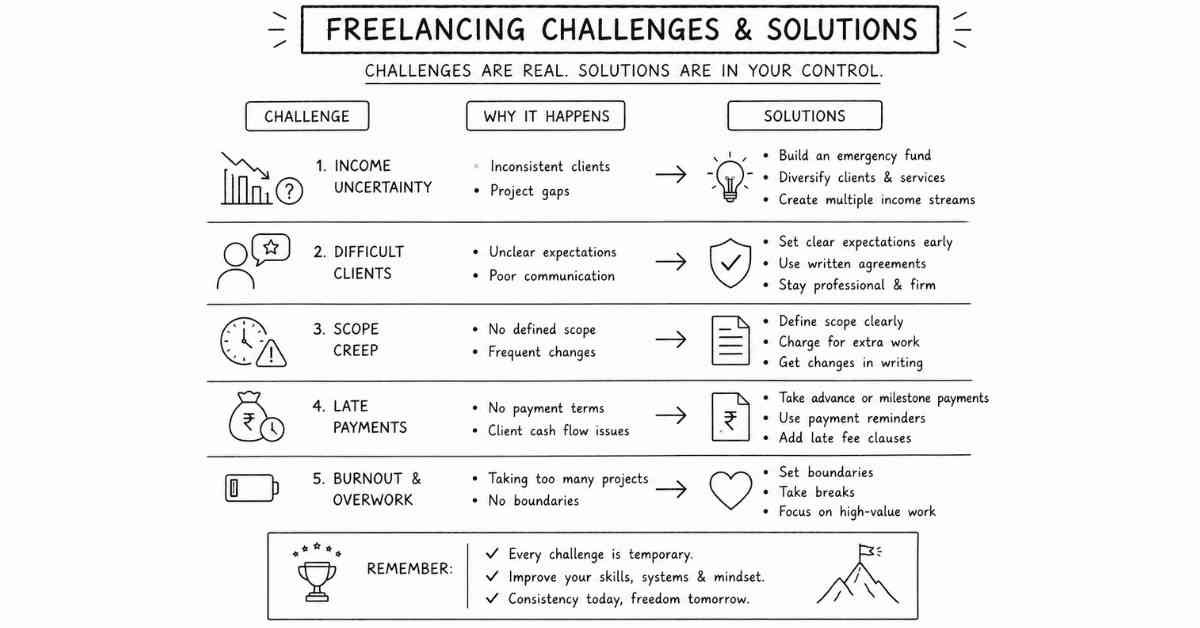
Income Uncertainty
Challenge: Variable monthly income, feast-famine cycles
Solutions:
- Build emergency fund (6-12 months expenses)
- Develop consistent marketing (not just when desperate)
- Diversify clients (not dependent on 1-2)
- Retainer clients for base income
- Consider hybrid model initially (part-time job + freelancing)
Client Acquisition Difficulty
Challenge: Finding clients consistently, especially starting out
Solutions:
- Start with network (easiest first clients)
- Platform work while building direct clients
- Content marketing (long-term investment)
- Consistent networking
- Patience takes 1-2 years to establish
Scope Creep
Challenge: Clients requesting additional work within same budget
Solutions:
- Detailed contract with clear scope
- Change request process (formal approval + additional pricing)
- Firm but professional boundaries
- Learn to say “This would be additional scope, let’s discuss pricing”
Payment Issues
Challenge: Late payments, non-payment
Solutions:
- Always get advance (50% minimum)
- Clear payment terms in contract
- Professional follow-up (automated reminders)
- Stop work if payments delayed significantly
- Legal action as last resort (small claims court)
- Learn from bad clients don’t work with them again
Isolation
Challenge: Working alone, missing team interaction
Solutions:
- Coworking spaces (social environment)
- Professional groups and meetups
- Online communities
- Collaboration with other freelancers
- Regular social activities outside work
Skill Stagnation
Challenge: Not learning as much as in corporate role
Solutions:
- Dedicate time to learning
- Online courses and certifications
- Attend conferences and workshops
- Diverse projects (avoid repetitive work)
- Collaboration with other experts
No Benefits
Challenge: No employer-provided health insurance, retirement, leave
Solutions:
- Buy health insurance individually (critical)
- Systematic retirement savings (PPF, NPS, mutual funds)
- Budget for “unpaid leave” (build into pricing)
- Professional indemnity insurance
- Factor these costs into rates
Transitioning to Freelancing
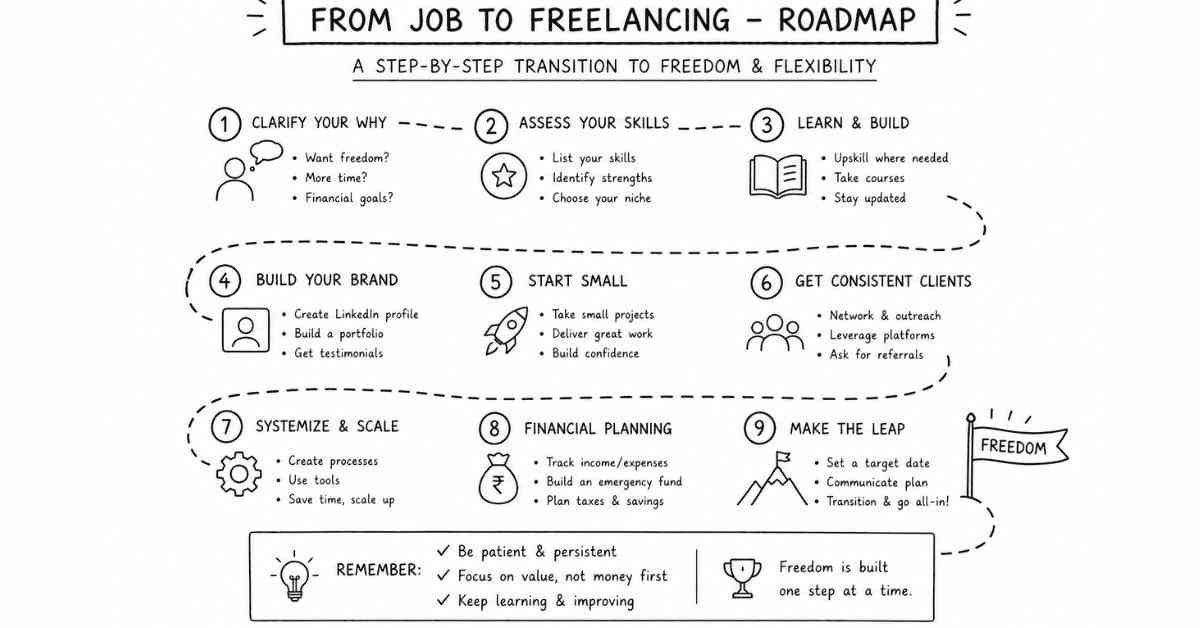
Should You Freelance Full-Time?
Consider Full-Time Freelancing If:
✅ 5+ years experience (credibility and expertise)
✅ Strong professional network
✅ Financial cushion (6-12 months expenses)
✅ Comfortable with uncertainty
✅ Self-motivated and disciplined
✅ Business development capability (can sell yourself)
✅ Specialized skills in demand
Stick with Employment If:
❌ Early career (building expertise and credibility)
❌ Risk-averse financially
❌ Need structure and team environment
❌ Health issues requiring employer insurance
❌ Don’t enjoy client acquisition and business aspects
❌ Specialized in narrow, low-demand area
Transition Strategies
Option 1: Side Hustle First (Recommended):
- Keep full-time job initially
- Freelance evenings/weekends
- Build client base and portfolio
- Save income for runway
- Transition when confident
- Timeline: 1-2 years side hustle before full-time
Option 2: Hybrid Model:
- Part-time job + part-time freelancing
- Reduces risk
- Base income + upside potential
- Some employers open to this (negotiate)
Option 3: Bold Jump:
- Quit job, go full-time freelance immediately
- Only if: Strong savings, pre-existing clients, high risk tolerance
- Most stressful approach
Option 4: Sabbatical Test:
- Take career break (3-6 months)
- Test freelancing intensively
- Return to employment if doesn’t work
- Some companies allow sabbaticals
First 6 Months Plan
Month 1-2: Setup:
- Business registration and accounts
- Portfolio website
- Marketing materials
- Platform profiles
- Outreach to initial network
Month 3-4: Client Acquisition:
- Active marketing and networking
- Proposals and pitches
- First projects (may be small)
- Refine offering based on market response
Month 5-6: Building Momentum:
- Deliver excellence on initial projects
- Ask for testimonials and referrals
- Increase rates slightly
- Develop pipeline
Expect: Slow start, income below employment initially, lots of learning
Success Stories and Inspiration
Real Patterns from Successful Independent Electrical Engineers
Energy Efficiency Consultant (8 years experience):
- Built practice around industrial energy audits
- 15-20 clients annually (retainer + project model)
- Income: ₹25-40 lakhs annually
- Works 6-8 months intensely, travels remaining time
Automation Specialist (10 years experience):
- PLC programming and SCADA development
- Mix of platform work and direct clients
- Specialized in pharmaceutical automation (niche)
- Income: ₹30-50 lakhs annually
Solar Design Consultant (6 years experience):
- Designs for 40-50 rooftop solar installations annually
- Partners with multiple installers (they handle execution)
- Income: ₹20-35 lakhs annually
- Work from anywhere (digital design work)
PCB Design Specialist (7 years experience):
- Primarily international clients via Upwork/Toptal
- Product companies and startups
- Income: $40,000-60,000 annually ($3,500-5,000/month)
- Premium rates for complex designs
Common Threads:
- Specialized expertise (not generalist)
- 5-10 years experience before going independent
- Built reputation systematically
- Consistent client pipeline development
- All earn comparable or more than employment
- Greater satisfaction and flexibility
Is Freelancing Right for You?
Self-Assessment
You Might Thrive as Freelancer If:
- Enjoy variety and new challenges
- Self-motivated and disciplined
- Comfortable with uncertainty
- Business-minded (willing to sell, market, manage)
- Value flexibility and autonomy highly
- Have specialized, in-demand skills
- Good communicator and client manager
- Financial planning ability
You Might Prefer Employment If:
- Prefer stability and predictability
- Enjoy team environment and structure
- Don’t want business management aspects
- Risk-averse financially
- Need employer benefits (health insurance, etc.)
- Still building expertise and credibility
- Specialized in very narrow area with limited market
No Wrong Answer: Both paths valid depends on your personality, circumstances, goals
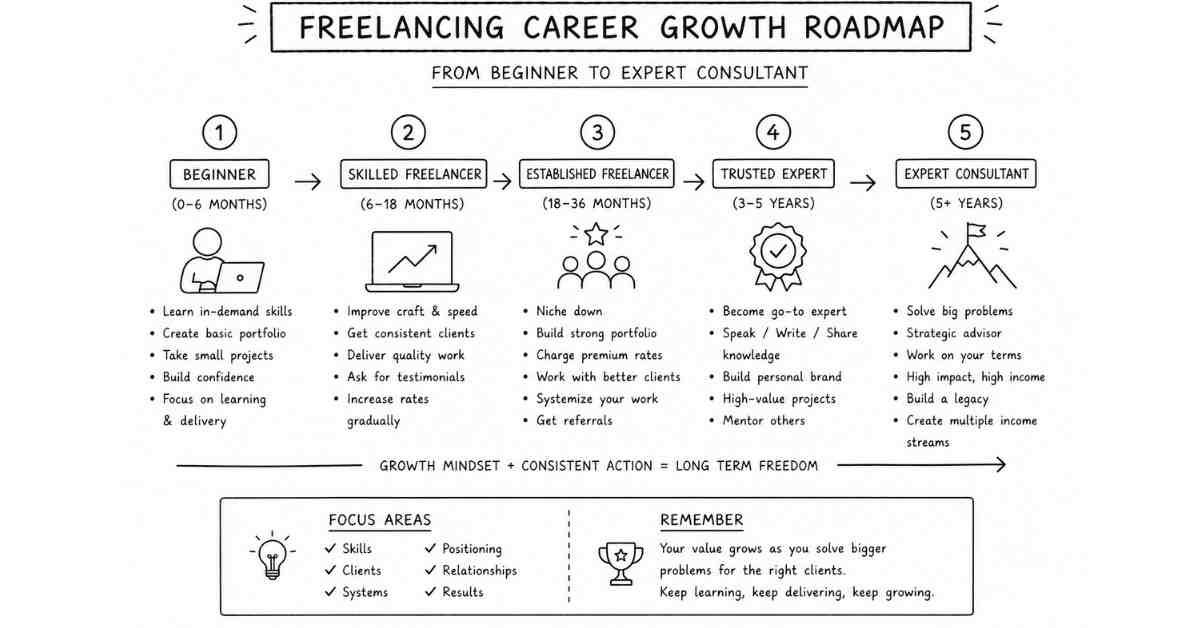
Conclusion: Building Independent Engineering Career
Freelancing and consulting as an electrical engineer isn’t the easy path it’s challenging, uncertain, and requires business skills beyond pure engineering. You’re not just an engineer; you’re running a business. Client acquisition, contracts, pricing, cash flow, marketing, taxes all your responsibility.
But for engineers with entrepreneurial mindset, specialized expertise, and willingness to handle business aspects, independent practice offers remarkable rewards: higher income potential, work flexibility, project diversity, location independence, and satisfaction of building something of your own.
You don’t need to choose permanently. Many engineers freelance for few years, then return to employment. Others start as side income and gradually transition. Some build successful multi-engineer consultancies. The path is yours to define.
The electrical engineering work exists beyond traditional employment industries need expertise, projects need design, companies need consultation. As independent professional, you can serve these needs on your terms.
If you’ve been wondering whether there’s alternative to corporate ladder, whether your engineering expertise can translate to independent income, whether you can build career with more autonomy the answer is yes. It’s possible. Others have done it. You can too.
Start small. Build systematically. Deliver excellence. Grow deliberately. The independent engineering practice you envision can become your reality.
Your expertise is valuable. The market needs it. The question is: are you ready to offer it independently?