
Control Systems & Automation Engineering
Table of Contents
Control Systems & Automation Engineering: PLC, SCADA & Robotics Careers
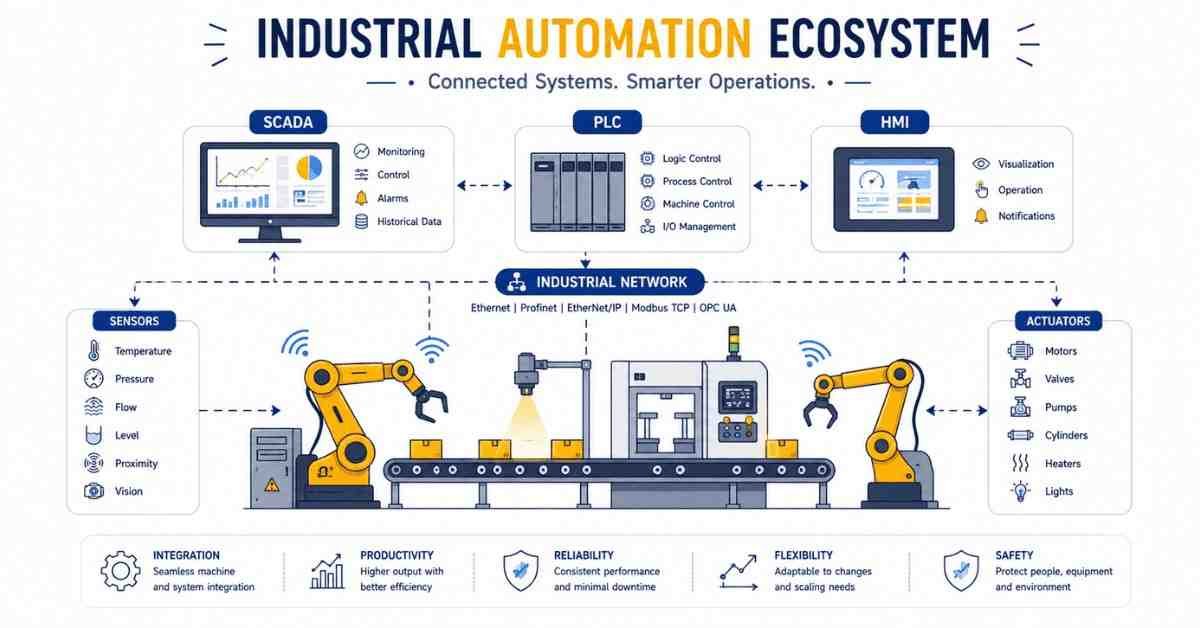
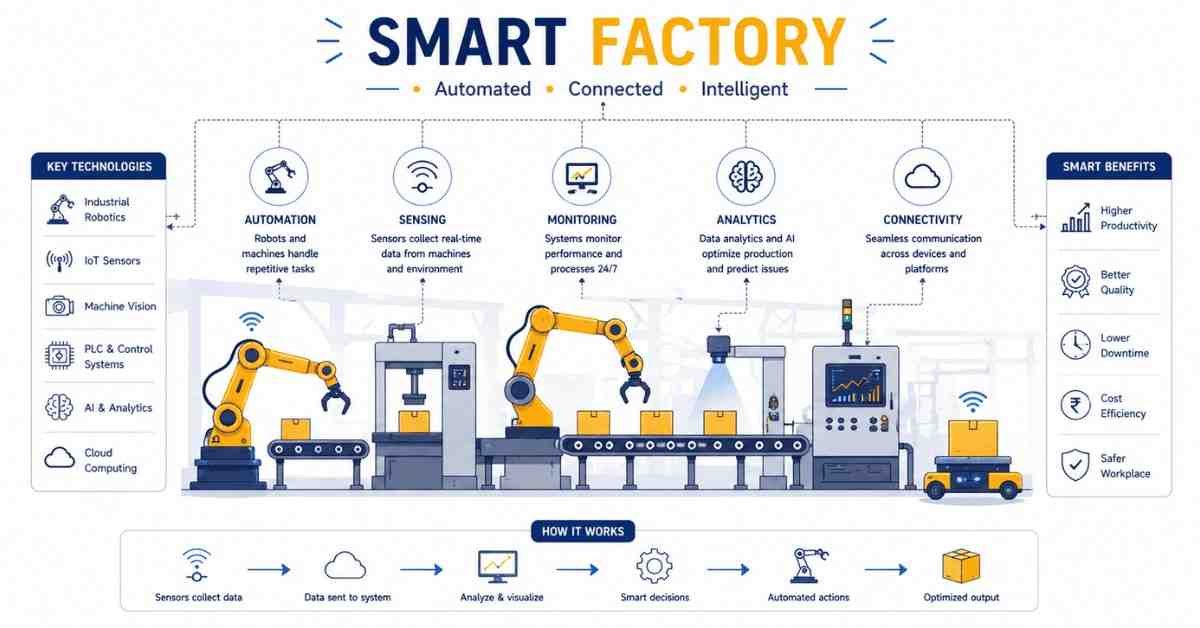
Walk into any modern pharmaceutical plant, automobile factory, food processing unit, or chemical facility in India, and you’ll notice something remarkable: massive production happening with surprisingly few people on the floor. Robots weld car frames with precision, automated systems fill thousands of bottles per hour, temperature and pressure in chemical reactors maintain perfect control, and quality checks happen automatically at blinding speeds.
This is automation engineering making industrial processes run automatically, efficiently, and safely. While software engineers build apps and websites, automation engineers program the systems that manufacture physical products, control power plants, manage water treatment, and run modern factories.
If you’ve ever been fascinated by how factories work, enjoyed control systems courses, or want a career combining electrical engineering with programming while working in manufacturing industries, automation engineering might be your ideal path. This guide covers everything from PLC programming to robotics, from career opportunities to salary expectations, from required skills to future trends.
Understanding Automation Engineering
What Automation Engineers Actually Do
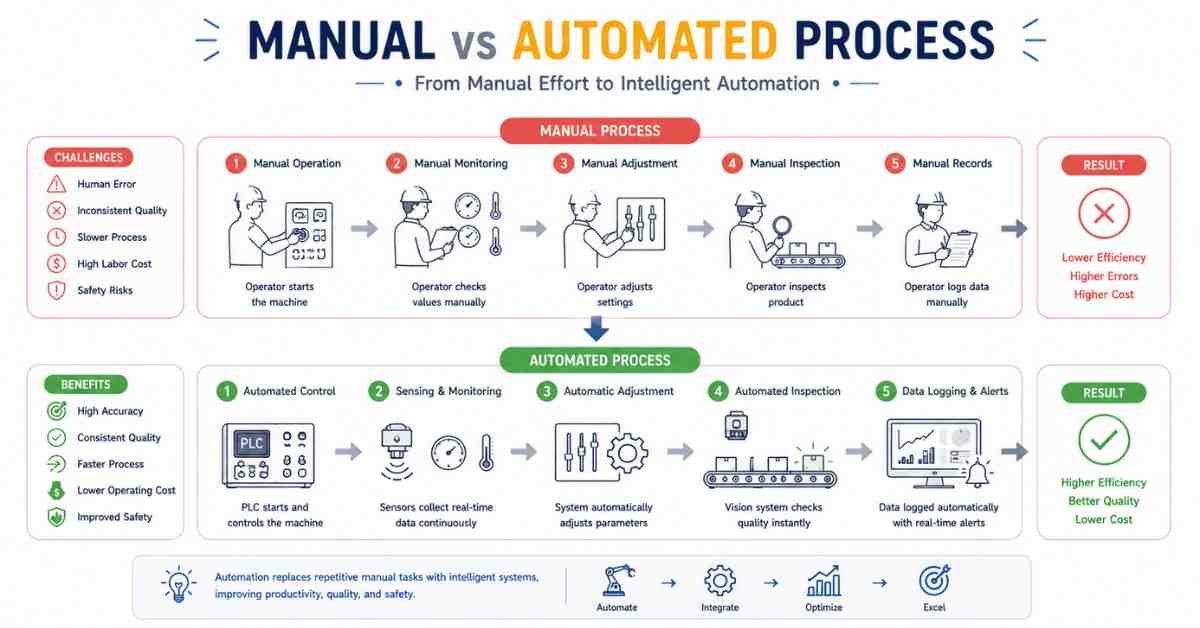
Simple Definition: Automation engineers design, program, and maintain systems that control industrial processes automatically replacing manual operations with programmed logic.
Real-World Examples:
Pharmaceutical Tablet Manufacturing:
- Automated systems precisely mix ingredients
- Compression machines form tablets with exact specifications
- Vision systems inspect each tablet for defects
- Packaging machines fill bottles automatically
- Everything controlled through PLC and monitored via
SCADA screens
- Automation engineer ensures the entire line runs smoothly
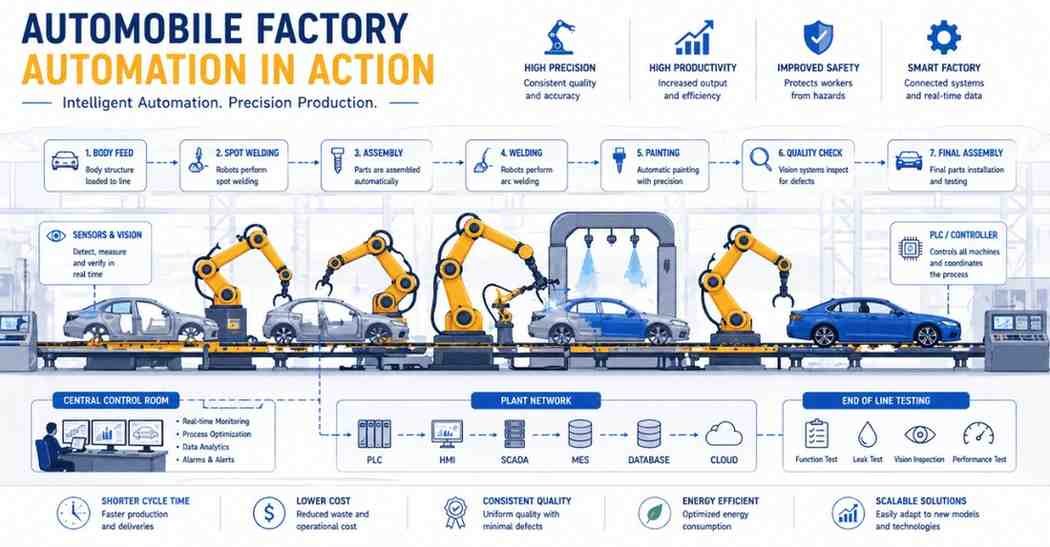
Automobile Assembly Line:
- Robots weld car body with repeatability impossible for humans
- Automated guided vehicles (AGVs) transport parts
- Torque wrenches automatically tighten bolts to exact specifications
- Paint robots apply uniform coating
- Quality checks automated with cameras and sensors
- Entire production orchestrated through automation systems
Water Treatment Plant:
- Sensors monitor water quality continuously
- Pumps and valves automatically adjust flow
- Chemical dosing systems maintain treatment levels
- SCADA displays real-time plant status
- Alarms alert operators to any issues
- Remote monitoring from central control room
Core Components of Industrial Automation
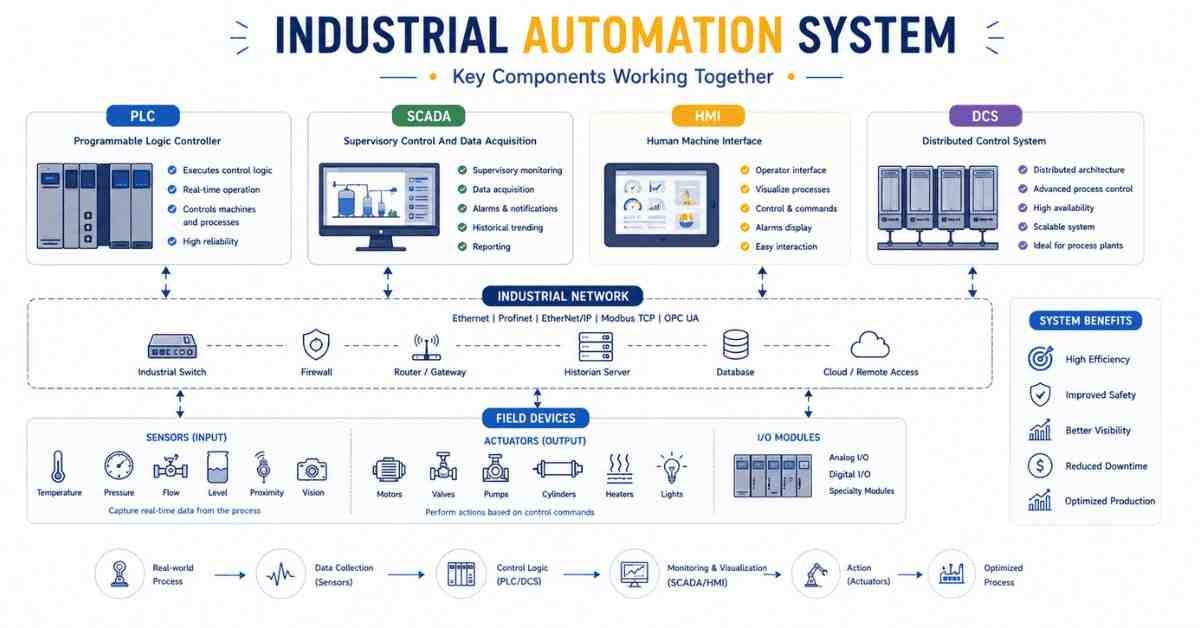
PLC (Programmable Logic Controller):
- Industrial computer designed for manufacturing control
- Programmed using ladder logic or structured text
- Controls machines, conveyors, valves, motors
- Extremely reliable designed for harsh industrial environments
- Brands: Siemens, Allen Bradley (Rockwell), Schneider, Mitsubishi, ABB
SCADA (Supervisory Control and Data Acquisition):
- Software for monitoring and controlling industrial processes
- Graphical displays showing plant status in real-time
- Historical data logging and trending
- Alarm management
- Remote control capabilities
- Platforms: Wonderware, WinCC, iFIX, Ignition
HMI (Human-Machine Interface):
- Touchscreen displays on machines
- Operator interface for controlling equipment
- Local visualization and control
- Often integrated with PLC
DCS (Distributed Control System):
- Used in continuous process industries (chemicals, refineries)
- Multiple controllers distributed throughout plant
- Advanced process control
- Brands: Honeywell, Yokogawa, ABB, Emerson DeltaV
Industrial Robots:
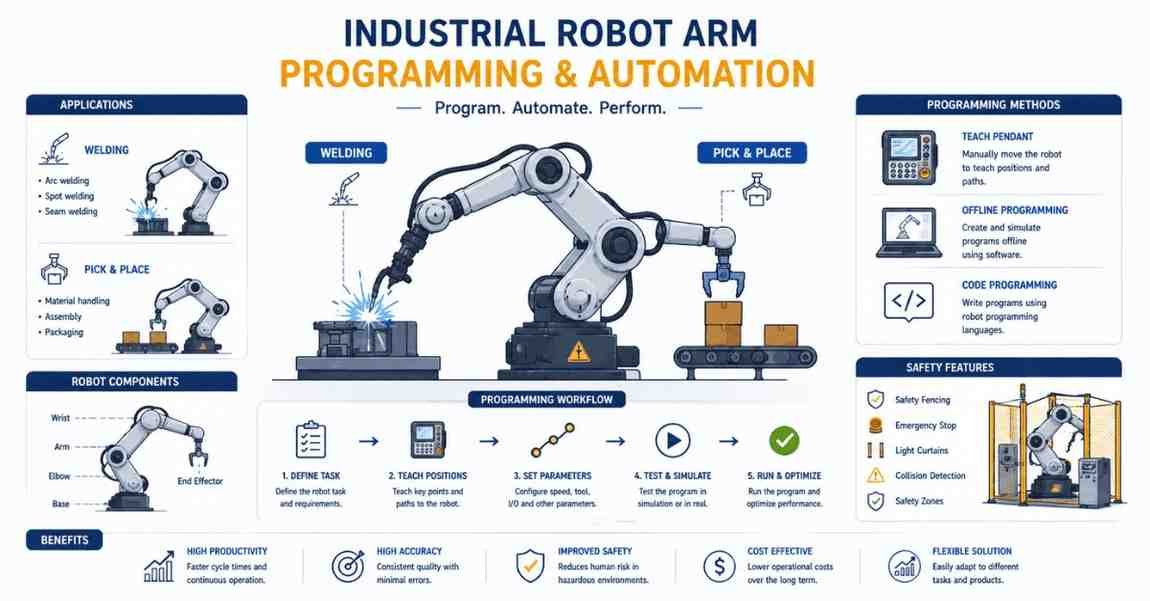
- Programmable manipulators for welding, painting, assembly, palletizing
- Teach pendant programming or offline programming
- Brands: ABB, KUKA, Fanuc, Yaskawa
Sensors and Actuators:
- Sensors: Temperature, pressure, flow, level, proximity, vision
- Actuators: Valves, motors, cylinders that perform physical actions
- The “eyes and hands” of automation systems
Industrial Networking:
- Protocols connecting all devices: Profibus, Profinet, EtherNet/IP, Modbus
- Industrial Ethernet enabling real-time communication
- Integration of IT and OT (Operational Technology)
Career Paths in Automation Engineering
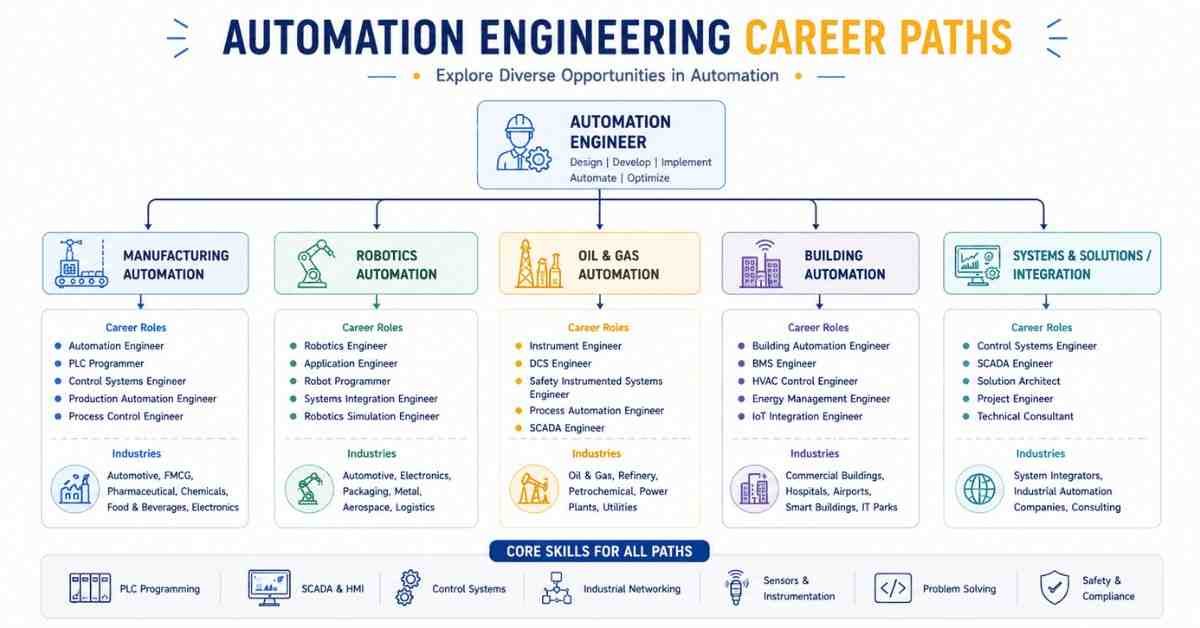
Path 1: Manufacturing Industries
Where: Automotive, pharma, FMCG, chemicals, electronics assembly, textiles, metal processing essentially any manufacturing
Job Roles:
- Automation Engineer: Programming PLCs, designing control systems
- Process Control Engineer: Optimizing production processes
- Instrumentation Engineer: Sensor selection and calibration
- Maintenance Engineer: Troubleshooting automation systems
- Projects Engineer: Implementing new automation projects
Major Employers:
- Automotive: Maruti Suzuki, Hyundai, Tata Motors, Mahindra, Toyota, Mercedes, BMW India plants
- Pharma: Sun Pharma, Cipla, Dr. Reddy’s, Lupin, numerous plants
- FMCG: HUL, ITC, Britannia, Nestlé, Coca-Cola bottling
- Chemicals: Reliance, ONGC, IOCL, numerous chemical plants
- Electronics: Samsung, Foxconn, contract manufacturers
Salary Range:
- Fresher: ₹4-8 LPA
- 3-5 years: ₹8-15 LPA
- 7-10 years: ₹15-28 LPA
- Senior/Manager: ₹28-45 LPA
Work Environment:
- Mix of office (programming, design) and shop floor (commissioning, troubleshooting)
- Industrial settings factories, plants
- Some travel for multi-site companies
- Shift work possible in continuous operations
Why Manufacturing Is Attractive:
- Jobs available across India (wherever factories exist)
- Diverse industries to choose from
- Hands-on, practical work
- Direct impact on production
- Automation adoption accelerating
Path 2: Automation Solution Providers
The Growing Field: As labor costs rise and precision requirements increase, robotics adoption growing rapidly
What Robotics Engineers Do:
- Programming industrial robots
- Designing robotic workcells
- Integrating robots with other automation
Simulation and offline programming
Robot commissioning and training
Major Players:
- Robot Manufacturers: ABB Robotics, KUKA, Fanuc, Yaskawa, Universal Robots
- System Integrators: Companies integrating robots into production lines
- Indian Startups: Addverb Technologies, GreyOrange (warehouse robotics), Asimov Robotics
Salary Range:
- Fresher: ₹6-11 LPA
- Mid-level: ₹11-22 LPA
- Senior: ₹22-40 LPA
Required Skills:
- Robot programming (brand-specific)
- Kinematics and motion planning
- Vision systems integration
- Safety systems (robot safety standards)
- PLC integration
Applications:
- Welding robots in automotive
- Pick-and-place in FMCG
- Palletizing in warehouses
- Material handling
- Collaborative robots (cobots) in small industries
Path 4: Oil & Gas, Power, Utilities
Critical Infrastructure: Control systems for power plants, refineries, pipelines, water treatment
- DCS Engineer: Operating distributed control systems
- Process Control Engineer: Optimizing plant operations
- Instrumentation Engineer: Maintaining measurement systems
- SCADA Engineer: Managing supervisory control systems
Major Employers:
- Oil & Gas: Reliance, ONGC, IOCL, BPCL, HPCL, Shell, ExxonMobil
- Power: NTPC, Tata Power, Adani Power (plant automation)
- Utilities: Water treatment plants, municipal systems
Salary Range:
- Fresher: ₹5-9 LPA
- Mid-level: ₹10-18 LPA
- Senior: ₹18-35 LPA
Special Characteristics:
- High reliability requirements
- Safety-critical systems
- Shift work common (continuous operations)
- Good benefits and job security
- Stringent safety protocols
Path 5: Building Automation & Infrastructure
Smart Buildings: Automated HVAC, lighting, access control, energy management
Companies:
- Honeywell Building Solutions
- Johnson Controls
- Siemens Building Technologies
- Schneider Electric EcoBuilding
- L&T Smart World & Communication
Applications:
- Commercial buildings automation
- Data center infrastructure management
- Airports and metro stations
- Hospitals and IT parks
- Smart cities infrastructure
Salary Range:
- Fresher: ₹4-8 LPA
- Mid-level: ₹8-16 LPA
- Senior: ₹16-30 LPA
Software and Tools
Programming Environments:
- Siemens TIA Portal
- Allen Bradley Studio 5000
- Schneider EcoStruxure Control Expert
- CODESYS (independent platform)
SCADA Platforms:
- Wonderware InTouch/System Platform
- Siemens WinCC
- GE iFIX
- Ignition by Inductive Automation
Simulation and Testing:
- Factory I/O (for learning PLC)
- PLCsim (Siemens simulation)
- Emulate3D (robot simulation)
Design Tools:
- AutoCAD Electrical (schematic design)
- EPLAN (advanced electrical design)
- Panel layout tools
Documentation:
- Microsoft Office (extensive documentation needed)
- Visio (flowcharts and diagrams)
Soft Skills Critical for Automation
Problem-Solving: Equipment failures need quick diagnosis and fix
Communication: Explaining technical issues to production managers and operators
Project Management: Automation projects involve coordination across disciplines
Attention to Detail: Small programming error can halt entire production line
Pressure Handling: Production downtime costs thousands per hour—stress management essential
Continuous Learning: New technologies constantly emerging in automation
Education and Certifications
Academic Background
B.Tech/B.E. Electrical/Electronics/Instrumentation: All suitable paths
Focus Areas During College:
- Control Systems courses (foundation)
- Instrumentation and measurement
- Electrical machines (motors used everywhere)
- Power electronics (VFDs, soft starters)
- Microcontrollers (understanding digital logic helps)
M.Tech Specialization:
- Control Systems & Automation
- Instrumentation
- Usually not essential for industry roles
- Helpful for R&D or academic positions
Industry Certifications (Highly Valuable)
PLC Certifications:
- Siemens Certified TIA Portal Programmer: Official Siemens certification
- Rockwell Automation Training: Allen Bradley certification
- Schneider Electric University: Certification programs
- Can add ₹2-4 LPA to package
SCADA Certifications:
- Wonderware System Platform certification
- Ignition by Inductive Automation (free core software, paid certification)
Robotics:
- ABB Robotics Training
- KUKA College certifications
- Universal Robots Academy (online, free)
Process Control:
- ISA Certified Automation Professional (CAP)
- Certified Control Systems Technician (CCST)
Functional Safety:
- TÜV Functional Safety Engineer
- IEC 61508/61511 training
- Critical for safety-critical industries
Other Valuable:
- Six Sigma Green Belt (process improvement)
- PMP (for project roles)
- Industrial Cybersecurity certifications (growing importance)
Where to Learn
During College:
- Use PLC simulators (many free/student versions)
- Factory I/O + PLCsim/OpenPLC for practice
- College labs (if equipped with PLCs)
- Online courses: Udemy, Coursera, LinkedIn Learning
Training Institutes:
- PLC Academy
- Control and Automation Academy
- Vendor training centers (Siemens, Rockwell)
- Many regional industrial training institutes
On-the-Job:
- Most companies provide training for freshers
- Mentorship from senior engineers
- Hands-on experience most valuable
Day in the Life: Real Scenarios
Automation Engineer at Automobile Plant
Morning:
- Review shift reports any production issues overnight?
- Attend production meeting addressing yesterday’s downtime
- Email from Germany software update from HQ needs implementation
Mid-Day:
- On shop floor troubleshooting welding robot issue
- Robot taught wrong position reprogram and test
- Check PLC program for new model changeover logic
- Coordinate with mechanical team on conveyor modification
Afternoon:
- Meeting with plant manager on automation upgrade project
- Creating cost estimate for adding vision system
- Programming HMI screen for new feature
- Testing program in offline mode before downloading
Evening:
- Documentation updating PLC program manual
- Training production supervisor on new HMI screens
- Planning weekend maintenance activities
Tools Used Daily: TIA Portal, WinCC, Robot pendant, Laptop, Multimeter, Tablet for documentation
Commissioning Engineer at System Integrator
Week at Customer Site (could be anywhere in India):
- Morning site meeting with client team
- Installing PLC panels checking wiring
- Downloading PLC program developed at office
- Testing I/O verifying sensors and actuators
- Debugging communication with VFDs
- Lunch with client engineers
- Afternoon functional testing of machine
- Fine-tuning PID loops
- Training customer maintenance staff
- Evening hotel preparing next day’s punch list
Challenges: Site conditions vary, client expectations, long hours during commissioning, problem-solving under pressure
Rewards: Seeing system come to life, diverse projects, travel, excellent learning
Salary Expectations and Growth
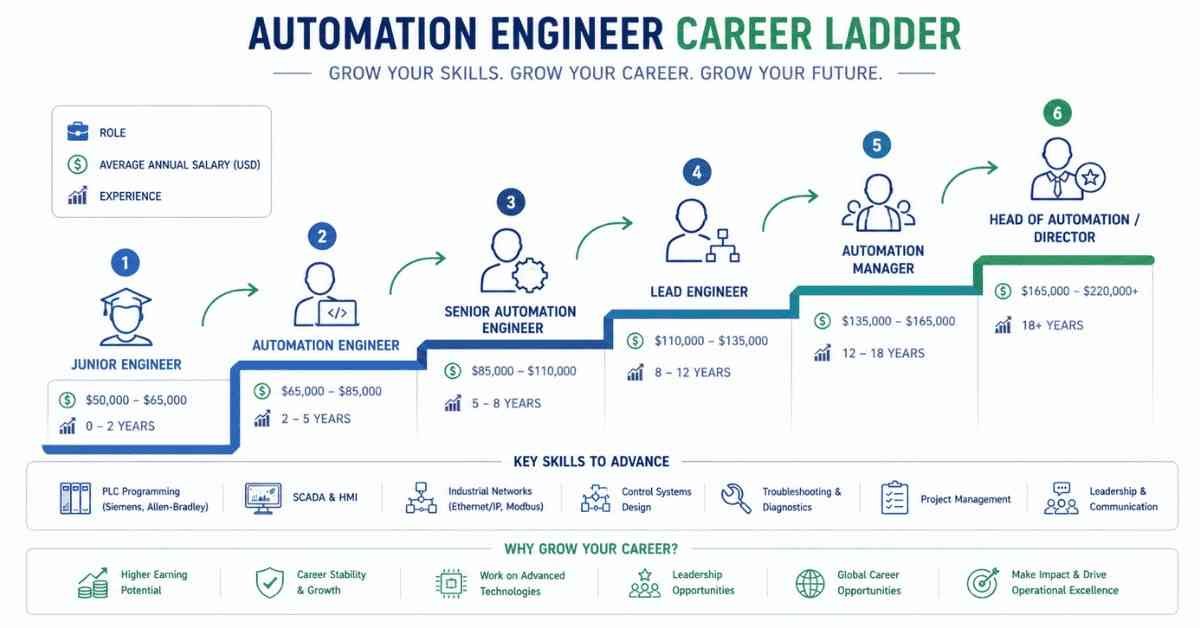
Entry Level (0-2 years)
Manufacturing: ₹4-8 LPA
System Integrators (MNC): ₹6-10 LPA
System Integrators (Indian): ₹4-7 LPA
Oil & Gas: ₹6-9 LPA
Mid-Level (3-7 years)
Manufacturing: ₹8-16 LPA
System Integrators: ₹10-20 LPA
Robotics: ₹12-22 LPA
Oil & Gas: ₹12-20 LPA
Senior Level (8-15 years)
Manufacturing (Manager): ₹18-35 LPA
Lead Engineer (Integrators): ₹22-40 LPA
Automation Architect: ₹30-50 LPA
Plant Manager (with automation background): ₹40-60 LPA
Factors Affecting Salary
Skills Premium:
- PLC expertise (Siemens/Rockwell): +₹2-4 LPA
- Robotics programming: +₹2-3 LPA
- DCS experience: +₹2-4 LPA
- Safety systems: +₹1-3 LPA
- Multiple platforms: +₹2-5 LPA
Industry Premium:
- Oil & Gas pays 15-25% more
- Automotive pays well for experienced
- FMCG moderate but stable
- Pharma good for experienced
Location Factor:
- Pune (automotive hub): +10-15%
- Bangalore: +15-20%
- NCR: +10%
- Tier-2 industrial cities: Lower but cost of living also lower
Industry 4.0 and Future Trends
What is Industry 4.0?
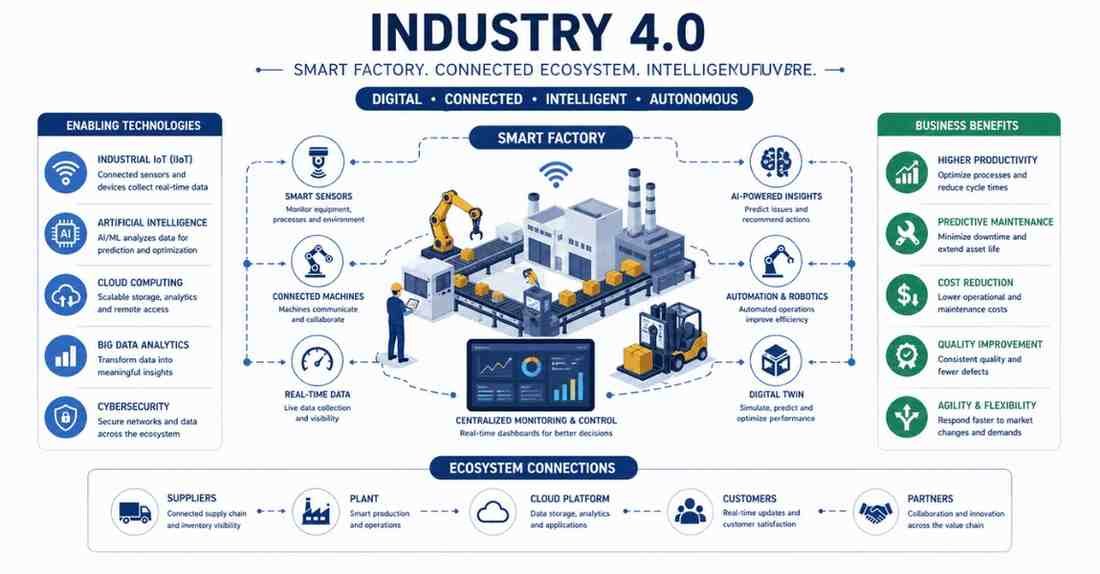
Fourth industrial revolution: Integration of digital technologies with manufacturing
Key Components:
- IoT sensors collecting massive data
- Cloud computing for data storage and processing
- Big Data analytics for insights
- AI/ML for predictive maintenance and optimization
- Digital twins—virtual models of physical systems
- Augmented reality for maintenance
- Cyber-physical systems
Impact on Automation Careers
Growing Opportunities:
- Data analysts for manufacturing data
- Industrial IoT engineers
- Predictive maintenance specialists
- Digital twin developers
- Cybersecurity for OT systems
Evolving Skill Requirements:
- Traditional PLC/SCADA still essential foundation
- Plus: Data analytics (Python, SQL.
- Cloud platforms (AWS IoT, Azure IoT)
- Machine learning basics
- Cybersecurity awareness
- IT-OT convergence understanding
Other Future Trends
Collaborative Robots (Cobots):
- Working alongside humans safely
- Easier programming
- Deployment in SMEs (small-medium enterprises)
Edge Computing:
- Processing data at device level
- Faster response times
- Reduced cloud dependency
5G in Manufacturing:
- Wireless connectivity for factory floor
- Real-time control over wireless
- Flexibility in layouts
Sustainable Manufacturing:
- Energy optimization
- Waste reduction through automation
- Carbon footprint monitoring
AI-Driven Optimization:
- Self-optimizing processes
- Quality prediction
- Adaptive control
Challenges and Realities
The Demanding Aspects
Field Work: Significant time on noisy, hot, dirty factory floors
Odd Hours: Commissioning often happens during production downtime (weekends, nights)
Pressure: When production line stops, pressure to fix quickly is intense
Travel: System integrator roles involve 40-60% travel
Physical Demands: Climbing, working in confined spaces, harsh environments
Continuous Learning: Technology constantly evolving
The Rewarding Aspects
Tangible Impact: You see production happening because of your work
Problem-Solving: Every day brings new challenges
Diverse Work: Mix of programming, electrical, mechanical, networking
Industry Exposure: Work across diverse sectors
Job Security: Manufacturing always needs automation engineers
Good Compensation: Skilled automation engineers well-paid
Respected Role: Recognition as technical expert.
Is Automation Engineering Right for You?
Choose Automation If You:
- Enjoy both programming and hardware
- Like practical, hands-on work
- Don’t mind industrial environments
- Appreciate seeing immediate results of your work
- Good at troubleshooting under pressure
- Willing to travel (for integrator roles)
- Like variety different industries, applications
- Want skills always in demand
Might Prefer Other Fields If You:
- Want pure office-based work only
- Dislike industrial environments completely
- Need guaranteed 9-5 schedule (commissioning has odd hours)
- Prefer cutting-edge research over applied engineering
- Want software-only career
- Cannot handle pressure of production environments
Getting Started: Action Plan
During College:
- Learn PLC programming: Use simulators, free software
- Master one platform: Siemens or Allen Bradley
- Understand control theory: Foundation for everything
- Build projects: Arduino-based automation projects show interest
- Learn SCADA basics: Trial versions available
- Internship crucial: Even 6-8 weeks in industry teaches more than semester theory
- Join industrial visits: See real automation in action
- Certifications: Get at least one vendor certification before graduation
First Year Strategy:
Manufacturing: Learn company’s systems, understand production process, assist seniors, documentation work
System Integrator: Travel extensively, commission projects, learn multiple platforms, develop troubleshooting skills
Both Paths: First 2-3 years most intense learning period—absorb everything
Career Growth Options:
Technical Track: Become automation architect, technical specialist, principal engineer
Management Track: Project manager → Engineering manager → Plant manager
Consulting: Independent automation consultant after 8-10 years experience
Entrepreneurship: System integration firm, training institute, product development
Conclusion: Automating India's Industrial Future
Automation engineering represents the perfect blend of electrical engineering fundamentals, programming skills, practical problem-solving, and real-world impact. You’re not building apps or websites you’re making physical products get manufactured efficiently.
As India pushes Make in India, as manufacturing becomes increasingly automated, as Industry 4.0 transforms factories, skilled automation engineers will be in constant demand.
The salary is good. The job security is excellent. The work is challenging but satisfying. And unlike some engineering fields where your work exists only in digital form, you can walk into any supermarket, see products manufactured, and know: “Systems like the ones I programmed made this possible”.
If you want a career that combines technical depth with hands-on work, programming with hardware, and theory with immediate practical application, automation engineering offers one of the most rewarding paths in electrical engineering.
The factories don’t run by themselves. Engineers like you make automation happen. And in a nation aspiring to become a manufacturing powerhouse, that makes you indispensable.