
Electronics & Embedded Systems Careers
Table of Contents
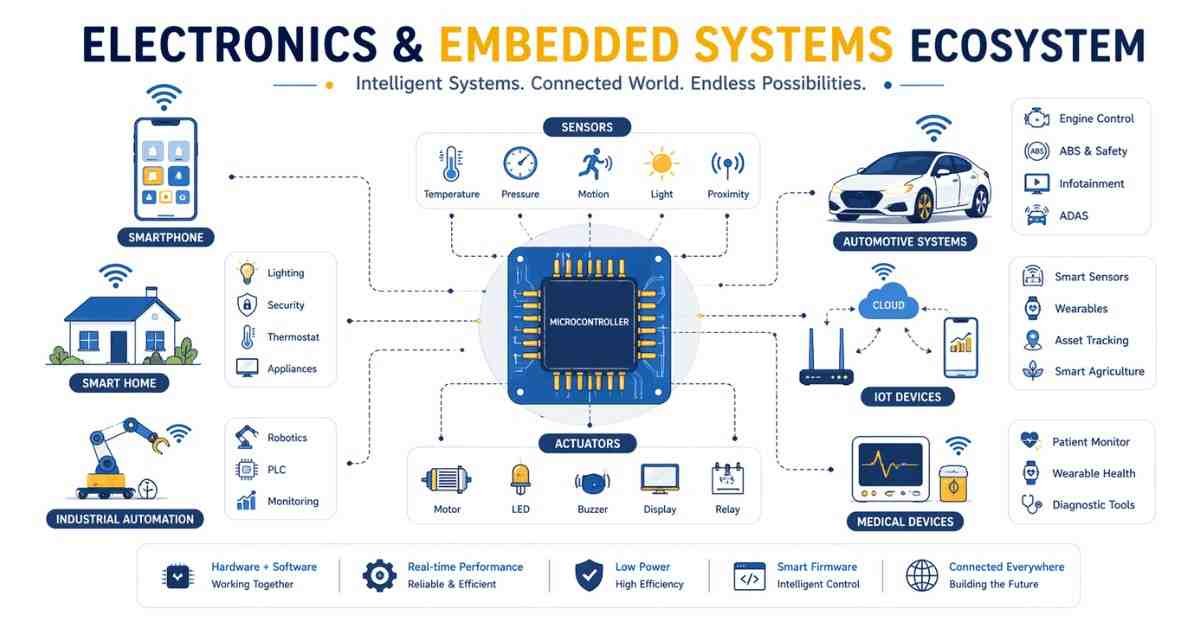
Electronics & Embedded Systems Engineering: Circuit Design to IoT Careers
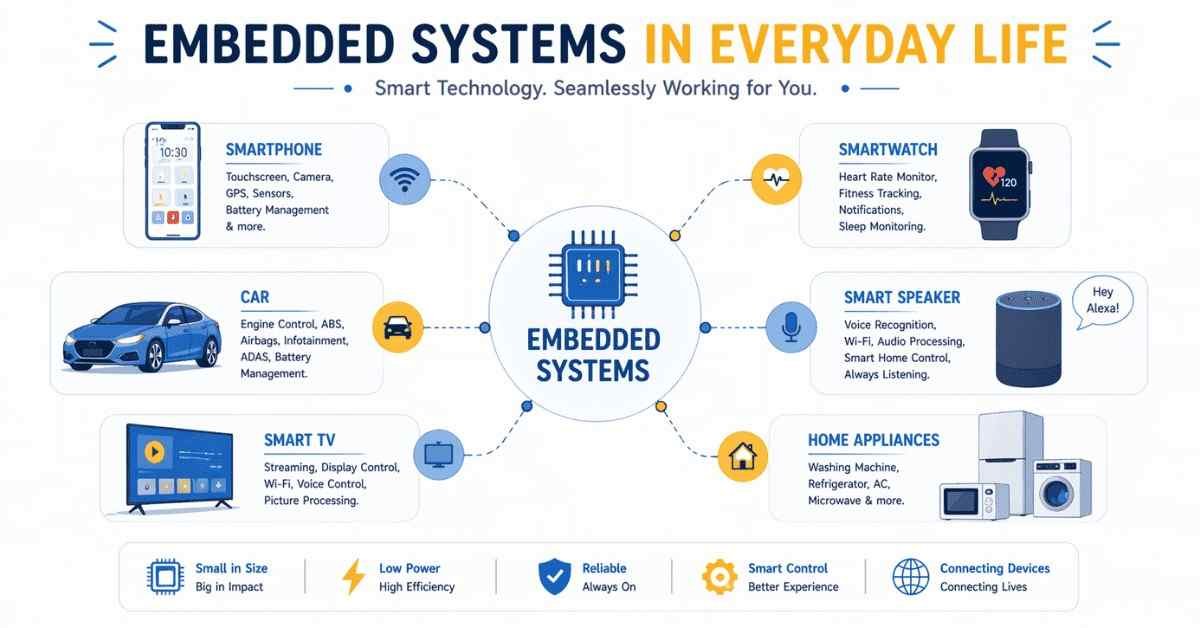
Every time you unlock your smartphone with a fingerprint, drive a car with ABS and airbags, or ask Alexa to play music, you’re using embedded systems specialized computers designed into devices to perform specific tasks. When you marvel at how thin modern laptops are or how long your smartwatch battery lasts, you’re appreciating electronics engineering that made miniaturization and efficiency possible.
Electronics and embedded systems represent one of the most versatile and high-paying specializations in electrical engineering. Unlike power systems (large, visible infrastructure) or automation (industrial environments), electronics engineers create the brains inside almost every modern device from medical equipment to satellites, from consumer gadgets to automotive systems.
This comprehensive guide explores electronics and embedded systems careers in 2026, from circuit design roles at semiconductor giants to firmware development at automotive companies, from IoT startups to aerospace applications. Whether you’re deciding your specialization, building skills for placements, or curious about this field’s potential, we cover everything you need to know.
Understanding the Field: Electronics vs Embedded Systems
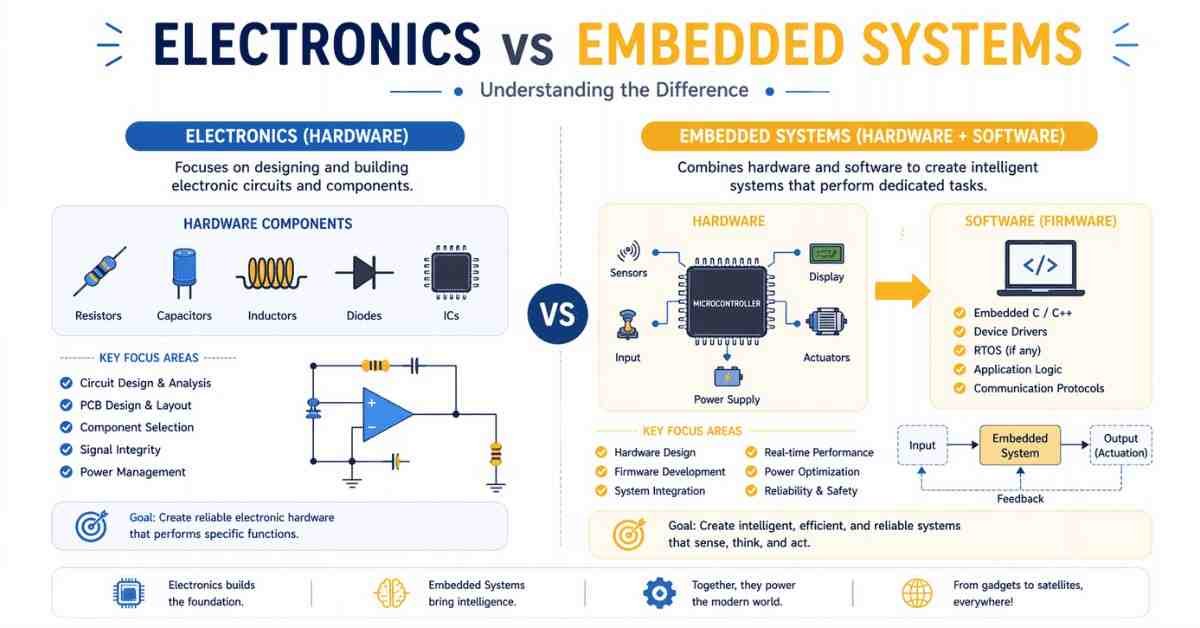
Electronics Engineering: The Hardware Side
What it involves: Designing electronic circuits and systems selecting components, creating circuit diagrams, PCB layout, testing prototypes, ensuring reliability.
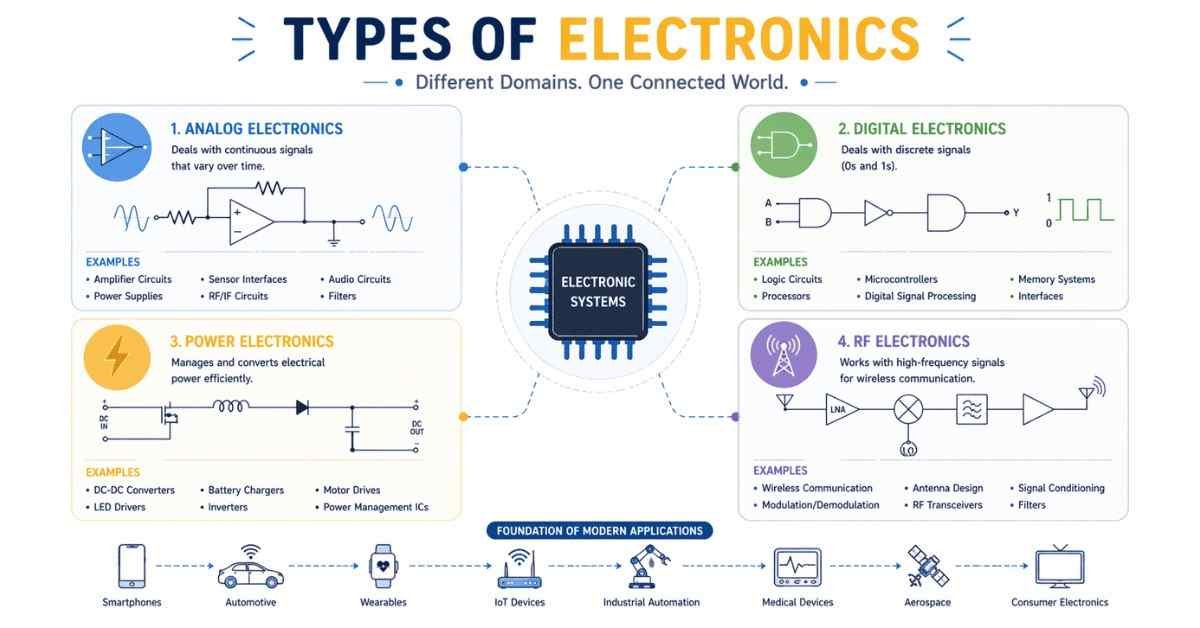
Types of electronics work:
Analog Electronics:
- Amplifier circuits
- Power supply design
- Sensor interface circuits
- Audio/RF circuits
- Precision measurement systems
Digital Electronics:
- Logic circuits
- Microprocessor/microcontroller systems
- Memory systems
- Digital signal processing hardware
- Communication interfaces
Power Electronics:
- DC-DC converters
- Battery charging circuits
- Motor drives
- LED drivers
- Power management ICs
RF Electronics:
- Wireless communication circuits
- Antenna design
- Signal conditioning
- Modulation/demodulation circuits
Embedded Systems: Hardware Meets Software
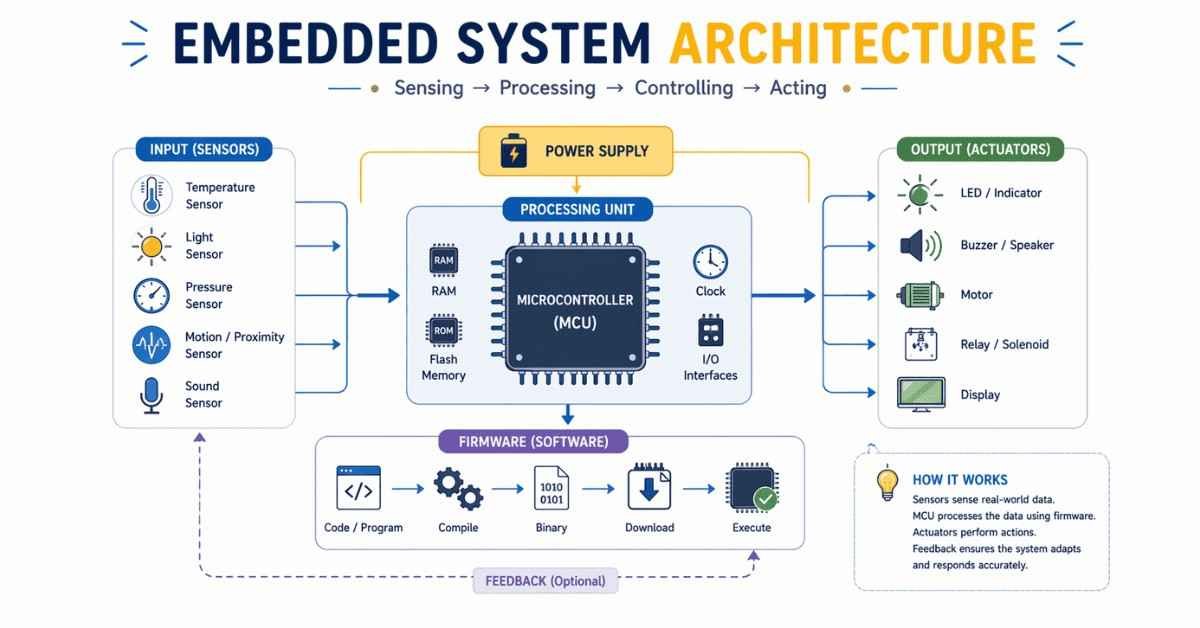
What it involves: Developing systems where software (firmware) directly controls hardware to perform dedicated functions.
Key characteristics of embedded systems:
- Dedicated purpose: Unlike general computers, embedded systems do specific tasks
- Resource constrained: Limited memory, processing power, energy
- Real-time requirements: Must respond within strict time deadlines
- Reliability critical: Often no option to restart or reinstall
- Cost-sensitive: Every component cost matters in mass production
Examples everywhere:
- Automotive: Engine control units, ABS, infotainment, ADAS (Advanced Driver Assistance Systems)
- Consumer: Washing machines, microwaves, smart TVs, fitness trackers
- Industrial: PLCs, motor controllers, process instruments, robots
- Medical: Pacemakers, insulin pumps, patient monitors, diagnostic equipment
- Aerospace: Flight control systems, avionics, satellites
- IoT: Smart home devices, wearables, agricultural sensors, tracking systems
The Overlap and Synergy
Modern products require both electronics design and embedded programming. The circuit board (hardware) needs firmware (software) to function. Engineers comfortable in both domains are highly valued.
Career Paths: Where Electronics Engineers Work
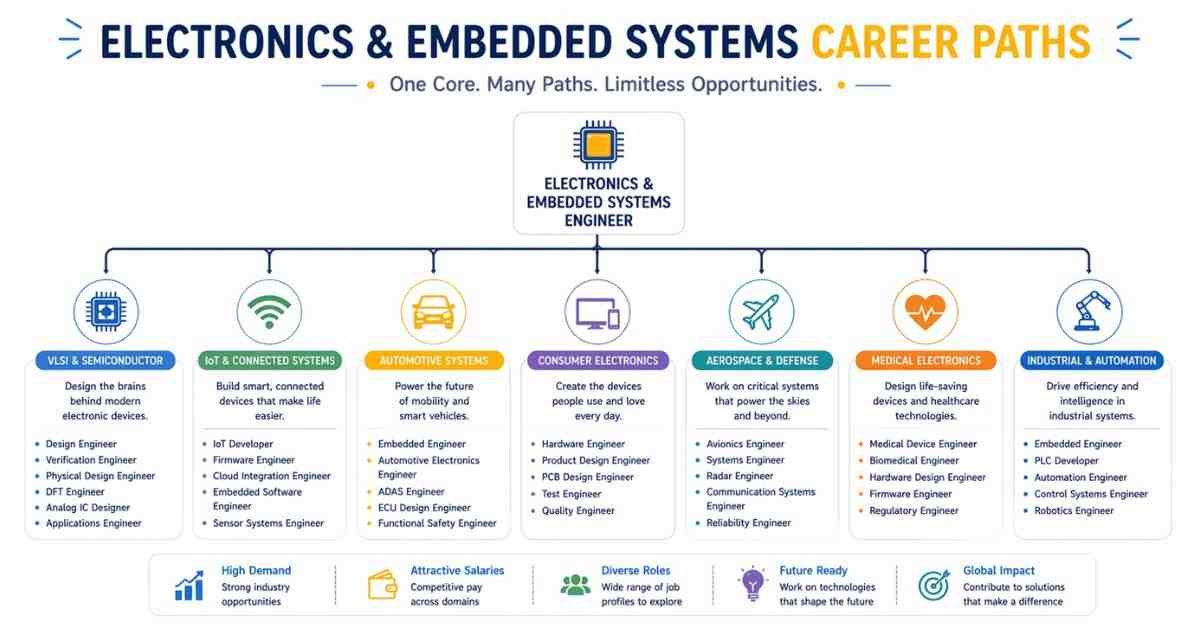
Path 1: Semiconductor Industry (VLSI)
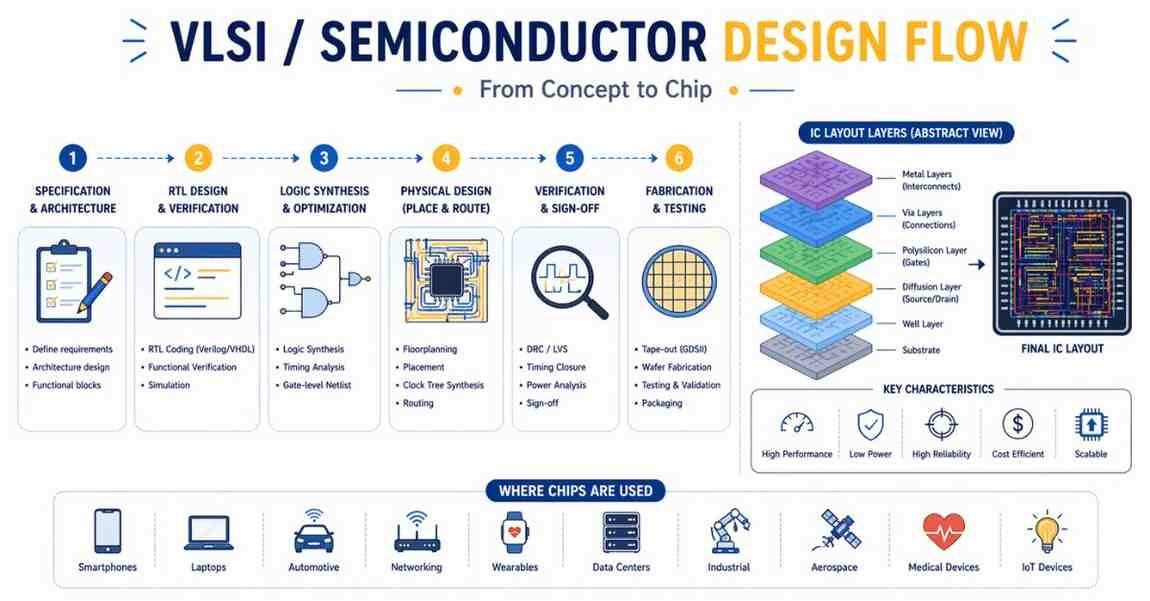
The Premium Path: Semiconductor companies typically offer the highest salaries in electrical engineering.
What VLSI Engineers Do:
- Design integrated circuits (ICs/chips)
- Verify chip designs through simulation
- Physical design and layout
- Test and validation of fabricated chips
- Applications engineering (helping customers use chips)
Major Companies in India:
- Intel (Bangalore design center)
- Qualcomm (Bangalore, Hyderabad)
- Texas Instruments (Bangalore)
- Analog Devices (Bangalore)
- NXP Semiconductors (Bangalore)
- Broadcom (Bangalore)
- MediaTek (Bangalore)
- Samsung Semiconductor (Bangalore, Noida)
- Nvidia (Bangalore, Pune)
- ARM (Bangalore)
Job Roles:
- Design Engineer: Creating chip architecture and RTL code
- Verification Engineer: Testing designs before fabrication
- Physical Design Engineer: Layout and timing closure
- DFT Engineer: Design for testability
- Analog IC Design Engineer: Analog circuit blocks
- Applications Engineer: Customer support and solutions
Salary Range:
- Fresher: ₹10-18 LPA (significantly higher than other electrical roles)
- 3-5 years: ₹18-30 LPA
- 7-10 years: ₹30-50 LPA
- Senior: ₹50 LPA-1 Cr+ (top performers at major companies)
Required Skills:
- For Digital VLSI: Verilog/VHDL, digital design, verification methodologies
- For Analog VLSI: Analog circuit design, Cadence Virtuoso, transistor-level design
- Common: C/C++, scripting (Python/Perl), chip architecture knowledge
- Often requires M.Tech: VLSI specialization adds significant advantage
Why It’s Lucrative:
- High barriers to entry (specialized knowledge)
- Global shortage of chip designers
- Critical technology—every electronic device needs chips
- India becoming major chip design hub
Career Consideration: Often requires M.Tech in VLSI or specialized courses from places like CDAC for better positions and faster growth.
Path 2: Consumer Electronics Companies
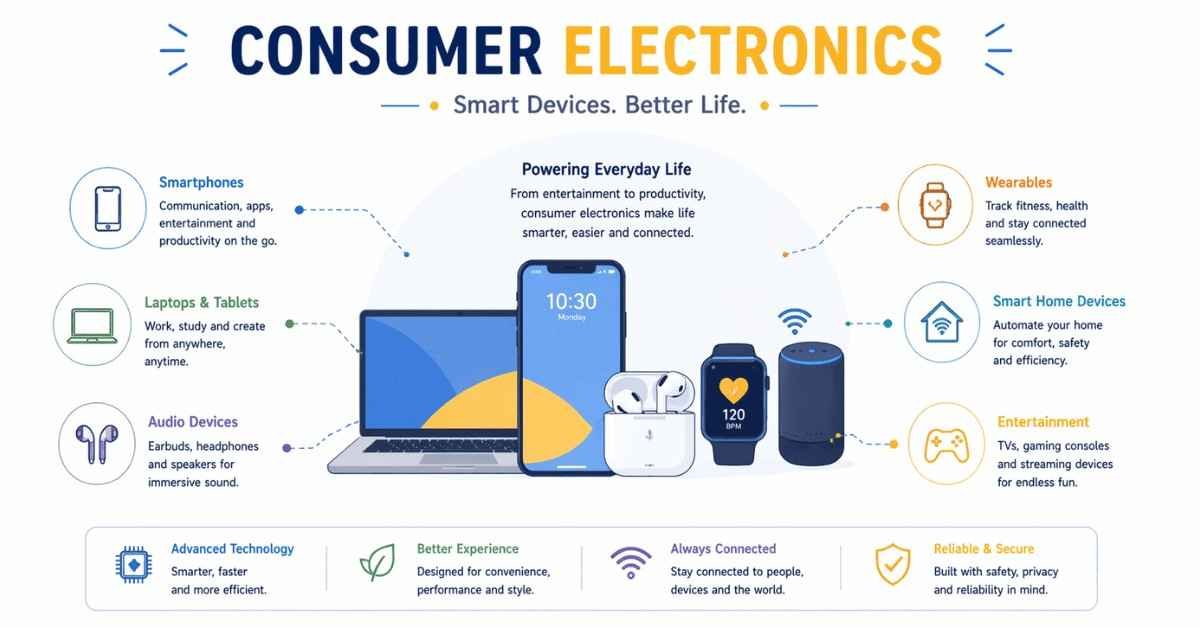
What They Build: Smartphones, laptops, tablets, smartwatches, audio devices, smart home products.
Major Companies:
- Samsung (massive R&D in Bangalore, Noida)
- Xiaomi (Bangalore)
- Oppo/Vivo (Greater Noida)
- OnePlus (Bangalore, Hyderabad)
- Realme (Noida)
- Lava/Micromax (Indian brands)
- Boat (audio devices)
- Sony India (limited R&D)
Job Roles:
- Hardware Design Engineer: Circuit design for product features
- PCB Design Engineer: Board layout and design
- Test Engineer: Product testing and validation
- Reliability Engineer: Ensuring products meet quality standards
- Acoustic Engineer: For audio products
- RF Engineer: Wireless connectivity
Salary Range:
- Fresher: ₹6-12 LPA
- Mid-level: ₹12-22 LPA
- Senior: ₹22-40 LPA
Work Nature:
- Fast-paced with frequent product launches
- Intense deadlines
- Mix of design, testing, and problem-solving
- Interaction with manufacturing teams
- Sometimes requires China travel (supplier coordination)
Path 3: Automotive Electronics & Embedded Systems
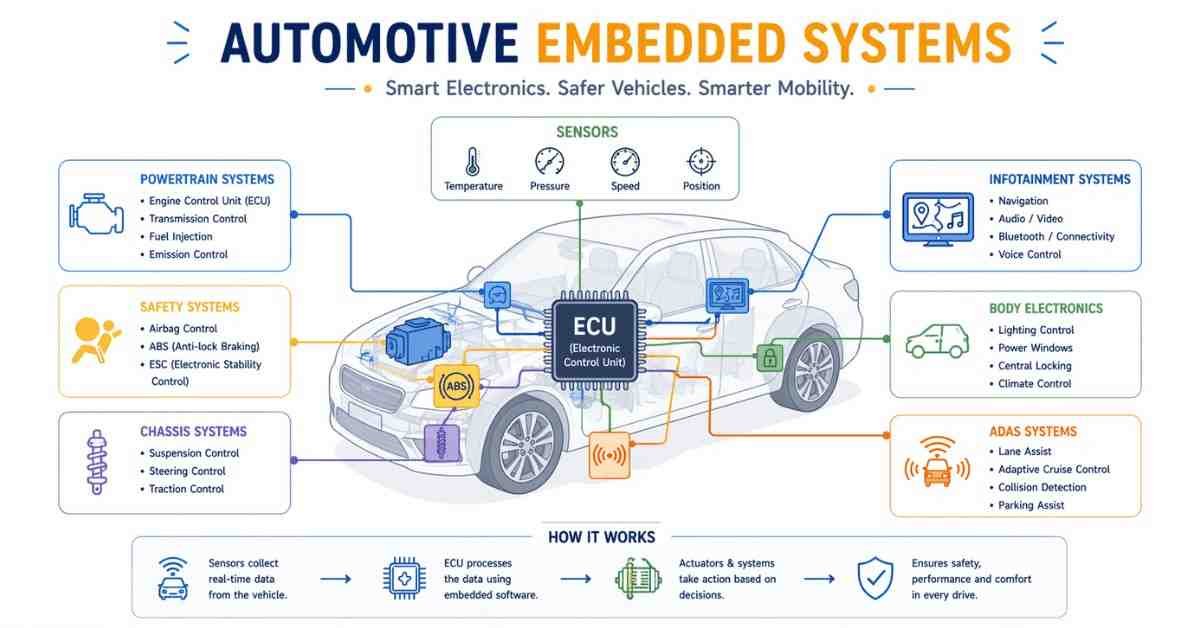
The Growing Giant: Modern cars have 50-100 embedded systems controlling everything from engines to entertainment.
What Automotive Embedded Engineers Do:
- Developing ECUs (Electronic Control Units)
- ADAS (Advanced Driver Assistance Systems)
- Infotainment systems
- Battery Management Systems for EVs
- Vehicle networking (CAN, LIN, FlexRay)
- Diagnostics and calibration
Major Employers:
- Bosch (Bangalore, Pune largest automotive electronics employer)
- Continental (Bangalore, Pune, Gurgaon)
- Delphi/Aptiv (Bangalore, Pune)
- Denso (Chennai, Pune)
- Valeo (Chennai)
- Motherson Group (various locations)
- Tata Elxsi (automotive embedded services)
- KPIT Technologies (automotive software)
- Tata Motors, Mahindra (in-house development)
Salary Range:
- Fresher: ₹5-10 LPA
- Mid-level: ₹10-20 LPA
- Senior: ₹20-40 LPA
Required Skills:
- Strong C programming: Embedded C specifically
- Automotive standards: MISRA-C, ISO 26262 (functional safety), AUTOSAR
- Communication protocols: CAN, LIN, FlexRay, Automotive Ethernet
- RTOS: Real-Time Operating Systems like FreeRTOS, AUTOSAR OS
- Development tools: Lauterbach, Vector CANoe/CANalyzer
- Microcontrollers: Infineon, Renesas, NXP automotive MCUs
Why Automotive Is Hot:
- EVs creating massive demand
- ADAS and autonomous driving need embedded expertise
- Connected cars and over-the-air updates
- Indian automotive component exports growing
- Stable sector with long product lifecycles
Path 4: IoT and Smart Devices
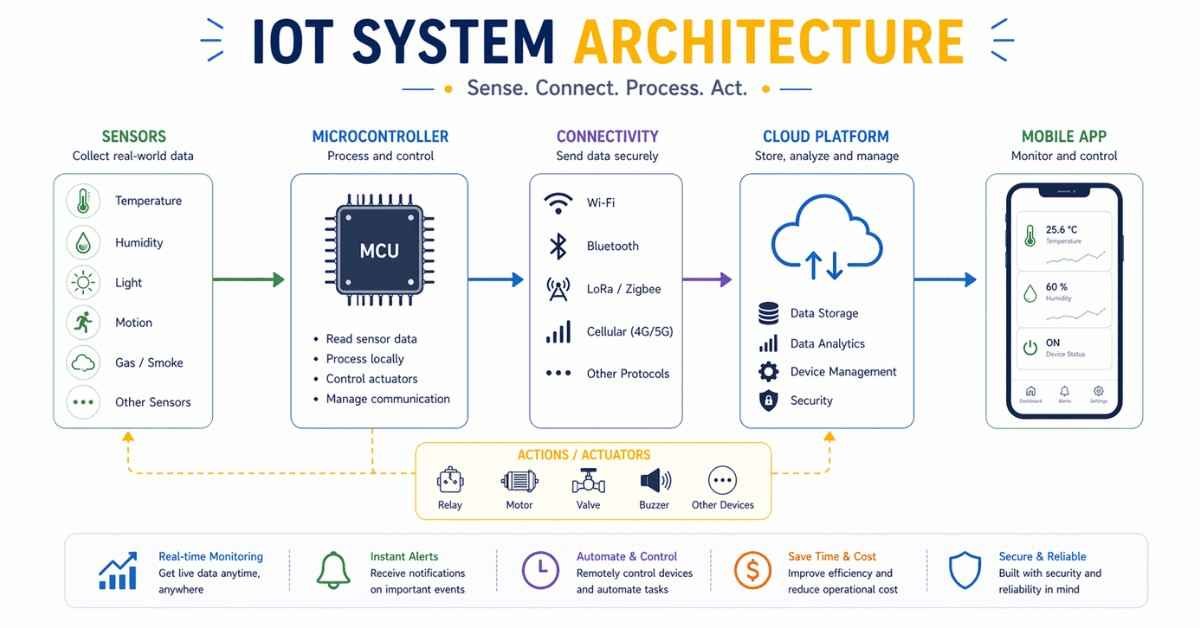
The Emerging Field: Internet of Things connects everyday devices to internet, creating smart homes, smart cities, industrial IoT.
What IoT Engineers Build:
- Smart home devices (lights, locks, cameras)
- Wearables (fitness trackers, smartwatches)
- Agricultural IoT (soil sensors, automation)
- Industrial IoT (predictive maintenance, monitoring)
- Asset tracking systems
- Environmental monitoring
Companies (Mix of Startups and Established):
- Startups: Ather Energy, Portronics, Noise, Fire-Boltt, Atomberg, numerous others
- Established: Honeywell, Schneider Electric IoT division, L&T Smart World
- Product Development Services: Tata Elxsi, HCL Technologies IoT division
Job Roles:
- IoT Solution Architect: Designing end-to-end systems
- Embedded IoT Developer: Firmware for IoT devices
- Hardware Engineer: Designing IoT device circuits
- Edge Computing Engineer: Processing at device level
- IoT Security Engineer: Securing connected devices
Salary Range:
- Fresher: ₹5-9 LPA (startups); ₹7-12 LPA (established companies)
- Mid-level: ₹10-20 LPA
- Senior/Architect: ₹20-35 LPA
Required Skills:
- Microcontroller programming: ESP32, STM32, nRF52
- Wireless protocols: WiFi, Bluetooth/BLE, LoRa, Zigbee, NB-IoT
- Cloud platforms: AWS IoT, Azure IoT, Google Cloud IoT
- Edge ML: TensorFlow Lite, running ML models on devices
- Low power design: Battery-powered devices need optimization
- Security: Encryption, secure boot, OTA updates
Why IoT Is Exciting:
- Huge variety of applications
- Combination of hardware, firmware, cloud
- Startup ecosystem vibrant
- Smart cities initiative driving growth
- Relatively easier entry than pure VLSI
Path 5: Aerospace & Defense Electronics
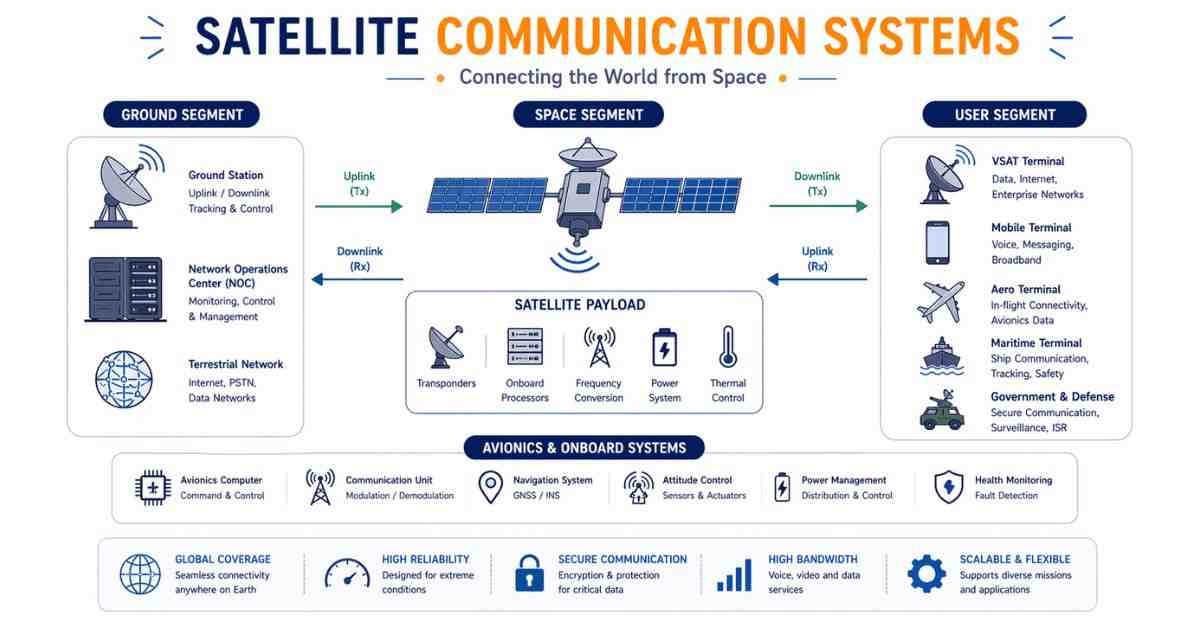
High-Reliability Systems: Where failure is not an option aircraft, satellites, missiles, defense equipment.
Major Organizations:
- ISRO (satellite electronics)
- DRDO (defense R&D)
- HAL (aerospace systems)
- BEL (defense electronics)
- Bharat Dynamics (missiles)
- Private: Larsen & Toubro Defense, Tata Advanced Systems, Godrej Aerospace
Job Roles:
- Avionics Engineer: Aircraft electronic systems
- Satellite Electronics Engineer: Spacecraft systems
- Guidance & Control Engineer: Navigation systems
- RF & Communication Engineer: Wireless systems
- Test & Validation Engineer: Ensuring reliability
Salary Range:
- PSUs (ISRO, DRDO, HAL): ₹7-10 LPA (fresher); stable growth to ₹20-35 LPA
- Private defense: ₹8-15 LPA (fresher); ₹15-30 LPA (mid-level)
Entry Path:
- ISRO/DRDO: Through GATE/ICRB exam
- BEL/HAL: Campus placements or direct recruitment
- Private: Campus placements and direct applications
Why Consider Aerospace/Defense:
- Cutting-edge technology
- National importance and pride
- Job security (especially PSUs)
- Challenging technical problems
- Clearances may limit career mobility
Path 6: Medical Electronics (Biomedical)
Healthcare Technology: Electronic devices for diagnosis, treatment, monitoring.
What They Build:
- Patient monitors
- Diagnostic equipment (ECG, ultrasound)
- Imaging systems
- Wearable health devices
- Implantable devices
Companies:
- MNCs in India: Philips Healthcare, GE Healthcare, Siemens Healthineers
- Indian: BPL Medical, Nasan Medical Electronics, others
- Startups: Various healthtech hardware startups
Salary Range:
- Fresher: ₹5-10 LPA
- Mid-level: ₹10-20 LPA
- Senior: ₹20-35 LPA
Special Requirements:
- Understanding of medical device regulations (FDA, CE marking)
- Safety standards (IEC 60601)
- Clinical understanding helpful
- Quality system knowledge (ISO 13485)
Essential Technical Skills
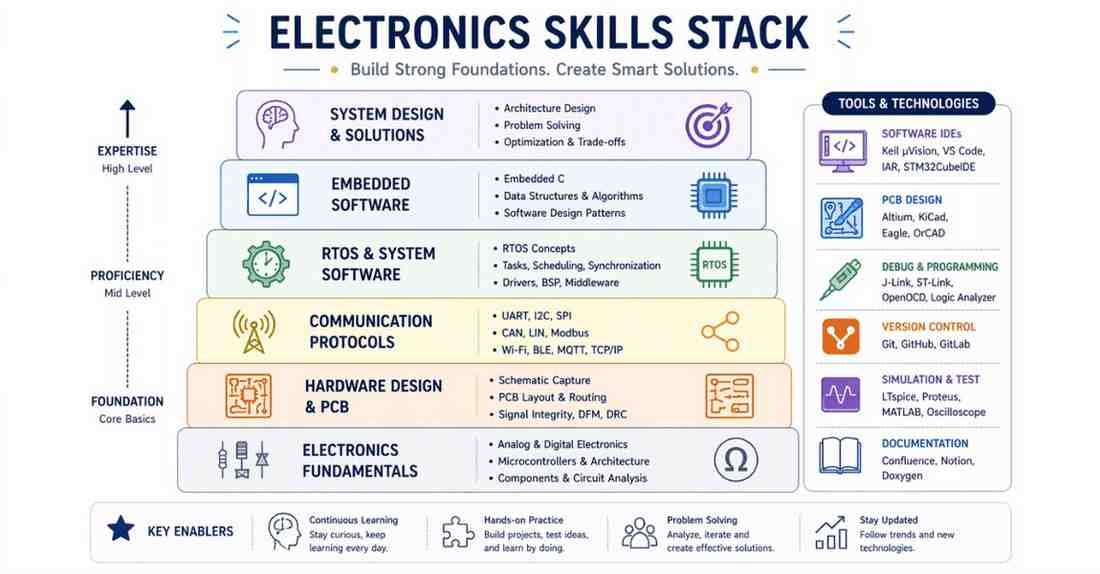
Hardware Design Skills
Circuit Design Fundamentals:
- Analog circuit design (op-amps, filters, amplifiers)
- Digital logic design
- Power supply design
- Signal conditioning
- Component selection and datasheets
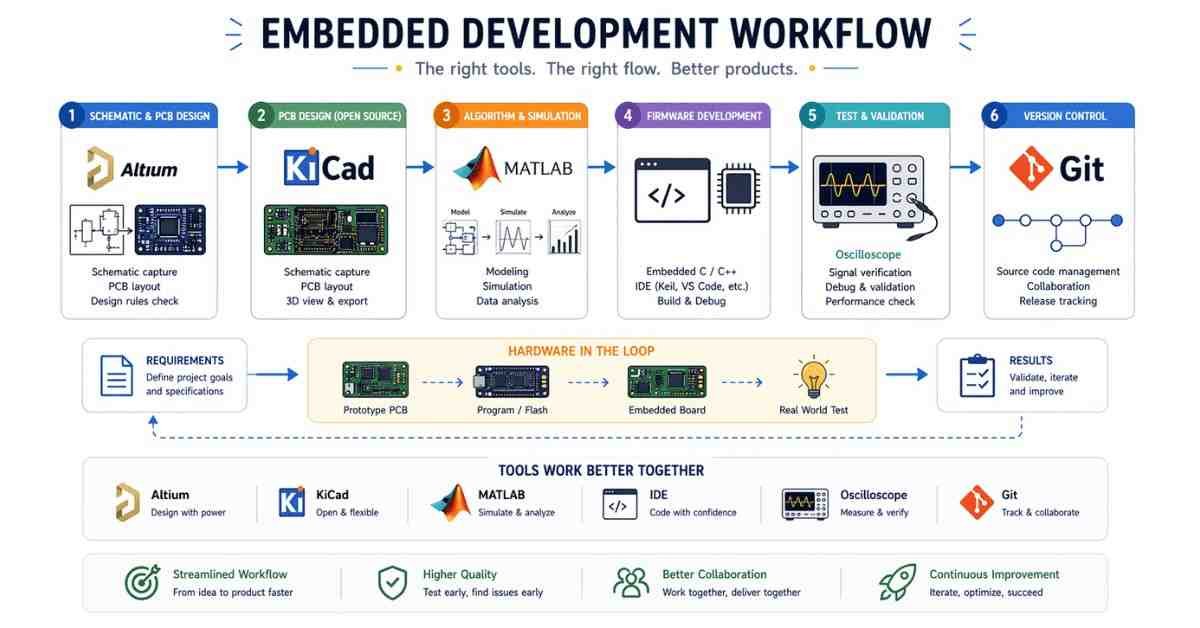
PCB Design:
- Tools: Altium Designer (industry standard), Eagle, KiCAD (free)
- Multi-layer board design
- High-speed design considerations
- EMC/EMI considerations
- Manufacturability (DFM)
Simulation Tools:
- PSpice/LTspice for analog simulation
- Multisim for mixed-signal
- Signal integrity simulation
Testing & Measurement:
- Oscilloscope operation (critical skill)
- Logic analyzers
- Protocol analyzers
- Power analyzers
- RF equipment (spectrum analyzer, network analyzer)
Embedded Programming Skills
Programming Languages:
- C: Absolute must-have for embedded (80% of embedded programming)
- C++: For complex embedded systems
- Python: Testing, automation, data analysis
- Assembly: Sometimes needed for optimization
Core Embedded Concepts:
- Microcontroller architecture (ARM Cortex-M most common)
- Interrupt handling
- Timers and counters
- ADC/DAC interfacing
- PWM control
- DMA (Direct Memory Access)
Communication Protocols:
- Serial: UART, SPI, I2C
- Automotive: CAN, LIN, FlexRay
- Industrial: Modbus, Profibus
- Wireless: UART over BLE, WiFi modules, LoRa
- USB: Device and host modes
Real-Time Operating Systems (RTOS):
- FreeRTOS (most popular, free)
- ThreadX
- Micrium μC/OS
- Understanding tasks, queues, semaphores, mutexes
Development Tools:
- IDEs: Keil, IAR, STM32CubeIDE, MPLAB
- Debuggers: J-Link, ST-Link, GDB
- Version control: Git (essential even for embedded)
Specialized Knowledge Areas
Low-Power Design:
- Sleep modes and power management
- Energy profiling
- Battery-powered design considerations
Wireless Technologies:
- Bluetooth/BLE
- WiFi (ESP32, ESP8266)
- LoRa/LoRaWAN
- Cellular (2G/4G modules)
- Zigbee, Thread, Matter
Security:
- Secure boot
- Encryption (AES, RSA)
- Secure firmware updates (OTA)
- Hardware security modules
Edge AI/TinyML:
- Running machine learning models on microcontrollers
- TensorFlow Lite for Microcontrollers
- Optimizing models for resource-constrained devices
Education Path and Certifications
Academic Background
B.Tech/B.E. Electrical/Electronics/ECE: All suitable.
Specialization During B.Tech:
- Choose electronics-focused electives
- VLSI design
- Embedded systems
- IoT Digital signal processing
M.Tech Consideration:
- VLSI Design: Almost essential for chip design roles
- Embedded Systems: Helpful but not mandatory
- Signal Processing: For communication/audio companies
When M.Tech adds value:
- VLSI roles significant advantage
- R&D positions
- Semiconductor companies prefer M.Tech
- Can’t get desired company in B.Tech placements
When work experience matters more:
- Embedded firmware roles
- IoT development
- PCB design positions
- Can learn on job effectively
Certifications Worth Pursuing
Embedded Systems:
- Embedded Systems certification from training institutes
- ARM Certified Engineer
- FreeRTOS certification
PCB Design:
- Altium Designer certification
- IPC standards training
Automotive:
- AUTOSAR training
- ISO 26262 Functional Safety
- Vector tools certification
IoT & Cloud:
- AWS IoT certification
- Azure IoT certification
- Google Cloud IoT
General:
- PMP (for project roles later)
- Agile/Scrum certifications
Day in the Life: Real Work Scenarios
Electronics Design Engineer at Consumer Electronics Company
Typical Day:
- Morning standup with hardware team
- Schematic design in Altium for new feature
- Component selection checking availability and cost
- Review PCB layout with layout engineer
- Testing prototype boards troubleshooting issues
- Meeting with software team for interface definition
- Updating design documentation
- Vendor call discussing component specifications
Tools Open: Altium Designer, LTspice, Datasheet PDFs, Excel for BOM, Slack/Teams
Challenges: Tight deadlines, cost pressures, miniaturization requirements, thermal issues
Embedded Software Engineer at Automotive Company
Typical Day:
- Pull latest code from Git repository
- Implement new CAN message handling feature
- Unit testing the module
- Debugging integration issue with another ECU
- Code review with team
- MISRA-C compliance check
- Flash code to ECU and test on vehicle
- Update documentation and commit code
Tools Open: Keil IDE, Vector CANoe, J-Link debugger, Git, Jira, Microsoft Word/Confluence
Challenges: Safety-critical code (no room for errors), complex interactions between modules, vehicle testing logistics
IoT Solutions Engineer at Startup
Typical Day:
- Fixing bug in ESP32 firmware
- Implementing low-power mode to extend battery life
- Testing BLE connection stability
- Updating cloud backend for new device feature
- Customer call troubleshooting field issue remotely
- Prototyping new sensor integration
- Updating mobile app to show new data
- Team meeting on next product features
Tools Open: VS Code with PlatformIO, AWS Console, Postman (API testing), Oscilloscope, Multimeter
Challenges: Wearing multiple hats (hardware, firmware, cloud, app), limited resources, field reliability issues, rapid iteration
Salary Deep Dive
By Sector and Experience
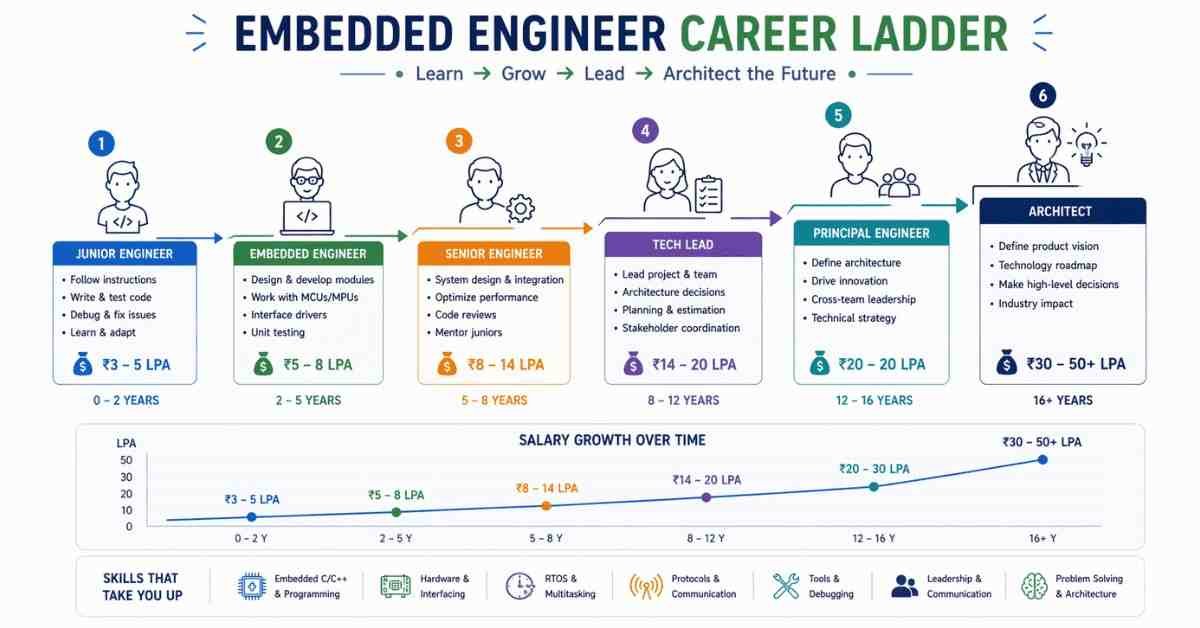
Semiconductor/VLSI:
- Fresher: ₹10-18 LPA
- 3-5 years: ₹18-30 LPA
- 7-10 years: ₹30-50 LPA
- 10+ years: ₹50 LPA-1 Cr+
Consumer Electronics:
- Fresher: ₹6-12 LPA
- Mid-level: ₹12-22 LPA
- Senior: ₹22-40 LPA
Automotive Embedded:
- Fresher: ₹5-10 LPA
- Mid-level: ₹10-20 LPA
- Senior: ₹20-40 LPA
IoT/Startups:
- Fresher: ₹5-10 LPA (plus equity sometimes)
- Mid-level: ₹10-20 LPA
- Senior/Lead: ₹20-35 LPA
Aerospace/Defense PSUs:
- Fresher: ₹7-10 LPA
- Mid-level: ₹12-20 LPA
- Senior: ₹20-35 LPA
Skills That Command Premium
+₹2-4 LPA: VLSI design skills (Verilog/VHDL)
+₹1-3 LPA: AUTOSAR expertise
+₹1-3 LPA: Advanced PCB design (high-speed, RF)
+₹1-2 LPA: RTOS experience
+₹1-2 LPA: Wireless protocol expertise
+₹1-2 LPA: Security expertise
Location Impact
Bangalore: +15-20% premium (tech hub)
Pune: +10-15% (automotive hub)
Hyderabad: +5-10%
Chennai: Average benchmark
NCR: +5-10%
Tier-2 cities: -10-20% but lower cost of living
Future Trends and Opportunities
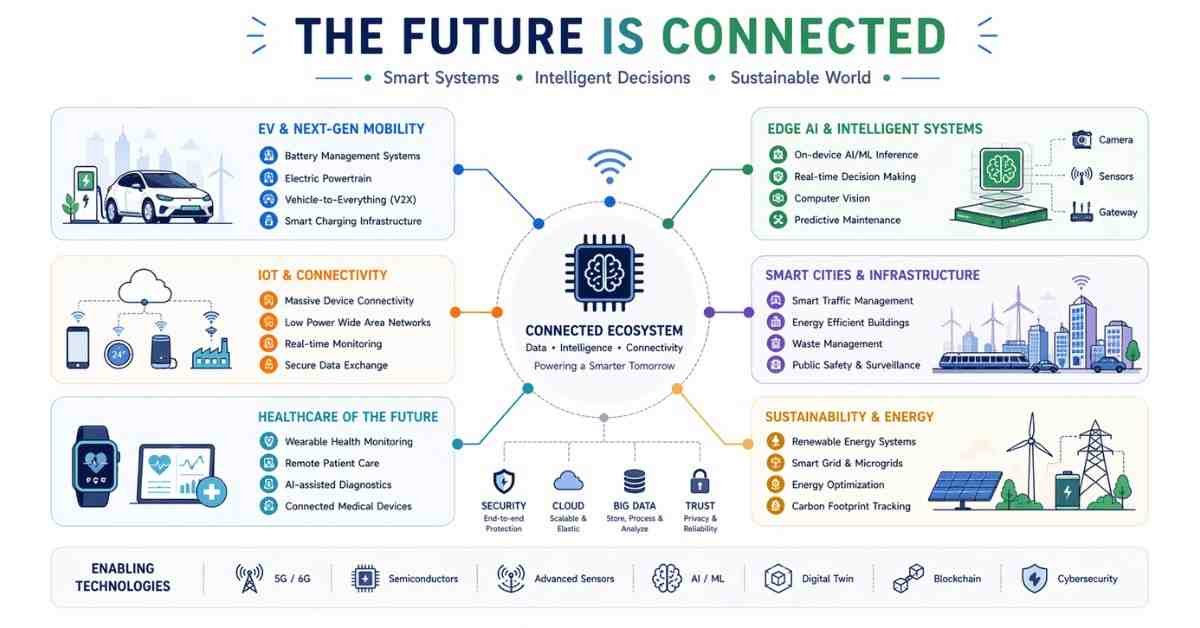
Electric Vehicles
India’s EV push creates massive demand for:
- Battery management systems
- Motor controllers
- EV charging systems
- Vehicle telemetry
- ADAS systems
Embedded engineers with automotive experience highly sought.
Edge AI and TinyML
Running AI models on microcontrollers for:
- Smart cameras
- Voice-activated devices
- Predictive maintenance
- Gesture recognition
- Health monitoring
Combination of embedded and ML skills extremely valuable.
5G and Beyond
Faster wireless creating new applications:
- Ultra-low latency systems
- Massive IoT deployments
- Enhanced mobile broadband devices
- RF and wireless engineers in demand.
Wearables and Health Tech
Growing market for:
- Fitness trackers
- Smartwatches
- Continuous health monitoring
- Medical wearables
- Low-power embedded expertise needed.
Smart Cities and Infrastructure
Government’s 100 smart cities creating need for:
- Smart lighting systems
- Traffic management devices
- Environmental sensors
- Smart parking systems
- Waste management automation
Semiconductor Manufacturing in India
Government push for domestic chip manufacturing:
- New fabs coming up
- Design houses expanding
- Increased VLSI opportunities
- Policy support through PLI schemes
- Could significantly boost semiconductor jobs in India.
Is Electronics/Embedded Right for You?
Choose This Path If You:
- Love hands-on building and prototyping
- Enjoy both hardware and software
- Like seeing your work in physical products
- Appreciate blend of theory and practical
- Want diverse industry options
- Comfortable with continuous learning (tech evolves fast)
- Enjoy debugging and problem-solving
- Like working on products used by millions
Might Prefer Other Fields If You:
- Want maximum job security (power systems PSUs better)
- Prefer pure software without hardware constraints
- Need highest starting salary guaranteed (IT sometimes higher at average colleges)
- Want slower-paced, stable technology
- Dislike product deadlines and pressure
Getting Started: Action Plan
During College:
- Master C programming: Non-negotiable for embedded
- Buy development boards: Arduino → STM32 → ESP32 progression
- Build real projects: Not tutorials actual useful devices
- Learn PCB design: Start with KiCAD (free), then Altium/Eagle
- Understand microcontroller peripherals: Timers, ADC, communication
- Contribute to open-source: GitHub portfolio matters
- Internships crucial: Even 2-month summer internship teaches enormously
- For VLSI focus: Consider M.Tech or specialized courses
Project Ideas to Build:
Beginner:
- Temperature logger with SD card storage
- Bluetooth-controlled robot
- RFID access control system
Intermediate:
- Custom PCB for Home automation
- CAN bus communication between microcontrollers
- Battery-powered weather station with WiFi
Advanced:
- BLE mesh network for smart lighting
- RTOS-based data acquisition system
- Custom smartwatch with health monitoring
Skills Development Priority:
Year 1-2: C programming, basic electronics, Arduino projects
Year 3: Microcontroller interfacing, RTOS, PCB design
Year 4: Specialization (automotive/IoT/VLSI), advanced projects, internship
Conclusion: Building the Smart World
Electronics and embedded systems engineers create the invisible intelligence inside almost everything modern. Your work powers smartphones connecting billions, cars becoming safer and smarter, homes becoming automated, healthcare becoming more accessible, and cities becoming efficient.
This field offers unmatched versatility you can work in automotive, aerospace, consumer electronics, IoT, semiconductors, medical devices, or defense. Few specializations open so many doors.
The salaries, especially in semiconductor and automotive sectors, rank among the highest in electrical engineering. The work is challenging but deeply satisfying you see, touch, and use the products you help create.
As India pushes electronics manufacturing, develops EVs, and builds smart infrastructure, embedded and electronics engineers will be at the absolute center of that transformation.
If you enjoy making things work, combining hardware and software, and creating products that millions will use, electronics and embedded systems offers one of the most rewarding paths in electrical engineering.
The smart devices powering modern life didn’t emerge by magic. Engineers like you will create them. Welcome to the field building tomorrow’s technology.