
Power Systems Engineering Career Path
Table of Contents
Power Systems Engineering Career: Generation, Transmission & Grid Jobs
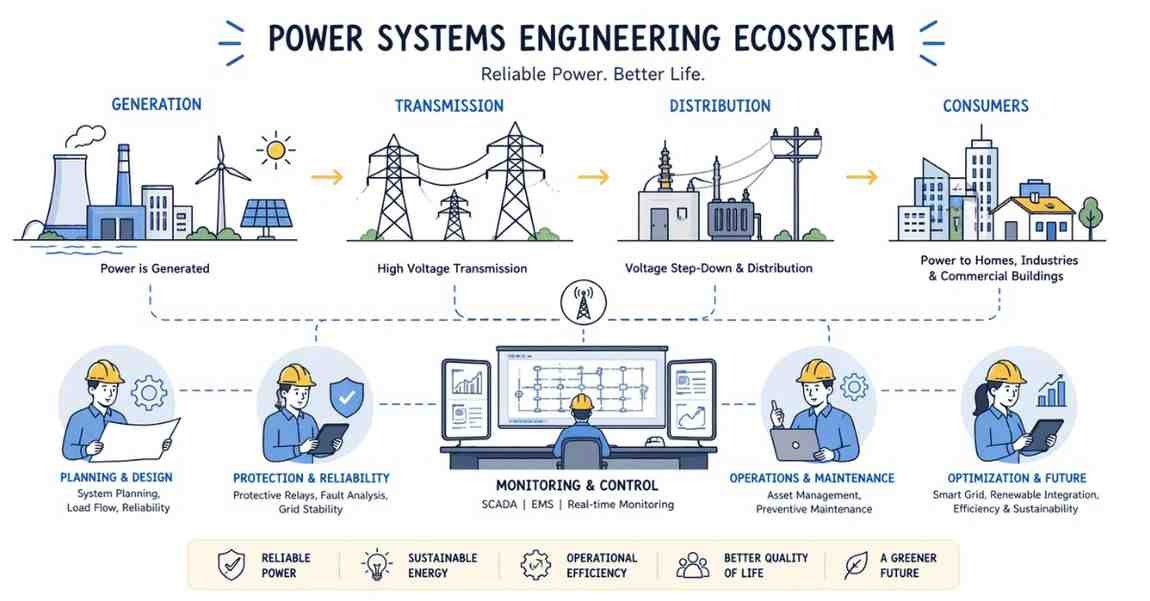
When Mumbai experienced a massive power outage in October 2020, affecting millions of people and disrupting everything from hospitals to stock markets, power systems engineers worked around the clock to restore the grid. When you switch on your air conditioner during peak summer, power systems engineers made that reliability possible. When India integrates massive solar farms into the national grid without destabilizing it, power systems engineers solved those complex challenges.
Power systems engineering is the backbone of modern civilization literally keeping the lights on and industry running. Yet many electrical engineering students overlook this specialization, drawn to flashier fields like embedded systems or VLSI. This comprehensive guide reveals why power systems offers one of the most stable, respected, and increasingly important career paths in electrical engineering, especially in India’s context.
Whether you’re deciding your specialization, preparing for GATE to target PSUs, or curious about what power systems engineers actually do, this guide covers everything from daily responsibilities to salary progression, from required skills to future trends.
Understanding Power Systems Engineerin
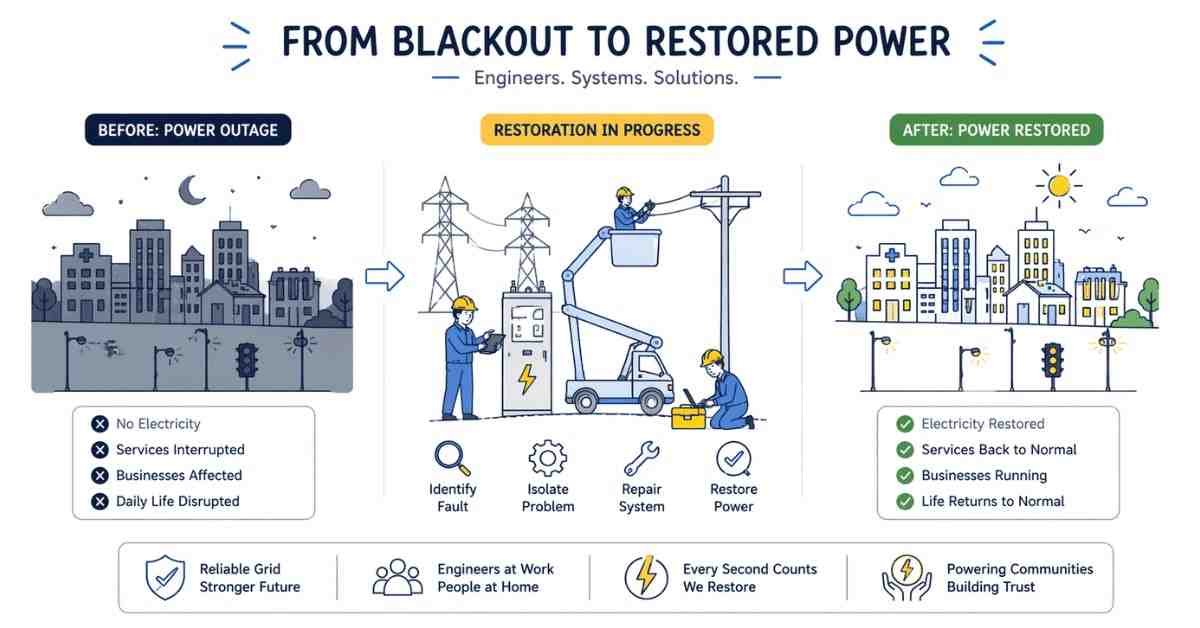
What Power Systems Engineers Actually Do
Power systems engineering involves the generation, transmission, distribution, and utilization of electrical energy. Let’s break down what this means in practical terms.
Simplest Explanation: You know how electricity reaches your home? That entire journey from power plant to your wall socket is designed, operated, and maintained by power systems engineers.
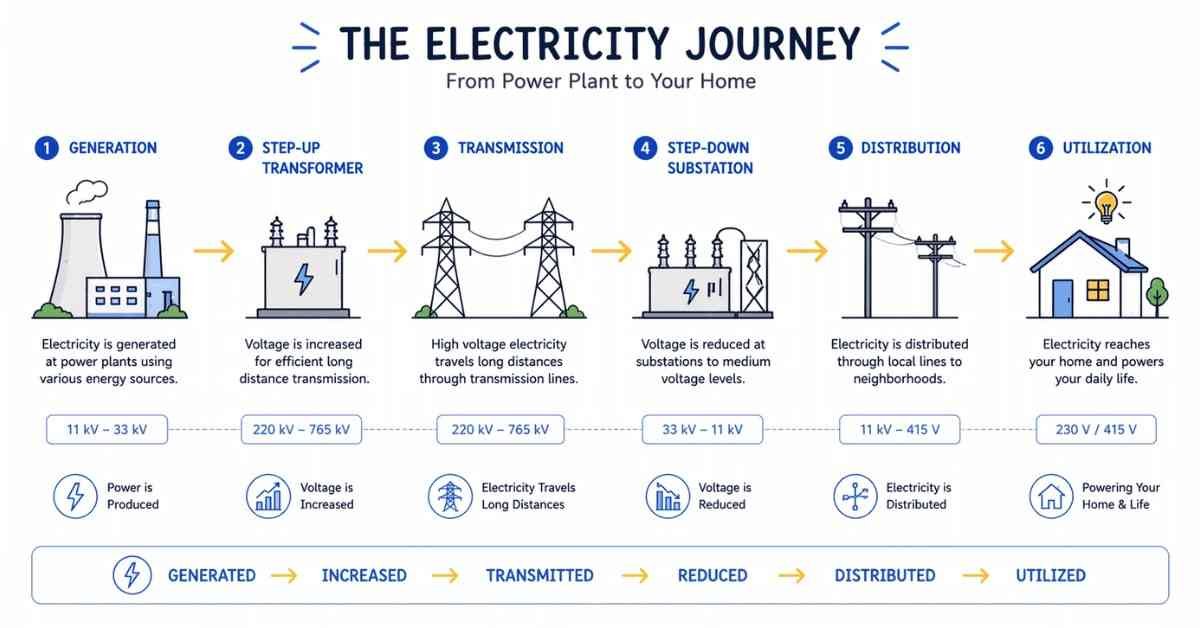
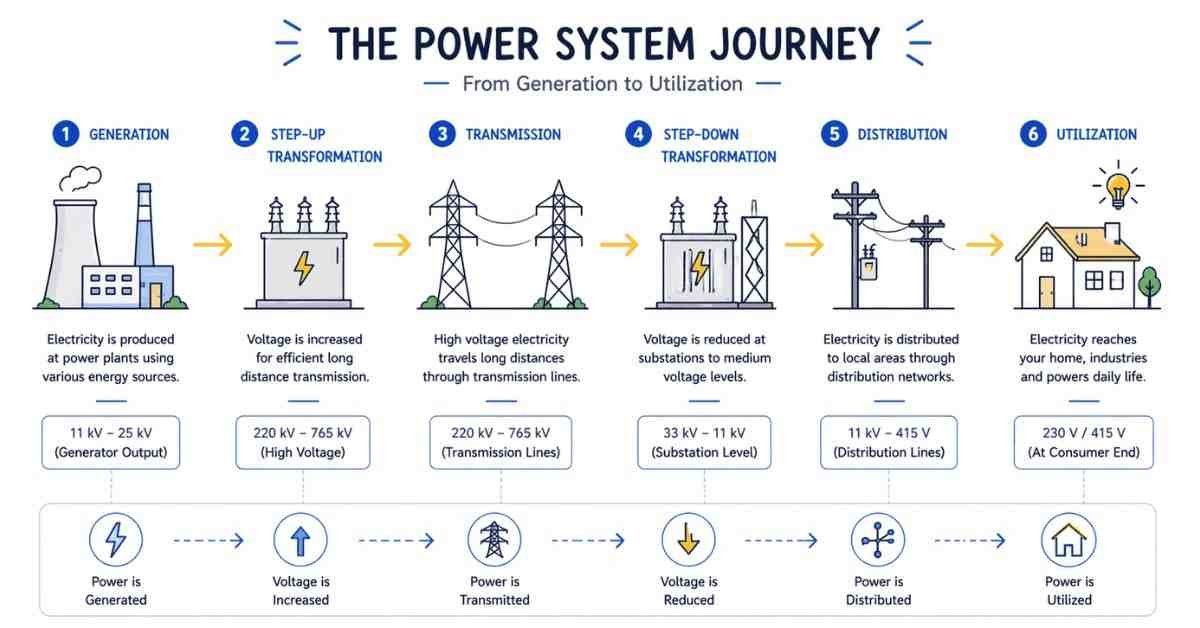
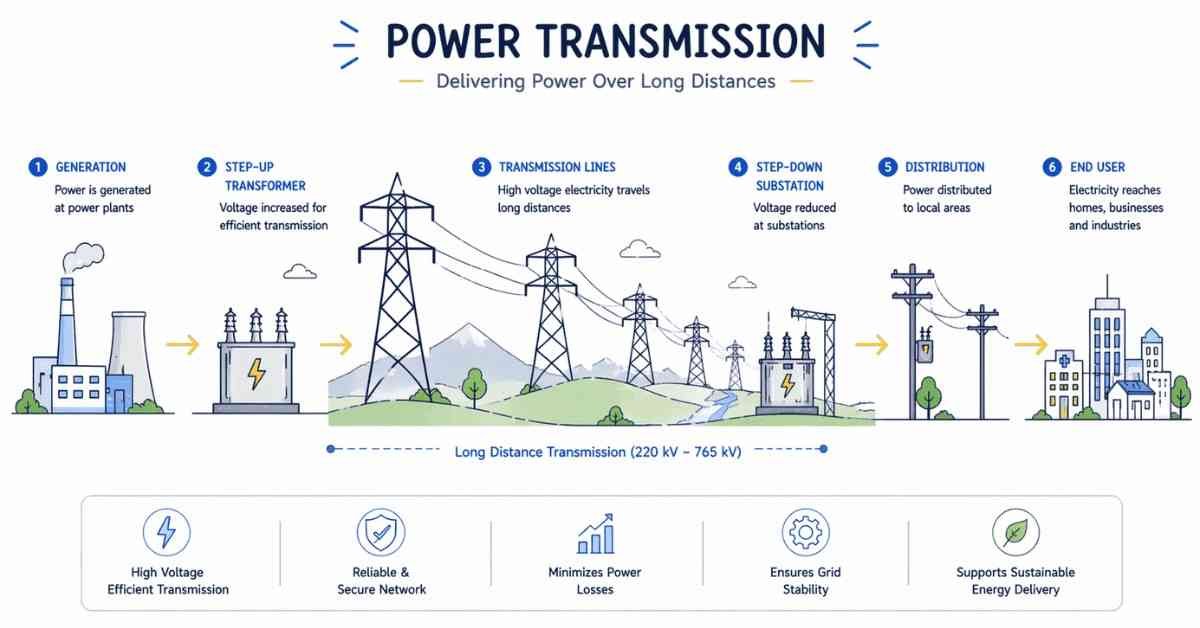
The Power System Journey:
- Generation: Electricity is produced at power plants (thermal, hydro, nuclear, renewable)
- Step-up Transformation: Voltage increased to 220kV, 400kV, or 765kV for efficient transmission
- Transmission: High-voltage electricity travels hundreds of kilometers on transmission lines
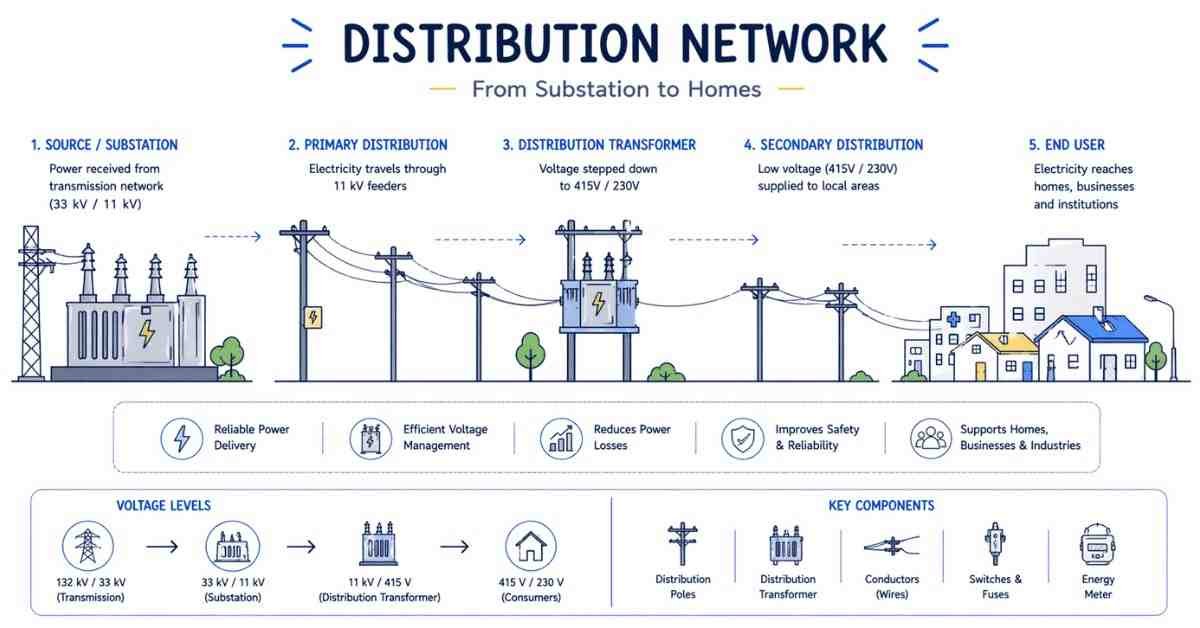
- Step-down Transformation: Voltage reduced at substations (132kV, 33kV, 11kV levels)
- Distribution: Electricity distributed to neighborhoods and buildings
- Utilization: Finally reaches your home at 230V single-phase or 415V three-phase
Power systems engineers work at every stage of this journey.
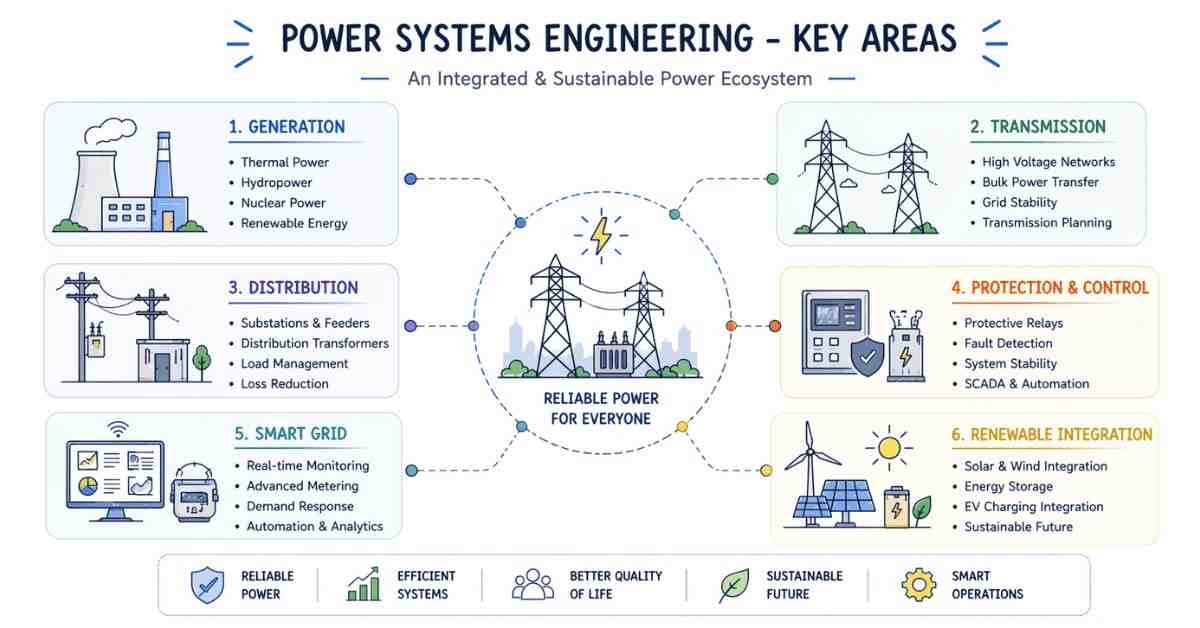
Key Specialization Areas Within Power Systems
Generation Engineering:
- Operating and maintaining power plants (thermal, hydro, nuclear, renewable)
- Optimizing generation efficiency
- Managing plant equipment generators, turbines, boilers
- Ensuring plant availability and reliability
- Environmental compliance and emissions control
Transmission Engineering:
- Designing high-voltage transmission networks
- Planning transmission line routes
- Load flow and stability analysis
- Managing transmission corridors
- Ensuring grid reliability and security
Distribution Engineering:
- Designing distribution networks for cities and towns
- Managing substations and distribution transformers
- Implementing smart meters and distribution automation
- Reducing technical and commercial losses
- Customer service and outage management
Protection & Control:
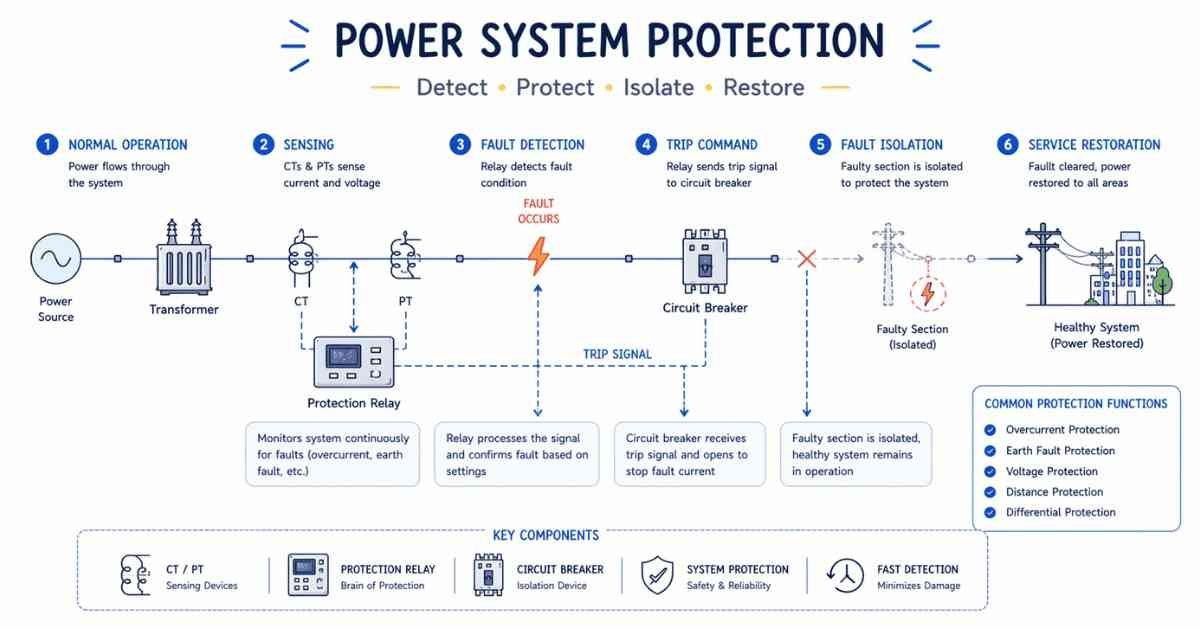
- Designing protective relaying schemes
- Ensuring selective fault isolation
- Grid stability and control
- SCADA systems for grid monitoring
- Emergency response and restoration
Smart Grid & Renewable Integration:
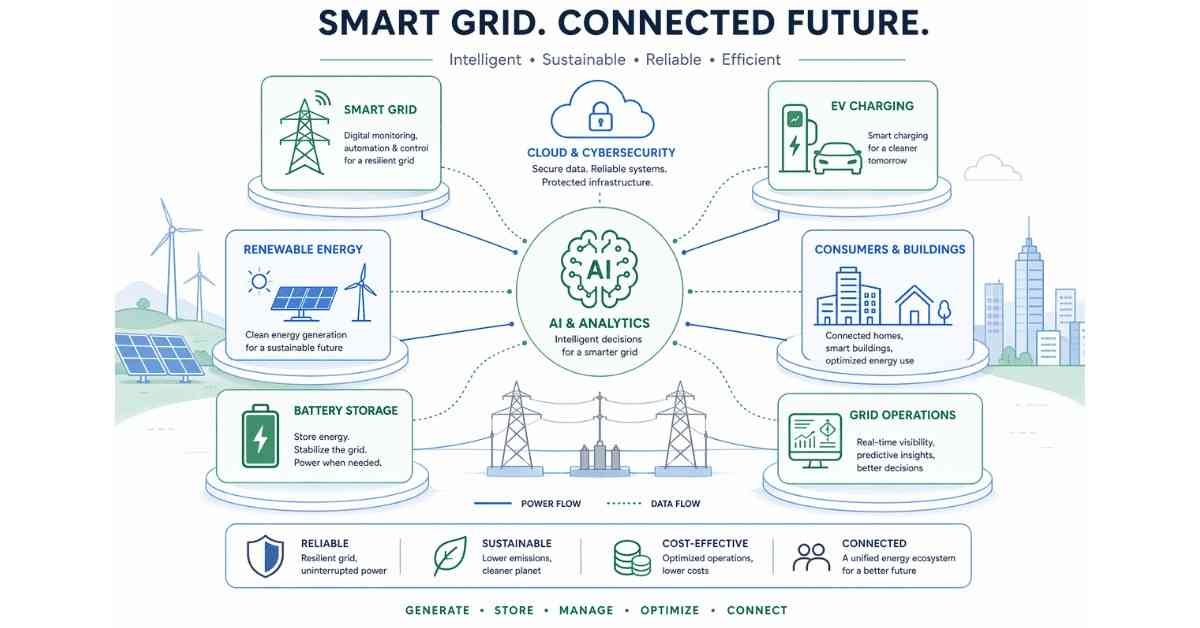
- Integrating solar and wind into existing grids
- Implementing smart grid technologies
Demand response and load management - Energy storage systems integration
- Distributed generation management
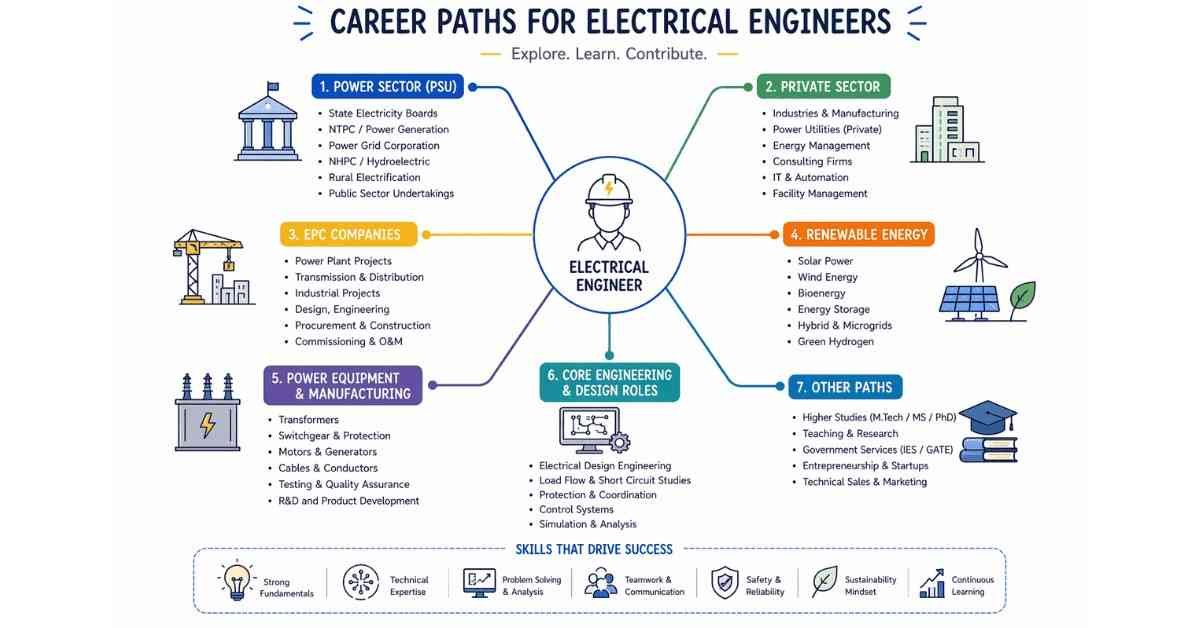
Career Paths: Where Power Systems Engineers Work
Path 1: Public Sector Undertakings (PSUs)
The Traditional Goldmine:
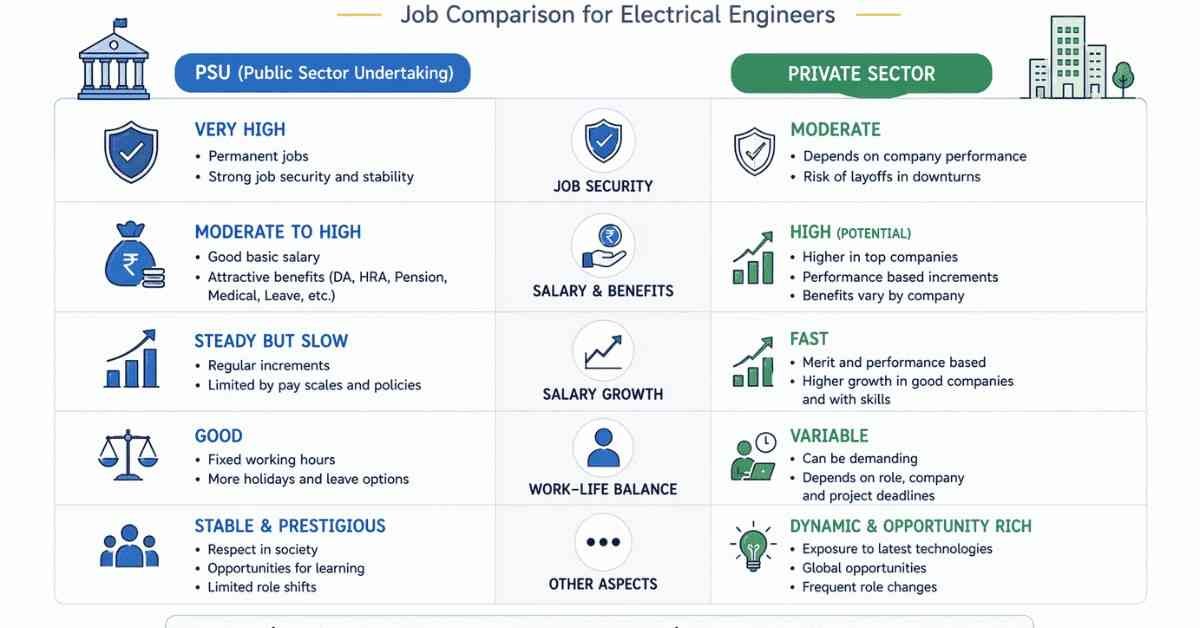
PSUs offer what many engineers ultimately seek: job security, decent salary, work-life balance, respect in society, and meaningful work.
Major PSUs Recruiting Through GATE:
Generation Companies:
- NTPC (National Thermal Power Corporation): India’s largest power generator
- NHPC (National Hydroelectric Power Corporation): Hydropower specialist
- Nuclear Power Corporation of India Limited (NPCIL): Nuclear plants
- NLC India Limited: Lignite-based generation
- Various state generation companies (Gencos)
Transmission Companies:
- Power Grid Corporation of India Limited (PGCIL): India’s central transmission utility
- REC Limited: Power sector financing and projects
- PFC (Power Finance Corporation): Infrastructure financing
- State transmission utilities
Other Electrical PSUs:
- BHEL (Bharat Heavy Electricals Limited): Equipment manufacturing
- Indian Railways: Massive electrical network
- DMRC (Delhi Metro Rail Corporation): Urban rail systems
- DRDO: Defense research (power systems for military applications)
- Various state electricity boards
PSU Entry Process:
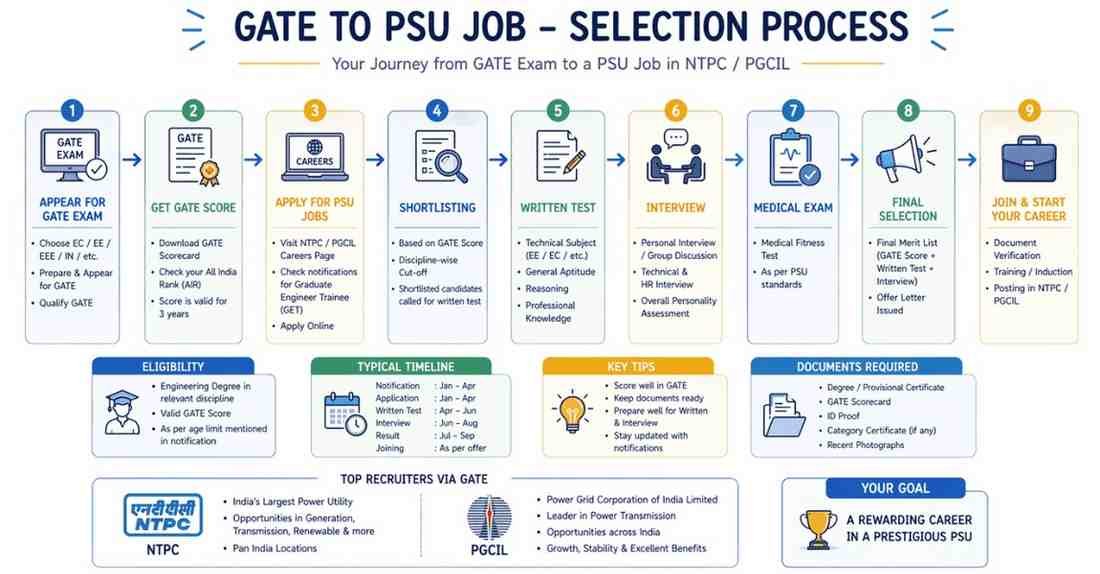
- Appear for GATE: Electrical Engineering paper
- Score well: Typically 500+ score needed for good PSUs, 600+ for top ones
- Apply when PSU notifies: Usually February-April
- Selection criteria: GATE score, sometimes followed by interview
- Merit list and posting: Selection based on merit, choice of location
PSU Career Benefits:
Job Security: Practically impossible to lose job barring serious misconduct.
Work-Life Balance: Generally 9-6 jobs with weekends off (except for operations staff with shifts).
Steady Salary Growth:
- Entry level (E1): ₹6-9 LPA CTC
- After 4-5 years (E2): ₹10-15 LPA
- After 8-10 years (E3): ₹15-22 LPA
- Senior positions (E4-E7): ₹25-50 LPA
Additional Benefits:
- HRA or company accommodation
- Medical facilities for family
- LTC (Leave Travel Concession)
- Pension benefits (for older PSUs, NPS for newer ones)
- Educational support for children
Posting Locations: May include remote areas initially, especially for generation companies. This is the trade-off for job security.
Career Progression: Steady but slower than private sector. Promotions based on years of service and departmental exams.
Path 2: Private Power Companies
Major Private Players:
Generation:
- Tata Power
- Adani Power
- Reliance Infrastructure
- JSW Energy
- Essar Power
Transmission & Distribution:
- Tata Power-DDL (Delhi)
- BSES (Delhi)
- Torrent Power (Gujarat, Maharashtra)
- CESC (Kolkata)
- Various state distribution franchises
Salary Comparison with PSUs:
- Entry level: ₹5-8 LPA (slightly lower than PSUs in CTC)
- Mid-level (5-7 years): ₹10-18 LPA
- Senior (10+ years): ₹20-40 LPA
- Top management: ₹50+ LPA
Advantages Over PSUs:
- Faster career growth for high performers
- Better exposure to modern practices and technology
- Merit-based promotions (not just seniority)
- Higher peak salaries possible
- Usually metro postings
Disadvantages:
- Less job security compared to PSUs
- May require longer working hours
- Performance pressure
- Lesser benefits compared to PSUs
Path 3: Equipment Manufacturers
Major Companies:
- ABB India: Switchgear, transformers, protection equipment
- Siemens: Power generation equipment, grid automation
- Schneider Electric: Distribution equipment, automation
- GE Power: Generation equipment, grid solutions
- Crompton Greaves (CG Power): Transformers, switchgear
- Havells: Distribution equipment, cables
Job Roles:
- Application Engineer (helping customers design solutions)
- Product Development Engineer
- Testing and Commissioning Engineer
- Technical Support Engineer
- Sales Engineer (technical sales)
Salary Range:
- Fresher: ₹5-9 LPA
- Mid-level: ₹9-18 LPA
- Senior: ₹18-35 LPA
Work Nature:
- Product-focused rather than operations
- Customer interaction and support
- Significant travel possible (for commissioning roles)
- Technical-commercial blend
Path 4: Consulting & EPC Companies
Engineering, Procurement, and Construction (EPC) firms execute power projects:
Major Players:
- L&T Power
- Tata Projects
- BGR Energy Systems
- KEC International
- Kalpataru Power Transmission
Consulting Firms:
- Tata Consulting Engineers
- Black & Veatch
- Various specialized power consultancies
Job Roles:
- Design Engineer (electrical systems design)
- Project Engineer (site execution)
- Planning Engineer (project scheduling)
- Commissioning Engineer (startup and testing)
- Quality Control Engineer
Salary Range:
- Fresher: ₹4-7 LPA
- Mid-level: ₹8-16 LPA
- Senior/Project Manager: ₹18-40 LPA
Work Nature:
- Project-based (changing projects every 1-3 years)
- Site postings common (often remote locations)
- Intense during project execution
- Excellent learning—see complete project lifecycle
- High travel
Path 5: Renewable Energy Sector
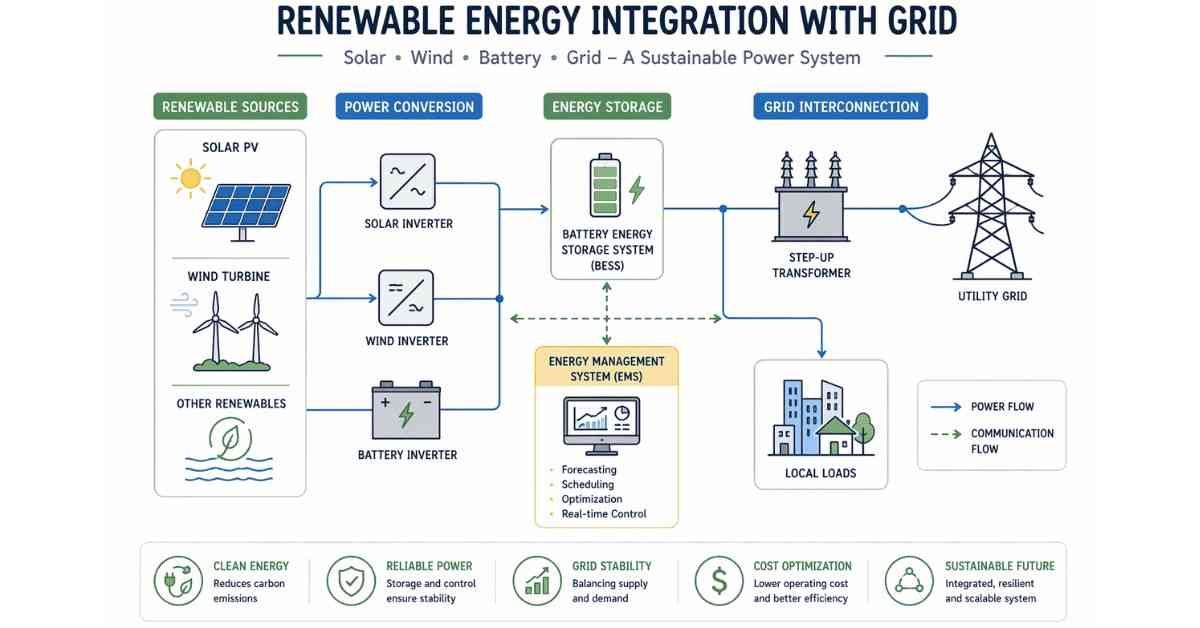
Booming Opportunity: India’s push toward 500 GW renewable capacity by 2030 creates massive demand.
Major Companies:
- Adani Green Energy (largest)
- Tata Power Renewable
- ReNew Power
- Suzlon Energy (wind)
- Azure Power
- Waaree Energies (solar)
Job Roles:
- Solar/Wind Plant Engineer
- Grid Integration Engineer
- Energy Storage Engineer
- O&M (Operations & Maintenance) Engineer
- Energy Analyst
Salary Range:
- Fresher: ₹4-8 LPA
- Mid-level: ₹8-16 LPA
- Senior: ₹16-30 LPA
Why It’s Attractive:
- Growing sector with future focus
- Environmentally meaningful work
- Government policy support ensures growth
- Combination of traditional power systems with new technology
- Increasing salaries as sector matures
Essential Skills for Power Systems Careers
Technical Knowledge Requirements
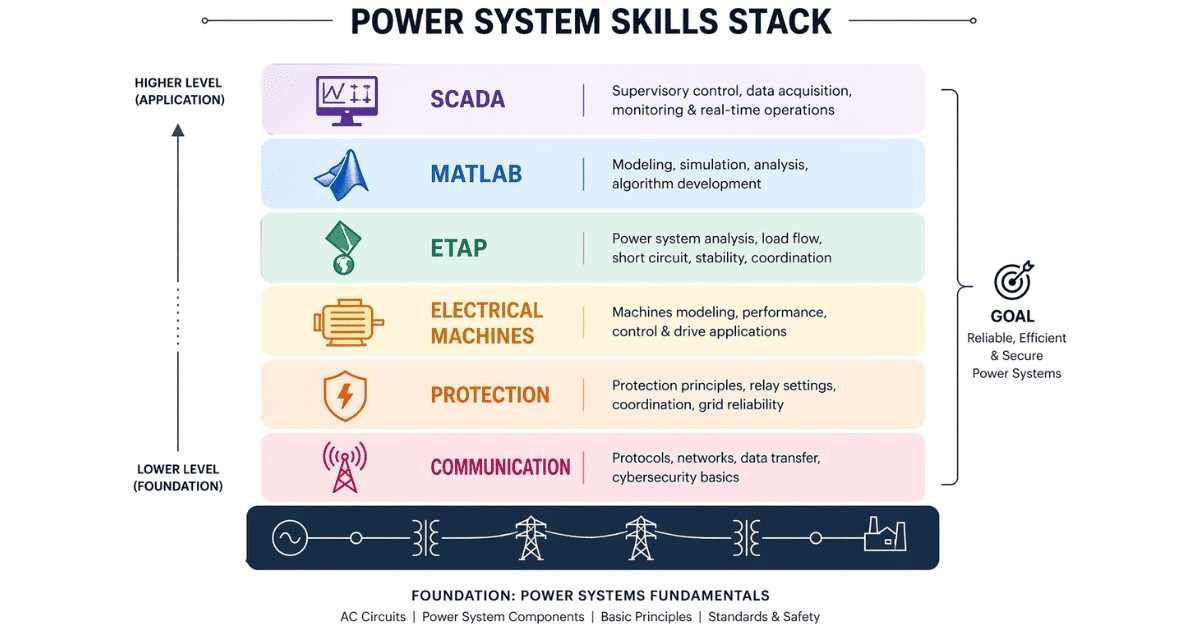
Fundamental Concepts:
- Power system analysis (load flow, fault analysis, stability)
- Electrical machines (generators, motors, transformers) in depth
- Protection and switchgear
- High voltage engineering
- Power electronics (increasingly important with HVDC, FACTS)
- Control systems for grid management
Industry Software Proficiency:
ETAP (Electrical Transient Analyzer Program):
- Industry standard for power system studies
- Load flow, short circuit, transient stability, arc flash analysis
- Learning it can add ₹2-4 LPA to your package
- Student version available for learning
PSS/E (Power System Simulator for Engineering):
- Used by transmission system operators
- Large-scale grid simulation
- Required for transmission companies and ISOs
AutoCAD Electrical:
- Creating electrical schematics
- Panel layouts and one-line diagrams
- Almost universally required in job descriptions
MATLAB/Simulink:
- Power system modeling
- Control algorithm development
- Research and advanced analysis
SCADA Systems:
- Grid monitoring and control
- Understanding HMI (Human-Machine Interfaces)
- Alarm management
Other Useful Tools:
- PVsyst/Helioscope (for solar projects)
- DIgSILENT PowerFactory
- PSCAD (for detailed electromagnetic transients)
- MS Excel (surprisingly important for calculations and reports)
Regulatory Knowledge
Indian Context:
- Indian Electricity Grid Code (IEGC): Rules for grid operation
- Central Electricity Authority (CEA) Regulations: Standards for equipment and installation
- State Electricity Regulatory Commissions: Tariff and policy
- Indian Electricity Act 2003: Legal framework
- National Electrical Safety Code: Safety requirements
Standards Knowledge:
- IEC standards for equipment
- IEEE standards (particularly protection and relaying)
- IS codes (Indian Standards) for electrical installations
Practical Skills
Field Experience:
- Reading protection settings
- Understanding substation layouts
- Recognizing equipment (circuit breakers, isolators, CTs, PTs)
- Safety procedures (lockout/tagout, PPE)
- Troubleshooting grid issues
Analytical Skills:
- Interpreting load curves and power quality data
- Root cause analysis of outages
- Energy audit and loss reduction
- Economic analysis of projects
Soft Skills Specific to Power Sector
Crisis Management: When grid fails, decisions needed quickly under pressure.
Communication: Explaining technical issues to non-technical management, regulatory bodies, public.
Team Coordination: Grid operation involves multiple teams generation, transmission, distribution coordinating in real-time.
Attention to Detail: Small error in protection settings can cause massive blackout.
Patience and Steady Temperament: Power systems are massive, slow-changing systems. Not for those seeking rapid change.
Education and Certifications
Academic Background
B.Tech/B.E. Electrical Engineering: Standard entry point. Focus on power systems electives in final years.
M.Tech Specialization:
- Power Systems
- Power Electronics & Drives
- High Voltage Engineering
- Renewable Energy Systems
When M.Tech adds value:
- For R&D roles in organizations like CPRI, ERDA
- Academic positions
- High-level design roles
- GATE score didn’t secure desired PSU in B.Tech
Professional Certifications
PE (Professional Engineer) Certification:
- Offered by Institution of Engineers India (IEI)
- Requires 5 years experience
- Adds credibility for consulting work
- Valued for senior positions
PMP (Project Management Professional):
- Valuable for project-facing roles in EPC companies
- Shows management capability
- Helps transition to project management
Vendor Certifications:
- ABB/Siemens training on specific equipment
- SCADA software certifications
- Protection relay programming
Energy Manager Certification:
- Bureau of Energy Efficiency (BEE) certification
- Valuable for energy efficiency roles
- Mandatory for designated consumers
Day in the Life: What You Actually Do Power Plant Engineer
Typical Day:
- Review previous shift reports and equipment status
- Monitor generation parameters temperatures, pressures, outputs
- Coordinate with grid operator for load scheduling
- Supervise maintenance activities
- Troubleshoot equipment issues
- Ensure environmental compliance
- Document operations in logbooks
- Participate in safety meetings
Work Environment:
- Usually on plant site (may be remote location)
- Shift work common in operations (rotating 8-12 hour shifts)
- Engineering roles typically day shifts
- Mix of control room monitoring and field inspection
Transmission Engineer
Typical Day:
- Monitor transmission system through SCADA
- Analyze system loading and congestion
- Plan maintenance outages to minimize impact
- Respond to line faults and coordinate restoration
- Review protection operations
- Work on transmission expansion planning
- Coordinate with generation and distribution
- Prepare reports for regulatory compliance
Work Environment:
- Mix of office (planning, analysis) and field (inspections, commissioning)
- Usually posted at regional load dispatch centers or transmission offices
- Some travel for line inspections and new project sites
Distribution Engineer
Typical Day:
- Monitor distribution network and outages
- Coordinate crew for fault restoration
- Analyze loss reports and plan reduction measures
- Review consumer complaints and disconnection cases
- Plan network augmentation for growing loads
- Supervise new connections and metering
- Interact with consumers and local authorities
- Manage contractors for construction work
Work Environment:
- Field-heavy role with regular site visits
- Office work for planning and reporting
- Customer interaction more than other power roles
- Posted in cities/towns (better locations than generation)
Protection Engineer
Typical Day:
- Analyze protection relay operations
- Set and test protective relays for substations
- Investigate fault incidents
- Coordinate protection settings between substations
- Commissioning protection systems for new installations
- Training operators on protection systems
- Review SCADA alarms and events
- Documentation of settings and schemes
Work Environment:
- Mix of substation fieldwork and office analysis
- Technical depth specialized knowledge
- Critical role mistakes have major consequences
- Some travel for commissioning projects
Career Progression Path
Typical Trajectory in PSU
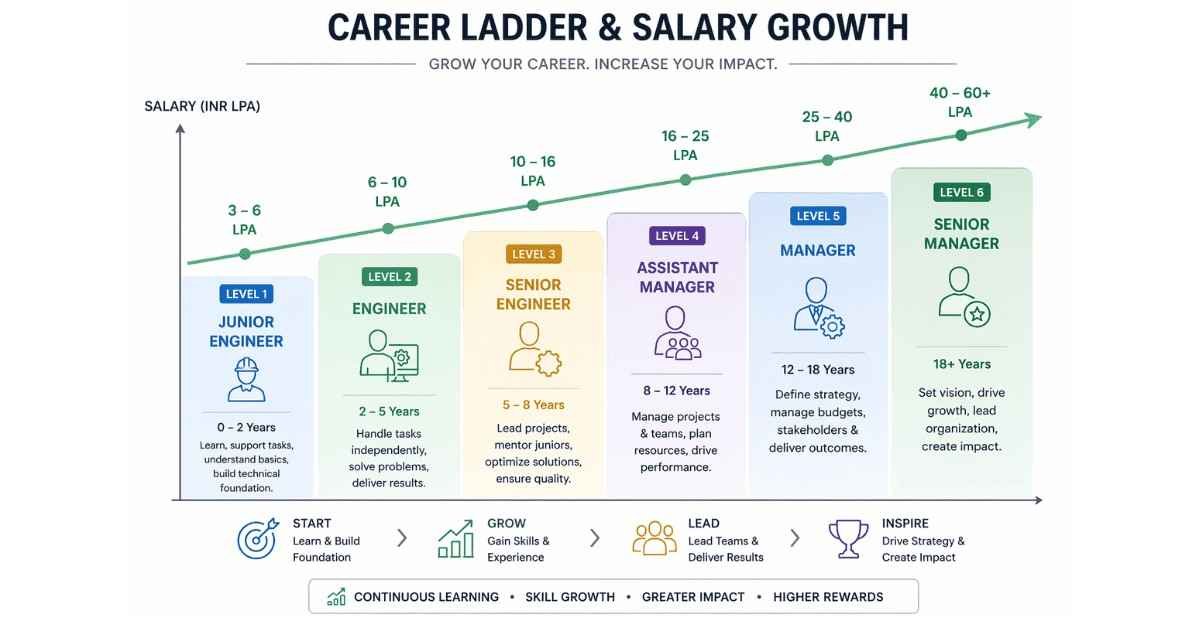
Years 0-3: Junior Engineer/Assistant Engineer (E1)
- Learning phase understanding operations
- Assisting senior engineers
- Shift duties if in operations
- Small project responsibilities
- Salary: ₹6-9 LPA
Years 3-7: Engineer/Senior Engineer (E2)
- Independent responsibilities
- Leading small projects
- Equipment in-charge roles
- Training juniors
- Salary: ₹10-15 LPA
Years 7-12: Senior Engineer/Deputy Manager (E3)
- Section/area in-charge
- Significant projects management
- Planning and strategy involvement
- Salary: ₹15-22 LPA
Years 12-20: Assistant Manager/Manager (E4-E5)
- Department head roles
- Multi-site responsibilities
- Budget and resource management
- Salary: ₹22-35 LPA
Years 20+: Senior Manager/General Manager (E6-E7)
- Strategic leadership
- Large operations/regions
- Policy and planning
- Salary: ₹35-55 LPA
Faster Track in Private Sector
High performers can reach senior positions faster:
- 5 years to leadership roles possible
- Performance-based rather than time-based
- Higher peak salaries but more uncertainty
Salary Deep Dive
Starting Salaries by Organization Type
Top PSUs (NTPC, PGCIL): ₹8-9 LPA CTC
Other PSUs: ₹6-8 LPA CTC
Private utilities: ₹5-8 LPA
Equipment manufacturers: ₹5-9 LPA
EPC companies: ₹4-7 LPA
Renewable energy companies: ₹4-8 LPA
Growth Trajectory
5 Years Experience:
- PSU: ₹12-15 LPA
- Private: ₹10-18 LPA
- Consulting/EPC: ₹10-16 LPA
10 Years Experience:
- PSU: ₹18-25 LPA
- Private: ₹20-35 LPA
- Consulting/EPC: ₹18-30 LPA
15+ Years (Senior Positions):
- PSU: ₹25-45 LPA
- Private: ₹30-60 LPA
- Consulting/EPC: ₹30-50 LPA
Other Compensation Factors
PSU Benefits (adding 20-30% to take-home value):
- Subsidized/free accommodation
- Medical for family
- LTC allowance
- Gratuity and pension/NPS
- Perks like vehicle, driver for senior positions
Private Sector Benefits:
- Performance bonuses (10-30% of base)
- Stock options in some companies
- Higher flexibility in compensation negotiation
Challenges and Realities
The Honest Drawbacks
Posting Locations: Generation engineers especially may face remote postings thermal plants in coal-belt areas, hydro plants in hilly regions. Not everyone likes this.
Shift Work: Operations roles involve rotating shifts including nights. Disrupts personal life, though shift allowances compensate somewhat.
Slower Innovation: Power systems change gradually. If you crave rapid technological change, other electrical fields might suit better.
Traditional Culture: Especially in PSUs, hierarchical structures and traditional work culture. Not the startup-like environment some prefer.
Physical Demands: Field roles involve visiting substations, climbing towers, working in outdoor conditions.
The Often-Overlooked Advantages
Job Security: In uncertain economic times, power sector stability is valuable. People always need electricity.
Meaningful Work: Powering homes, hospitals, industries tangible societal impact.
Growing Sector: India’s power demand growing 6-7% annually. Electrification, EVs, data centers all increase demand.
Respected Career: Traditional respect for power sector engineers in Indian society. Family pride factor matters for many.
Work-Life Balance: Especially in PSUs and planning roles. Unlike some IT jobs with constant overtime.
Diverse Opportunities: Can work in generation, transmission, distribution, equipment, consulting variety within field.
Future Trends Transforming Power Systems
Renewable Energy Integration
The Challenge: Integrating variable renewable energy (solar, wind) without destabilizing grid.
Opportunities: Engineers specializing in renewable integration, forecasting, grid flexibility highly valued.
Smart Grid Technologies
What’s Coming:
- Advanced metering infrastructure (AMI)
- Distribution automation
- Demand response systems
- Grid analytics using AI/ML
- Real-time optimization
Skills Needed: Combination of traditional power systems with IT, data analytics, communication networks.
Energy Storage Systems
Battery Integration: Grid-scale batteries for renewables smoothing and peak shifting.
Career Opportunity: Engineers understanding both power systems and battery technology in high demand.
Electric Vehicle Impact
Grid Challenge: Millions of EVs charging impacts distribution networks significantly.
New Roles: EV charging infrastructure planning, vehicle-to-grid systems, load management.
HVDC and Supergrid
Technology: High Voltage Direct Current for long-distance, efficient transmission.
India Context: Connecting diverse regions, offshore wind integration.
Microgrids and Distributed Generation
Concept: Localized grids that can operate independently.
Applications: Remote areas, military bases, campuses, islands.
AI and Machine Learning
Applications:
- Predictive maintenance
- Fault prediction
- Load forecasting
- Optimal grid operation
- Outage management
Skill Combination: Power engineers with data science skills highly valuable.
Is Power Systems Right for You?
Choose Power Systems If You:
- Value job security and stability highly
- Appreciate work with tangible, critical impact
- Enjoy large-scale, complex systems
- Comfortable with gradual technological change
- Like mix of technical and operational work
- Willing to accept remote postings (initially)
- Appreciate respect that comes with traditional careers
- Interested in energy transition and sustainability
Consider Other Specializations If You:
- Need cutting-edge technology constantly
- Strongly prefer only metro city locations
- Want very high starting salaries (₹15+ LPA)
- Dislike shift work or operations roles
- Prefer pure design/development without operations
- Want startup-like work culture only
- Need maximum career flexibility
Getting Started: Action Steps
During College:
- Focus on core power subjects: Electrical machines, power systems, protection, high voltage
- Learn ETAP or PSS/E: Huge differentiator in applications
- Master AutoCAD Electrical: Almost universal requirement
- Do internship at power company: Even 4-6 weeks teaches immensely
- Prepare for GATE seriously: If targeting PSUs (start in pre-final year)
- Complete mini-project in power domain: Shows genuine interest
- Join IEEE Power & Energy Society student chapter: Networking and learning
For GATE Preparation:
- Start early: Pre-final year summer (12-15 months before exam)
- Focus areas: Power systems, machines, power electronics get 25-30% weightage
- Regular practice: Daily 4-5 hours minimum
- Previous papers: Solve 10-15 years thoroughly
- Mock tests: Essential for time management
- Target score: 600+ for top PSUs, 500+ for good options
First Job Strategy:
- PSU through GATE: Best option if you value security
- Private utilities: Good alternative with metro postings
- Equipment companies: If interested in product side
- EPC companies: Excellent learning, seeing complete projects
- Renewable energy: Future-focused, growing rapidly
Don’t be too rigid—your first job is learning opportunity. Many successful power engineers changed sectors after gaining experience.
Conclusion: Powering India's Future
Power systems engineering might not be the most glamorous electrical specialization. It won’t make you overnight rich like some tech startups. You probably won’t work in Google-like offices with free gourmet food.
But here’s what it offers: the satisfaction of keeping a nation running, the security of working in an essential sector, the respect of building critical infrastructure, and increasingly, the excitement of transforming to clean energy future.
As India electrifies transportation, integrates renewable energy, builds smart cities, and powers growing economy, power systems engineers will be absolutely central to that transformation.
For students who value meaningful work, appreciate complex systems, and want stable careers while contributing to nation-building, power systems engineering offers an excellent path.
The lights are always on because power systems engineers make it happen. It’s not flashy work. It’s essential work. And that makes all the difference.