
Industry Sectors & Employment Opportunities
Table of Contents
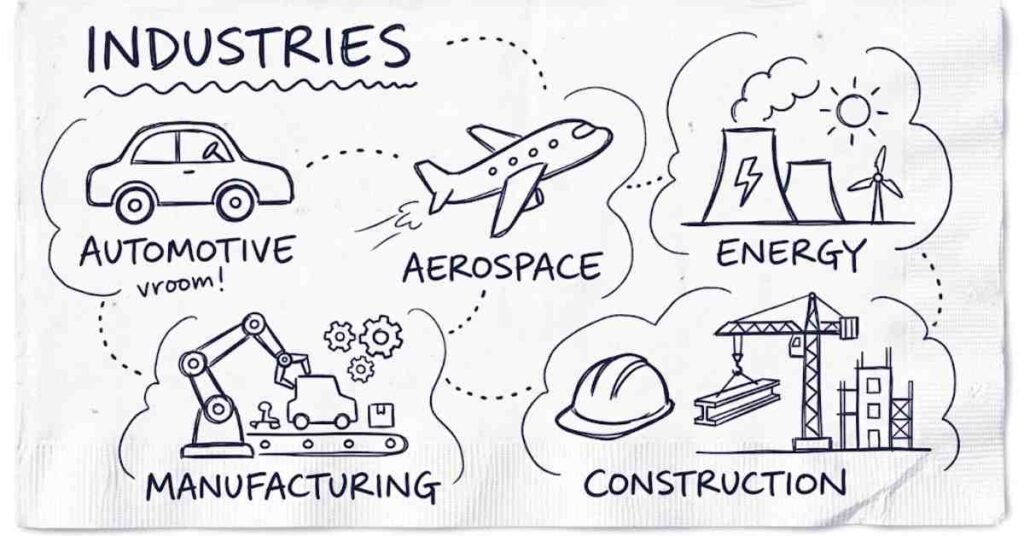
1. Understanding the Industry Landscape
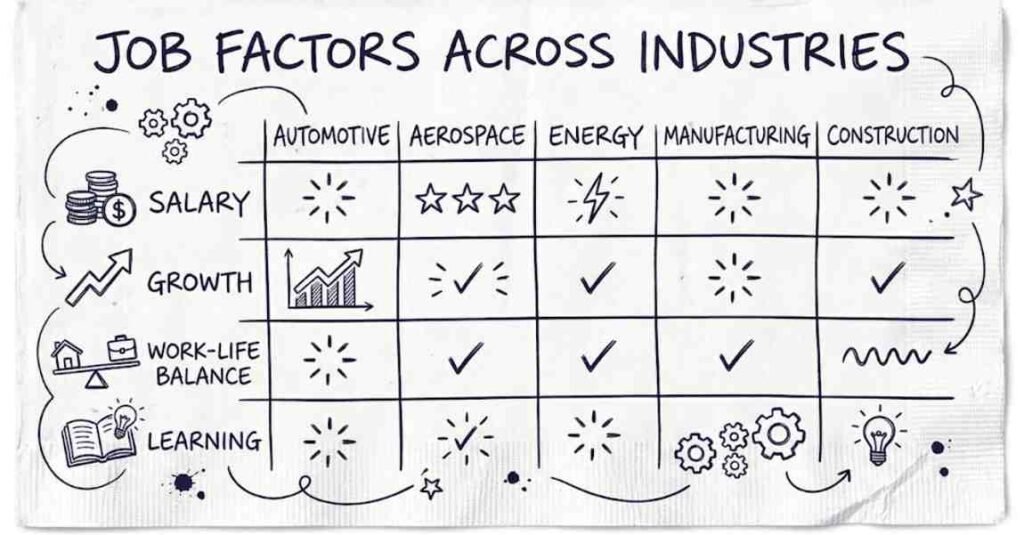
One of the biggest advantages of mechanical engineering is versatility. Unlike some niche branches, mechanical engineers find opportunities across nearly every sector that makes, moves, or manages physical products and systems.
However, not all sectors are created equal. Some offer:
- Better starting salaries.
- Stronger long‑term growth.
- More learning opportunities.
- Better work‑life balance.
- Geographic flexibility.
Understanding the landscape helps you target your applications strategically rather than applying randomly everywhere.
2. Automotive & Auto Components
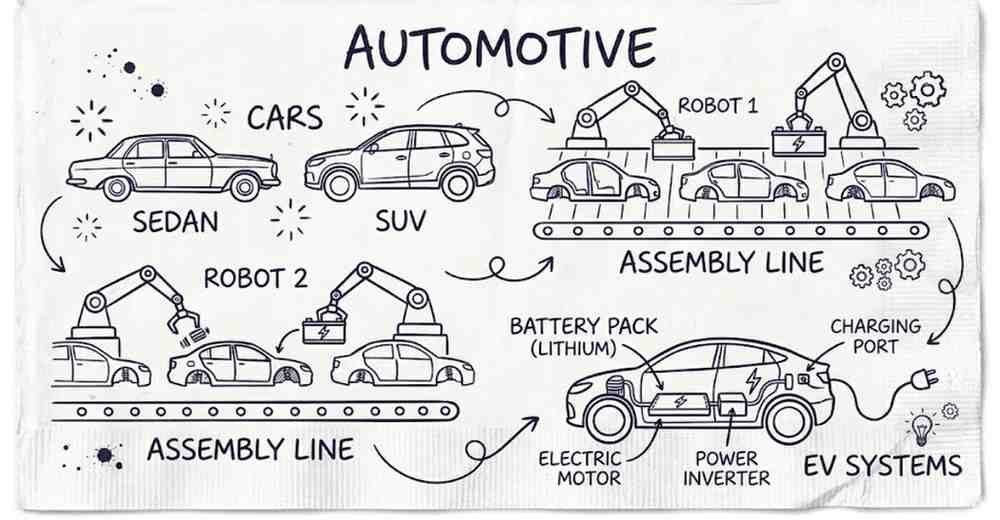
What this sector includes:
- Passenger vehicle OEMs (Tata Motors, Maruti Suzuki, Mahindra, Hyundai, Honda, etc.).
- Two‑wheeler companies (Hero, Bajaj, TVS, Royal Enfield).
- Commercial vehicles (Ashok Leyland, Eicher, BharatBenz).
- Tier‑1 suppliers (Bosch, Continental, Motherson, ZF).
- EV companies (Ola Electric, Ather, Tata EV division, etc.).
Roles available:
- Design engineer (powertrain, chassis, body, interiors).
- CAE engineer (crash, NVH, durability).
- Testing & validation engineer.
- Manufacturing/production engineer at assembly plants.
- Quality engineer.
- After‑sales and service engineering.
Where jobs are concentrated:
- Pune, Chennai, Bangalore, Gurgaon/Manesar, Sanand (Gujarat), Hosur.
Pros:
- Large sector with constant hiring.
- Excellent learning—automotive touches every mechanical discipline.
- Good exposure to global standards and processes.
- Growing EV segment creating new opportunities.
Cons:
- Can be high‑pressure with tight launch deadlines.
- Traditional auto has cyclical hiring based on market conditions.
- Starting salaries often modest compared to IT.
Key companies hiring:
- OEMs: Tata Motors, Mahindra & Mahindra, Maruti Suzuki, Hyundai Motor India, Hero MotoCorp, Bajaj Auto.
- Suppliers: Bosch, Continental, Motherson Sumi, Bharat Forge, ZF India, Varroc.
EV Startups: Ola Electric, Ather Energy, Revolt Motors.
3. Aerospace & Defence
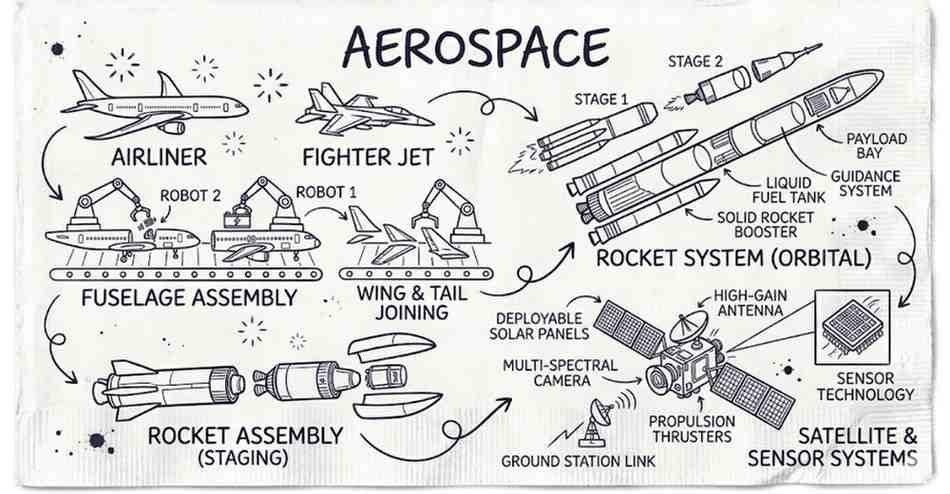
What this sector includes:
- Space (ISRO and satellite companies).
- Defence aviation and systems (DRDO, HAL, BEL).
- Private aerospace (Tata Advanced Systems, L&T Defence, Bharat Dynamics).
- UAV/drone companies.
- MRO (Maintenance, Repair, Overhaul) providers.
Roles available:
- Structural design and analysis engineer.
- Systems engineer.
- Test engineer.
- Manufacturing engineer (tooling, composites, assembly).
- Quality & certification specialist.
Where jobs are concentrated:
- Bangalore, Hyderabad, Trivandrum, Nashik, Chennai, Kanpur.
Pros:
- Prestigious, intellectually challenging work.
- High job security, especially in PSUs and government.
- Cutting‑edge technology exposure.
- Strong sense of purpose (national projects).
Cons:
- Highly competitive entry—limited seats.
- Bureaucracy in government organizations can slow things down.
- Private aerospace jobs still relatively fewer than auto/IT.
- Often requires higher academic performance and sometimes GATE scores.
Key organizations hiring:
- Government: ISRO, DRDO, HAL (Hindustan Aeronautics Limited), NAL (National Aerospace Laboratories), BEL.
- Private: Tata Advanced Systems, L&T Defence, Bharat Dynamics, Dynamatic Technologies.
- Startups: Skyroot Aerospace, Agnikul Cosmos, ideaForge (drones).
4. Energy & Power Generation
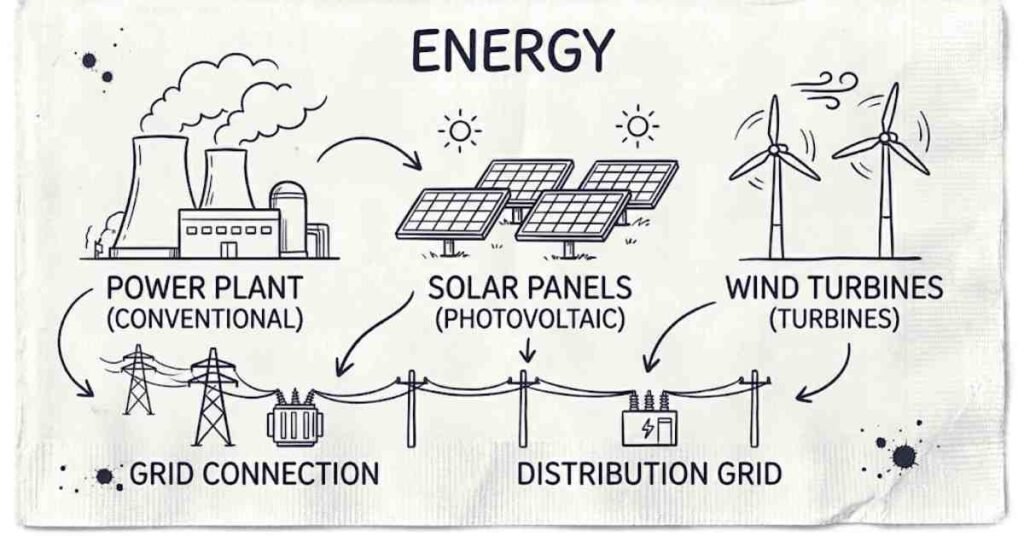
What this sector includes:
- Thermal power plants (coal, gas).
- Hydroelectric plants.
- Nuclear power (NPCIL).
- Renewable energy (solar, wind, biomass).
- Power transmission and distribution companies.
Roles available:
- Power plant engineer (operations & maintenance).
- Boiler/turbine engineer.
- Renewable energy project engineer.
- Energy efficiency consultant.
- Plant performance engineer.
Where jobs are concentrated:
- Power plants are spread across India, often in semi‑urban or rural areas.
- Renewables increasingly in Rajasthan, Gujarat, Karnataka, Tamil Nadu.
- Corporate offices in metros.
Pros:
- Stable, essential sector.
- PSU jobs offer excellent benefits and security.
- Growing renewable segment.
- Good long‑term career progression into plant management.
Cons:
- Thermal plants often in remote locations.
- Shift work in operations roles.
- Traditional power sector growth slower due to shift toward renewables.
Key companies hiring:
- PSUs: NTPC, Power Grid Corporation, NHPC, SJVN, NLC India.
- Private: Tata Power, Adani Power, JSW Energy, ReNew Power, Azure Power.
- Nuclear: NPCIL (Nuclear Power Corporation of India Limited).
5. Oil, Gas & Petrochemicals
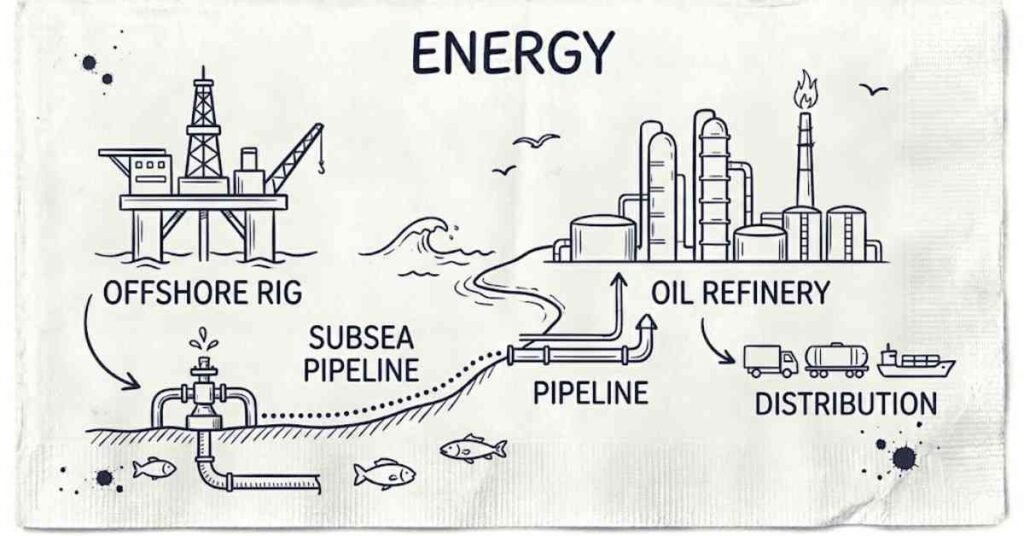
What this sector includes:
- Upstream (exploration, drilling).
- Refineries (processing crude oil).
- Petrochemicals (plastics, polymers, chemicals from petroleum).
- Pipelines and storage.
- LNG terminals.
Roles available:
- Mechanical engineer (maintenance, operations).
- Rotating equipment engineer (pumps, compressors, turbines).
- Piping engineer.
- Process engineer.
- Project engineer for new plants/expansions.
Where jobs are concentrated:
- Gujarat (Jamnagar, Vadodara), Mumbai, Visakhapatnam, Haldia, Paradip, Mangalore.
- Offshore rigs (Mumbai High, East coast).
Pros:
- Among the highest‑paying sectors for mechanical engineers.
- Excellent benefits, overseas postings possible.
- PSUs offer strong job security.
- Exposure to large‑scale, complex systems.
Cons:
- Refineries and offshore often in remote or harsh locations.
- Shift work and long rotations (especially offshore 14 days on/off).
- Safety‑critical environment strict protocols.
- Sector faces long‑term uncertainty due to global energy transition.
Key companies hiring:
- PSUs: ONGC, Indian Oil, HPCL, BPCL, GAIL, Oil India.
- Private: Reliance Industries, Essar Oil, Cairn India, Nayara Energy.
6. Manufacturing & Heavy Engineering
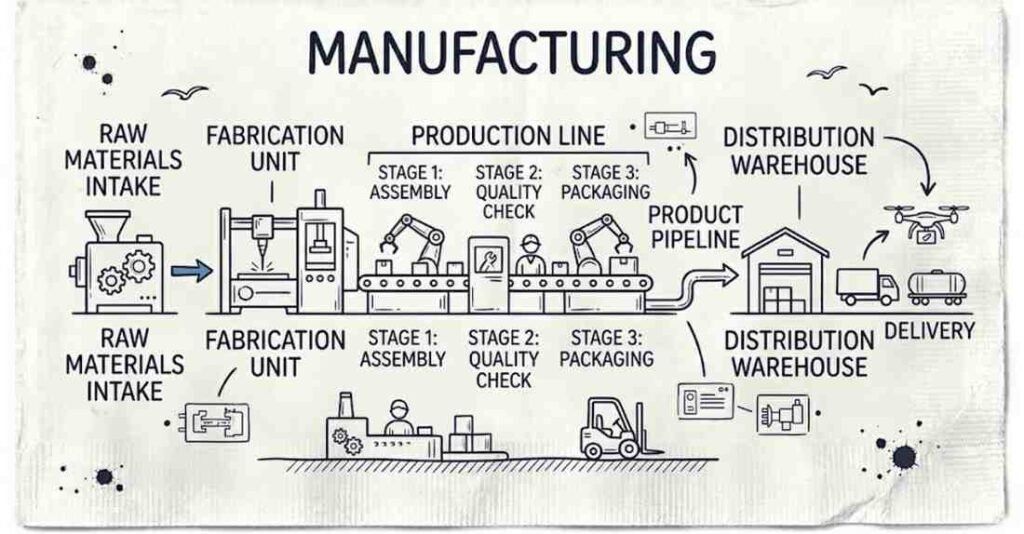
What this sector includes:
- Steel plants.
- Heavy machinery and equipment manufacturers.
- Material handling equipment.
- Industrial valves, pumps, compressors.
- Machine tool manufacturers.
Roles available:
- Production/manufacturiengineer.
- Design engineer (industrial machinery).
- Quality assurance engineer.
- Maintenance & reliability engineer.
- Process improvement engineer.
Where jobs are concentrated:
- Industrial hubs—Pune, Coimbatore, Ahmedabad, Jamshedpur, Visakhapatnam, Kolkata.
Pros:
- Core mechanical engineering work.
- Solid foundational learning.
- Wide variety of products and processes.
- Decent job stability in established companies.
Cons:
- Can be traditional, slower to adopt new tech.
- Manufacturing roles can involve tough plant environments.
- Salary growth sometimes slower than newer sectors.
Key companies hiring:
- Heavy Engineering: L&T (Larsen & Toubro), BHEL, Thermax, Kirloskar.
- Steel: Tata Steel, JSW Steel, SAIL.
Machinery: Cummins India, Atlas Copco, BEML, ELGI Equipment.
7. Construction, Infrastructure & MEP Services
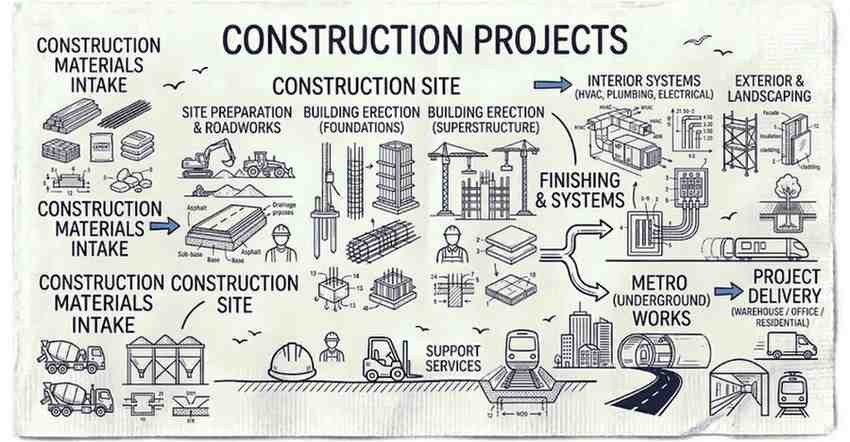
What this sector includes:
- Building construction (commercial, residential).
- Infrastructure projects (metros, airports, highways, ports).
- MEP services (Mechanical, Electrical, Plumbing) for buildings.
- HVAC installation and servicing.
Roles available:
- MEP design engineer.
- Site mechanical engineer.
- HVAC engineer.
- Project engineer (infrastructure).
- Facility management engineer.
Where jobs are concentrated:
- Metro cities and tier‑2 cities with active construction.
- Project‑based, so location varies.
Pros:
- Booming sector with huge infrastructure push in India.
- Variety of projects (airports, metro, IT parks, hospitals).
- Quick exposure to end‑to‑end project execution.
- Consulting firms offer good work‑life balance.
Cons:
- Site work can be demanding—heat, dust, long hours.
- Project‑based hiring can be cyclical.
- Design roles better than site execution roles for lifestyle.
Key companies hiring:
- Construction/Infra: L&T Construction, Shapoorji Pallonji, Punj Lloyd, GMR, GVK.
- MEP/HVAC: Voltas, Blue Star, Johnson Controls, Carrier, Trane.
- Consulting: JLL, CBRE, Cushman & Wakefield (facility management).
8. Consumer Goods & Appliances
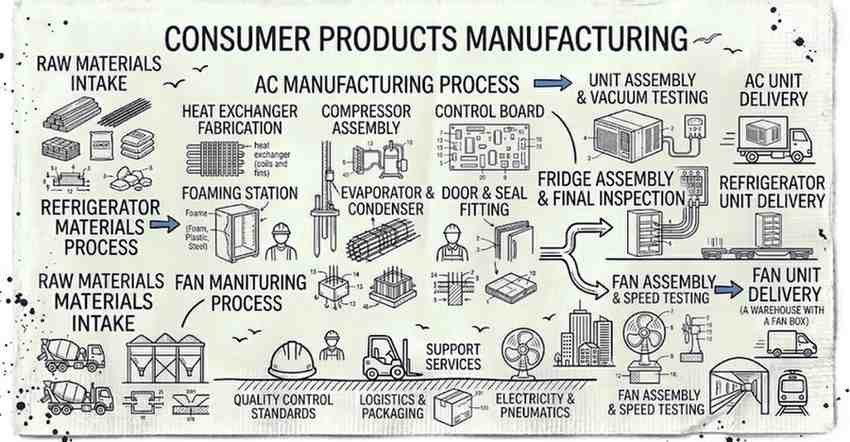
What this sector includes:
- Home appliances (refrigerators, washing machines, AC, fans).
- Consumer electronics.
- Industrial and consumer tools.
- Furniture and fixtures.
Roles available:
- Product design engineer.
- Manufacturing/production engineer.
- Quality engineer.
- R&D engineer.
Where jobs are concentrated:
- Manufacturing hubs—Pune, Chennai, Gurgaon, Ahmedabad, Noida.
Pros:
- Fast‑paced consumer‑driven design.
- Opportunity to see your work in millions of homes.
- Growing Indian consumer market.
- Good balance of design and manufacturing.
Cons:
- Cost pressures intense—affordability often trumps premium engineering.
- High competition, tight margins.
Key companies hiring:
- Appliances: Whirlpool, LG, Samsung, Godrej Appliances, Voltas.
- Fans/Small appliances: Havells, Crompton, Bajaj Electricals, Usha.
9. Consulting & Engineering Services
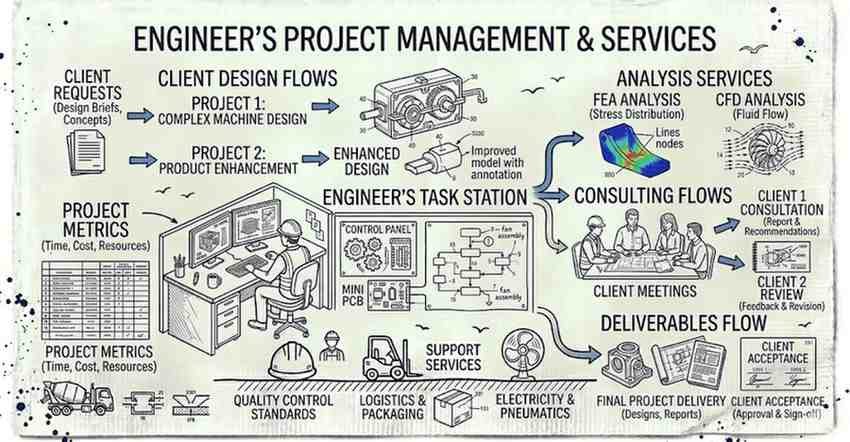
What this sector includes:
- Engineering service providers offering design, analysis, testing to global clients.
- Management consulting with technical focus.
- Product development companies.
Roles available:
- CAD/CAE engineer.
- Design engineer (multi‑client projects).
- Technical consultant.
- Project engineer.
Where jobs are concentrated:
- Bangalore, Pune, Hyderabad, Chennai, Gurgaon.
Pros:
- Exposure to multiple industries and clients.
- Strong technical skill‑building.
- Structured career growth programs.
- Often better work‑life balance than manufacturing plants.
Cons:
- Can feel like “outsourced” work rather than owning products.
- Sometimes repetitive project types.
- Client pressures and deadlines.
Key companies hiring:
- Global ER&D: Tata Technologies, Tech Mahindra, Cyient, LTTS (L&T Technology Services), HCL Technologies, Infosys Engineering.
- Niche: Altair, AVL, Ricardo, FEV (India operations).
10. Public Sector Undertakings (PSUs)
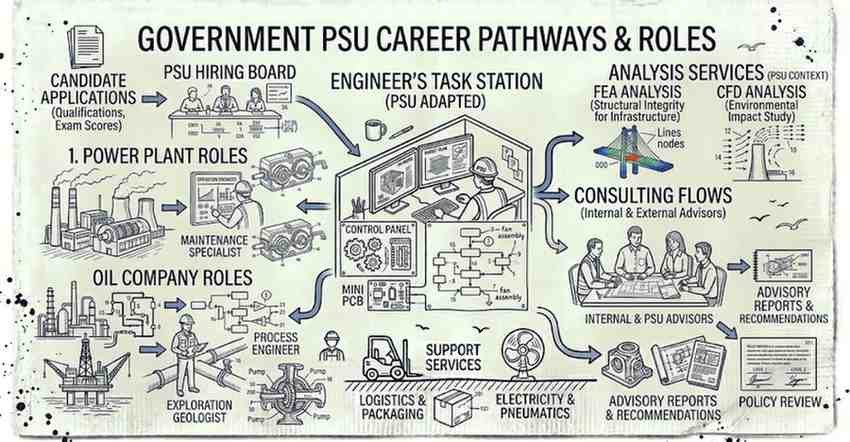
What PSUs are:
Government‑owned companies across sectors—energy, oil & gas, steel, heavy engineering, aerospace, mining.
Why PSUs are attractive:
- Excellent job security.
- Structured pay scales (often competitive with private at entry, better long‑term benefits).
- Work‑life balance generally better.
- Pensions, housing, medical benefits.
- Respect and social status.
Entry routes:
- GATE score: Most PSUs recruit through GATE (Graduate Aptitude Test in Engineering).
- Campus placements: Some PSUs visit top campuses.
- Direct recruitment exams: Some have their own tests.
Popular PSUs hiring mechanical engineers:
- BHEL, ONGC, IOCL, NTPC, GAIL, Power Grid, SAIL, Coal India, HAL, BEL, NPCIL, AAI (Airports Authority).
Reality check:
- PSU jobs are prestigious but can have bureaucracy and slower decision‑making.
- Postings can be in remote areas.
- Career growth can feel slower than aggressive private companies.
11. Emerging & High‑Growth Sectors
Robotics & Automation Companies:
- GreyOrange, Addverb Technologies, Rapyuta Robotics.
- Roles: robotics engineer, automation specialist, application engineer.
Electric Vehicles (Beyond OEMs):
- Battery manufacturers, charging infrastructure, power electronics.
- Companies: Exide, Amara Raja, Tata Chemicals, Charge+, etc.
3D Printing / Additive Manufacturing:
- Service bureaus, machine manufacturers, material suppliers.
- Roles: AM engineer, design for additive manufacturing.
Drones & UAVs:
- ideaForge, Asteria Aerospace, Throttle Aerospace.
- Roles: mechanical design, flight systems, testing.
Cleantech & Sustainability:
- Waste‑to‑energy, carbon capture, green hydrogen.
Companies vary; often startups or projects within larger firms.
12. How to Choose the Right Sector for YOU
Ask yourself these questions:
Career priority:
- Learning & growth? → Automotive, aerospace, consulting.
- Stability & security? → PSUs, large manufacturing.
- High salary fast? → Oil & gas, consulting, niche automation.
- Work‑life balance? → PSUs, design consulting, some MNCs.
Lifestyle preference:
- Comfortable with shifts/remote locations? → Power, oil & gas, some manufacturing.
- Prefer metro life? → Automotive, aerospace, consumer goods, consulting.
- Want to travel for projects? → Construction, commissioning roles, consulting.
Sector health:
- Growing fast? → EVs, automation, renewables.
- Stable? → FMCG, appliances, core manufacturing.
- Uncertain? → Traditional coal power, diesel vehicles.
Your technical interests:
- Love thermodynamics? → Power, HVAC, thermal systems.
- Love design & CAD? → Automotive, consumer products, aerospace.
- Love hands‑on factory work? → Manufacturing, production roles.
- Love cutting‑edge tech? → Robotics, aerospace, R&D.
13. Application Strategy for Students
Don’t just apply everywhere randomly. Focus your efforts:
- Identify 3–4 target sectors based on your interests and goals.
- Research top 10–15 companies in those sectors.
- Tailor your resume to highlight relevant projects and skills for each sector.
- Build a sector‑specific portfolio if possible (e.g., automotive design projects if targeting auto).
- Network with alumni and professionals in those sectors via LinkedIn.
- Prepare for sector‑specific interview questions (automotive companies ask vehicle dynamics; energy companies ask thermodynamics depth).
Quality applications to the right companies beat mass‑applying to hundreds.
14. Final Thought: Industries Evolve Stay Adaptable
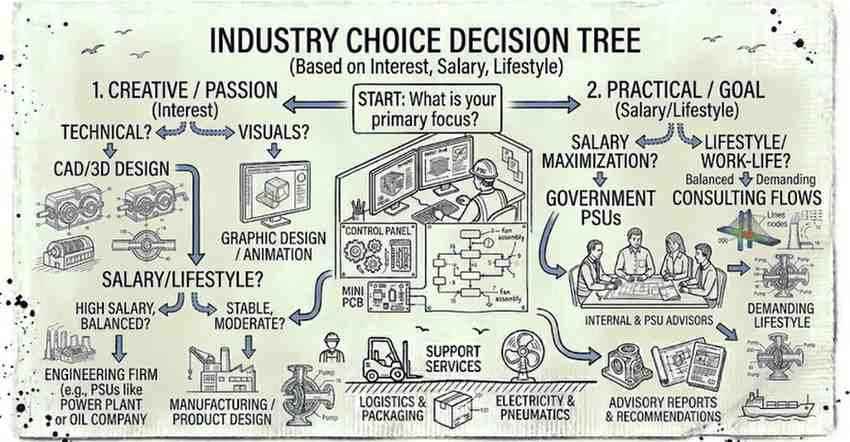
The best sector today might not be the best in 10 years. Coal was booming decades ago; now it’s contracting. EVs were a joke 10 years ago; now they’re mainstream.
Build transferable skills strong fundamentals, design, analysis, problem‑solving so you can pivot across sectors if needed. The mechanical engineers with long, successful careers aren’t those who picked the “perfect” sector; they’re the ones who stayed curious and adaptable.