
Design Engineering Careers
Table of Contents
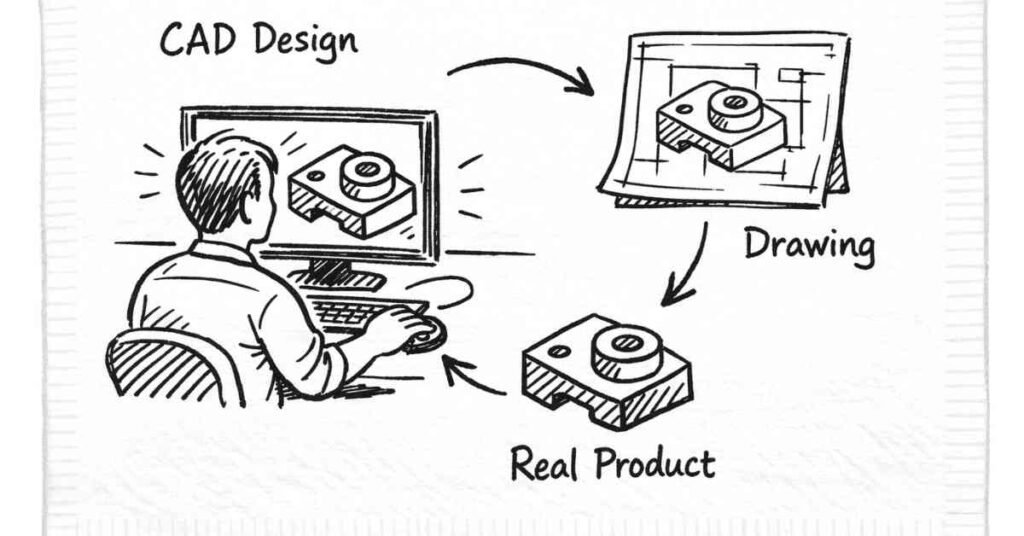
1. What Does a Mechanical Design Engineer Really Do?
When people hear “design”, they often imagine sketching cool concepts on paper. In reality, a mechanical design engineer spends most of their day:
- Creating and modifying 3D models and assemblies.
- Preparing detailed drawings for production.
- Checking fit, clearances, and tolerances.
- Coordinating with production, quality, and vendors.
- Solving problems when something doesn’t fit or fails in testing.
It’s a mix of creativity and discipline: you’re free to try ideas, but your designs must survive manufacturing, cost constraints, safety norms, and real‑world usage.
2. Day‑in‑the‑Life: A Realistic Picture
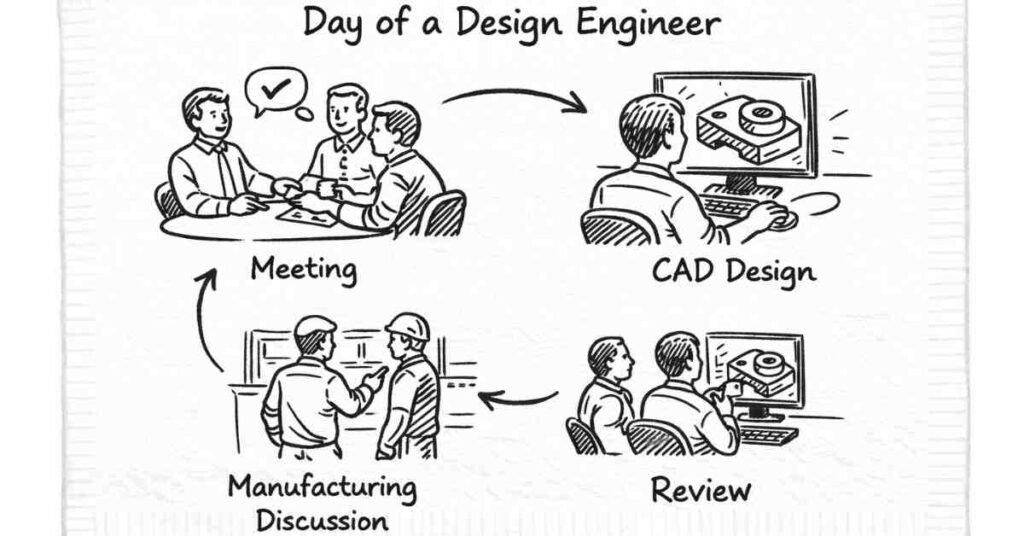
A typical day might look like this:
- Morning stand‑up with your team: quick update on design tasks, timelines, blockers.
- CAD work: updating a bracket design to reduce weight and cost, while maintaining strength.
- Design review: presenting options to your senior/manager, discussing pros/cons.
- Manufacturing discussion: production engineer says your design is hard to machine—you adjust features to simplify it.
- Supplier call: clarifying tolerances and materials for an outsourced component.
- Documentation: updating BOM (Bill of Materials), revising drawing revisions, writing design change notes.
- Late afternoon: running a quick simulation to check if your new design can handle load conditions.
If you enjoy “thinking with your hands on a mouse”, seeing your virtual models become real hardware can be very satisfying.
3. Essential Skills for Design Engineers
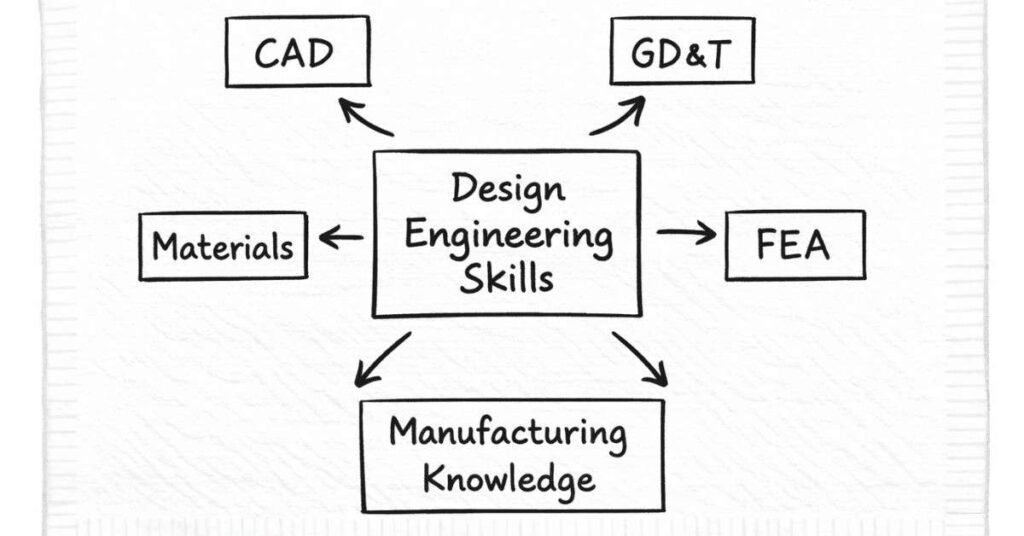
a) Core Technical Skills
- CAD Mastery: At least one 3D tool (SolidWorks/CREO/CATIA) at a high level; you should be fast and precise.
- 2D Drafting: Ability to create clear, fully dimensioned drawings with correct views.
- GD&T: Understanding of geometric tolerances, fits, and functional dimensions.
- Mechanics & Machine Design: Calculating stresses, factor of safety, bearing life, shaft sizing, etc.
Materials Knowledge: Choosing between steel grades, aluminium alloys, plastics, and composites based on application.
b) Analysis & Validation Skills
- Basic FEA to:
- Check stresses and deflections in critical areas.
- Compare design alternatives quickly.
- Check stresses and deflections in critical areas.
- Simple hand calculations to sanity‑check results.
- Understanding testing results and feeding back into design changes.
c) Cross‑Functional Skills
- Manufacturing Awareness: Knowing what is easy vs. difficult to machine, cast, bend, or weld.
- Cost Sensitivity: Reducing part count, choosing more economical processes, avoiding unnecessary tight tolerances.
- Communication: Explaining design decisions clearly to non‑design colleagues.
4. Education Path for Design Roles
Minimum entry: B.Tech/B.E. in Mechanical/Automobile/Mechatronics.
To aim specifically at design:
- Take electives in machine design, CAD/CAM, FEA, product design.
- Use your final‑year project to do a serious design‑and‑build or design‑and‑analysis project.
- Try to get an internship focused on design rather than pure production.
Diploma holders with strong CAD skills also get hired as CAD technicians/draftsmen and can grow into more responsible design roles over time.
5. Building a Strong Portfolio (Super Important)
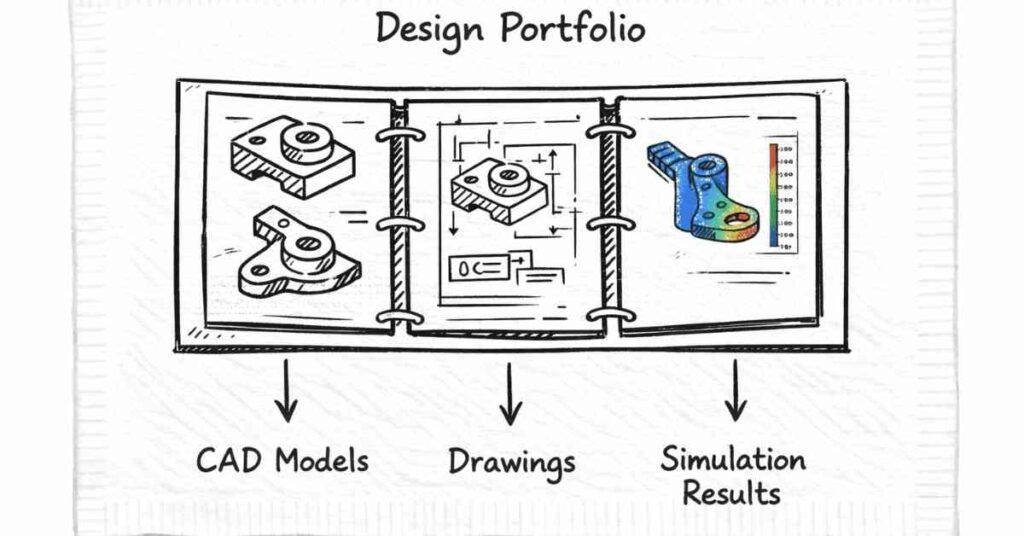
Grades matter, but for design roles, your portfolio is your biggest weapon.
Include:
- 5–10 of your best 3D models (with screenshots and brief descriptions).
- At least 2–3 assemblies (with exploded views).
- Example drawings with proper dimensions and tolerances.
- One design that includes basic FEA (show inputs, loads, constraints, and interpretation).
- Photos of any physical prototypes you’ve built or 3D printed.
Tips:
- Don’t just copy YouTube tutorials; modify and improve upon them or design your own versions.
- Show your thought process: what was the requirement, what options you considered, why you chose the final design.
- Host on a shared drive, personal website, or public portfolio platform. Add links to your resume and LinkedIn.
In interviews, walking recruiters through this portfolio often matters more than explaining marksheets.
6. Entry‑Level Roles & What to Expect
Common job titles:
- Graduate Trainee Engineer (Design).
- CAD Engineer.
- Junior Design Engineer.
- Design Trainee.
Typical early responsibilities:
- Making modifications to existing designs.
- Updating drawings and BOMs under guidance.
- Creating 3D models from sketches or reference parts.
- Learning company standards and templates.
Don’t expect to be “chief product designer” in your first year. Early on, your job is to master tools, learn best practices, and build trust by doing the basics well.
7. Salary & Growth (India, Broad Ranges)
(These are typical ballparks; exact numbers vary by city, company type, and your background.)
- Fresher (0–2 years): around ₹3–6 LPA in many companies; IIT/NIT/top private grads and strong CAD+portfolio can be higher.
- Mid‑level (3–7 years): often ₹6–12 LPA, depending on specialization (e.g., automotive, aerospace, niche machinery).
- Senior Design/Team Lead (8–12 years): ₹12–25 LPA range in good product companies.
- Architect/Manager/Head of Design: can exceed ₹25 LPA in large firms, especially MNCs.
Engineers who combine strong design skills with people management and basic business understanding often move into:
- Technical lead / design lead.
- Product manager (bridging engineering and business).
- Independent design consultant.
8. Common Mistakes to Avoid
- Only learning software commands, not understanding why you’re using a certain feature.
- Ignoring manufacturing and cost; creating “beautiful but unmakeable” designs.
- Over‑relying on simulation without hand calculations or engineering judgement.
- Focusing only on marks and ignoring practical skill development.
Not documenting your work—no portfolio = much harder interviews.
9. Roadmap: From Student to Strong Design Engineer
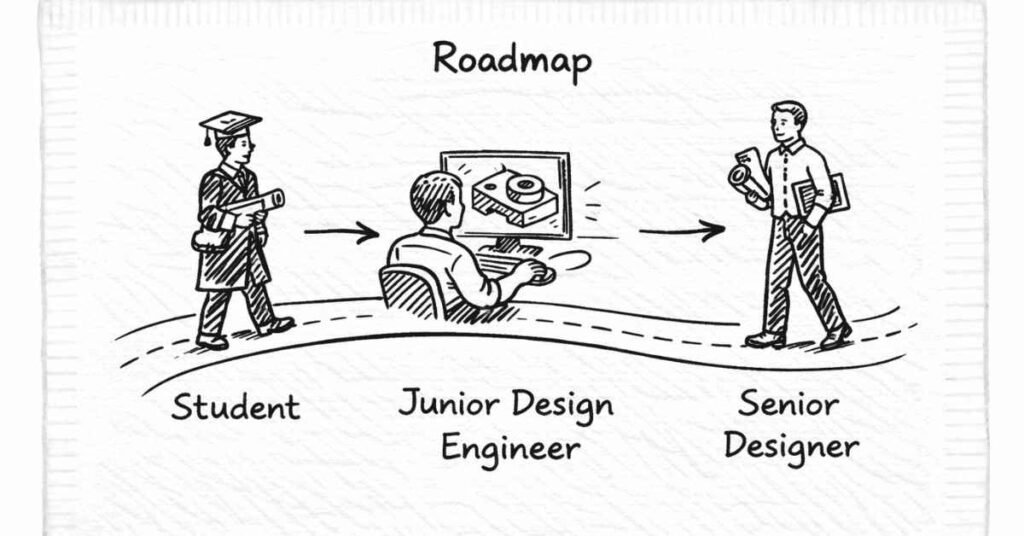
Year 1–2 (College):
- Get comfortable with at least one CAD tool.
- Do mini‑projects: model simple mechanisms, household products, etc.
- Start learning GD&T basics.
Year 3–4:
- Advanced CAD usage (surface modeling, complex assemblies).
- One good design‑heavy project (e.g., go‑kart chassis, machine fixture).
- Internship in a design‑related role if possible.
First 3 Years of Work:
- Build speed and accuracy in CAD.
- Learn your company’s standards thoroughly.
- Ask to shadow senior designers and join design reviews.
- Take one serious certification (e.g., SolidWorks Professional).
After 3–5 Years:
- Take ownership of full subsystems or products.
- Mentor juniors, lead small design projects.
- Consider niche specialization (e.g., plastics design, sheet metal, jigs & fixtures, EV packaging).
Design engineering rewards patience: the more designs you see go from screen to shop floor, the better your intuition becomes.