
Mechanical Engineering Specializations
Table of Contents
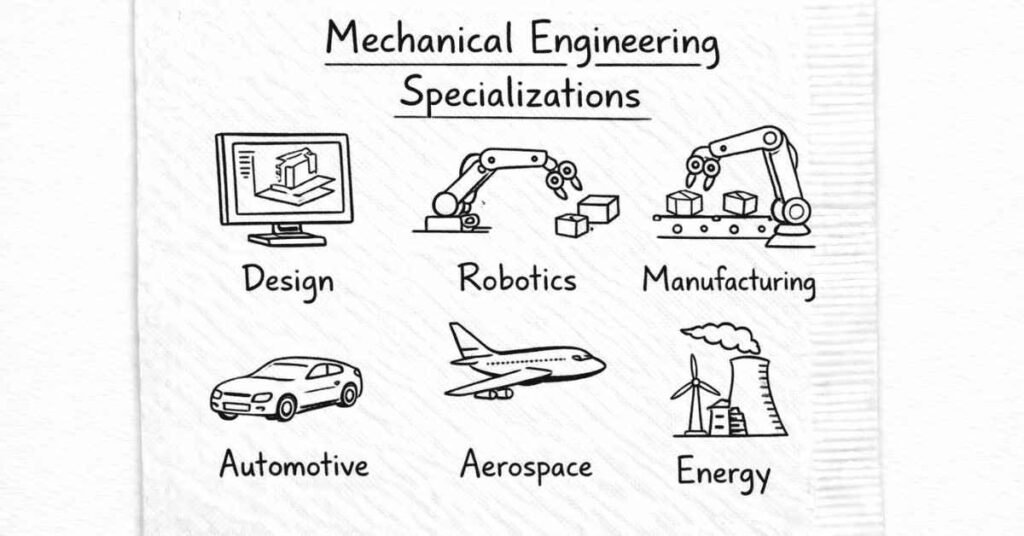
1. Why Specialization Matters Today
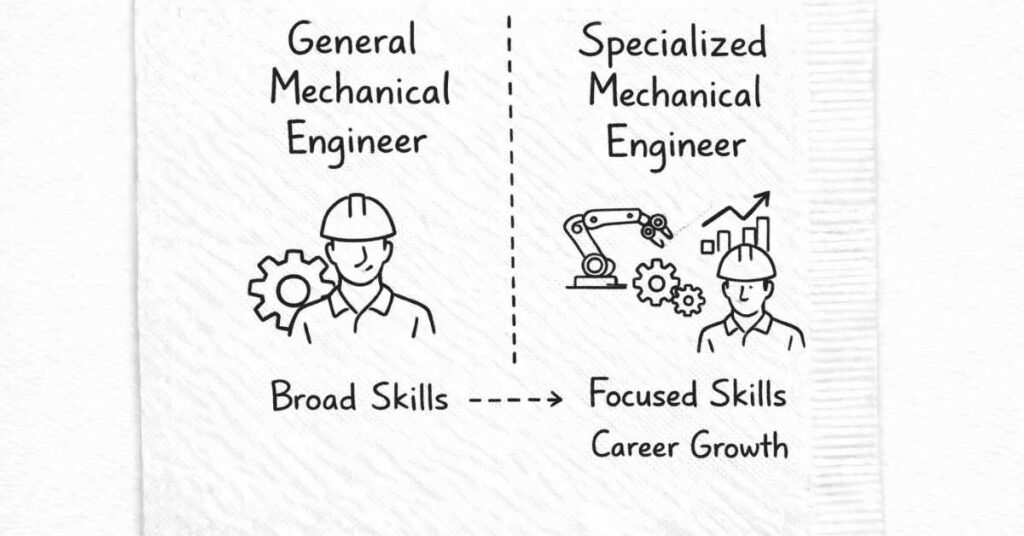
Mechanical engineering used to be mostly “generalist” workone degree, one broad role. Today, companies don’t just ask for “a mechanical engineer”; they ask for a design engineer with SolidWorks and FEA, or a robotics engineer with PLC and Python, or a thermal engineer with power plant exposure.
Specialisation helps you:
- Stand out among thousands of graduates.
- Target specific industries (automotive, aerospace, robotics, energy).
- Command better salaries once you build 3–5 years of focused experience.
- Build a portfolio and reputation in one clear direction.
You still need strong fundamentals, but picking a direction early (even if you adjust later) gives your learning and projects a clear focus.
2. Design Engineering
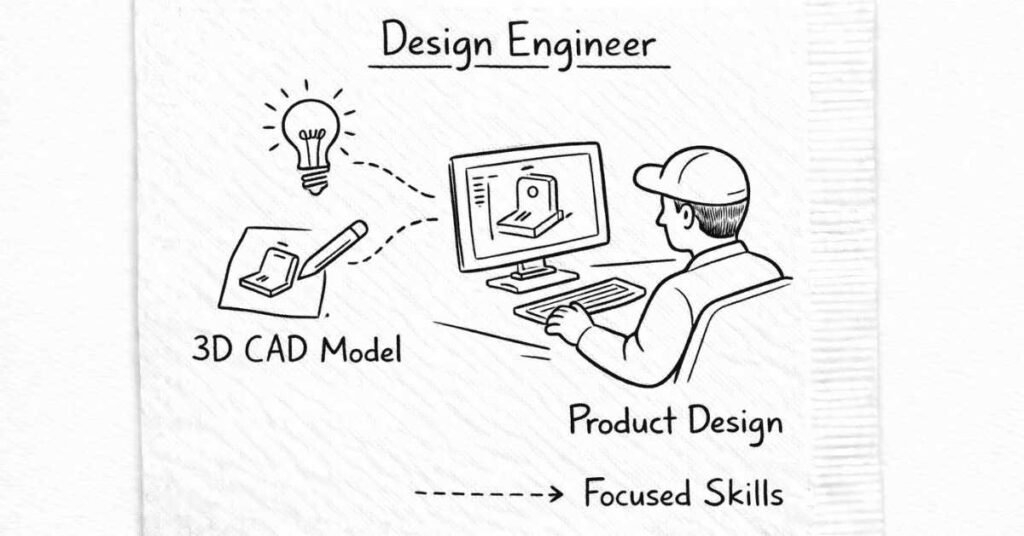
Who it’s for: Students who enjoy drawing, visual thinking, and turning ideas into detailed 3D models and prototypes.
What you actually do:
- Create 3D models and assemblies in CAD.
- Run simulations (stress, deflection, fatigue, motion).
- Prepare detailed 2D drawings with tolerances and GD&T.
- Work with manufacturing, quality, and suppliers to make your design practical and cost‑effective.
Core skills:
- Strong command of CAD (SolidWorks, CATIA, CREO).
- Basics of FEA (ANSYS, SolidWorks Simulation).
- Machine design, strength of materials, materials science.
- Understanding of manufacturing methods to avoid “unproducible” designs.
Typical roles:
- Mechanical Design Engineer
- Product Design Engineer
- CAD Engineer / Design Analyst
- Tooling / Fixture Design Engineer
Where you work:
- Automotive OEMs and suppliers.
- Consumer product companies (fans, mixers, appliances, tools).
- Industrial machinery manufacturers.
- Design and engineering service firms.
3. Robotics & Automation
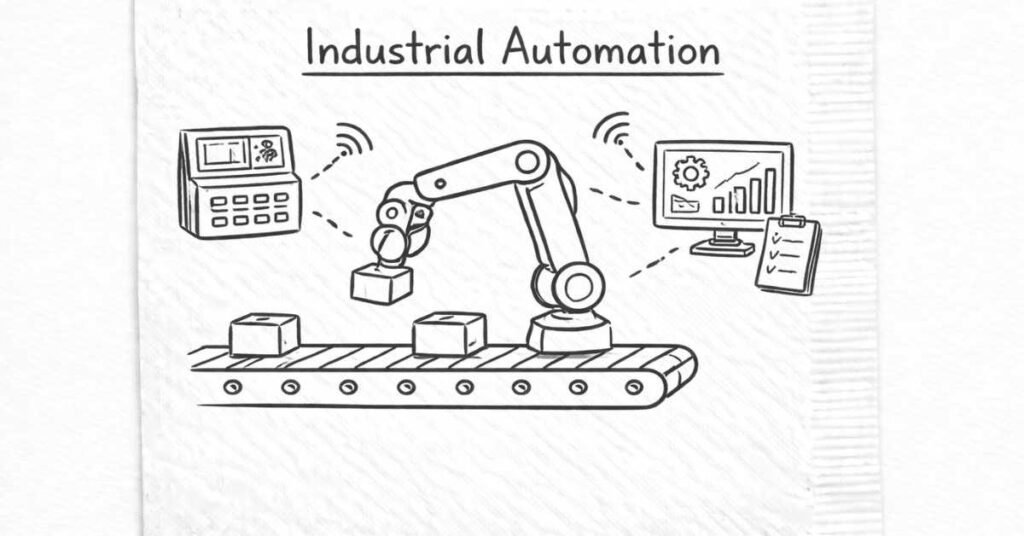
Who it’s for: Those excited by robots, factory automation, AI‑driven machines, and Industry 4.0.
What you actually do:
- Design robotic arms, grippers, conveyors, and automated stations.
- Program robots and PLCs to perform repetitive tasks.
- Integrate sensors, vision systems, and safety systems.
- Improve production speed, consistency, and safety in factories.
Core skills:
- Mechanics + kinematics of robots.
- PLC programming (Siemens, Allen‑Bradley).
- Basic programming (C/C++/Python) for control and data handling.
- Sensors, actuators, servo systems, pneumatics/hydraulics.
- Industrial safety standards.
Typical roles:
- Robotics Engineer
- Automation Engineer
- Controls Engineer
- Mechatronics Engineer (overlaps with this area)
Where you work:
- Automotive and electronics factories.
- System integrators (who build turnkey automation lines).
- Warehouse and logistics automation companies.
- Robotics startups.
4. Manufacturing & Production Engineering
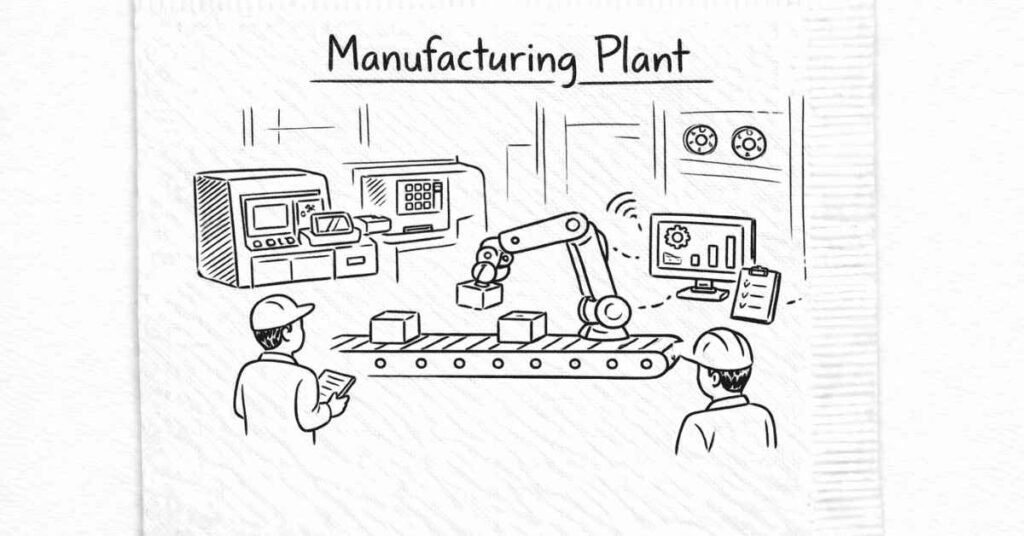
Who it’s for: People who like factories, real‑world problem solving, and seeing products physically roll off the line.
What you actually do:
- Plan and optimise production lines.
- Troubleshoot breakdowns and quality problems.
- Balance cycle times, manpower, and machine utilisation.
- Implement lean practices (reducing waste, improving flow).
Core skills:
- Manufacturing processes (machining, casting, forming, welding, 3D printing).
- Industrial engineering (line balancing, time–motion studies).
- Quality tools (SPC, root cause analysis, basic Six Sigma).
- Basic PLC/automation understanding is a big plus.
Typical roles:
- Production Engineer / Manufacturing Engineer
- Process Engineer
- Industrial Engineer
- Maintenance Engineer (closely related)
Where you work:
- Any plant that makes physical products—auto, steel, FMCG, pharma machinery, equipment.
5. Thermal & Energy Engineering
Who it’s for: Students who enjoy thermodynamics, heat transfer, and energy systems.
What you actually do:
- Design and analyse boilers, turbines, condensers, heat exchangers.
- Work on HVAC, refrigeration, and power plant systems.
- Improve energy efficiency of buildings and industrial systems.
- Support solar, wind, and other renewable installations.
Core skills:
- Thermodynamics, heat transfer, fluid mechanics (strong fundamentals).
- Power plant systems, refrigeration cycles, HVAC.
- Hands‑on tools like EES, basic CFD/thermal simulation.
- Knowledge of energy efficiency standards and codes.
Typical roles:
- Thermal Engineer
- Power Plant Engineer
- HVAC Design Engineer
- Energy Efficiency / Sustainability Engineer
Where you work:
- Power plants (coal, gas, hydro, renewable).
- HVAC design and MEP firms.
- Energy consultancies and ESCOs.
- Industrial plants with heavy utility systems.
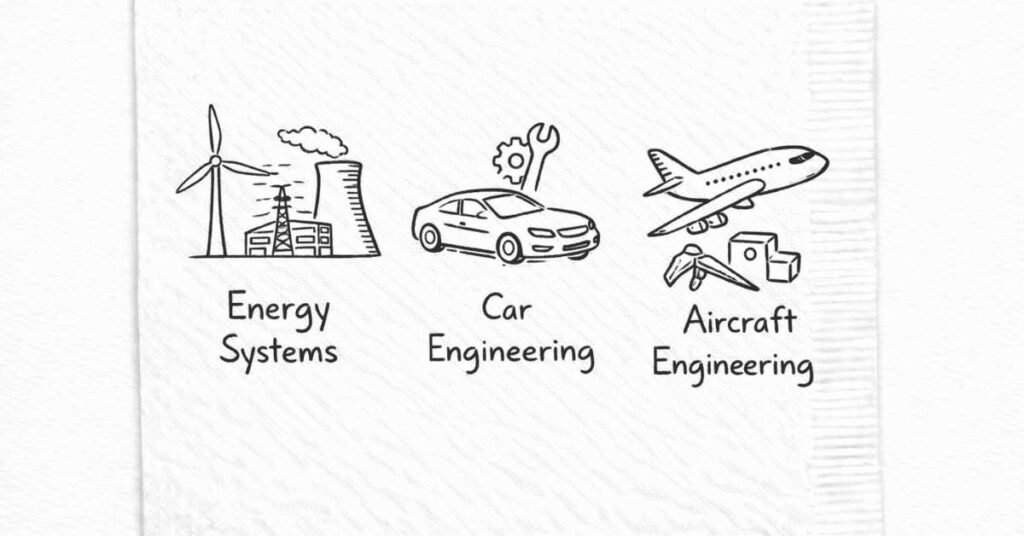
6. Automotive Engineering
Who it’s for: People passionate about cars, bikes, EVs, and vehicle performance.
What you actually do:
- Design and test components like suspension, braking, body structures.
- Work on NVH (Noise, Vibration, Harshness) and ride comfort.
- Contribute to EV systems (battery, motor packaging, cooling).
- Participate in vehicle testing, validation, and homologation.
Core skills:
- Vehicle dynamics, chassis design, powertrain basics.
- CAD/CAE (often CATIA, ANSYS, Altair).
- Knowledge of automotive standards and regulations.
- Practical exposure through projects like BAJA/Formula Student is a huge plus.
Typical roles:
- Automotive Design Engineer
- CAE Engineer (crash, durability, NVH)
- Vehicle Integration Engineer
- Test & Validation Engineer
Where you work:
- OEMs (Tata, Mahindra, Maruti, Hyundai India).
- Tier‑1 suppliers (Bosch, Motherson, Continental).
- EV startups.
- Testing/validation labs.
7. Aerospace Engineering
Who it’s for: Those fascinated by aircraft, rockets, satellites, and defence systems.
What you actually do:
- Design and analyse airframes, wings, propulsion components.
- Work on structural analysis, aerodynamics, lightweight design.
- Support testing for aircraft, UAVs, and space systems.
- Work on ground support and tooling for aerospace production.
Core skills:
- Strength of materials, fatigue, fracture mechanics.
- Aerodynamics and CFD basics.
- Advanced composites and lightweight materials.
- High‑end CAE tools common in aerospace.
Typical roles:
- Aerospace Design Engineer
- Structural Analyst
- Systems Engineer
- Tooling & Ground Equipment Engineer
Where you work:
- Government orgs (ISRO, DRDO, HAL).
- Private aerospace firms and defence contractors.
- UAV/drone startups.
8. Mechatronics & Embedded Systems
Who it’s for: Students who enjoy a mix of mechanical, electronics, and coding.
What you actually do:
- Design smart products with sensors and actuators.
- Integrate microcontrollers into mechanical systems.
- Develop control algorithms and test embedded hardware.
- Support IoT‑enabled products and machines.
Core skills:
- Basic electronics (circuits, sensors, actuators).
- Microcontrollers (Arduino, STM, etc.).
- C/C++/Python for embedded code.
- Control theory basics.
Typical roles:
- Mechatronics Engineer
- Embedded Systems Engineer (mechanical focus)
- Controls Engineer
- IoT Hardware Engineer
Where you work:
- Robotics and automation firms.
- Consumer device companies.
- Industrial IoT startups.
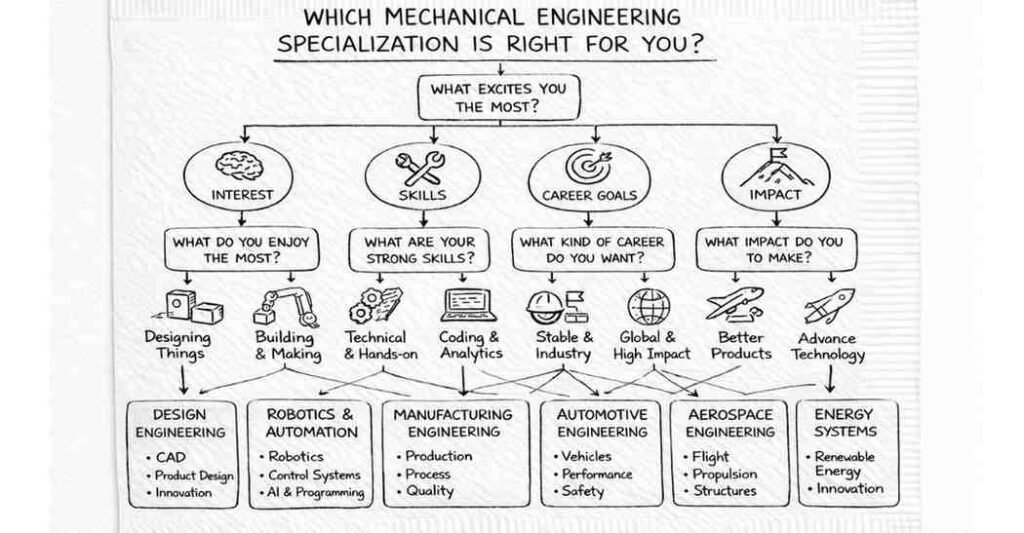
9. How to Choose Your Specialization
Ask yourself:
- Which subjects did you naturally enjoy—design, thermo, manufacturing, controls?
- Do you prefer computer‑based design, plant‑floor action, or field/site work?
- Are you more excited by cars, robots, energy, aircraft, or factories?
Practical steps:
- Use internships to “test drive” fields.
- Do at least one capstone project in your target area.
- Choose electives aligned with your desired specialization.
- Follow professionals from that domain on LinkedIn/YouTube to see their real day‑to‑day.
You don’t have to pick perfectly at 20. But pointing yourself roughly in the right direction now can save years of confusion later.