
Top Civil Engineering Jobs: Roles, Responsibilities & Career Tracks
Table of Contents
Introduction
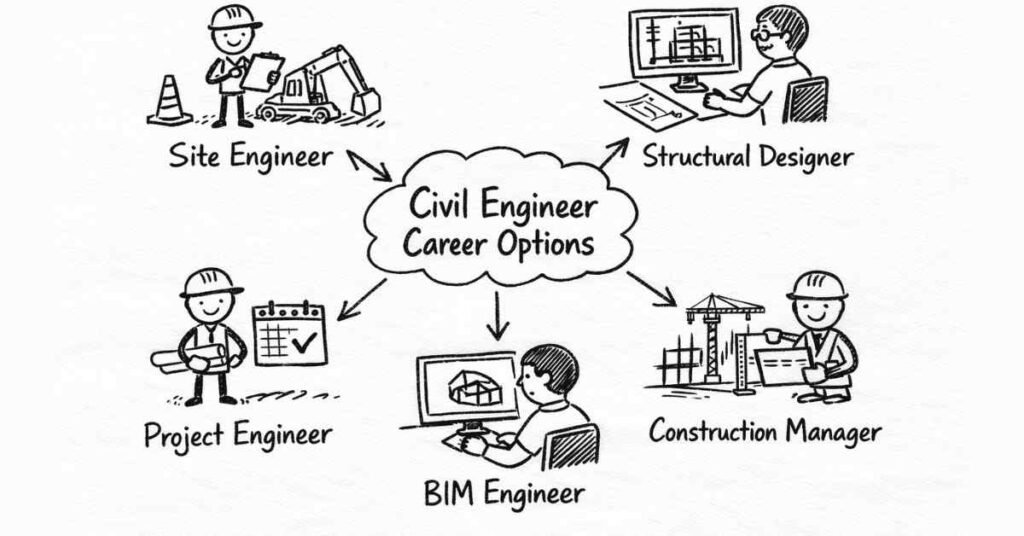
When you graduate with a civil engineering degree, the most common question is: “What job will I actually do?”
The answer isn’t simple because civil engineering offers many different job roles, each with different responsibilities, work environments, and career paths. A site engineer’s daily routine is completely different from a structural design engineer’s, even though both are civil engineers.
Understanding these roles helps you make smarter career decisions—what to aim for, what skills to build, and what to expect when you start working.
Let’s break down the major civil engineering job roles in practical, clear terms.
Entry-Level Roles: Where Most Engineers Start
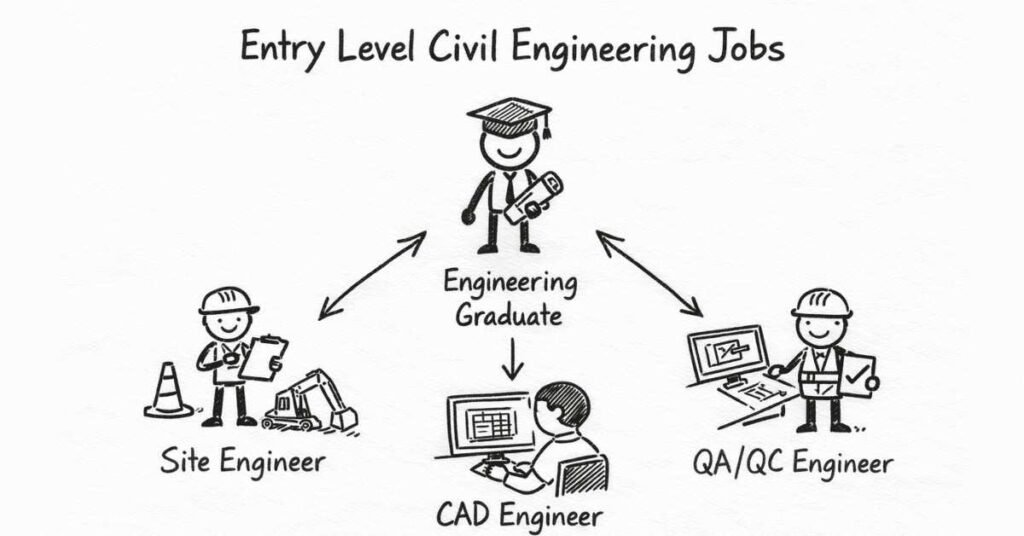
1. Site Engineer / Field Engineer
This is where most civil engineering freshers begin their careers.
What You’ll Do Daily:
- Report to site early morning (usually 7-8 AM, sometimes earlier)
- Check the previous day’s work—was concrete poured properly? Is curing happening? Are materials stored correctly?
- Review today’s work schedule with the contractor and supervisor
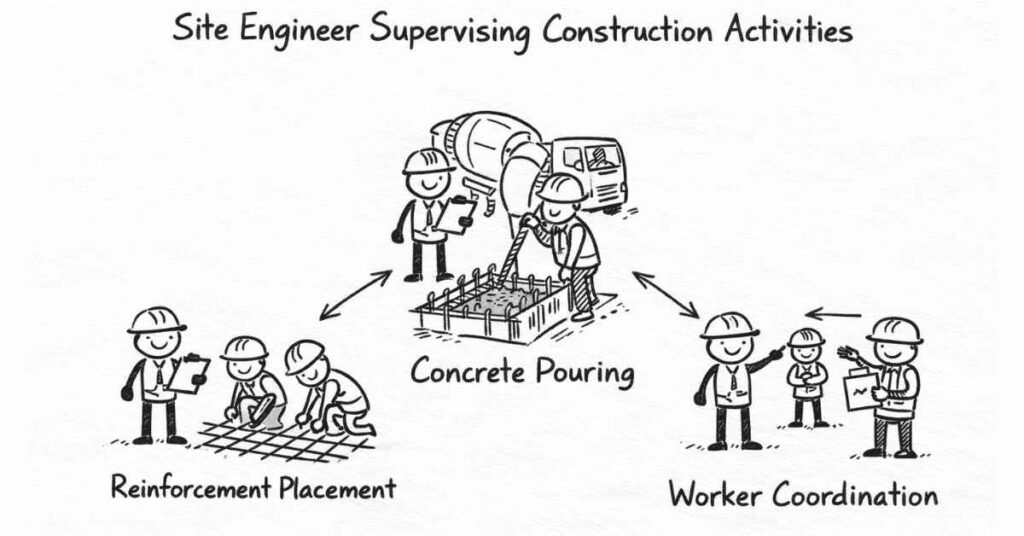
- Supervise ongoing construction activities—shuttering, reinforcement placement, concreting, masonry, finishing
- Ensure work matches approved drawings and specifications
- Coordinate material delivery—cement, steel, aggregates, bricks
- Take measurements and maintain site records (daily progress reports, material consumption, labour attendance)
- Conduct quality checks—cube testing, reinforcement inspection, level checking
- Ensure safety standards are followed (helmets, safety nets, proper scaffolding)
- Solve day-to-day site problems (drawing unclear, material delayed, worker shortage)
- Attend progress meetings with seniors and consultants
- Sometimes stay late to complete critical activities like concreting (which can’t be stopped midway)
Work Environment:
You’re outdoors most of the day, walking around the site, climbing stairs and scaffolding, sometimes in heat, dust, or rain. It’s physically demanding but teaches you ground realities.
Skills Needed:
- Ability to read and interpret construction drawings
- Basic knowledge of construction methods and materials
- Communication skills (explaining work to contractors and labourers)
- Problem-solving under pressure
- Patience and persistence
Salary Range:
Freshers: ₹3.5-6 LPA depending on company size and location
Career Path:
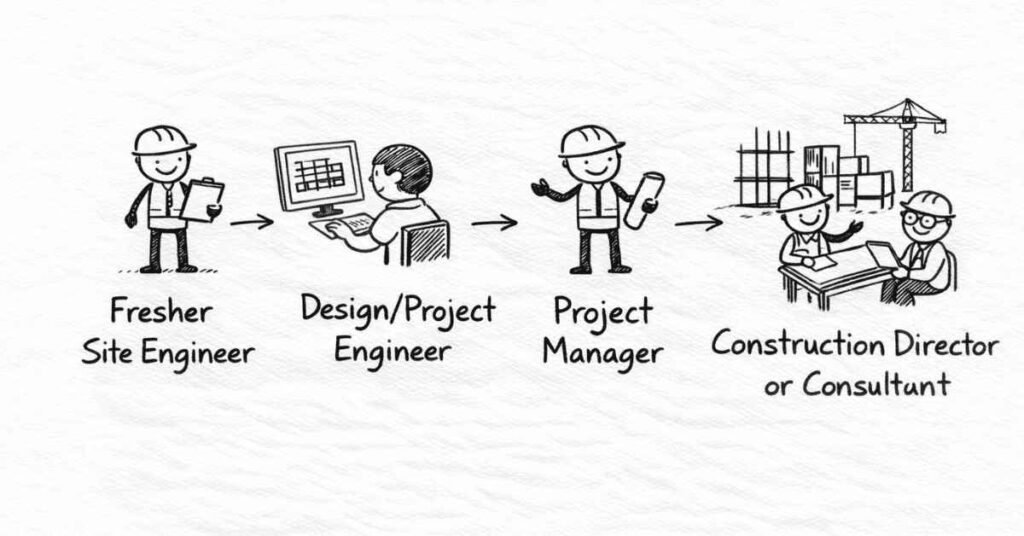
Site Engineer → Senior Site Engineer → Site-in-Charge → Project Engineer → Assistant Project Manager → Project Manager
Best For:
Engineers who want hands-on experience, don’t mind physical work, and want to understand how buildings are actually built (not just designed).
2. Junior Design Engineer / CAD Engineer
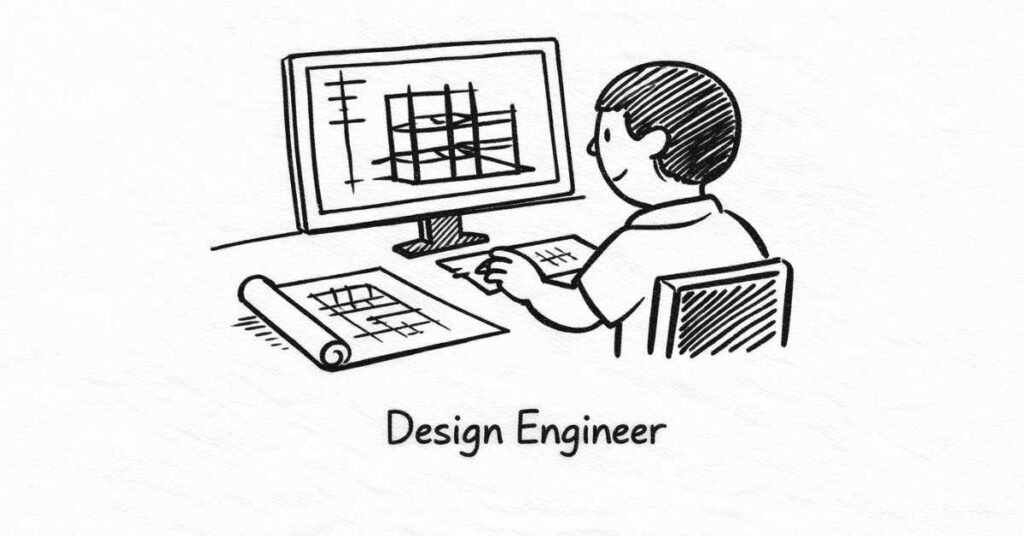
If you join a design consultancy or structural design firm, you’ll likely start here.
What You’ll Do Daily:
- Create 2D drawings in AutoCAD based on senior engineers’ sketches or instructions
- Prepare reinforcement detailing drawings for beams, columns, slabs
- Generate bar bending schedules (BBS)
- Assist senior engineers with structural analysis and design
- Prepare design calculations under supervision
- Make revisions to drawings based on client or architect feedback
- Prepare drawing sets for approval submissions
- Coordinate with architectural and MEP teams for design integration
Work Environment:
Primarily office-based, air-conditioned, working on computers. Occasional site visits for understanding built conditions.
Skills Needed:
- Strong AutoCAD skills
- Basic understanding of structural engineering concepts
- Attention to detail (one wrong dimension can cause big problems)
- Ability to follow instructions precisely
- Basic knowledge of IS codes
Salary Range:
Freshers: ₹3-5.5 LPA
Career Path:
Junior Design Engineer → Design Engineer → Senior Design Engineer → Lead Designer / Design Manager
Best For:
Engineers who prefer office work, enjoy technical drawing and detailing, and want to build expertise in design rather than execution.
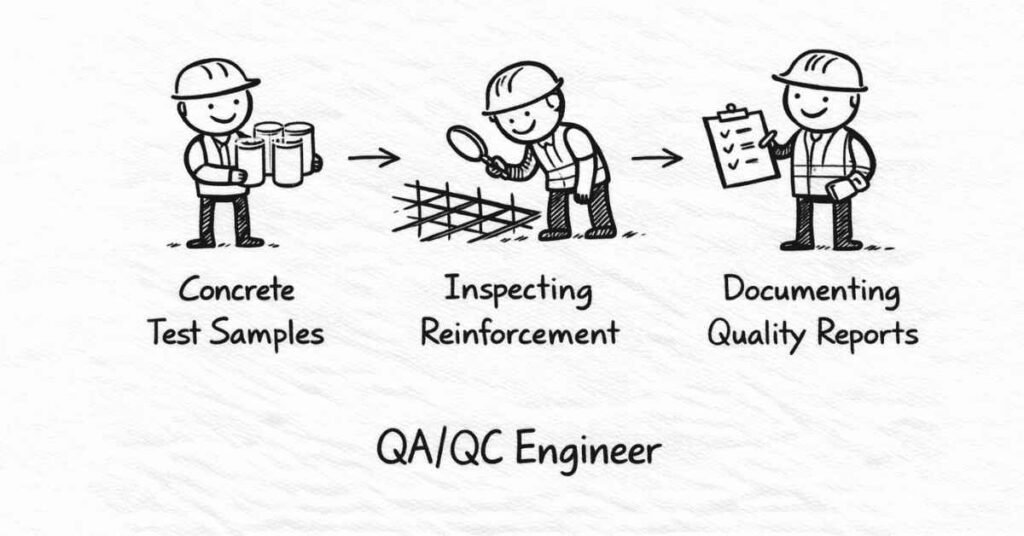
3. Quality Control / Quality Assurance Engineer
Some companies hire dedicated QC/QA engineers, especially for large infrastructure projects.
What You’ll Do Daily:
- Inspect work before, during, and after execution
- Conduct material testing (concrete cubes, aggregate grading, steel tensile tests)
- Document test results and maintain quality records
- Ensure work complies with specifications and quality standards
- Issue non-conformance reports (NCRs) when work doesn’t meet standards
- Coordinate with third-party testing labs
- Maintain quality documentation for client audits
Work Environment:
Mix of site (inspections) and office/lab (testing and documentation).
Skills Needed:
- Knowledge of material testing procedures
- Understanding of quality standards and specifications
- Documentation and reporting skills
- Firmness (saying “no” when quality is compromised)
- Attention to detail
Salary Range:
₹3.5-5.5 LPA for freshers
Career Path:
QC Engineer → Senior QC Engineer → QC Manager → Quality Head
Mid-Level Roles: 3-7 Years Experience
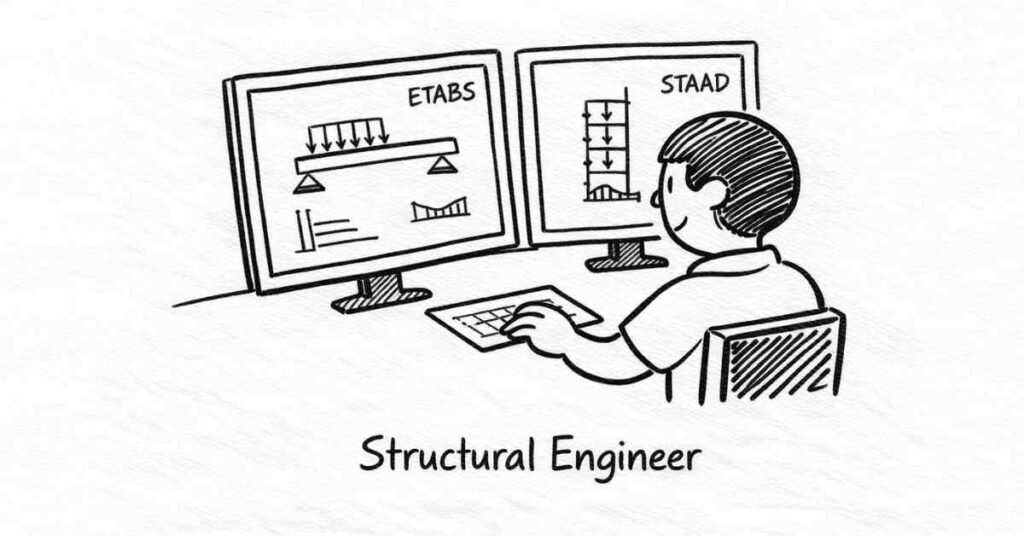
4. Structural Design Engineer
After gaining experience as a junior designer, you move into independent design roles.
What You’ll Do:
- Perform structural analysis using STAAD Pro, ETABS, or SAP2000
- Design structural members (beams, columns, slabs, foundations) as per IS codes
- Prepare detailed design calculations and reports
- Review and approve drawings prepared by junior engineers
- Coordinate with architects regarding structural constraints
- Attend design meetings with clients and review structural requirements
- Ensure designs are safe, economical, and constructible
- Provide technical support during construction (design clarifications, site modifications)
- Sometimes supervise foundation and structural work on site
Work Environment:
Mostly office with periodic site visits for inspections and problem-solving.
Skills Needed:
- Strong knowledge of structural mechanics and design
- Proficiency in structural analysis software
- Understanding of IS codes (IS 456, IS 1893, IS 875, etc.)
- Good judgment (balancing safety, economy, and aesthetics)
- Communication skills for client interaction
Salary Range:
₹5-12 LPA depending on expertise and project complexity
Career Path:
Structural Engineer → Senior Structural Engineer → Principal Structural Engineer → Structural Design Manager / Consultant
5. Project Engineer
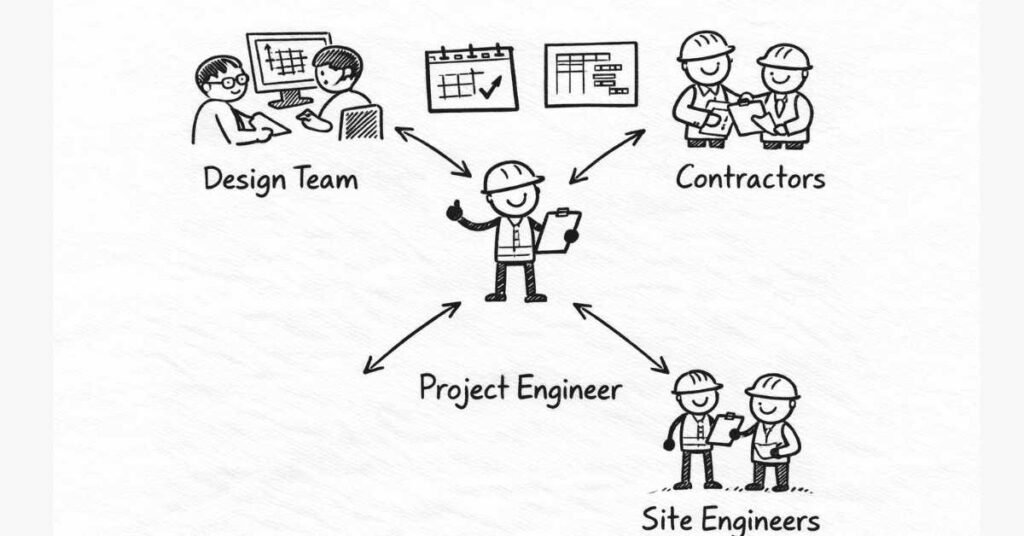
Project engineers bridge the gap between site execution and project management.
What You’ll Do:
- Manage specific components of larger projects (e.g., foundation work, superstructure, finishing)
- Coordinate between design team, site team, and contractors
- Prepare and monitor project schedules
- Handle procurement of materials and services
- Review and process contractor bills
- Ensure quality and safety compliance
- Solve technical and execution problems
- Prepare progress reports for senior management
- Interface with clients and consultants
Work Environment:
Split between site and office, traveling between multiple sites if managing different project components.
Skills Needed:
- Project planning and scheduling
- Budget management basics
- People management and coordination
- Technical knowledge of construction methods
- Decision-making ability
Salary Range:
₹6-11 LPA
Career Path:
Project Engineer → Senior Project Engineer → Assistant Project Manager → Project Manager
6. Transportation Engineer / Highway Engineer
If you specialize in transportation, this is a common mid-level role.
What You’ll Do:
- Conduct traffic studies and analysis
- Design highway geometric layouts (alignment, gradients, cross-sections)
- Perform pavement design for roads and highways
- Design intersections, interchanges, and traffic signals
- Conduct road safety audits
- Prepare detailed project reports (DPRs) for highway projects
- Coordinate with survey and geotechnical teams
- Monitor construction of road projects
- Use software like AutoCAD Civil 3D, MX Road for design
Work Environment:
Mix of office design work and field surveys/inspections on highway corridors.
Skills Needed:
- Highway geometric and pavement design
- Knowledge of IRC codes (Indian Roads Congress) and MORTH specifications
- Traffic engineering and analysis
- Surveying and GIS skills
- Report writing
Salary Range:
₹5-10 LPA
Career Path:
Highway Engineer → Senior Highway Engineer → Highway Design Manager / Principal Transportation Planner
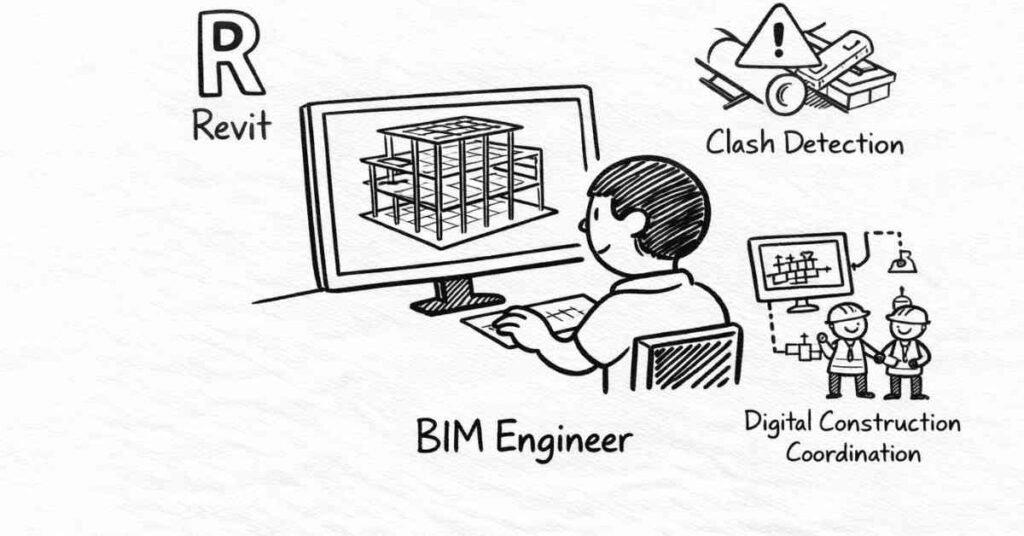
7. BIM Coordinator / BIM Engineer
As BIM adoption grows, this role is in high demand.
What You’ll Do:
- Create 3D BIM models in Revit for structural, architectural, or MEP systems
- Coordinate models from different disciplines
- Perform clash detection using Navisworks
- Generate 2D drawings from 3D models
- Extract quantities from BIM models
- Manage BIM collaboration platforms (BIM 360, Autodesk Construction Cloud)
- Ensure model quality and adherence to BIM standards
- Support construction teams with model-based planning
Work Environment:
Office-based, working with design and coordination teams.
Skills Needed:
- Advanced Revit proficiency
- Understanding of construction systems (structure, architecture, MEP)
- Clash detection and resolution skills
- Collaboration and coordination ability
- Continuous learning (BIM technology evolves rapidly)
Salary Range:
₹6-15 LPA (higher than traditional design roles due to skill shortage)
Career Path:
BIM Modeler → BIM Coordinator → BIM Manager → BIM Director / Digital Construction Lead
Senior-Level Roles: 7+ Years Experience
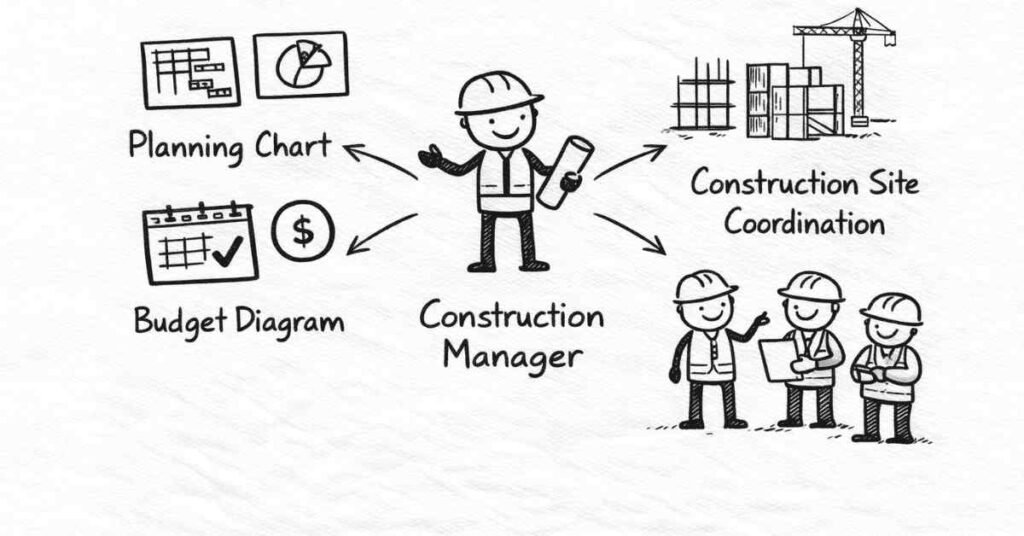
8. Construction Manager / Project Manager
This is a leadership role managing entire projects or significant portions.
What You’ll Do:
- Overall responsibility for project delivery—time, cost, quality
- Develop project execution plans and schedules
- Manage project budgets and control costs
- Lead and coordinate multiple teams (civil, MEP, architecture, contractors)
- Negotiate with contractors, vendors, and suppliers
- Handle approvals, NOCs, and statutory compliance
- Manage risks and resolve conflicts
- Regular client communication and reporting
- Ensure safety and quality standards
- Final handover and project closure
Work Environment:
High-pressure, dynamic environment managing multiple stakeholders. Mix of site and office work.
Skills Needed:
- Strong project management skills
- Leadership and people management
- Commercial and contractual knowledge
- Budget and cost control expertise
- Decision-making under pressure
- Excellent communication and negotiation
Salary Range:
₹10-25 LPA for project managers; can reach ₹35+ LPA for senior positions managing mega projects
Career Path:
Project Manager → Senior Project Manager → Program Manager → Construction Director / Head of Projects
9. Design Manager / Principal Consultant
In design firms, this is a senior technical leadership role.
What You’ll Do:
- Lead design teams for large or multiple projects
- Review and approve all designs before client submission
- Provide expert technical guidance on complex problems
- Represent the firm in client meetings and technical discussions
- Mentor junior and mid-level engineers
- Contribute to business development (proposals, presentations)
- Ensure design quality and innovation
- Stay updated on codes, technologies, and best practices
Skills Needed:
- Deep technical expertise in your specialization
- Leadership and mentoring ability
- Client relationship management
- Business acumen
- Communication and presentation skills
Salary Range:
₹15-30 LPA depending on firm size and reputation
10. Urban Planner / Infrastructure Planning Consultant
For those in the planning side of civil engineering.
What You’ll Do:
- Develop master plans for cities, townships, or special economic zones
- Plan urban infrastructure—roads, water supply, drainage, solid waste
- Work on smart city planning and implementation
- Conduct feasibility studies for large infrastructure projects
- Coordinate with government authorities and stakeholders
- Use GIS and planning software for spatial analysis
- Prepare detailed project reports and proposals
Skills Needed:
- Urban planning and design principles
- GIS and spatial analysis
- Understanding of smart city technologies
- Policy and regulatory knowledge
- Stakeholder management
Salary Range:
₹8-18 LPA
How to Choose the Right Role for You
Different roles suit different personalities:
Choose Site/Execution Roles If:
- You like hands-on, outdoor work
- You enjoy problem-solving in real-time
- You’re good at managing people
- You want faster exposure to complete project lifecycle
Choose Design Roles If:
- You prefer technical, analytical work
- You like working with software and calculations
- You want to specialize deeply in structural/geotechnical/transportation design
- You prefer office environments
Choose Management Roles If:
- You enjoy leadership and coordination
- You’re good at multitasking and handling pressure
- You like commercial and contractual aspects
- You want career growth into senior leadership
Choose Planning/Consulting Roles If:
- You like big-picture thinking
- You enjoy research and analysis
- You want to shape infrastructure policy and strategy
- You prefer variety over repetition
Career Progression: Timeline Overview
Years 0-3: Site Engineer / Junior Designer → Learn fundamentals, gain hands-on experience
Years 3-7: Project Engineer / Design Engineer / Specialist roles → Develop expertise, take ownership
Years 7-12: Project Manager / Senior Designer / Lead roles → Lead teams and projects
Years 12+: Senior PM / Director / Principal Consultant → Strategic leadership, business development
Final Thoughts
Every role has value. A site engineer learning construction realities is as important as a design engineer perfecting structural calculations. Your first job doesn’t lock you in—many engineers start on site and move to design, or vice versa.
The key is to understand what each role involves, try different things early, and then specialize based on what you genuinely enjoy and excel at. Your career is a long journey—choose roles that align with your strengths and interests, not just what sounds impressive.