
Digital Marketing Manager Career Guide
Table of Contents
What Makes a Great Digital Marketing Manager?
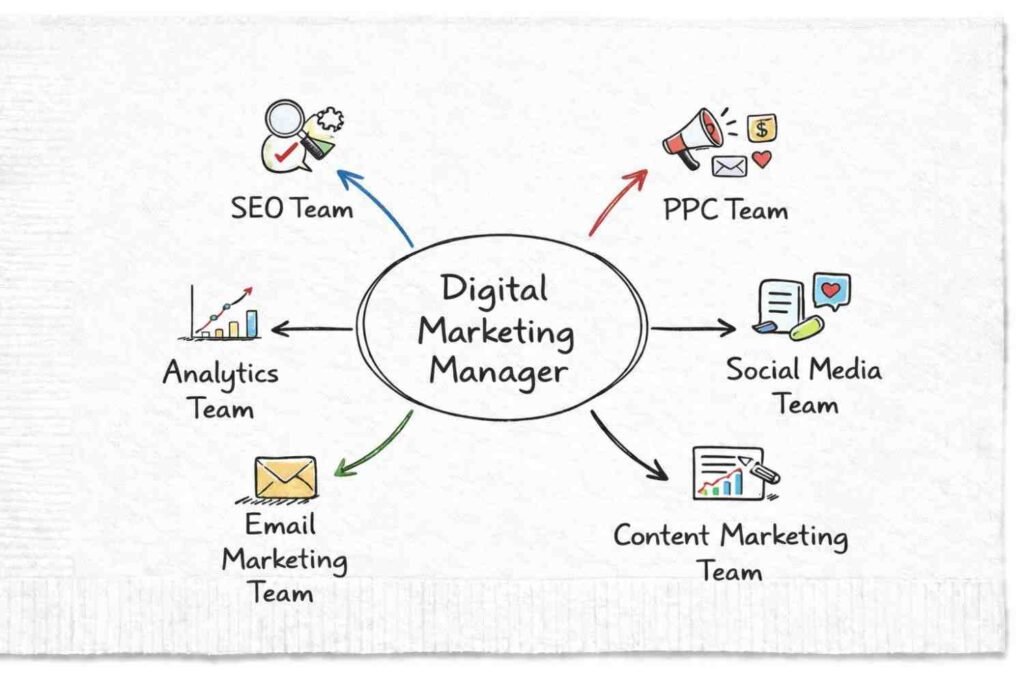
Digital marketing managers are the orchestra conductors of marketing teams. While specialists focus on individual instruments—SEO, PPC, social media, content—managers ensure all channels work together harmoniously to achieve business objectives. They don’t just execute campaigns; they develop comprehensive strategies, build and lead teams, allocate budgets, and directly impact company revenue and growth.
This is a leadership role that combines strategic thinking, people management, technical marketing knowledge, and business acumen. You’re no longer optimizing a single campaign—you’re shaping the entire digital presence of a brand. You’re not just analyzing data—you’re translating insights into strategic decisions that guide teams and influence company direction.
In 2026, digital marketing managers in India earn between ₹8-25 lakhs annually depending on experience and location, with senior managers and heads of digital marketing commanding ₹20-40+ lakhs. This premium reflects the role’s complexity: you need both deep marketing expertise and strong leadership capabilities to succeed.
The transition from specialist to manager represents a fundamental career shift. Success requires developing an entirely new skill set beyond technical marketing—team leadership, stakeholder management, strategic planning, budget management, and cross-functional collaboration.
What Digital Marketing Managers Do Daily
Digital marketing managers balance strategic planning with tactical execution and team leadership
Strategic Planning and Vision
- Develop comprehensive digital marketing strategies aligned with business goals
- Set quarterly and annual objectives for digital channels and campaigns
- Conduct market research to identify opportunities and competitive threats
- Define target audiences and positioning strategies
- Create roadmaps for achieving marketing goals across channels
Team Leadership and Management
- Hire, train, and develop marketing team members (specialists in SEO, PPC, content, social media)
- Set individual performance goals and conduct regular one-on-ones
- Provide mentorship and career development guidance
- Resolve conflicts and maintain team morale
- Foster collaborative, innovative team culture
Campaign Oversight and Execution
- Oversee planning and execution of integrated marketing campaigns across channels
- Ensure campaigns align with brand guidelines and strategic objectives
- Review creative assets and messaging for effectiveness
- Monitor campaign performance and make real-time adjustments
- Coordinate launches, promotions, and seasonal campaigns
Budget Management
- Develop and manage annual marketing budgets (often in lakhs or crores)
- Allocate spend across channels based on ROI and strategic priorities
- Track spending against budgets and forecast future needs
- Justify marketing investments to senior management
- Make trade-off decisions on resource allocation
Analytics and Reporting
- Monitor KPIs across all digital channels—traffic, conversions, leads, revenue, ROI
- Prepare weekly, monthly, and quarterly reports for senior leadership
- Analyze performance trends and identify optimization opportunities
- Present data-driven recommendations to stakeholders
- Calculate marketing attribution and contribution to revenue
Cross-Functional Collaboration
- Partner with sales teams to align marketing with sales goals and generate qualified leads
- Collaborate with product teams on launches, positioning, and feature marketing
- Work with customer service to understand customer pain points and feedback
- Coordinate with external agencies, vendors, and freelancers
- Present marketing strategies and results to C-level executives
Staying Current
- Monitor industry trends, platform updates, and competitor activities
- Evaluate new marketing tools and technologies for team adoption
- Attend industry conferences and networking events
- Invest in continuous learning and team upskilling
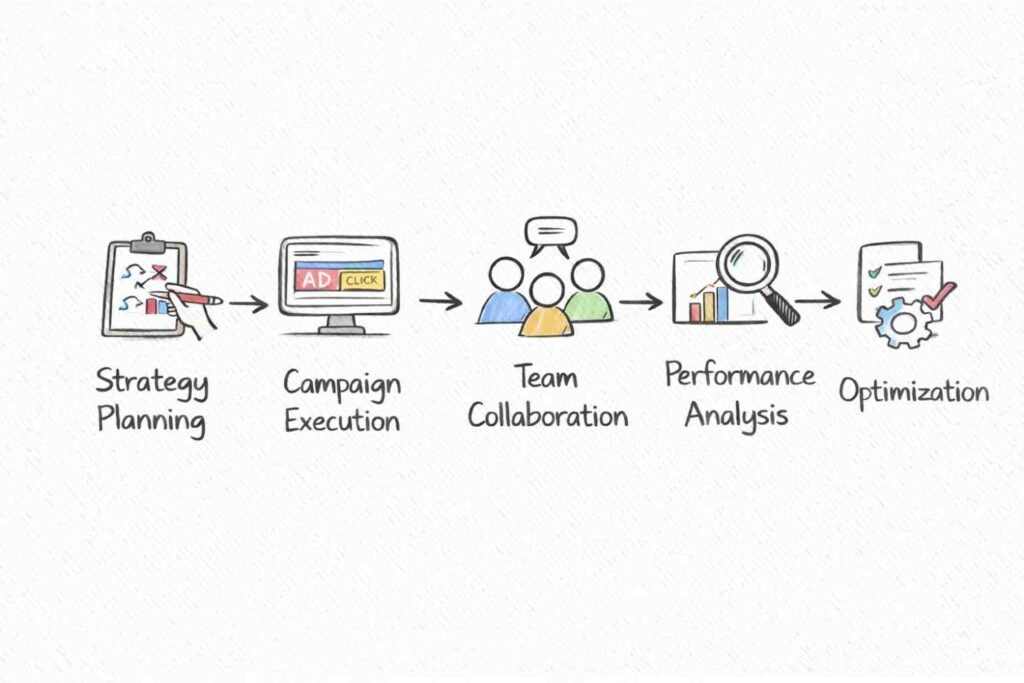
Essential Skills for Digital Marketing Managers
Leadership and People Management Skills
Team Building and Development: Hiring right talent, identifying individual strengths, providing growth opportunities, and building cohesive teams that collaborate effectively.
Effective Communication: Articulating vision clearly to teams, presenting to executives persuasively, giving constructive feedback, and ensuring all stakeholders stay aligned.
Motivation and Inspiration: Creating enthusiasm for projects, recognizing achievements, maintaining morale during challenges, and helping team members see bigger purpose in their work.
Empathy and Emotional Intelligence: Understanding team members’ perspectives, managing different personalities, providing psychological safety, and handling sensitive situations with care.
Delegation and Trust: Assigning appropriate responsibilities, trusting team members to execute, avoiding micromanagement, and empowering specialists to make decisions.
Conflict Resolution: Addressing disagreements constructively, mediating between team members, making difficult decisions when needed, and maintaining team harmony.
Strategic and Business Skills
Strategic Thinking: Seeing big picture beyond individual campaigns, connecting marketing activities to business outcomes, anticipating market changes, and positioning for long-term success.
Business Acumen: Understanding P&L, revenue models, customer economics, competitive dynamics, and how marketing drives overall business performance.
Data-Driven Decision Making: Using analytics to guide strategy, interpreting complex data sets, balancing quantitative insights with qualitative judgment, and making decisions under uncertainty.
Budget and Resource Management: Allocating limited resources for maximum impact, making ROI-based investment decisions, forecasting accurately, and justifying spending.
Prioritization and Time Management: Focusing teams on high-impact activities, distinguishing urgent from important, managing competing priorities, and ensuring deadlines are met.
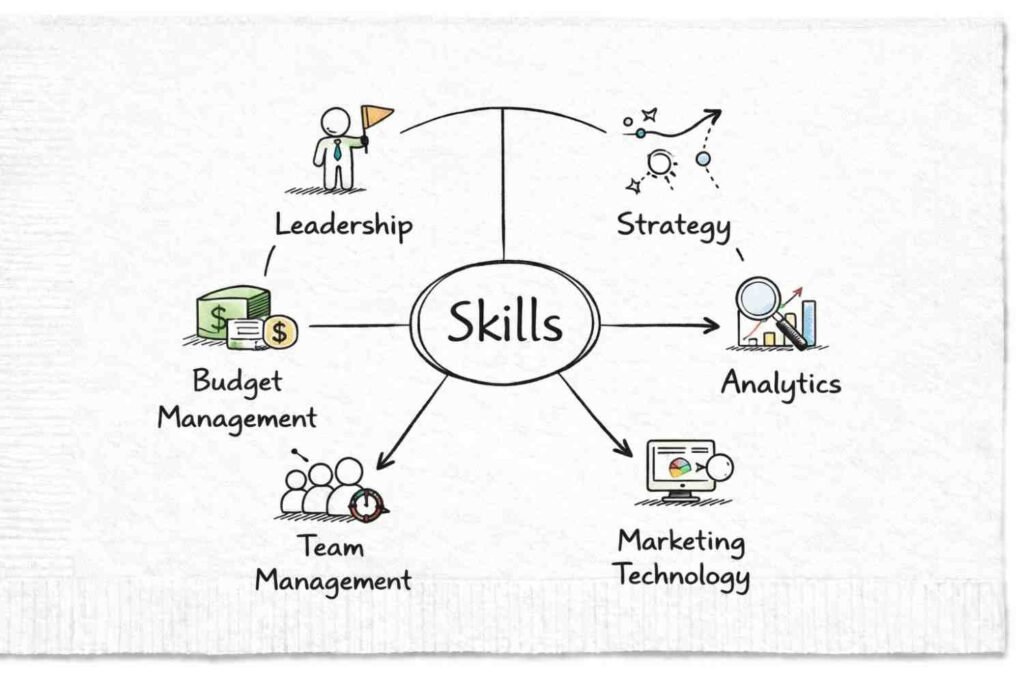
Technical Marketing Knowledge
Multi-Channel Expertise: Deep understanding of SEO, PPC, content marketing, social media, email marketing, and how channels complement each other.
Marketing Technology Stack: Familiarity with tools for analytics (Google Analytics), CRM (Salesforce, HubSpot), marketing automation, social media management, and project management.
Customer Journey Understanding: Mapping touchpoints from awareness to advocacy, understanding how different channels influence each stage, and optimizing full-funnel experiences.
Marketing Attribution: Understanding different attribution models, calculating true marketing contribution to revenue, and making data-informed channel decisions.
Conversion Optimization: Knowledge of landing page optimization, A/B testing, user experience principles, and maximizing conversion rates across properties.
Soft Skills for Management
Stakeholder Management: Managing expectations of executives, sales leaders, and external partners, building consensus, and navigating organizational politics.
Adaptability and Resilience: Staying calm under pressure, pivoting strategies when needed, learning from failures, and maintaining optimism through challenges.
Creativity and Innovation: Encouraging new ideas, testing unconventional approaches, staying ahead of trends, and fostering culture of experimentation.
Project Management: Coordinating complex initiatives with multiple workstreams, managing dependencies, keeping projects on timeline and budget.
Digital Marketing Manager vs. Other Roles
Understanding how this role differs helps clarify career progression:
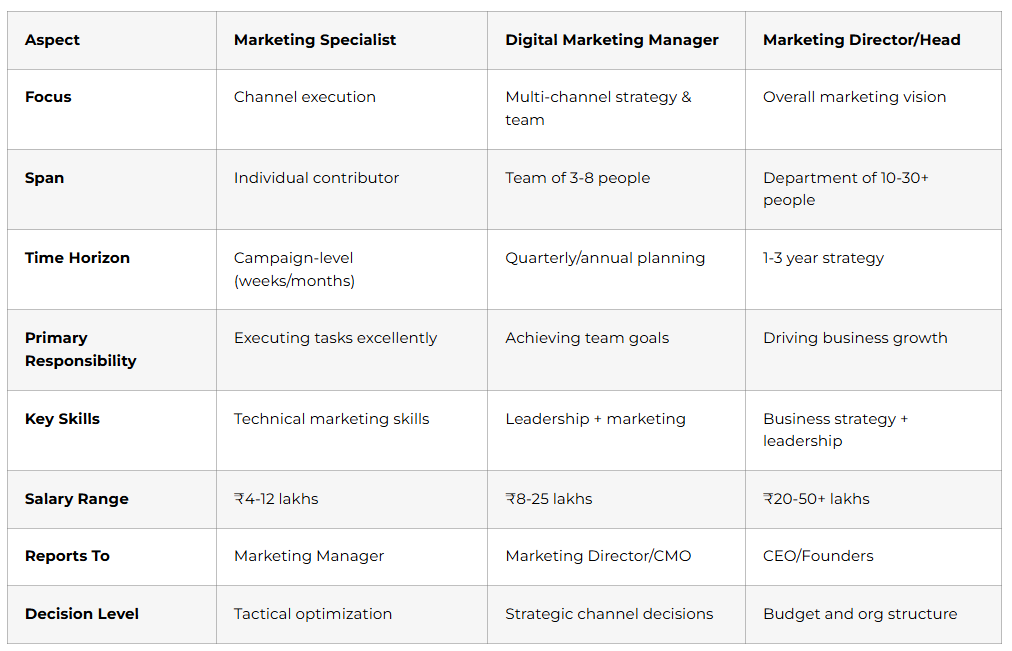
The shift from specialist to manager is the shift from “doing” to “leading others who do”.
Digital Marketing Manager Salary in India
Digital marketing managers earn strong salaries reflecting their strategic importance:
Experience-Based Salary Ranges
- Junior Digital Marketing Manager (3-5 years): ₹6-12 lakhs per year
- Digital Marketing Manager (5-8 years): ₹12-18 lakhs per year
- Senior Digital Marketing Manager (8-12 years): ₹18-28 lakhs per year
- Head of Digital Marketing (12+ years):
₹28-50 lakhs per year Average salary for mid-level digital marketing managers (5-8 years experience) is ₹12-15 lakhs annually.
City-Wise Salary Comparison
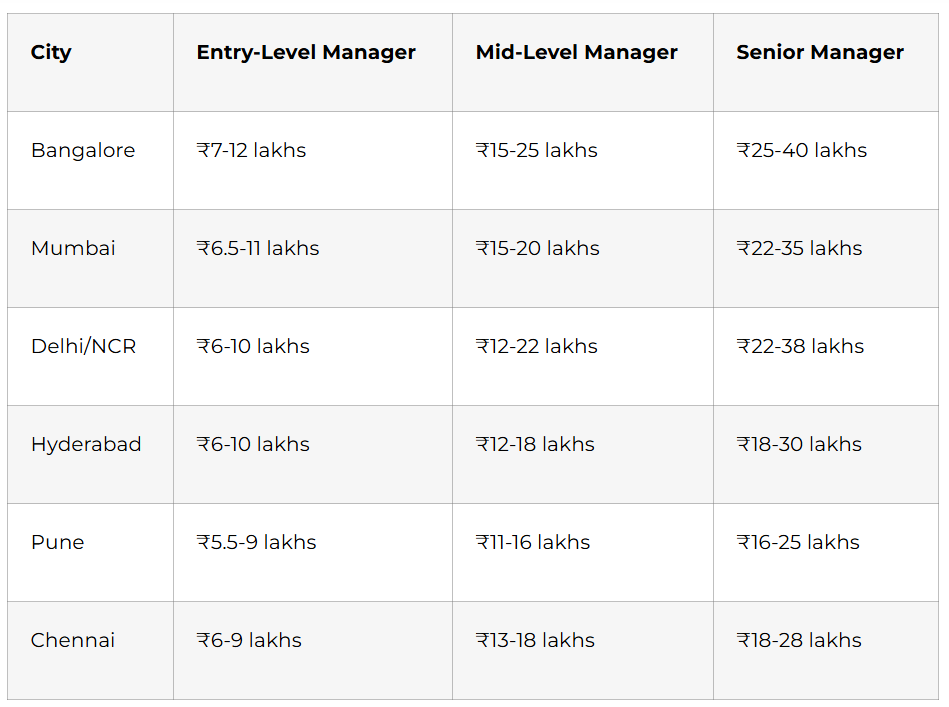
Mumbai freshers in digital marketing management roles can start at ₹4.5-9 lakhs, while Delhi offers ₹4.5-6 lakhs for entry-level manager positions.
Industry Variations
- Technology/SaaS: ₹12-35 lakhs (data-driven culture, strong digital focus)
- E-commerce: ₹10-32 lakhs (digital-first business models)
- Fintech: ₹12-38 lakhs (competitive space, high customer value)
- Edutech: ₹10-28 lakhs (aggressive growth phase for many companies)
- FMCG: ₹10-30 lakhs (traditional brands increasing digital investment)
- Agencies: ₹8-25 lakhs (managing multiple client portfolios)
- Startups: ₹8-30 lakhs (equity compensation adds significant value)
Additional Compensation
Beyond base salary, managers often receive:
- Performance bonuses: 10-30% of base salary
- Equity/ESOPs in startups: Can be worth ₹5-50 lakhs long-term
- Health insurance and benefits
- Professional development budgets
- Conference attendance and networking opportunities
How to Transition from Specialist to Manager
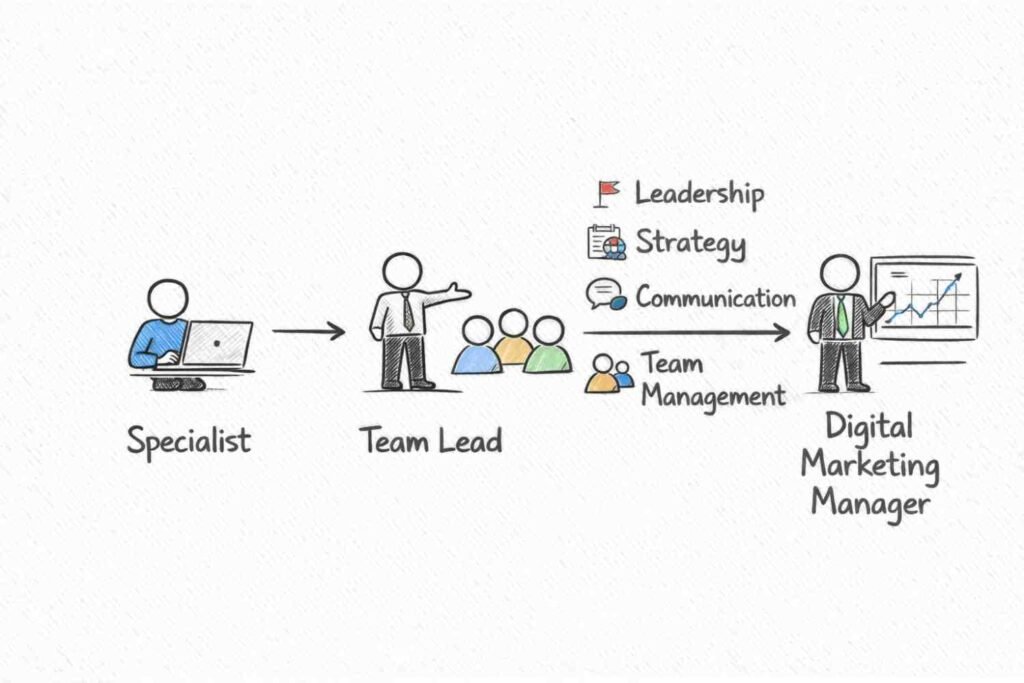
The jump from individual contributor to manager is significant—here’s how to prepare:
Year 0-3: Build Specialist Expertise
Before managing others, become excellent at executing marketing yourself:
- Master at least 2-3 digital marketing channels deeply
- Deliver measurable results consistently
- Understand how channels integrate and complement each other
- Build analytical skills interpreting campaign performance
- Develop business thinking connecting marketing to revenue
Demonstrate Leadership Potential:
- Volunteer to mentor new team members
- Lead cross-functional projects
- Take ownership beyond your job description
- Present ideas and strategies to senior management
- Show initiative solving problems independently
Year 3-5: Develop Management Capabilities
Take On Leadership Responsibilities:
- Request to manage 1-2 junior team members or interns
- Lead specific campaigns or channel strategies end-to-end
- Participate in hiring interviews to understand talent evaluation
- Manage small budgets to develop financial accountability
- Present regularly to stakeholders to build communication skills
Build Core Management Skills:
- Take leadership courses or read management books (recommended: “The Manager’s Path,” “Radical Candor,” “High Output Management”)
- Practice giving and receiving feedback constructively
- Develop conflict resolution capabilities
- Learn delegation—letting others own work even if you could do it faster
- Build strategic thinking—ask “why” and “what if” questions
Understand Business Fundamentals:
- Learn to read P&L statements and understand unit economics
- Understand how your company makes money and marketing’s role
- Study customer lifetime value, acquisition costs, and payback periods
- Connect marketing metrics to business outcomes
- Develop presentation skills for executive audiences
Year 5-7: Move Into Manager Role
Position Yourself for Promotion:
- Have conversation with current manager about management track aspirations
- Ask what skills/experiences you need to demonstrate
- Request specific development opportunities (managing projects, leading initiatives)
- Document your leadership impact in performance reviews
- Network with other managers to understand role realities
Entry Points to Management:
Internal Promotion (most common):
- Senior Marketing Executive → Team Lead → Digital Marketing Manager
- Demonstrate results, leadership, and readiness over 1-2 years
- Easier transition since you know company, team, and culture
Job Switch to Manager Role:
- Senior specialist at one company → Manager at another
- Particularly common when moving from large company (limited advancement) to startup/scaleup (need managers)
- May require taking some responsibility risk
Build Your Management Portfolio:
Project 1: Team Project Leadership Case Study
- Document project where you led cross-functional team
- Show planning, execution, problem-solving, and results
- Demonstrate how you motivated team and overcame obstacles
- Present leadership learnings
Project 2: Strategic Marketing Plan
- Develop comprehensive digital marketing strategy for business
- Include situation analysis, objectives, strategies, tactics, budget, metrics
- Show strategic thinking beyond tactical execution
- Present as you would to executive team
Project 3: Team Development Experience
- Document mentoring or training you provided to others
- Show how you helped someone improve their skills
- Demonstrate coaching and feedback capabilities
- Include testimonials from mentees if possible
Biggest Challenges for New Marketing Managers
Challenge 1: The Doing vs. Leading Transition
You’re accustomed to executing tasks yourself. Now you must trust others to do work you could do faster/better.
Solution: Recognize that your success now comes through others. Accept that team members will make mistakes—that’s how they learn. Your job is coaching, not doing. Focus on output, not methods. Remember: two people doing okay work accomplishes more than you doing great work alone.
Challenge 2: Managing Former Peers
Awkwardness managing people who were recently your equals.
Solution: Have honest conversations about the transition. Set clear expectations. Be transparent about decisions. Don’t try to still be “one of the team”—you’re now in a different role. Earn respect through fairness and competence, not trying to be liked. Give it time—relationships adjust.
Challenge 3: Giving Difficult Feedback
Discomfort addressing performance issues or giving critical feedback.
Solution: Remember feedback is gift helping people improve. Be direct but kind. Focus on behaviors and impact, not personality. Provide specific examples. Offer support for improvement. Delay doesn’t help anyone—address issues promptly.
Challenge 4: Time Management Overwhelm
Suddenly responsible for team’s work plus your own responsibilities. Endless meetings. Constant interruptions.
Solution: Block focus time for strategic work. Learn to say no to low-priority requests. Delegate everything you can. Use team meetings efficiently. Set boundaries—you don’t need to be instantly available 24/7. Prioritize ruthlessly.
sing Touch with Execution
As you focus on strategy and management, your hands-on marketing skills may atrophy.
Solution: Stay involved in select campaigns hands-on. Review team work in detail regularly. Keep learning new tools and techniques. Attend industry events. Read specialist blogs. Balance management with staying current in craft.
Challenge 6: Stakeholder Pressure
Managing expectations of executives who want results faster, sales teams demanding more leads, and teams needing resources.
Solution: Set realistic expectations early. Communicate progress transparently. Educate stakeholders about marketing realities. Document decisions and trade-offs. Build trust through consistent delivery. Learn to manage up effectively.
Key Marketing Leadership Skills to Develop
Strategic Communication:
- Presenting complex marketing strategies simply to executives
- Writing compelling business cases for budget increases
- Running effective team meetings that energize, not drain
- Giving presentations that inspire action
- Active listening to understand team and stakeholder concerns
Decision-Making Under Uncertainty:
- Making calls with incomplete information
- Balancing data with intuition
- Taking calculated risks
- Owning outcomes of decisions
- Learning from failures without dwelling
Building Trust and Credibility:
- Following through on commitments consistently
- Admitting when you don’t know something
- Taking responsibility for team failures
- Sharing credit for successes
- Demonstrating integrity in all interactions
Fostering Innovation:
- Creating psychological safety where people share ideas
- Encouraging experimentation and accepting failures
- Rewarding creative thinking
- Testing unconventional approaches
- Learning from other industries
Planning and Organization:
- Creating quarterly team roadmaps
- Prioritizing competing initiatives
- Setting realistic timelines
- Managing dependencies across projects
- Keeping teams focused on goals
Career Growth Path for Digital Marketing Managers
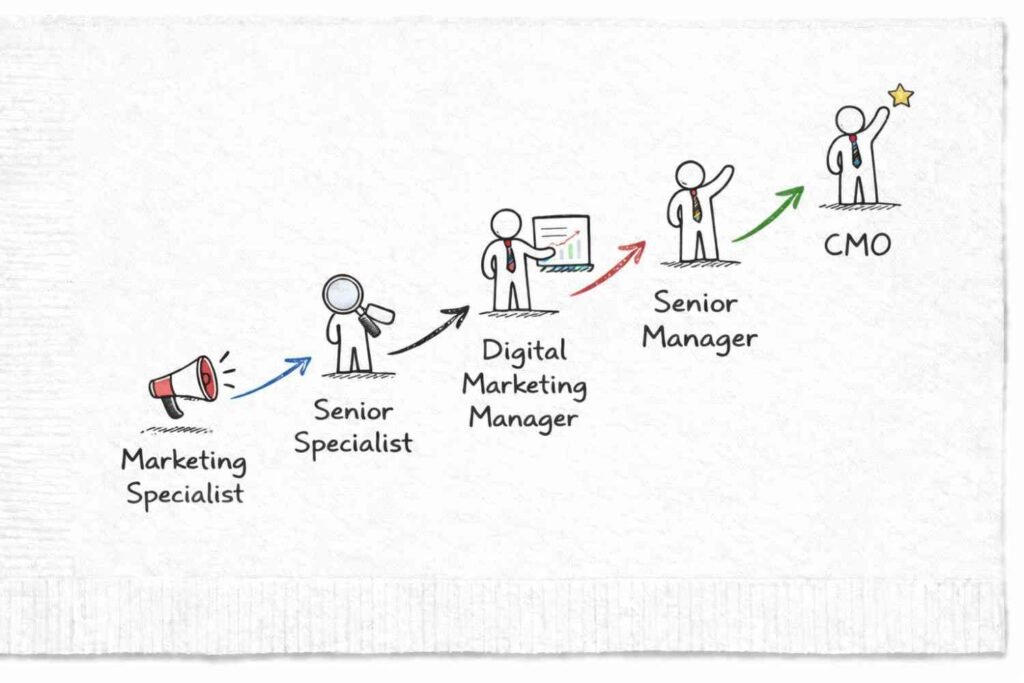
Year 0-3: Marketing Specialist/Executive
Execute marketing activities in specific channels. Expected salary: ₹3-8 lakhs.
Year 3-5: Senior Marketing Specialist/Team Lead
Own channels independently, begin leading small teams or projects. Expected salary: ₹6-12 lakhs.
Year 5-8: Digital Marketing Manager
Lead team of 3-8 people, manage multi-channel strategy, report to director/head. Expected salary: ₹12-18 lakhs.
Year 8-12: Senior Digital Marketing Manager
Larger team and budget responsibility, shape departmental strategy, present to C-suite regularly. Expected salary: ₹18-28 lakhs.
Year 12-15: Head of Digital Marketing / Marketing Director
Own entire digital marketing function, manage multiple managers, set department vision, significant P&L impact. Expected salary: ₹28-45 lakhs.
Year 15+: VP Marketing / CMO
Lead all marketing (digital and traditional), manage large teams and budgets, shape company strategy, report to CEO. Expected salary: ₹45-100+ lakhs.
Alternative paths from manager level:
- Specialist Consultant: Deep expertise in one area, advising multiple companies
- Agency Leadership: Leading marketing agency or practice
- Entrepreneurship: Starting own business leveraging marketing expertise
- Cross-Functional Leadership: Moving into general management, product, or operations
Common Mistakes New Marketing Managers Make
Mistake 1: Trying to Do Everything Yourself
Not delegating because you don’t trust team or think you’ll do it better.
Impact: Burnout, bottlenecks, team members don’t develop skills.
Fix: Delegate even when uncomfortable. Accept work won’t be perfect. Coach people to improve.
Mistake 2: Avoiding Difficult Conversations
Ignoring performance issues, conflict, or bad behaviors hoping they resolve themselves.
Impact: Problems escalate, team morale suffers, good performers get frustrated.
Fix: Address issues early and directly. Have courage for uncomfortable conversations.
Mistake 3: Not Setting Clear Expectations
Assuming team knows what you want without explicit communication.
Impact: Misaligned work, wasted effort, frustration on both sides.
Fix: Over-communicate goals, priorities, deadlines, and success criteria.
Mistake 4: Micromanaging
Dictating exactly how work should be done, constantly checking in, not trusting team judgment.
Impact: Demotivated team, lack of ownership, stifled creativity.
Fix: Define outcomes, not methods. Trust people’s expertise. Check in at milestones, not constantly.
Mistake 5: Forgetting Your Team Needs You
Getting too busy with meetings and reports to support team, provide feedback, or remove blockers.
Impact: Team feels unsupported, problems aren’t resolved, morale drops.
Fix: Prioritize one-on-ones, stay available, actively remove obstacles.
Mistake 6: Not Managing Up
Failing to keep executives informed, surprised stakeholders with bad news, not advocating for team resources.
Impact: Lost trust, reduced budget, limited advancement opportunities.
Fix: Proactive communication upward, no surprises, educate executives on marketing realities.
FAQs: Digital Marketing Manager Career
Q: How many years of experience needed to become a manager?
Typically 4-6 years, but can be accelerated to 3-4 with strong performance and company growth. MBA graduates sometimes enter at assistant/junior manager level.
Q: Is it better to be specialist or generalist for management?
Start as specialist (master one domain), then broaden to generalist (understand all channels). Managers need T-shaped skills—depth in something, breadth across everything.
Q: Can introverts succeed as managers?
Absolutely. Introverts often excel at one-on-ones, thoughtful decision-making, and creating psychological safety. Management doesn’t require being outgoing—it requires caring about people and developing them.
Q: Should I pursue MBA for marketing management?
Not mandatory but can accelerate career. Many successful managers don’t have MBAs. Experience and results matter more than degrees. MBA helps more for transitioning from other fields.
Q: How to manage people older/more experienced than me?
Focus on what you bring: strategic thinking, leadership, organization, resource access. Leverage their experience—ask for input, show respect, learn from them. Authority comes from competence, not age.
Q: What if I don’t like management after becoming a manager?
It’s okay. Many specialists try management and return to individual contributor roles. Some companies have parallel tracks (staff/principal/distinguished levels) for senior specialists. Management isn’t the only path to advancement.
Your Next Steps: Prepare for Marketing Management
Digital marketing management offers the perfect blend of strategy, leadership, and marketing impact. You’re not just optimizing campaigns—you’re shaping businesses, building teams, and developing people. The satisfaction of watching team members grow, seeing strategies succeed, and driving real business outcomes makes the challenges worthwhile.
If you’re currently a specialist dreaming of management, start preparing today. Volunteer to lead your next project. Mentor a junior team member. Think strategically about campaigns, not just tactically. Present your work to broader audiences. Ask questions about business strategy. Read management books. Build relationships across your organization.
The digital marketing managers earning ₹20-30 lakhs today started as individual contributors wondering if they had what it takes to lead. They developed new skills one experience at a time. They made mistakes and learned from them. They chose to grow into leadership rather than waiting for perfect readiness.
Your management journey starts not when you get the title, but when you start thinking and acting like a leader. Start today. The title will follow.