
DIVERSITY, EQUITY, AND INCLUSION (DEI) CAREERS
Table of Contents
During a leadership meeting, a VP presents hiring data showing that while 40% of candidates in the final interview stage are women, only 18% of actual hires are female. As the Diversity, Equity, and Inclusion (DEI) Specialist, you probe deeper—what happens between final interviews and offers? Your analysis reveals unconscious bias in evaluation criteria favoring “culture fit” (often code for similarity to existing team), and compensation negotiations where women receive lower initial offers. You recommend structured evaluation rubrics, bias training for hiring managers, and standardized offer formulas. Six months later, female hiring increases to 35%, better reflecting the candidate pool.
This is DEI work—identifying and dismantling barriers that prevent talented people from diverse backgrounds from thriving, while building cultures where everyone feels valued and can contribute fully. If you’re passionate about fairness and social justice, energized by creating systemic change, comfortable addressing uncomfortable topics about bias and privilege, and want work with clear purpose and societal impact, DEI might be your calling.
This guide explores what DEI professionals do, the unique blend of analytical rigor and cultural sensitivity required, salary expectations in India’s emerging DEI landscape, and how to build a career in this values-driven field that’s reshaping how organizations think about talent and culture.
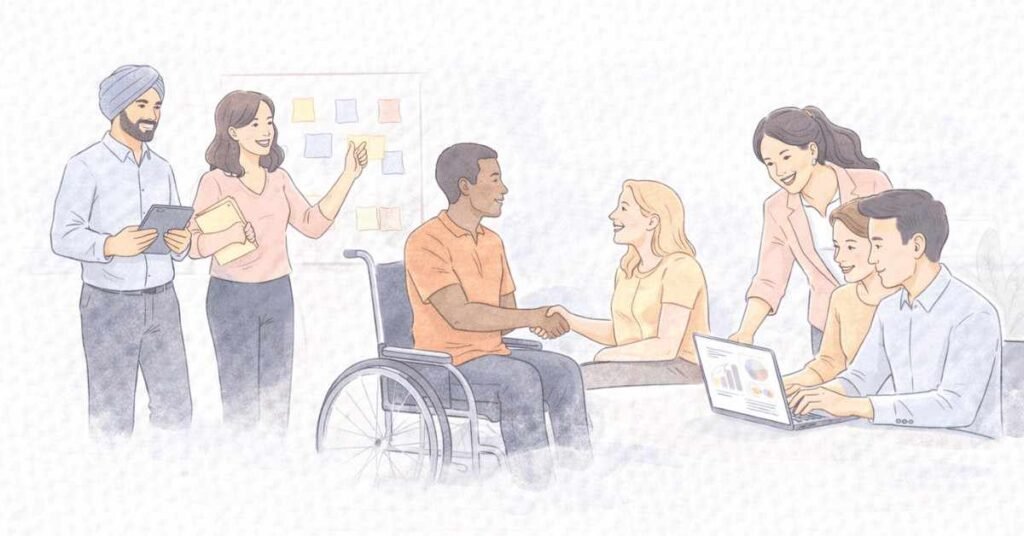
What is Diversity, Equity, and Inclusion?
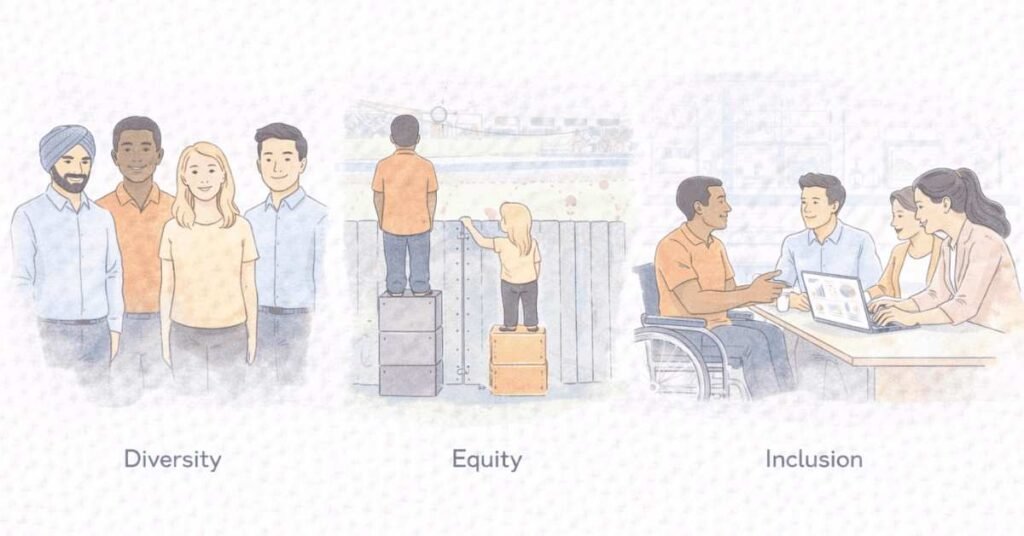
Diversity refers to the presence of differences within a workforce—differences in gender, race, ethnicity, religion, sexual orientation, age, disability, socioeconomic background, education, geography, and cognitive diversity.
Equity means fair treatment, access, and opportunities for all people, recognizing that different people have different circumstances and allocating resources accordingly to ensure fair outcomes.
Inclusion is creating environments where all individuals feel welcomed, respected, supported, and valued—where diverse perspectives are actively solicited and integrated into decision-making.
DEI Professionals develop and implement strategies, programs, and policies that increase diversity, ensure equity, and foster inclusion across the organization. They work to identify and address systemic barriers, biases, and inequities that prevent people from thriving, build awareness and capability around DEI principles, measure progress through data and analytics, partner with leadership to embed DEI into business strategy, and create culture shifts toward genuine inclusion.
DEI isn’t just about representation (hiring diverse people). It’s about creating systems and cultures where diverse talent can succeed, advance, and contribute fully.
Why DEI is Strategic in India
DEI might seem like a Western concept, but it’s increasingly relevant in India:
Diverse Indian Context: India has profound diversity—linguistic, religious, caste-based, regional, gender, disability, and socioeconomic. Organizations must navigate this complexity to build truly inclusive workplaces.
Gender Equity Imperative: India has among the world’s lowest female workforce participation rates (around 30%). Progressive organizations recognize that tapping female talent is both moral imperative and business necessity.
Global Integration: Indian companies operating globally and MNCs in India must meet international DEI expectations. Clients, investors, and employees increasingly expect DEI commitments.
Innovation and Performance: Research consistently shows diverse teams make better decisions, innovate more effectively, and deliver stronger business results. Companies prioritizing DEI outperform those that don’t.
Talent Attraction and Retention: Top talent—especially younger generations—increasingly evaluates potential employers on DEI track records. Organizations lacking DEI programs struggle to attract and retain diverse talent.
Legal and Compliance: While India’s DEI regulations are less prescriptive than some countries, laws around equal opportunity, sexual harassment prevention (POSH), and disability rights create compliance imperatives.
This growing importance explains why DEI roles are expanding in India. DEI Managers typically earn ₹18-35 lakhs annually, with Chief Diversity Officers commanding packages exceeding ₹50 lakhs in large organizations.
Core DEI Responsibilities
What does DEI work actually involve?
DEI Strategy Development
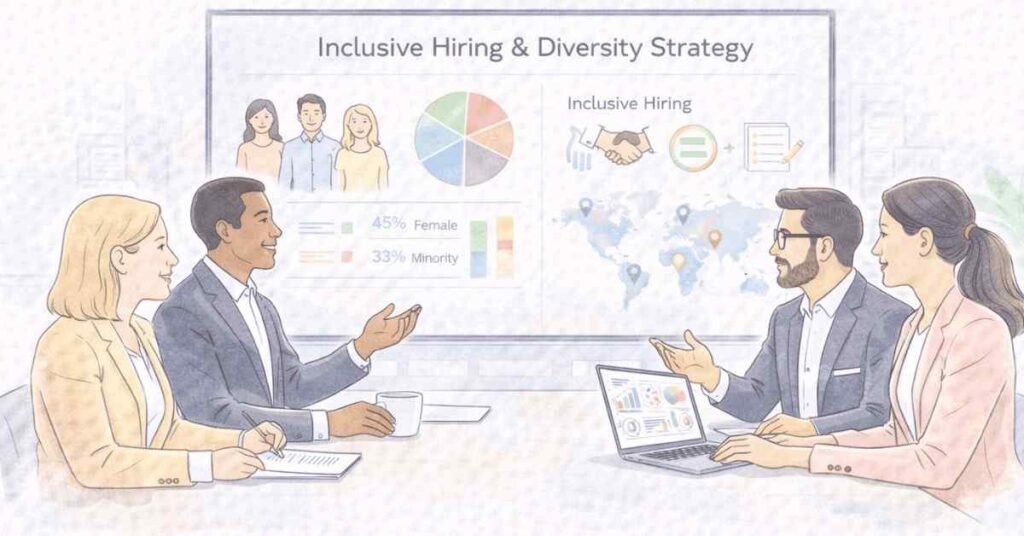
You create organizational DEI roadmaps by conducting diversity audits assessing current state (representation, equity, inclusion climate), defining DEI vision, goals, and success metrics, developing multi-year DEI strategies aligned with business objectives, securing leadership commitment and accountability, and building business cases for DEI investments.
Strategic DEI work moves beyond feel-good initiatives to systematic organizational change.
Diversity Recruitment and Hiring
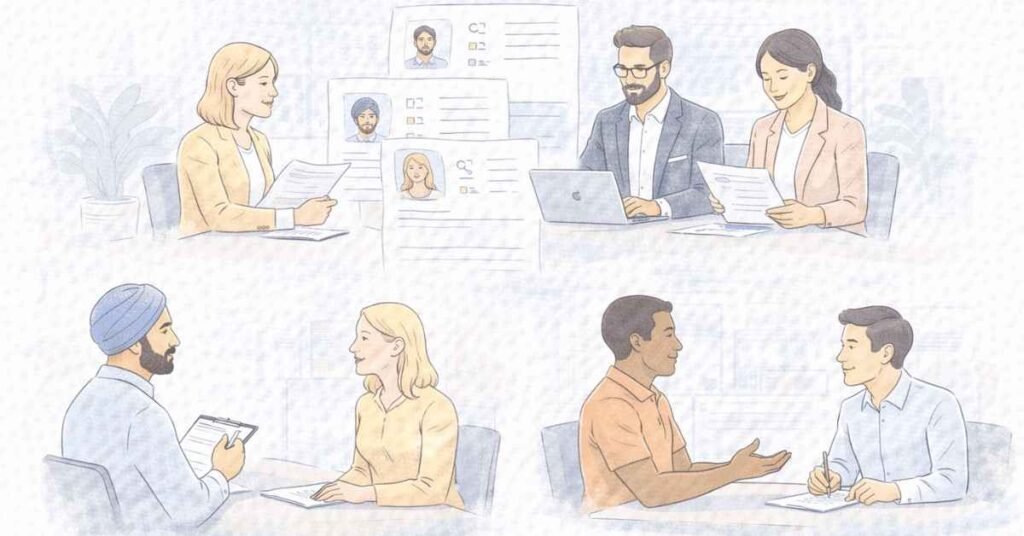
You make hiring more equitable and diverse through partnering with talent acquisition on inclusive job descriptions (removing biased language), expanding candidate sourcing to reach diverse talent pools, designing structured interviews reducing bias, training hiring managers on recognizing and mitigating unconscious bias, analyzing hiring data to identify bottlenecks and disparities, and implementing diverse interview panels and slate approaches.
Example: You analyze campus hiring data and discover only 12% of engineering hires are female despite 25% female enrollment in target schools. Investigation reveals company recruiting events happen at times conflicting with women’s college hostel curfews. Adjusting event timing increases female applicant rates.
Training and Education
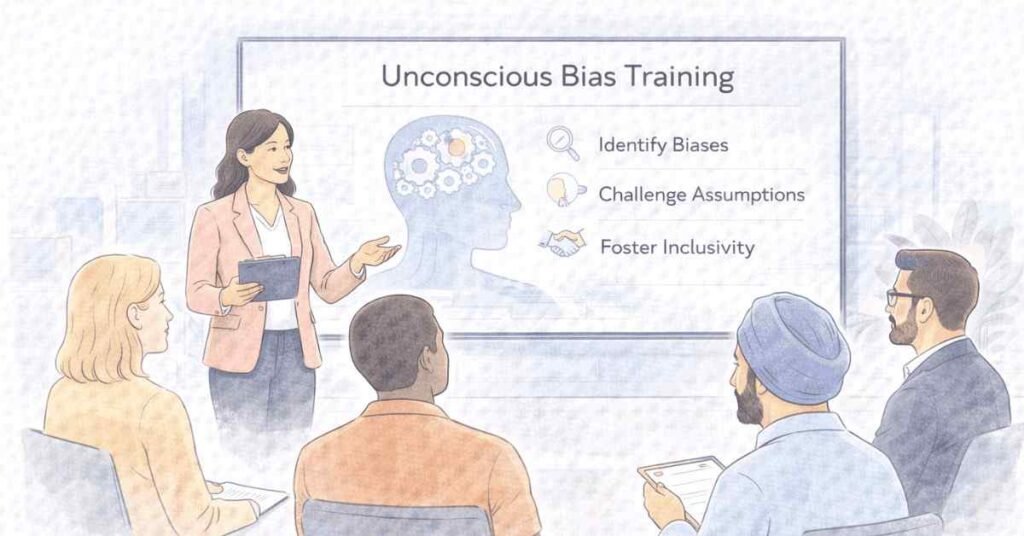
You build organizational DEI capability through designing and delivering unconscious bias training, conducting workshops on inclusive leadership, facilitating difficult conversations about privilege and systemic barriers, training managers on building inclusive teams, educating employees on microaggressions and allyship, and creating learning resources on DEI topics.
Effective DEI training creates genuine awareness and behavior change, not just checking compliance boxes.
Employee Resource Groups (ERGs)
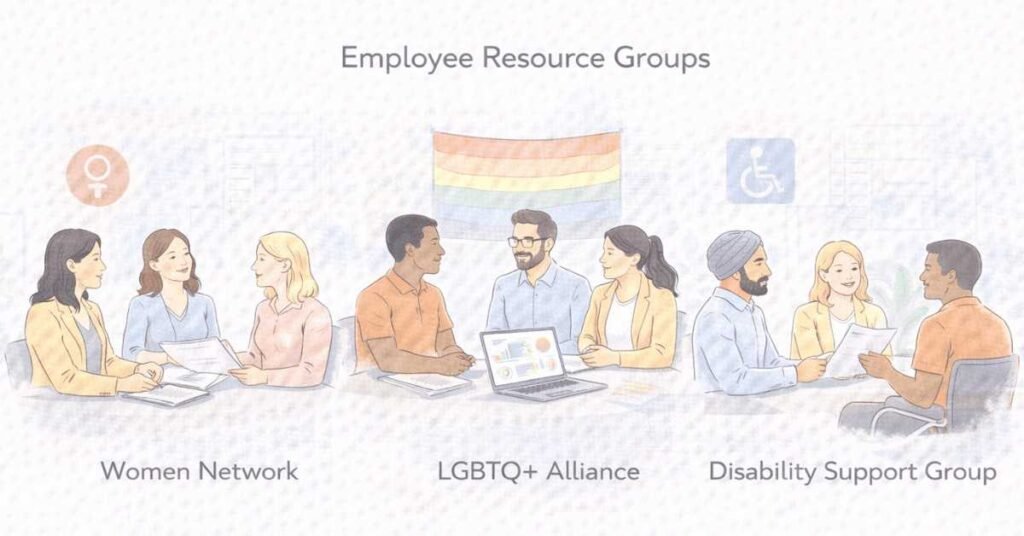
You support employee-led communities including establishing and supporting ERGs (Women’s Network, LGBTQ+ Alliance, Disability ERG, etc.), providing ERG leadership with resources, budget, and guidance, facilitating ERG collaboration on initiatives and events, connecting ERGs to business priorities and leadership, and measuring ERG impact on engagement and retention.
ERGs give employees from underrepresented groups community, visibility, and voice.
Policy Development and Review
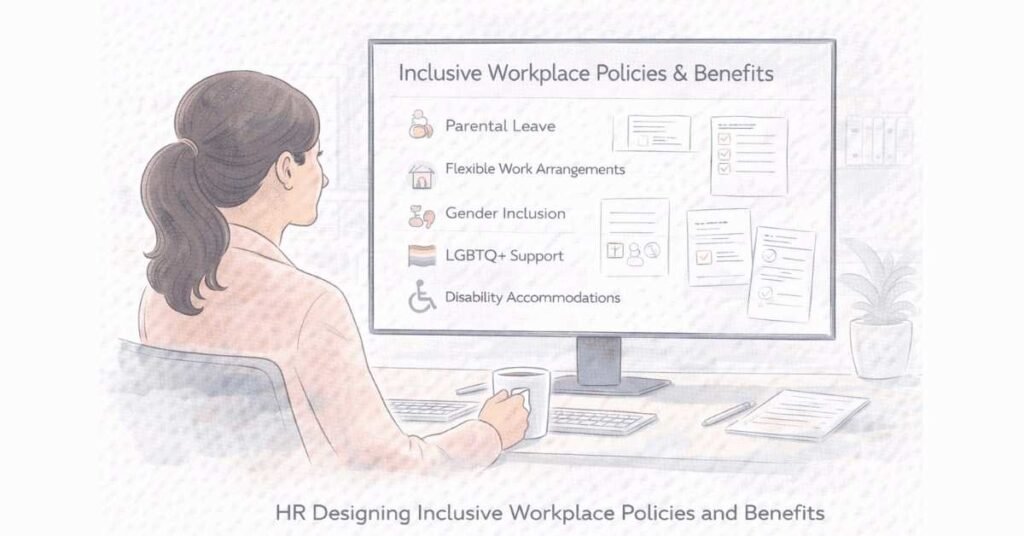
You ensure policies promote equity including reviewing HR policies for bias and barriers, developing inclusive benefits (parental leave, gender transition support, disability accommodations), creating flexible work policies supporting diverse needs, establishing anti-discrimination and anti-harassment policies, and ensuring accessibility standards across workplace and technology.
Indian Context: DEI policies in India must navigate cultural sensitivities while pushing boundaries—addressing caste-based discrimination carefully, supporting LGBTQ+ employees despite social stigma, creating disability inclusion despite infrastructure limitations.
Data Analytics and Metrics
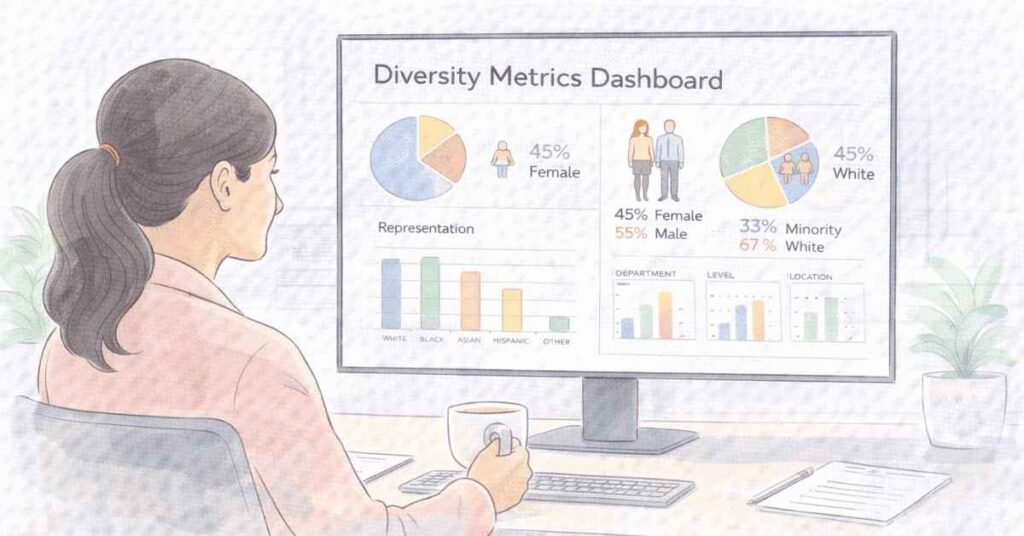
You measure DEI progress through tracking representation data across dimensions (gender, disability, regional diversity, etc.), analyzing equity metrics (pay gaps, promotion rates, performance ratings by demographic), monitoring inclusion metrics (engagement survey data, retention rates, internal mobility), benchmarking against industry and competitors, creating dashboards visualizing DEI metrics for leadership, and identifying disparities requiring intervention.
Data reveals where good intentions fall short and guides targeted improvements.
Change Management and Culture Building
You drive cultural transformation through partnering with leadership to model inclusive behaviors, creating accountability mechanisms for DEI commitments, recognizing and celebrating DEI progress and champions, addressing resistance and backlash constructively, integrating DEI into performance expectations and evaluations, and storytelling that makes DEI personally meaningful.
Culture change is the hardest, most important DEI work—shifting mindsets, norms, and behaviors across entire organizations.
External Partnerships and Community Engagement
You connect DEI work beyond organizational boundaries including partnering with diversity-focused NGOs and organizations, building relationships with diverse talent pipelines (colleges, bootcamps, community organizations), representing organization in DEI forums and conferences, managing diversity supplier programs, and supporting community initiatives aligned with DEI values.
Compliance and Risk Management
You ensure legal compliance and manage DEI-related risks through staying current on equal employment opportunity laws, ensuring POSH Act compliance and investigation processes, coordinating disability accommodations and accessibility requirements, managing legal requirements around diversity reporting, and partnering with legal and employee relations on discrimination concerns.
Advisory and Consulting
You connect DEI work beyond organizational boundaries including partnering with diversity-focused NGOs and organizations, building relationships with diverse talent pipelines (colleges, bootcamps, community organizations), representing organization in DEI forums and conferences, managing diversity supplier programs, and supporting community initiatives aligned with DEI values.
A Day in the Life of a DEI Specialist
Let’s walk through a typical day:
Morning (9:00 AM – 12:00 PM): Your morning starts reviewing data for the quarterly DEI dashboard. You analyze representation changes—female hiring increased 3 percentage points (good progress), but promotion rates for employees with disabilities remain concerningly low (needs investigation). You flag this for deeper analysis.
You facilitate a two-hour unconscious bias training for 30 hiring managers. Using interactive exercises, you help them recognize how similarity bias, confirmation bias, and halo effect influence hiring decisions. You share techniques for structured interviewing and objective evaluation. Several participants have “aha moments” recognizing their own biases.
You meet with the Women’s ERG leadership to discuss their proposed mentorship program connecting junior women employees with senior leaders. You help them refine the program design, commit budget support, and offer to present the program to executive leadership for sponsorship.
Midday (12:00 PM – 2:00 PM): Over lunch, you read research on caste diversity in Indian workplaces—a sensitive but critical DEI dimension rarely addressed openly. You consider how to start conversations about this difficult topic.
You respond to an employee who emailed seeking support. They’re transgender and want guidance on transitioning at work—updating name and pronouns, communicating with their team, ensuring bathroom access. You schedule a confidential meeting to understand their needs and coordinate support.
Afternoon (2:00 PM – 6:00 PM): You conduct a listening session with employees from tier-2 cities and rural backgrounds. They share experiences of exclusion—social conversations assume urban upbringing, English language expectations create barriers, and networking happens in expensive restaurants they can’t afford. You document themes to inform interventions.
You review updated job descriptions from the talent acquisition team. You flag several using gendered language (“rockstar,” “ninja”) or requiring qualifications not actually necessary for roles (filtering out non-traditional candidates). You suggest more inclusive, accessible language.
You meet with the CFO to discuss pay equity analysis results. You’ve identified statistically significant gender-based pay gaps in three departments even after controlling for role, experience, and performance. You present recommendations for equity adjustments and corrective actions. The CFO commits to funding adjustments in next quarter’s budget.
Late Afternoon (4:30 PM – 6:00 PM): You facilitate a planning meeting for the organization’s first Disability Inclusion Month. You coordinate with ERGs, communications, and facilities on awareness events, accessibility improvements, speaker sessions, and policy enhancements. Creating visible commitment signals that disability inclusion matters.
Before ending your day, you prepare talking points for the CHRO’s board presentation on DEI progress. You highlight wins (increased diverse hiring, pay equity corrections, ERG growth) while candidly acknowledging gaps (leadership diversity remains low, retention of diverse talent lags).
DEI work blends analytical rigor (data analysis, metrics) with human connection (listening sessions, training, coaching) and strategic influence (leadership partnership, policy development). The variety and purpose make it meaningful.
Essential Skills for DEI Success
What distinguishes successful DEI professionals?
Cultural Competence and Humility
DEI requires deep cultural sensitivity including understanding diverse identities, experiences, and perspectives, recognizing your own biases, blind spots, and privilege, showing genuine curiosity about others’ experiences, navigating cultural differences respectfully, and admitting when you don’t know and being willing to learn.
Cultural humility—recognizing you’ll never fully understand others’ experiences but committing to continuous learning—is essential.
Communication and Facilitation
DEI involves constant communication including facilitating difficult conversations about bias, privilege, and discrimination, presenting to diverse audiences (frontline employees to C-suite), active listening to understand marginalized experiences, explaining complex DEI concepts accessibly, managing defensive reactions and resistance, and storytelling that creates emotional connection to DEI.
DEI professionals must communicate with courage and compassion simultaneously.
Data Analysis and Metrics
Effective DEI uses data rigorously including analyzing workforce demographics and representation, conducting statistical analysis identifying disparities, creating compelling data visualizations, measuring program impact and ROI, and translating data into actionable insights.
Data credibility helps DEI move from “soft” to strategic business priority.
Change Management
DEI is organizational transformation requiring assessing readiness for change, building coalitions and securing stakeholder buy-in, managing resistance and addressing backlash, creating accountability and measuring progress, celebrating wins while pushing continued improvement, and sustaining momentum over years-long journeys.
Strategic Thinking and Business Acumen
Strategic DEI connects to business outcomes including understanding business strategy and priorities, connecting DEI to business results (innovation, talent, reputation), building business cases for DEI investments, balancing ideal DEI vision with pragmatic implementation, and speaking business language not just social justice terminology.
DEI professionals who can’t articulate business value struggle to secure resources and commitment.
Program Design and Project Management
DEI involves managing initiatives including designing training programs and curricula, planning events and awareness campaigns, managing budgets and vendor relationships, coordinating cross-functional teams, and ensuring timely execution.
Empathy and Emotional Intelligence
DEI surfaces emotions—pain, anger, defensiveness, vulnerability. Success requires holding space for difficult emotions, showing empathy without absorbing others’ pain, managing your own emotional responses, reading group dynamics and adjusting approach, and building trust across difference.
Courage and Resilience
DEI requires speaking truth to power including naming inequities even when uncomfortable, pushing back on biased decisions, advocating for marginalized employees, persisting despite setbacks and resistance, and managing backlash while maintaining commitment.
DEI professionals face burnout risk from emotional labor and resistance. Resilience and support networks are essential.
Career Progression in DEI
DEI is an emerging field with evolving career paths:
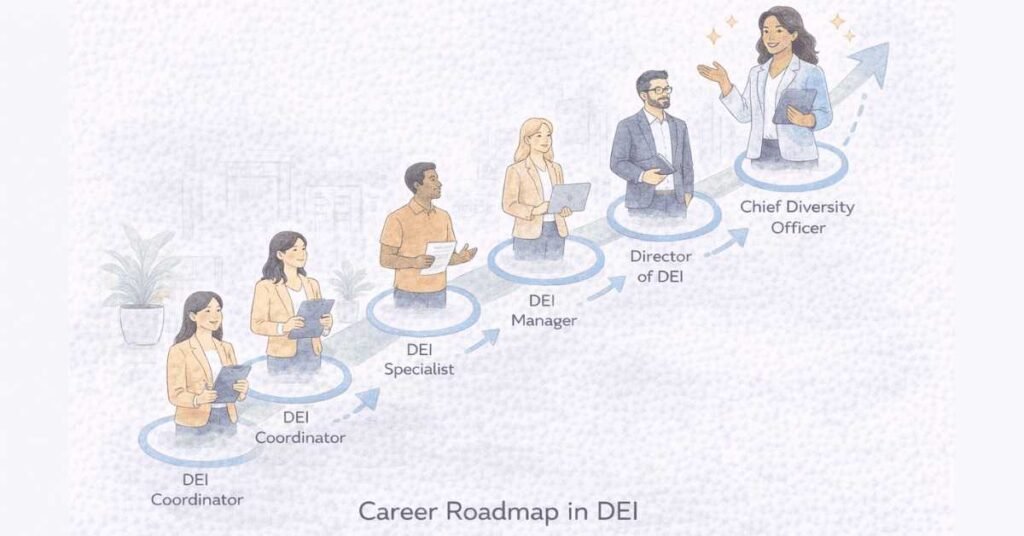
Entry Level: DEI Coordinator / Diversity Analyst (0-3 Years)
Salary Range: ₹4-8 lakhs annually
Responsibilities: Supporting senior DEI professionals, coordinating DEI programs and events, maintaining DEI data and dashboards, assisting with training logistics, supporting ERGs, conducting research on best practices, and handling administrative DEI tasks.
Early Career: DEI Specialist (3-7 Years)
Salary Range: ₹8-15 lakhs annually
Responsibilities: Designing and delivering DEI training, managing specific DEI initiatives independently, analyzing diversity data and reporting trends, partnering with HR on inclusive practices, supporting ERG strategy, and contributing to DEI strategy.
Mid-Career: Senior DEI Specialist / DEI Program Manager (7-12 Years)
Salary Range: ₹12-22 lakhs annually
Responsibilities: Leading major DEI programs, conducting complex analytics identifying disparities, partnering with senior leaders, developing DEI strategy components, managing vendor relationships, and mentoring junior DEI staff.
Management: DEI Manager / Head of Diversity & Inclusion (10-15 Years)
Salary Range: ₹18-35 lakhs annually
Responsibilities: Leading DEI team (if applicable), developing overall DEI strategy, partnering with executive leadership, managing DEI budget, overseeing all DEI initiatives, representing DEI in senior forums, and demonstrating DEI business impact.
Executive: Director of DEI / Chief Diversity Officer (15+ Years)
Salary Range: ₹35-50+ lakhs annually
Responsibilities: Setting DEI vision for the organization, partnering with CEO and board, building comprehensive DEI infrastructure, driving culture transformation, managing substantial investments, representing organization externally on DEI, and owning all DEI outcomes.
Chief Diversity Officer roles exist primarily in large MNCs, progressive Indian companies, and organizations where DEI is strategic priority.
DEI Career Challenges
Understanding challenges helps you prepare:
Emerging Field in India: DEI roles are newer in India with fewer established career paths than Western markets. Organizations are still determining how DEI fits strategically.
Skepticism and Resistance: Some view DEI as “Western import” irrelevant to India or “quota system” compromising merit. You’ll face skepticism requiring patience and evidence.
Cultural Sensitivity: Addressing bias and privilege in Indian context requires navigating caste, religion, regional identity, and other sensitive dimensions. What works in the West may not transfer directly.
Measuring Impact: Proving DEI ROI is challenging. Culture change takes years, and attribution is difficult.
Emotional Labor: Constantly educating about bias, listening to marginalized experiences, and facing resistance creates emotional exhaustion.[aihr]
Tokenism Risk: Some organizations hire DEI professionals for optics without genuine commitment or resources. DEI becomes performative rather than transformative.
Limited Budgets: DEI programs often receive insufficient resources to create meaningful impact.
Why Choose DEI Careers?
Despite challenges, DEI offers unique rewards:
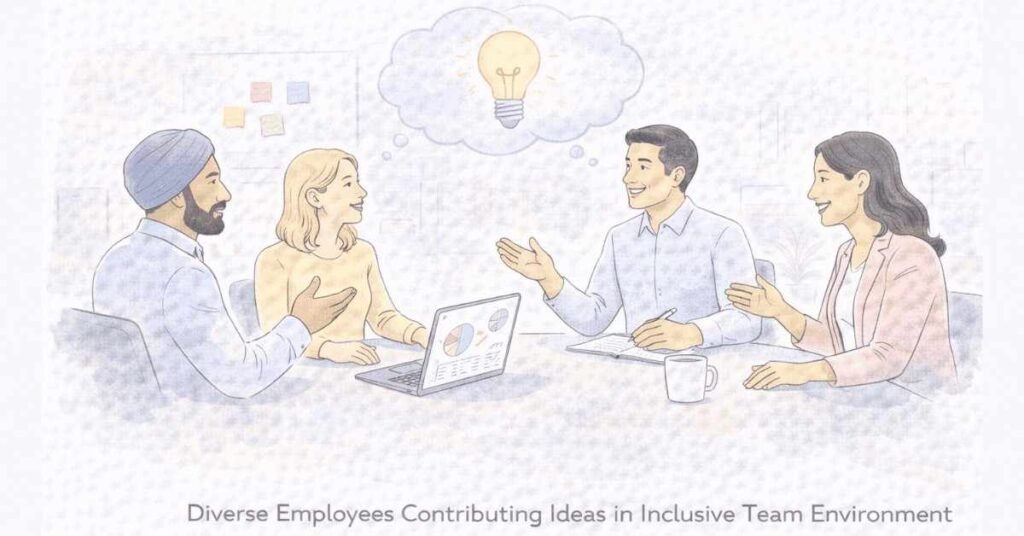
Purpose and Impact: DEI directly improves people’s lives and creates fairer workplaces. Few careers offer such clear social purpose.
Growing Field: DEI is expanding in India with increasing recognition of its value. Early career builders can shape this emerging field.
Values Alignment: If fairness and justice motivate you, DEI aligns work with values.
Strategic Influence: Senior DEI roles partner with executives, influencing organizational culture and strategy.
Transferable Skills: DEI builds capabilities—change management, data analysis, training, consulting—applicable across roles.
Decent Compensation: While not the highest-paying HR specialization, DEI managers earn competitive salaries (₹18-35+ lakhs) reflecting strategic importance.
Getting Started in DEI
How do you break into DEI?
Educational Backgrounds: DEI professionals come from diverse fields—HR, psychology, sociology, social work, organizational development, communications, or any field with passion for social justice.
Entry Paths: Common routes include transitioning from HR generalist roles with DEI interest, starting as DEI coordinator supporting established programs, joining organizations with DEI rotational programs, moving from ERG leadership into formal DEI roles, and transitioning from related fields (training, OD, employee relations).
Build Foundation: Develop understanding of DEI concepts and frameworks, learn about unconscious bias and systemic barriers, study change management and adult learning principles, gain presentation and facilitation skills, and understand data analysis basics.
Relevant Certifications: SHRM Inclusive Workplace Culture Specialty Credential, Cornell University Diversity and Inclusion Certificate, various university DEI certificates, and general HR certifications (SHRM-CP/SCP).
Demonstrate Commitment: Volunteer for DEI initiatives in current role, participate in or lead ERGs, conduct DEI projects (bias audits, policy reviews), and build knowledge through reading, courses, and community engagement.
Network: Connect with DEI professionals on LinkedIn and platforms like DEI Jobs India, attend DEI conferences and webinars, join DEI practitioner communities, and learn from experienced practitioners.
DEI careers offer purpose-driven work creating fairer, more inclusive organizations where everyone can thrive. Success requires blending analytical rigor with cultural sensitivity, strategic thinking with grassroots organizing, and courage with compassion. If you’re passionate about justice, energized by difficult conversations, and want work with clear social impact, DEI offers a meaningful career path at the intersection of HR, social change, and business strategy.