
PEOPLE ANALYTICS AND HR DATA SCIENCE CAREERS
Table of Contents
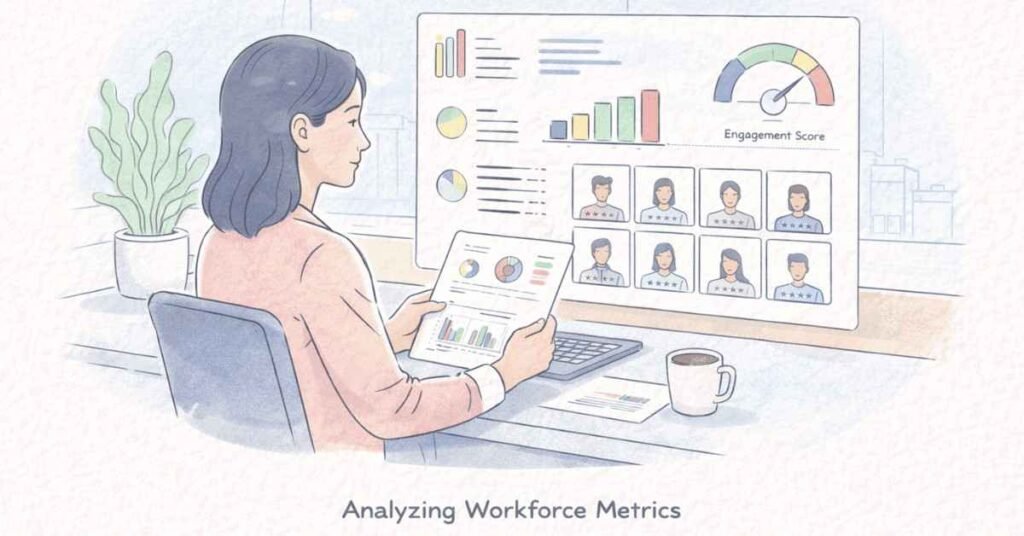
The Chief Operating Officer asks a seemingly simple question during a leadership meeting: “Why is our engineering team’s turnover 35% while marketing is only 12%? And more importantly, which engineers are most likely to leave next quarter so we can proactively retain them?” Traditional HR would struggle to answer beyond anecdotal observations. But as a People Analytics professional, you dive into the data—analyzing patterns across tenure, performance ratings, compensation positioning, promotion history, manager effectiveness scores, and engagement survey responses. Within two days, you present a predictive model identifying the 23 highest flight-risk engineers with 82% accuracy, along with specific retention interventions tailored to different risk factors.
This is People Analytics—the emerging HR discipline that applies data science, statistics, and analytics to workforce challenges, transforming HR from intuition-based to evidence-driven decision-making. If you’re fascinated by data and patterns, enjoy detective work uncovering insights, want to influence business strategy through analytics, and believe decisions should be evidence-based rather than gut-based, People Analytics might be your ideal career path.
This guide explores what People Analytics professionals do, the unique blend of technical and HR skills required, salary expectations in India, and how to transition into this high-growth field that sits at the intersection of data science, HR, and business strategy.
What is People Analytics?
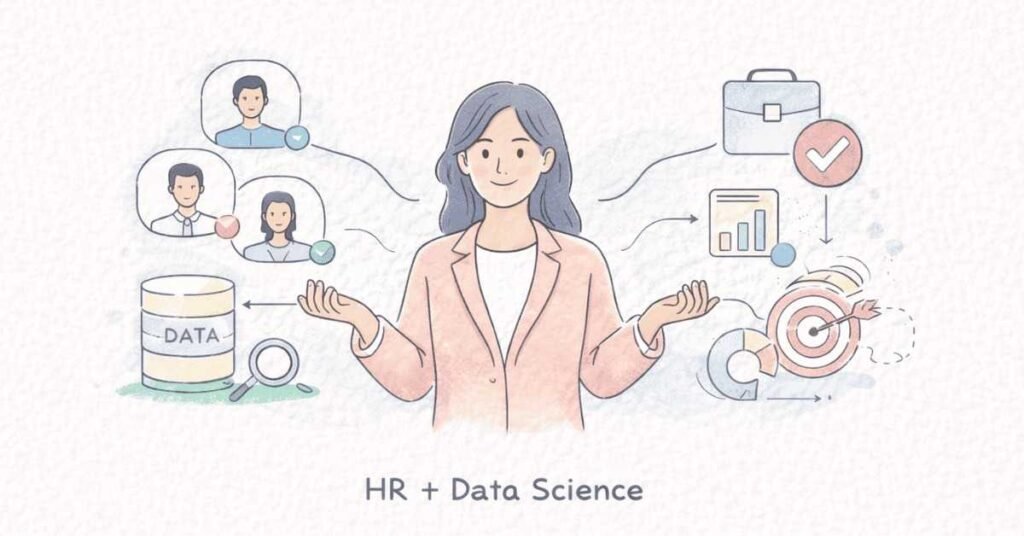
People Analytics (also called HR Analytics, Workforce Analytics, or Talent Analytics) applies data analysis, statistics, and predictive modeling to workforce data to improve organizational decision-making about people.
People Analytics professionals use data to answer critical questions like who are our top performers and what distinguishes them? Which employees are at risk of leaving and why? What factors predict successful hires? How do different managers impact team performance and engagement? What’s the ROI of our learning programs? How should we structure teams for optimal performance? What compensation strategies maximize retention within budget? Which diversity initiatives actually improve outcomes?
The goal isn’t analysis for its own sake but actionable insights that drive better workforce decisions, improve organizational effectiveness, and demonstrate HR’s business impact.
Evolution from HR Reporting: Traditional HR reporting tracks what happened—headcount, turnover rates, time-to-hire. People Analytics goes deeper, explaining why things happened, predicting what will happen, and prescribing what should be done.
Why People Analytics is Strategic
People Analytics has evolved from nice-to-have to strategic necessity:
Competitive Advantage: Organizations using analytics to make workforce decisions outperform competitors. Google famously uses People Analytics to optimize everything from hiring to team composition to retention.
Cost Optimization: Turnover costs 50-200% of annual salary per employee. Predicting and preventing turnover of high performers through analytics saves millions. Similarly, analytics optimizes compensation spend, training investments, and hiring strategies. Analytics replaces gut feelings with evidence. Rather than assuming what drives engagement, analytics reveals actual drivers. Rather than guessing which candidates will succeed, predictive models identify success patterns.
Executive Credibility: CFOs and CEOs respect data. HR leaders who present workforce insights backed by rigorous analysis gain credibility and influence that traditional HR struggles to achieve.
Proactive Management: Analytics shifts HR from reactive (responding to turnover after people leave) to proactive (predicting turnover and intervening early). This transformation multiplies HR’s strategic value.
This importance explains why People Analytics professionals earn premium salaries—averaging ₹20.3 lakhs in India, with top performers earning ₹40-50 lakhs—among the highest in HR.

Core People Analytics Responsibilities
What does People Analytics work involve?
Workforce Data Analysis
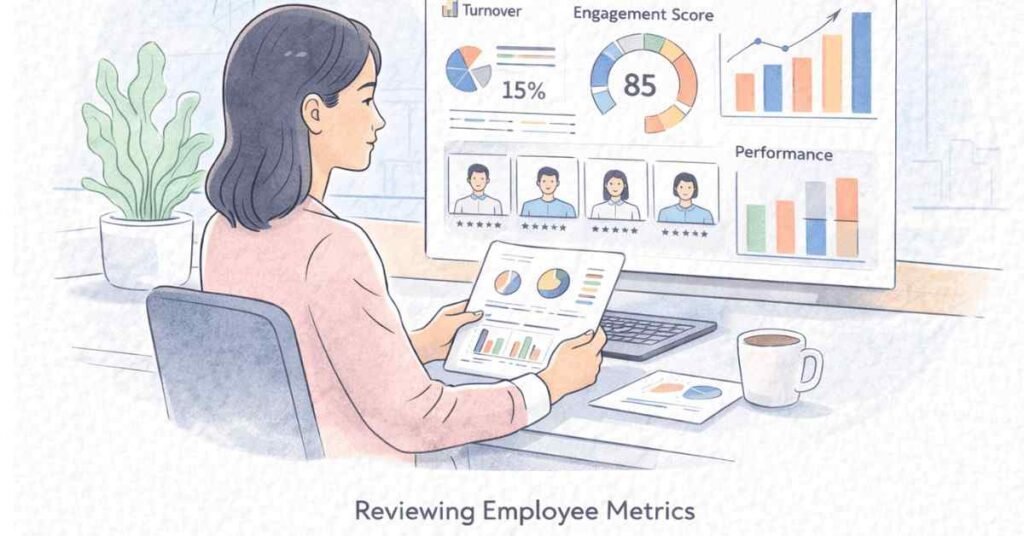
You analyze employee data to uncover patterns including examining turnover data to identify risk factors, analyzing engagement survey results to understand drivers, studying performance data to understand what differentiates high performers, investigating compensation equity and competitiveness, exploring diversity and inclusion metrics and trends, and analyzing time-to-hire and hiring effectiveness.
Example: You analyze why sales turnover is 28%. You discover that 65% of exits happen within first 18 months, turnover is highest among high performers (4-5 ratings), and compensation positioning below 50th percentile predicts 3x higher turnover risk. These insights enable targeted interventions.
Predictive Modeling and Machine Learning
You build models predicting future outcomes including attrition risk models identifying flight-risk employees, performance prediction models for hiring decisions, success profiles identifying characteristics of top performers, workforce forecasting for hiring needs, compensation modeling for retention and equity, and engagement prediction identifying at-risk teams.
Advanced analytics professionals use machine learning techniques—regression, decision trees, random forests, clustering—to build sophisticated predictive models.

Data Visualization and Storytelling
Analysis only matters if it drives action, requiring creating compelling visualizations (charts, graphs, dashboards), building interactive dashboards for self-service analytics, translating complex analysis into simple narratives, presenting insights to non-technical audiences, and telling stories that drive decision-making.
The best analytics professionals are data storytellers who make numbers meaningful and actionable.

HR Metrics and Dashboards
You design and maintain metrics tracking organizational health including defining key HR metrics aligned with business goals, building real-time dashboards showing workforce trends, creating executive scorecards for leadership review, benchmarking against industry standards, and monitoring leading indicators of problems.

Consulting and Advisory
You partner with HR and business leaders as advisor including understanding business problems requiring analytics solutions, recommending which questions analytics can answer, interpreting analysis results and implications, advising on people decisions based on data insights, and building HR’s analytical capabilities
Great analytics professionals are consultants who solve business problems, not just technicians running analyses.
Research Design and Methodology
You design studies answering people questions including designing surveys and measurement instruments, conducting experiments testing HR interventions, employing qualitative research (interviews, focus groups), applying research methodology ensuring valid conclusions, and combining multiple data sources for comprehensive insights.
Data Infrastructure and Governance
You ensure data quality and accessibility including working with HRIS teams on data architecture, defining data quality standards and processes, building data pipelines feeding analytics, ensuring data security and privacy compliance, and creating self-service analytics capabilities.
Training and Capability Building
You build organizational analytics literacy through training HR teams on data literacy and interpretation, teaching managers to use analytics tools, educating stakeholders on how to request analytics, sharing best practices in people analytics, and fostering data-driven culture.
A Day in the Life of a People Analytics Analyst
Let’s walk through a typical day:
Morning (9:00 AM – 12:00 PM): Your morning starts analyzing last quarter’s turnover data. You pull data from the HRIS using SQL queries, clean and prepare data in Python, and conduct statistical analysis identifying that turnover increased 4 percentage points, concentrated in engineering and product teams. You dig deeper—compensation positioning and manager effectiveness scores appear to be key factors.
You have a meeting with the VP of Engineering to present preliminary findings. You’ve created visualizations in Tableau showing turnover trends, comparative analysis across teams, and correlation between manager scores and team turnover. The VP asks you to build a predictive model identifying engineers at highest exit risk.
You spend two hours building a logistic regression model predicting turnover probability. Your model incorporates tenure, compensation percentile, performance ratings, promotion history, manager effectiveness, engagement scores, and external market factors. The model achieves 78% accuracy in identifying leavers.
Midday (12:00 PM – 2:00 PM): Over lunch, you review a request from talent acquisition asking you to analyze hiring effectiveness—which sources produce hires who perform best and stay longest. You outline your analytical approach and data requirements.
You spend an hour updating the executive HR dashboard showing key metrics—headcount, turnover, diversity representation, open requisitions, and engagement pulse scores. You notice diversity hiring slowed last quarter and flag it for the CHRO’s attention.
Afternoon (2:00 PM – 6:00 PM): You conduct a training session for HR business partners on interpreting engagement survey data. You walk them through reading correlation matrices, understanding statistical significance, and avoiding common misinterpretations. You want HRBPs to use data effectively, not just request analyses.
You work with the compensation team analyzing pay equity. Using regression analysis controlling for legitimate factors (role level, experience, performance, location), you identify several cases where female employees are paid significantly less than male peers. You prepare recommendations for equity adjustments.
You meet with the HRIS team about a data quality issue—promotion dates aren’t being captured consistently, undermining your ability to analyze promotion velocity. You discuss implementing data validation rules preventing incomplete data entry.
Late Afternoon (4:30 PM – 6:00 PM): You prepare a presentation for next week’s leadership meeting on your turnover analysis. You build a compelling narrative—here’s the problem (rising turnover in critical roles), here’s what the data shows (key risk factors), here are high-risk individuals (your predictive model), and here’s what we should do (targeted retention interventions).
Before ending your day, you review academic research on employee engagement to understand latest thinking and methodologies you might apply.
People Analytics combines technical work (coding, statistical analysis, data cleaning) with business partnership (presenting insights, advising leaders, solving problems). The variety keeps work engaging.
Essential Skills for People Analytics Success
What capabilities distinguish successful analytics professionals?
Statistical Knowledge and Research Methods
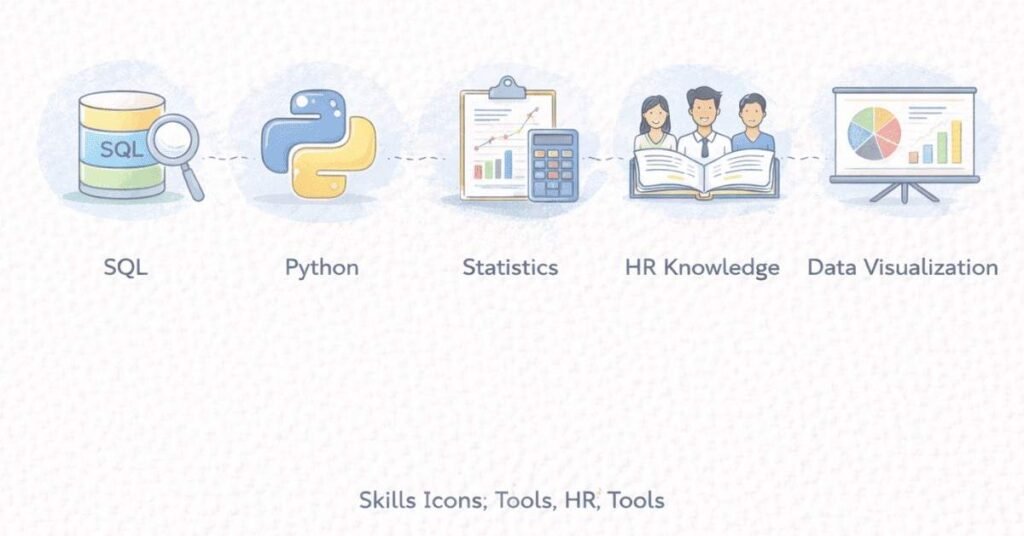
Analytics requires solid statistical foundation including descriptive statistics (mean, median, distribution, variance), inferential statistics (hypothesis testing, significance, confidence intervals), regression analysis (linear, logistic, multivariate), correlation and causation understanding, survey design and sampling methodology, and experimental design (A/B testing, control groups).
You don’t need PhD-level expertise, but comfort with statistical concepts is essential for valid analysis.[
Programming and Data Skills
Modern analytics requires technical capabilities including SQL for querying databases and extracting data, Python or R for statistical analysis and modeling, data manipulation and cleaning skills, understanding of machine learning algorithms, experience with APIs and data integration, and database concepts and data structures.
Python is increasingly standard in People Analytics for its versatility, libraries (pandas, scikit-learn, statsmodels), and integration capabilities.
Data Visualization Tools
Communicating insights requires visualization mastery including Tableau or Power BI for interactive dashboards, Excel for quick analysis and basic visuals, data storytelling principles, understanding of visual perception and design, and creating executive-ready presentations.
The best analytics professionals make complex data accessible through elegant visualizations.
HR Domain Knowledge
Analytics without HR understanding produces irrelevant insights requiring knowledge of HR processes and employee lifecycle, understanding of people management challenges, familiarity with HR metrics and what they mean, awareness of labor laws and compliance considerations, and appreciation for organizational dynamics and culture.
Technical experts without HR knowledge build models that don’t solve real problems. HR professionals without technical skills can’t perform rigorous analysis. The best combine both.
Business Acumen
Strategic analytics requires business understanding including how organizations create value and compete, connecting people metrics to business outcomes, understanding financial basics and ROI concepts, prioritizing analysis based on business impact, and speaking business language not just analytics jargon.
Analytical and Critical Thinking
Effective analytics requires questioning and curiosity including asking probing questions to understand problems, identifying data that would answer questions, critically evaluating data quality and limitations, recognizing spurious correlations versus causal relationships, and thinking systematically about complex problems.
Communication and Storytelling
Technical brilliance means nothing without communication including presenting to non-technical audiences clearly, translating statistics into plain language, building compelling narratives from data, facilitating data-driven discussions, writing clearly about complex topics, and influencing decisions through insights.
Many analytics professionals excel technically but struggle to communicate insights in ways that drive action.
Problem-Solving and Consulting
You’re solving business problems, not just running analysis including understanding stakeholder needs and constraints, structuring ambiguous problems, recommending solutions not just presenting data, balancing perfect analysis with timely decisions, and building trusted advisor relationships.
Career Progression in People Analytics
Understanding typical trajectories helps you plan:

Entry Level: HR Data Analyst / People Analytics Analyst (0-3 Years)
Salary Range: ₹4-8 lakhs annually
Responsibilities: Supporting senior analysts, conducting routine reporting and analysis, maintaining dashboards and metrics, learning analytics tools and methods, cleaning and preparing data, and conducting basic statistical analyses.
This role builds analytical foundations. Focus on mastering tools (SQL, Excel, Tableau/Power BI), learning statistics, and understanding HR domain.
Early Career: People Analytics Specialist / Senior Analyst (3-7 Years)
Salary Range: ₹9-18 lakhs annually
Responsibilities: Conducting independent analyses, building predictive models with guidance, creating dashboards and visualizations, partnering with HR on analytics needs, presenting insights to stakeholders, and contributing to analytics strategy.
You’re building credibility as capable analyst who delivers valuable insights.
Mid-Career: Senior People Analytics Specialist / Lead Analyst (7-12 Years)
Salary Range: ₹15-28 lakhs annually
Responsibilities: Leading complex analytics projects, building sophisticated predictive models, serving as subject matter expert, mentoring junior analysts, partnering with senior leaders, driving analytics methodology and standards, and managing vendor relationships.
You’re recognized as analytics expert who can tackle sophisticated challenges.
Management: People Analytics Manager (10-15 Years)
Salary Range: ₹22-38 lakhs annually
Responsibilities: Leading analytics teams (typically 3-8 people), developing analytics strategy and roadmap, prioritizing analytics initiatives, managing stakeholder relationships, overseeing model development and deployment, representing analytics in leadership forums, and demonstrating analytics ROI.
This requires leadership capabilities beyond technical expertise.
Senior Leadership: Head of People Analytics / Director (15+ Years)
Salary Range: ₹30-50+ lakhs annually
Responsibilities: Setting overall analytics vision and strategy, building analytics organization and capabilities, partnering with CHRO and executives, driving data-driven culture, managing substantial budgets, representing organization externally, and owning all analytics outcomes.
Senior analytics leaders shape how organizations leverage data for workforce decisions.
People Analytics Salary Factors
Why do salaries vary?
Technical Skills Depth: Strong programming (Python, R), machine learning expertise, and advanced statistical capabilities command 30-50% premiums over basic Excel-based analysis.
Industry: Technology companies, financial services, and consulting pay highest—often ₹25-50 lakhs for experienced professionals. Traditional sectors pay moderately.
Company Size: Large organizations with complex workforce analytics needs pay more. Tech companies and data-driven organizations value analytics highly.
Experience and Demonstrated Impact: Track record building models that drove decisions, projects that saved costs, or insights that influenced strategy command premiums.
Education: Advanced degrees (statistics, data science, industrial-organizational psychology, economics) typically add ₹3-8 lakhs to packages.
Geography: Bangalore and Gurgaon (tech/services hubs) pay 40-60% more than tier-2 cities. However, remote analytics work is increasingly common.
Challenges in People Analytics Careers
Understanding challenges helps you prepare:
Data Quality Issues: Workforce data is often incomplete, inconsistent, or inaccurate. You’ll spend 50-70% of time cleaning data rather than analyzing it.
Organizational Resistance: Some leaders resist data-driven decisions, preferring gut feelings. You must influence and educate, which can be frustrating.
Proving Value: Demonstrating that analytics insights drove specific outcomes is challenging. Attribution is difficult in complex organizational environments.
Ethical Considerations: Predictive models raise concerns about fairness, bias, and privacy. You must navigate ethical questions about how data should and shouldn’t be used.
Keeping Skills Current: Analytics tools, techniques, and best practices evolve rapidly. Continuous learning is mandatory.
Balancing Rigor and Speed: Leaders want quick answers, but rigorous analysis takes time. Balancing these pressures requires judgment.
Why Choose People Analytics?
Despite challenges, People Analytics offers compelling rewards:
High Earning Potential: Analytics professionals earn among the highest salaries in HR—₹20+ lakhs average, ₹40-50+ lakhs for experienced specialists.
Strategic Impact: Your insights directly influence business decisions about people, affecting organizational performance and thousands of employees.
Intellectual Challenge: Analytics combines technical problem-solving with business strategy, providing continuous intellectual stimulation.
Growing Field: People Analytics is expanding rapidly. Organizations increasingly recognize its value, creating strong demand and career opportunities.
Transferable Skills: Analytics builds capabilities—programming, statistics, data visualization, problem-solving—that transfer to data science, consulting, or business intelligence roles.
Clear Differentiation: Analytics skills distinguish you from traditional HR professionals, making you valuable and harder to replace.

Getting Started in People Analytics
How do you break into this field?
For HR Professionals Transitioning: Build technical skills through online courses (Coursera, edX) in statistics, Python/R, SQL, and Tableau/Power BI. Start with basic Excel analytics in your current role. Volunteer for data projects even if not your primary responsibility. Pursue certifications like AIHR’s People Analytics Certificate.
For Data Professionals Entering HR: Learn HR domain knowledge through HR courses, SHRM certification, or HR books. Understand people challenges organizations face. Look for HR analytics roles leveraging your technical skills while learning HR context.
Educational Backgrounds: Analytics professionals come from diverse backgrounds—statistics, psychology, economics, business analytics, computer science, industrial-organizational psychology, mathematics, or HR with strong quantitative skills.
Build Portfolio: Create projects analyzing publicly available workforce data. Showcase analysis on GitHub or personal website. Demonstrate your analytical thinking and technical capabilities.
Network in Community: Connect with People Analytics professionals on LinkedIn. Join People Analytics conferences (like Wharton People Analytics Conference). Participate in online communities sharing knowledge.
Start Entry-Level: Most analytics careers begin with analyst or coordinator roles supporting analytics teams. These positions provide training ground for developing skills.
People Analytics represents the future of HR—transforming intuition-based people decisions into evidence-driven strategies. Success requires blending technical rigor with business acumen, statistical expertise with storytelling, and analytical depth with strategic vision. If you’re fascinated by data patterns, believe evidence should drive decisions, and want to prove HR’s business impact quantitatively, People Analytics offers an intellectually stimulating, high-impact career at the cutting edge of HR evolution.