
Marketing Analytics Career Guide
Table of Contents
Why Marketing Analytics is the Most In-Demand Skill in 2026
Every rupee spent on marketing needs justification. Every campaign requires measurement. Every strategy demands data-driven insights. This is why marketing analytics professionals have become indispensable to modern businesses.
Marketing analysts bridge the gap between raw data and actionable business insights. While marketers create campaigns and content, analysts answer the crucial questions: What’s working? What’s not? Where should we invest more? Which channels drive the best ROI? Which customers are most valuable?
In 2026, the Indian job market for marketing analysts is projected to grow by 45%, with over 2,000 active positions across companies. With average salaries of ₹26.9 lakhs for experienced professionals—significantly higher than most marketing roles—this career path combines strong earning potential with job security.
What makes marketing analytics particularly attractive is its versatility. The skills you develop—data analysis, visualization, statistical thinking, business acumen—are transferable across industries and roles. Whether you’re analyzing e-commerce conversion funnels, evaluating email campaign performance, optimizing paid advertising spend, or measuring brand awareness, the core analytical mindset remains constant.
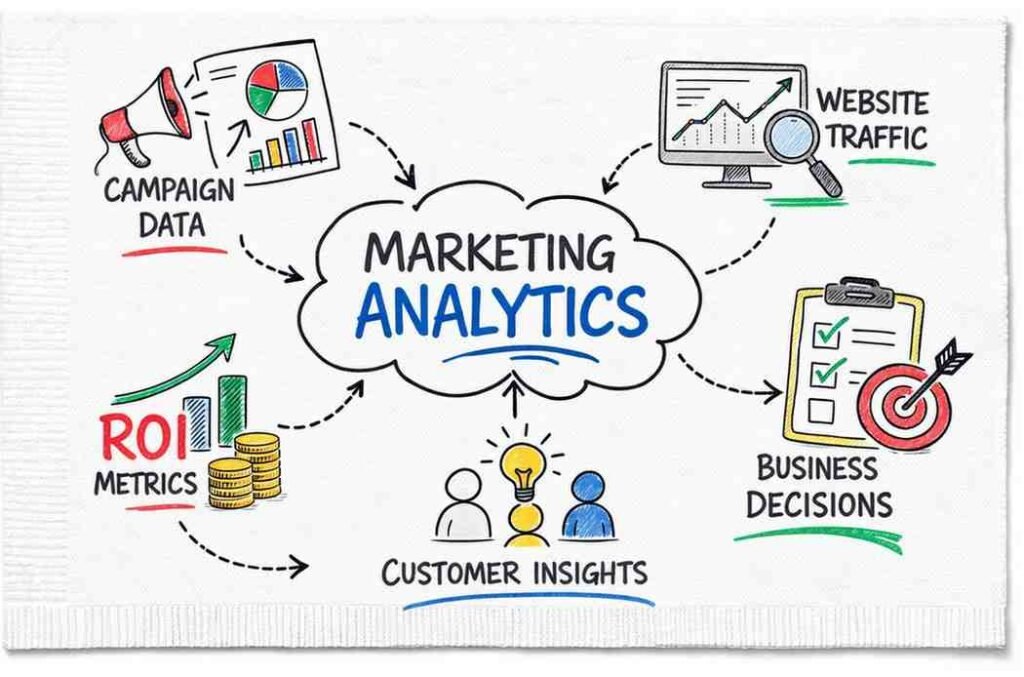
What Marketing Analysts Actually Do
Marketing analysts turn data into strategic recommendations that drive business growth
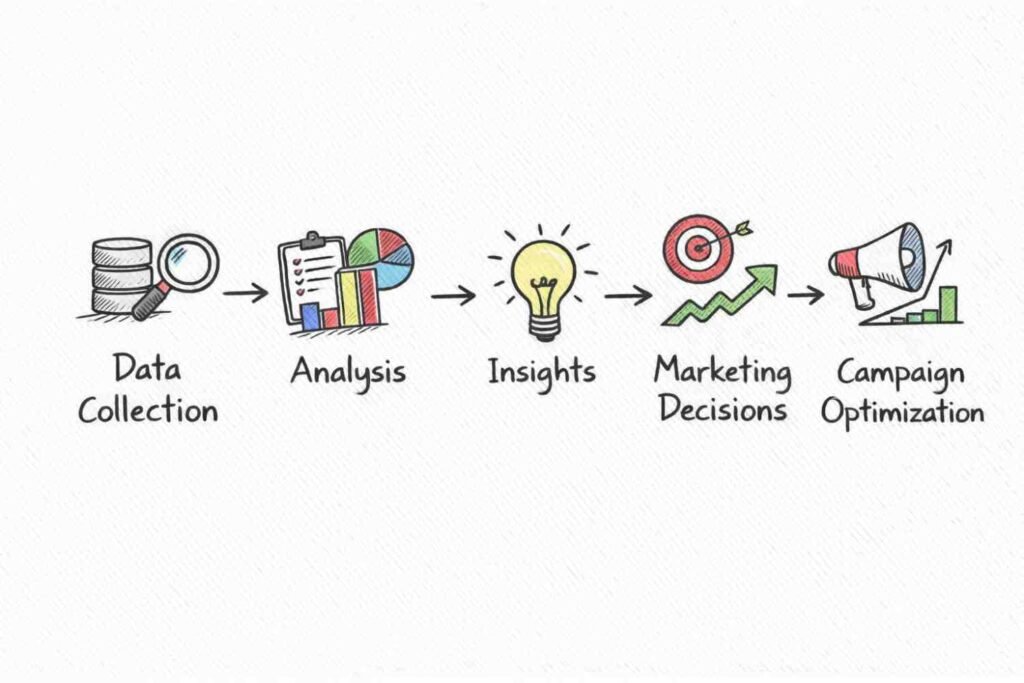
Data Collection and Management
- Set up tracking systems across marketing channels (websites, social media, email, paid ads)
- Ensure data accuracy and consistency across platforms
- Build and maintain marketing databases
- Create automated data pipelines from various sources
- Clean and prepare data for analysis
Performance Analysis
- Monitor key marketing metrics—traffic, conversions, customer acquisition cost, lifetime value, ROI
- Analyze campaign performance across channels to identify what drives results
- Track customer journey from first touchpoint to conversion
- Identify trends, patterns, and anomalies in marketing data
- Conduct cohort analysis to understand customer behavior over time
Reporting and Visualization
- Create dashboards showing real-time marketing performance
- Build weekly/monthly reports for stakeholders
- Visualize complex data in understandable charts and graphs
- Present findings to marketing teams and senior management
- Translate data insights into clear recommendations
Strategic Insights and Recommendations
- Identify opportunities for optimization across marketing channels
- Recommend budget allocation based on channel performance
- Segment customers based on behavior and value
- Predict future trends using historical data
- Support marketing strategy with data-driven insights
A/B Testing and Experimentation
- Design experiments to test marketing hypotheses
- Analyze test results for statistical significance
- Recommend winning variations for implementation
- Build experimentation culture within marketing teams
Essential Skills for Marketing Analysts
Technical Skills
Google Analytics 4 (GA4) Mastery: The most critical skill for marketing analysts in 2026. Understanding event-based data model, custom dimensions, exploration reports, conversion tracking, attribution modeling, and audience building.
Key GA4 Capabilities to Master:
- Planning proper analytics setup aligned with business goals
- Configuring events and conversions correctly
- Building custom reports and explorations
- Analyzing user behavior and identifying revenue opportunities
- Understanding attribution models and customer journeys
- Integrating with BigQuery for advanced analysis
- Creating audiences for remarketing
SQL for Data Querying: Writing SQL queries to extract, filter, and analyze data from databases. Essential for working with large datasets beyond what analytics tools provide.
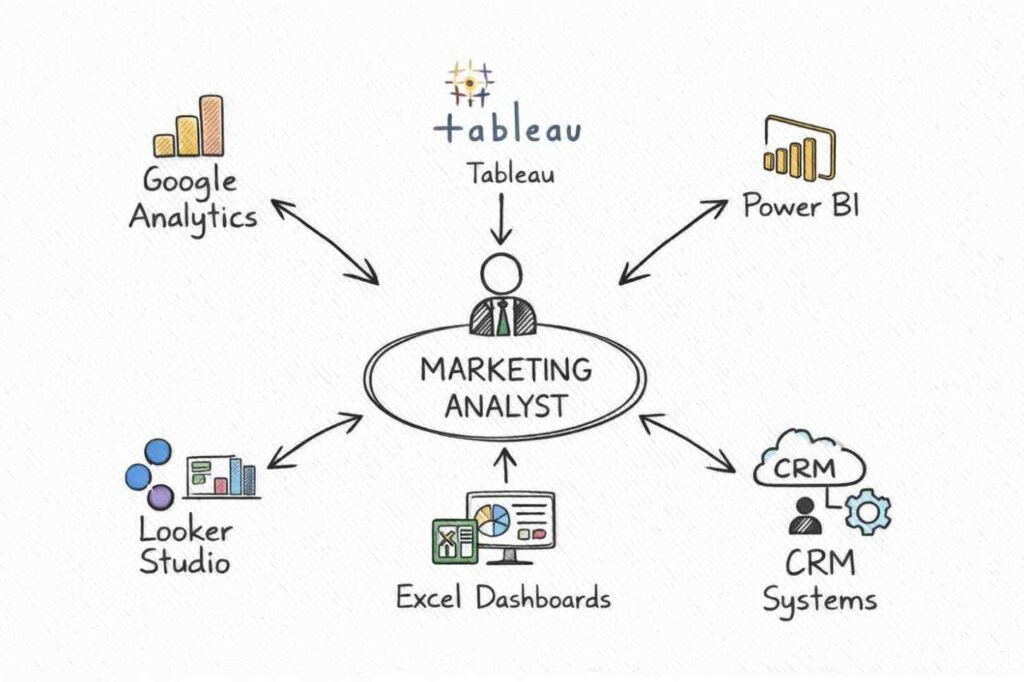
Data Visualization Tools: Creating dashboards and visualizations using:
- Tableau: Industry-leading visualization platform
- Power BI: Microsoft’s business intelligence tool, increasingly popular in India
- Google Data Studio (Looker Studio): Free tool integrating seamlessly with Google products
- Excel/Google Sheets: Advanced functions, pivot tables, charts
Marketing Platforms: Understanding how to extract and analyze data from:
- Google Ads, Facebook Ads Manager, LinkedIn Campaign Manager
- Email platforms (Mailchimp, HubSpot, SendGrid)
- CRM systems (Salesforce, HubSpot CRM, Zoho)
- E-commerce platforms (Shopify, WooCommerce, Magento)
Statistical Analysis: Basic statistics including:
- Descriptive statistics (mean, median, standard deviation)
- Hypothesis testing for A/B tests
- Correlation and regression analysis
- Sample size calculations
- Statistical significance testing
Python/R (Advanced): For marketing analysts moving into advanced roles, programming skills enable:
- Automated reporting and data pipeline creation
- Advanced statistical modeling
- Predictive analytics and forecasting
- Machine learning applications
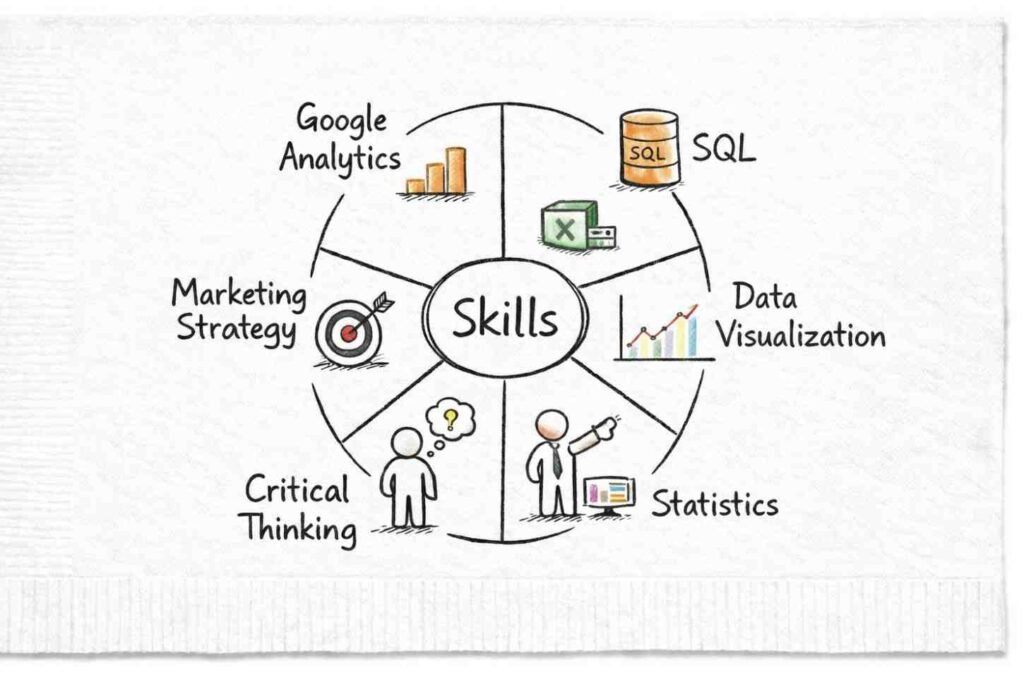
Analytical and Business Skills
Marketing Funnel Understanding: Deep knowledge of customer journey stages—awareness, consideration, conversion, retention, advocacy—and relevant metrics for each.
Business Acumen: Understanding how marketing impacts revenue, profit margins, customer lifetime value, and business objectives.
Critical Thinking: Questioning data, identifying biases, distinguishing correlation from causation, and avoiding analysis paralysis.
Problem-Solving: Breaking down complex business questions into answerable analytical problems.
Communication Skills: Translating technical findings into actionable recommendations for non-technical stakeholders.
Top Marketing Analytics Tools for 2026
Analytics and Tracking Platforms
Google Analytics 4: Free, comprehensive web and app analytics platform. Essential for understanding website traffic, user behavior, conversions, and attribution.
Adobe Analytics: Enterprise-grade analytics for large organizations requiring advanced customization and cross-device tracking. Cost: From ₹50,000/month.
Mixpanel: Product analytics platform excellent for SaaS and mobile apps, tracking user actions and retention. Cost: Free tier available; paid from ₹15,000/month.
Hotjar: Heatmaps, session recordings, and user feedback to understand qualitative behavior. Cost: From ₹2,500/month.
Data Visualization and BI Tools
Tableau: Powerful visualization platform creating interactive dashboards from multiple data sources. Cost: From ₹15,000/user/month.
Microsoft Power BI: Comprehensive BI solution with strong Excel integration. Popular in Indian corporate environments. Cost: From ₹800/user/month.
Google Looker Studio (Data Studio): Free visualization tool integrating with Google ecosystem. Ideal for startups and small businesses.
Marketing Attribution and Analytics
HubSpot Marketing Analytics: Built into HubSpot, tracks marketing performance across campaigns with CRM integration. Cost: Included with HubSpot Marketing Hub from ₹8,000/month.
Segment: Customer data platform collecting and routing data to various marketing tools. Cost: From ₹25,000/month.
Google Tag Manager: Free tag management system for implementing tracking codes without developer help.
Social Media Analytics
Sprout Social: Comprehensive social media analytics and reporting. Cost: From ₹8,000/month.
Native Platform Analytics: Instagram Insights, Facebook Analytics, LinkedIn Analytics, Twitter Analytics (free but limited).
Reporting and Automation
Microsoft Excel/Google Sheets: Advanced spreadsheet analysis remains foundational.
Python with libraries: Pandas, NumPy, Matplotlib for automated analysis (free, requires programming knowledge).
Most entry-level analysts start with free tools (Google Analytics, Google Sheets, Looker Studio) then progressively learn paid platforms as they advance.
Marketing Analytics Salary in India
Marketing analysts command premium salaries reflecting their strategic value:
Experience-Based Salary Ranges
- Junior Marketing Analyst (0-2 years): ₹4-8 lakhs per year
- Marketing Analyst (2-5 years): ₹10-16 lakhs per year
- Senior Marketing Analyst (5-8 years): ₹16-25 lakhs per year
- Lead Analyst/Manager (8+ years): ₹25-40 lakhs per year
Average salary for marketing analytics professionals is ₹26.9 lakhs annually, with top 10% earning ₹43+ lakhs. Some senior positions reach ₹95+ lakhs in premium companies.
For comparison, marketing analysts earn ₹13.1 lakhs on average, while specialized marketing analytics roles (requiring advanced statistical and technical skills) earn ₹26.9 lakhs—more than double.
City-Wise Comparison
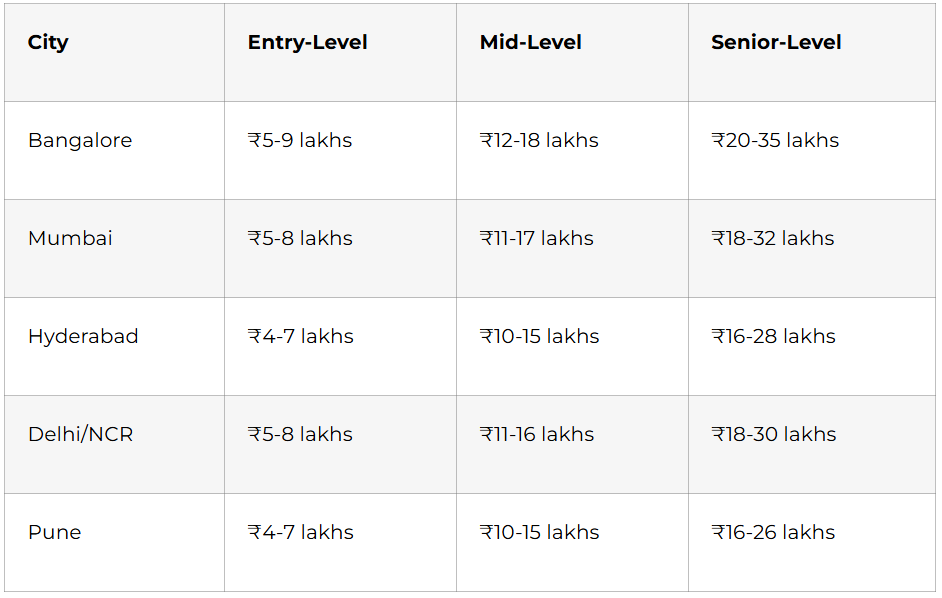
Industry Variations
- Technology/SaaS: ₹8-40 lakhs (data-driven culture, strong analytics teams)
- E-commerce: ₹7-35 lakhs (heavy focus on conversion optimization)
- Fintech: ₹8-38 lakhs (complex customer journeys, regulatory requirements)
- Consulting/Analytics Agencies: ₹6-32 lakhs (working across multiple clients)
- FMCG: ₹7-30 lakhs (market research and brand tracking focus)
Freelance Marketing Analytics
Freelance analysts typically charge:
- ₹2,000-5,000 per hour for consulting
- ₹30,000-1,00,000 per project for one-time analysis
- ₹50,000-1,50,000 monthly retainers for ongoing analytics support
- Dashboard setup: ₹20,000-60,000 one-time
Managing 3-4 clients generates ₹1.5-4 lakhs monthly income for established freelancers.
How to Become a Marketing Analyst
Month 1-2: Learn Analytics Fundamentals
Week 1-2: Understand Digital Marketing Basics
- Complete Google Digital Garage to understand marketing channels
- Learn marketing funnel concepts (awareness → consideration → conversion → retention)
- Understand key marketing metrics (CTR, conversion rate, CAC, LTV, ROAS)
Week 3-4: Master Google Analytics 4
- Take free Google Analytics Academy courses
- Set up GA4 on personal website or blog
- Explore demo account to understand reports
- Complete Google Analytics Individual Qualification (GAIQ) certification
- Practice building custom reports and explorations
Month 3: Develop Excel/Sheets Proficiency
Advanced Spreadsheet Skills:
- Pivot tables for data summarization
- VLOOKUP, INDEX-MATCH for data joining
- IF statements and logical functions
- Charts and conditional formatting
- Basic statistical functions (AVERAGE, MEDIAN, STDEV)
Create 5-10 practice projects analyzing sample marketing data.
Month 4: Learn Data Visualization
Choose One Tool to Master:
- Google Looker Studio (free, beginner-friendly)
- Power BI (popular in corporate India)
- Tableau Public (free version for portfolio building)
Build 3-4 Marketing Dashboards:
- Website traffic dashboard (using GA4 data)
- Campaign performance dashboard (sample PPC data)
- Email marketing dashboard (sample email metrics)
- Social media analytics dashboard
Document these as portfolio pieces with explanations.
Month 5: Understand SQL Basics
Why SQL Matters:
Most marketing data lives in databases requiring SQL to access.
Learning Path:
- Take free SQLBolt or Khan Academy SQL courses
- Practice on sample databases
- Learn SELECT, WHERE, GROUP BY, JOIN operations
- Write 20-30 queries on practice data
You don’t need to become a database expert—basic querying suffices for most marketing analyst roles.
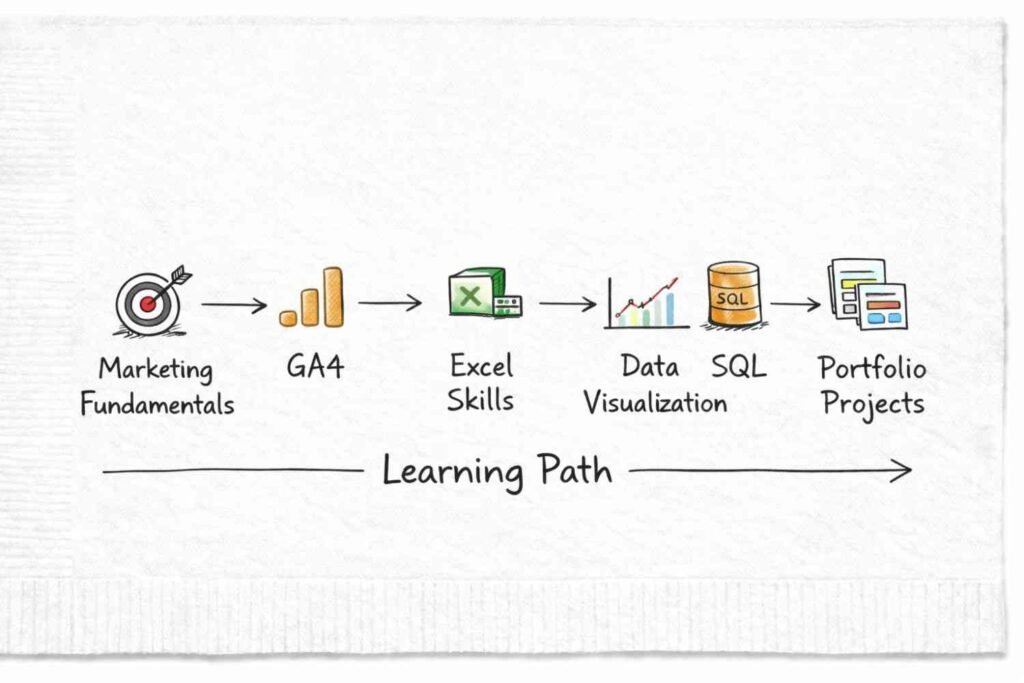
Month 6: Build Portfolio Projects
Project 1: Website Traffic Analysis
- Use GA4 demo account or your own website
- Analyze traffic sources, user behavior, conversion paths
- Identify optimization opportunities
- Create dashboard showing key insights
- Present findings in PDF report with recommendations
Project 2: Campaign Performance Analysis
- Download sample Google Ads or Facebook Ads data
- Analyze which campaigns, ad groups, and keywords perform best
- Calculate ROI and recommend budget allocation
- Build visualization showing performance trends
- Demonstrate A/B test analysis skills
Project 3: Customer Segmentation Analysis
- Use sample e-commerce data
- Segment customers by behavior, value, or demographics
- Identify high-value segments
- Recommend targeted marketing strategies
- Visualize segments with charts
Project 4: Multi-Channel Attribution Analysis
- Analyze sample customer journey data
- Compare different attribution models (first-click, last-click, linear, time-decay)
- Recommend which channels deserve more credit and budget
- Create presentation explaining methodology
Build portfolio website showcasing all projects with detailed explanations, tools used, and insights generated.
Month 7+: Gain Practical Experience
Option A: Internships
- Apply for marketing analyst internships at tech companies, e-commerce brands, agencies
- LinkedIn, Naukri, Internshala regularly post analyst roles
- Even 3-month internships provide invaluable real-world experience
Option B: Freelance Analytics Projects
- Offer analytics services on Upwork or Freelancer
- Start with lower rates (₹500-1,000/hour) to build reviews
- Help small businesses set up analytics and reporting
Option C: Internal Analytics Support
- If currently employed, offer to help marketing team with analytics
- Volunteer to build dashboards or analyze campaign data
- Get recommendations from internal stakeholders
Month 8+: Apply for Full-Time Roles
Job Titles to Search:
- Marketing Analyst
- Marketing Data Analyst
- Digital Marketing Analyst
- Analytics Executive
- Business Analyst (Marketing)
- Growth Analyst
Resume Strategy:
- Lead with technical skills (Google Analytics, Excel, SQL, visualization tools)
- Quantify portfolio results (“Identified opportunity to reduce CAC by 25%”)
- Include certifications prominently (GAIQ, Google Ads, Excel certifications)
- Link to portfolio website with dashboards and analyses
- Demonstrate both technical prowess and business thinking
Where to Apply:
- Tech companies and startups (highest demand)
- E-commerce platforms
- Digital marketing agencies
- SaaS companies
- LinkedIn, Naukri, Indeed, Wellfound
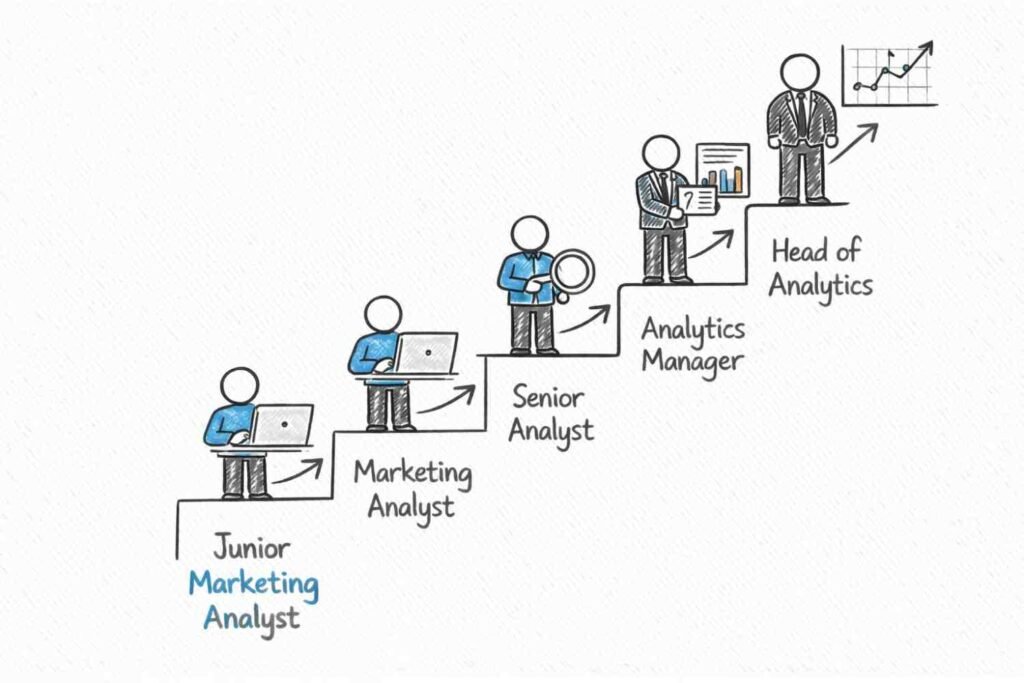
Career Growth Path for Marketing Analysts
Year 0-2: Junior Marketing Analyst
Execute analyses defined by seniors. Build reports, maintain dashboards, collect data, conduct basic analysis. Learn tools and metrics. Expected salary: ₹4-8 lakhs.
Year 2-5: Marketing Analyst
Own analytical projects independently. Answer business questions through data, build dashboards, present insights to stakeholders. Expected salary: ₹10-16 lakhs.
Year 5-8: Senior Marketing Analyst
Lead complex analyses, mentor junior analysts, shape analytical strategy, collaborate directly with marketing leadership. Expected salary: ₹16-25 lakhs.
Year 8-12: Lead Analyst/Analytics Manager
Manage team of 3-6 analysts, set analytical roadmap, integrate analytics into strategic planning, present to C-level executives. Expected salary: ₹25-40 lakhs.
Year 12+: Head of Analytics/Director
Oversee entire analytics function, build data-driven culture, shape business strategy with insights, manage large teams and budgets. Expected salary: ₹40-75+ lakhs.
Alternative career paths:
- Data Scientist: Move into predictive modeling and machine learning
- Product Analyst: Focus on product usage and optimization
- Growth Analyst: Specialize in growth experimentation and optimization
- Marketing Manager: Transition from analytics into marketing leadership
- Analytics Consultant: Advise multiple companies on data strategy
Marketing Analytics vs. Data Analytics vs. Business Analytics
Understanding the differences helps you position yourself correctly:
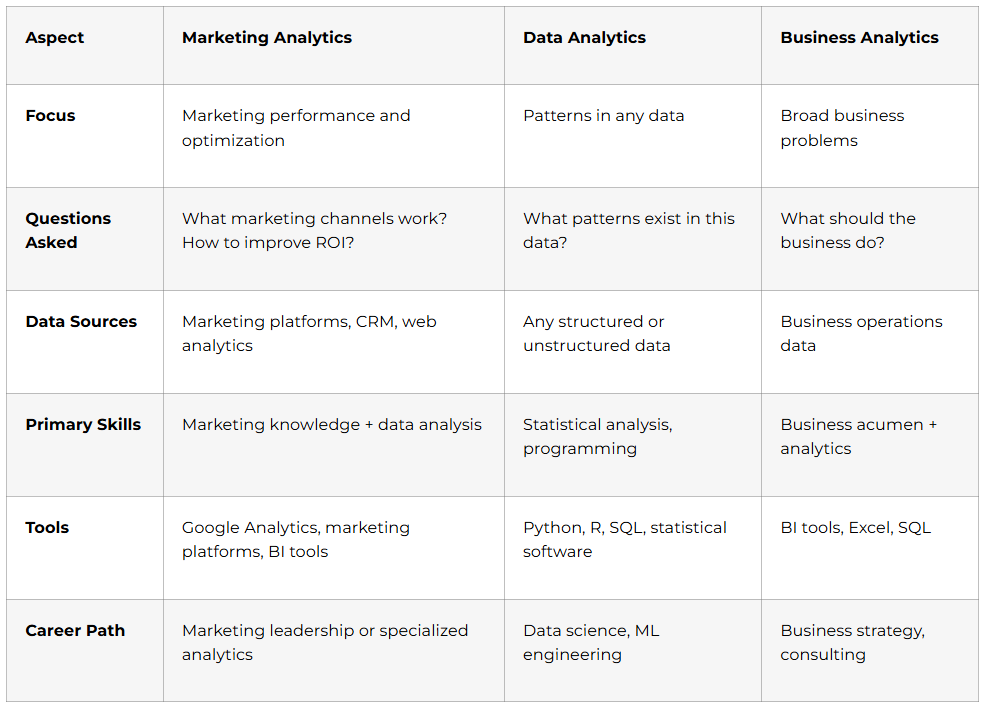
Marketing analysts need strong marketing understanding alongside technical skills.
Common Challenges and Solutions
Challenge 1: Data Quality Issues
Poor data quality leads to incorrect insights and bad decisions.
Solutions:
- Implement proper tracking from the start
- Audit data regularly for accuracy
- Document data collection methodology
- Clean data before analysis
- Validate findings against multiple sources
Challenge 2: Analysis Paralysis
Drowning in data without generating actionable insights.
Solutions:
- Start with clear business questions
- Focus on metrics that matter (avoid vanity metrics)
- Create frameworks for systematic analysis
- Set deadlines for analysis projects
- Remember: done and imperfect beats perfect and never-delivered
Challenge 3: Lack of Statistical Knowledge
Making incorrect conclusions from data due to statistical misunderstanding.
Solutions:
- Take basic statistics courses
- Understand statistical significance for A/B tests
- Know when sample sizes are too small
- Distinguish correlation from causation
- Consult statisticians for complex analyses
Challenge 4: Communicating to Non-Technical Stakeholders
Technical findings don’t translate into business action.
Solutions:
- Lead with insights, not methodology
- Use visualizations over tables
- Tell stories with data
- Focus on “so what?” and recommendations
- Practice explaining technical concepts simply
Challenge 5: Tool Overload
Overwhelmed by too many analytics tools and platforms.
Solutions:
- Master 2-3 core tools deeply before expanding
- Focus on tools used in your target industry
- Understand when to use which tool
- Build T-shaped skills (depth in few, breadth in many)
FAQs: Marketing Analytics Career
Q: Do I need a degree in statistics or mathematics?
No. While helpful, many successful marketing analysts come from marketing, business, or even non-technical backgrounds. Strong analytical thinking and willingness to learn technical skills matter more.
Q: Is coding necessary for marketing analysts?
Basic SQL is increasingly expected. Python/R are valuable for senior roles but not mandatory for entry-level positions. Excel, Google Analytics, and visualization tools can take you far.
Q: Which certification is most valuable?
Google Analytics Individual Qualification (GAIQ) is essential and free. Google Ads certifications, Excel certifications, and platform-specific credentials (Tableau, Power BI) add value.
Q: Marketing analyst or data scientist—which career path?
Marketing analyst if you enjoy marketing strategy and business impact. Data scientist if you prefer advanced statistics, machine learning, and programming. Marketing analytics offers faster entry.
Q: Can I work remotely as a marketing analyst?
Yes. Marketing analytics is highly remote-friendly since all work is digital. Many companies hire analysts from anywhere in India.
Your Next Steps: Launch Your Marketing Analytics Career
Marketing analytics combines the best of both worlds—creative marketing strategy and logical data analysis. If you enjoy uncovering insights, solving puzzles with data, and directly impacting business outcomes, this career path offers exceptional rewards both financially (₹26.9 lakhs average) and intellectually.
The barrier to entry is lower than you think. You don’t need expensive certifications or years of preparation. Start today by setting up Google Analytics on a website, analyzing the data, and presenting insights. Build one dashboard this month. Complete one certification next month. Create one portfolio project the following month.
The marketing analysts earning ₹30-40 lakhs today started by analyzing website traffic on a simple blog, wondering if they were doing it right. They kept learning, asking better questions, and building better analyses. Your marketing analytics career starts with your first dataset and your first insight. What will you analyze today?