
EMPLOYEE RELATIONS AND HR COMPLIANCE CAREERS
Table of Contents

It’s 3 PM on a Friday when you receive an urgent email marked “CONFIDENTIAL.” An employee has filed a formal harassment complaint against their manager. The situation is sensitive, emotions are running high, and the company’s reputation is at stake. As an Employee Relations specialist, you spring into action—conducting a thorough investigation, interviewing witnesses, reviewing evidence, and ensuring fair treatment for all parties while protecting the organization from legal risk. By Monday morning, you’ve completed your investigation, made recommendations, and helped resolve a situation that could have escalated into a costly lawsuit or damaged workplace culture.[6figr]
This is Employee Relations—the HR function that handles the most sensitive, complex, and emotionally charged aspects of workplace life. If you’re someone who values fairness and justice, can remain calm under pressure, enjoys detective work uncovering the truth, has the courage to have difficult conversations, and wants to protect both employees and organizations, Employee Relations might be your ideal career path.
This comprehensive guide explores what ER professionals actually do, the unique blend of interpersonal skills and legal knowledge required, realistic salary expectations in India, and how to build a successful career in this challenging but deeply rewarding specialization that puts you at the frontlines of workplace fairness and organizational integrity.
What is Employee Relations?
Employee Relations (ER) is the HR function focused on maintaining positive relationships between employers and employees while handling workplace issues, conflicts, and compliance with employment laws.
ER professionals serve as neutral parties who investigate complaints and grievances, mediate conflicts between employees or between employees and managers, handle disciplinary actions and performance issues, manage terminations and exits fairly and legally, ensure compliance with labor laws and regulations, develop and enforce workplace policies, maintain positive employee relations climate, handle union relations in organized environments, conduct workplace investigations, and protect organizations from legal liabilities while ensuring fair employee treatment.
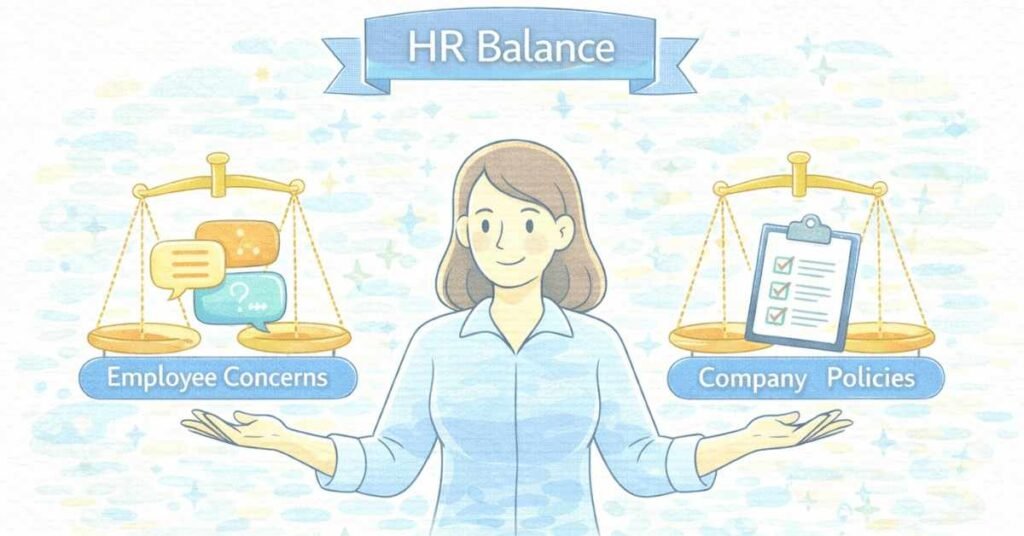
The core challenge of ER is balancing competing interests—protecting employee rights while considering business needs, conducting fair processes while making timely decisions, maintaining confidentiality while ensuring transparency, and being empathetic while remaining objective.
ER professionals are essentially workplace judges, mediators, and guardians of fairness. Done well, ER work prevents small issues from becoming major problems, resolves conflicts constructively, maintains trust, and ensures organizations treat people fairly and legally.
Why Employee Relations is Critical
ER might not be the most glamorous HR function, but it’s strategically vital:
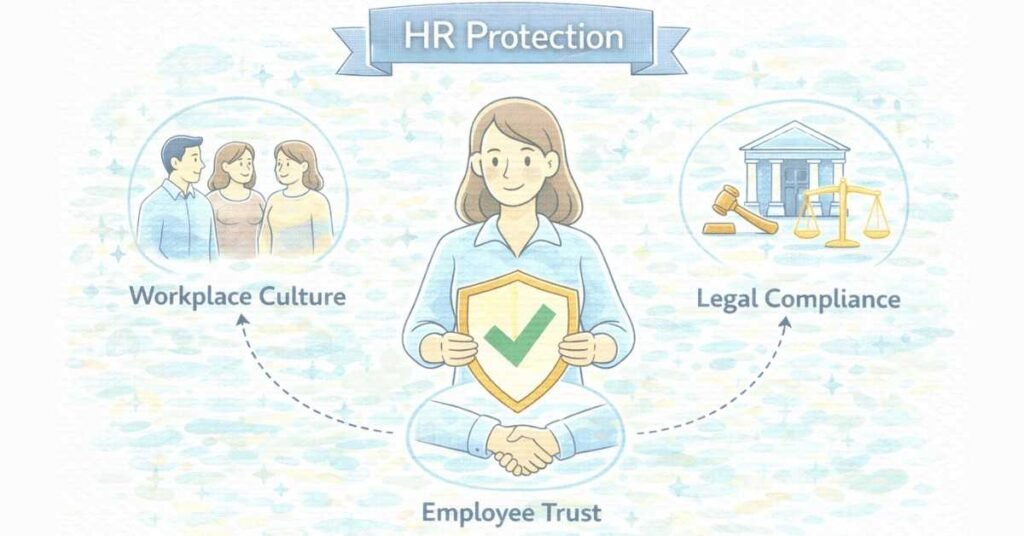
Legal Risk Management: Employment disputes are among the most common and costly legal issues organizations face. Wrongful termination lawsuits, harassment claims, discrimination cases, and labor law violations can cost lakhs to crores in settlements, legal fees, and penalties. Effective ER prevents these risks through proper processes, documentation, and decision-making.
Culture and Trust: How organizations handle conflicts and employee issues profoundly shapes workplace culture. When employees see that complaints are taken seriously, investigations are fair, and bad behaviors have consequences, trust increases. Conversely, mishandled ER situations destroy trust and engagement.
Retention and Productivity: Unresolved conflicts, perceived unfairness, and toxic behaviors drive good employees to leave and reduce productivity among those who stay. Effective ER addresses issues before they cause attrition or performance problems.
Leadership Development: Managers often struggle with performance management, difficult conversations, and conflict resolution. ER professionals coach leaders, helping them develop capabilities to address issues early and effectively.
Compliance Assurance: India has complex labor laws varying by state, industry, and company size. ER professionals ensure organizations comply with the Industrial Disputes Act, Shops and Establishments Acts, Payment of Bonus Act, Sexual Harassment of Women at Workplace Act, and numerous other regulations. Non-compliance creates legal vulnerability and reputational damage.
This critical importance explains why experienced ER professionals earn solid salaries—₹12-28 lakhs for specialists and managers, with compliance-focused roles earning ₹18-25 lakhs. Organizations recognize that strong ER capabilities prevent problems that would cost far more than ER salaries.
The ER and Compliance Landscape in India
Understanding the Indian context helps you navigate ER careers:
Complex Regulatory Environment: India has intricate, sometimes overlapping labor laws including the Industrial Disputes Act (regulating layoffs, retrenchment, and closures), Shops and Establishments Acts (working hours, leave, conditions—varies by state), Payment of Wages Act and Minimum Wages Act, Payment of Bonus Act (mandatory bonuses), Sexual Harassment of Women at Workplace Act (POSH Act), Maternity Benefit Act, Equal Remuneration Act, and various state-specific labor laws.
ER professionals must navigate this complexity, understanding which laws apply to their organization and ensuring compliance.
Union Dynamics: While union membership has declined in many sectors, certain industries remain heavily unionized—manufacturing, public sector, some services. In unionized environments, ER includes collective bargaining, grievance procedures per union agreements, managing strikes and industrial actions, and maintaining productive labor-management relations.
ER professionals in unionized sectors need additional expertise in labor relations and collective bargaining.
Growing Awareness of Workplace Rights: Indian employees are increasingly aware of their rights and willing to raise complaints. Social media amplifies workplace issues. The #MeToo movement heightened awareness of harassment. This trend increases ER workload but also creates opportunities for ER professionals who can handle sensitive issues properly.
POSH Compliance: The Sexual Harassment of Women at Workplace (Prevention, Prohibition and Redressal) Act, 2013 mandates Internal Complaints Committees (ICC) in organizations with 10+ employees. ER professionals often serve on ICCs or coordinate POSH compliance—training, prevention, handling complaints.
Documentation Culture: Indian courts and tribunals emphasize documentation. ER professionals must maintain meticulous records of investigations, disciplinary actions, and decisions to defend organizational actions if challenged.
Economic Pressures: During downturns, organizations implement layoffs, retrenchment, or restructuring. ER manages these transitions fairly and legally, handling terminations that comply with notice requirements, severance calculations, and legal processes.
Core ER Responsibilities
What does Employee Relations work actually involve? Let’s explore key responsibilities:
Workplace Investigations
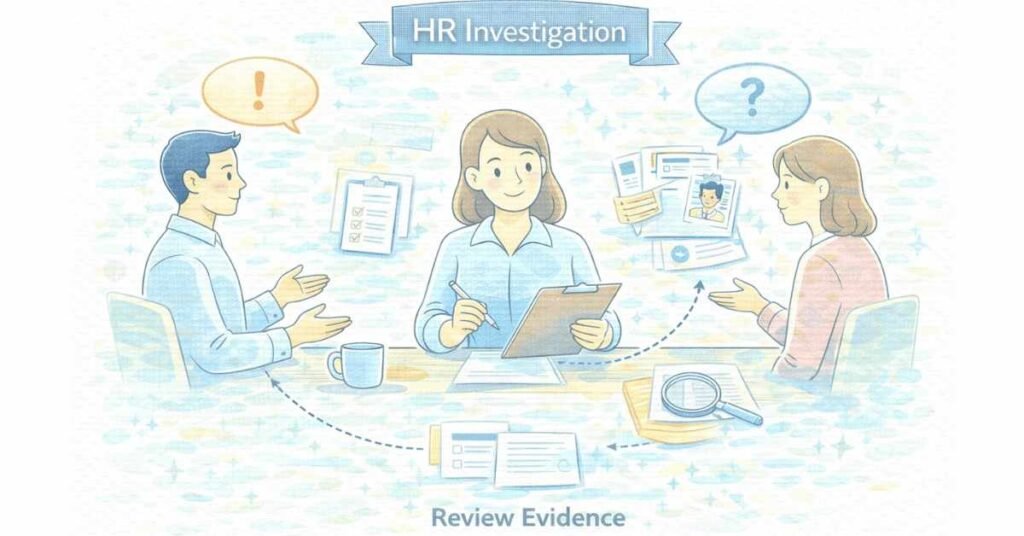
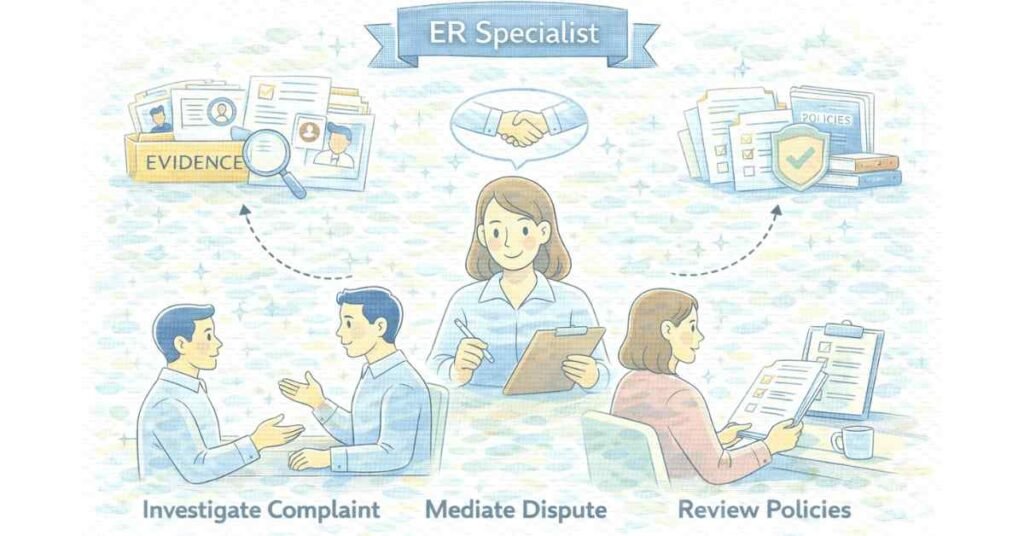
Investigating complaints is central to ER work including receiving and documenting complaints (harassment, discrimination, policy violations), planning investigation approach and identifying witnesses, conducting confidential interviews with complainant, accused, and witnesses, gathering and reviewing evidence (emails, documents, records), analyzing information objectively to determine facts, preparing investigation reports with findings and recommendations, and maintaining strict confidentiality throughout.
Investigations require detective skills, objectivity, attention to detail, and ability to handle emotionally charged situations. A thorough, fair investigation protects both employees and the organization.
Example: An employee complains that their manager makes inappropriate comments about their appearance. You must interview both parties, talk to colleagues who might have witnessed interactions, review any written communications, assess credibility, determine whether harassment occurred per legal definitions, and recommend appropriate action—all while maintaining confidentiality and ensuring fairness.
Conflict Mediation and Resolution
You help parties resolve disputes constructively including meeting with employees in conflict to understand perspectives, facilitating conversations where parties communicate directly, identifying underlying interests beyond stated positions, generating solutions that address both parties’ needs, helping parties reach mutually acceptable agreements, and following up to ensure resolutions hold.
Mediation requires active listening, emotional intelligence, neutrality, and creative problem-solving. When successful, mediation resolves issues without formal disciplinary action, preserving relationships and productivity.

Disciplinary Actions and Performance Management
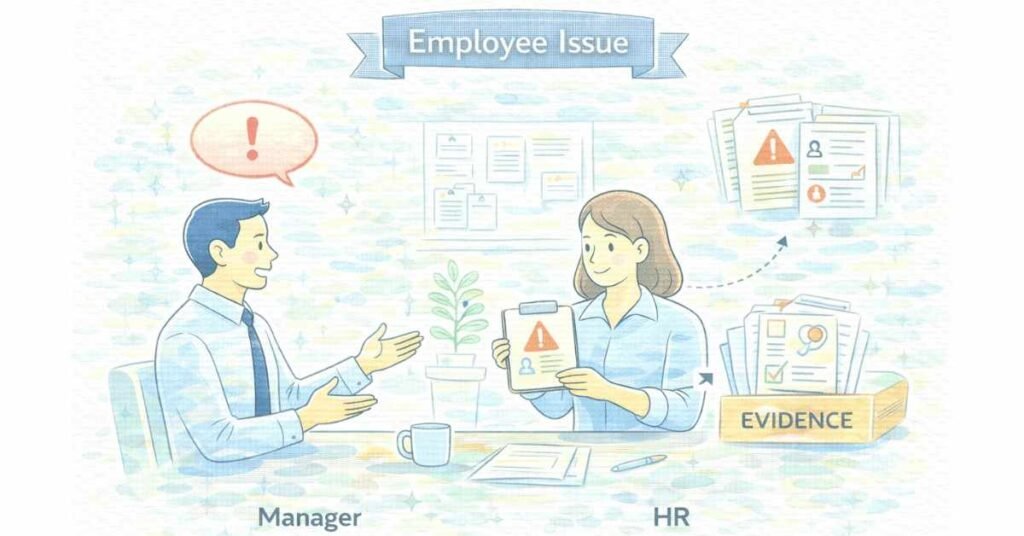
You guide managers through addressing performance and conduct issues including advising on appropriate disciplinary action (verbal warning, written warning, suspension, termination), ensuring consistency with policies and past precedent, drafting disciplinary documentation clearly stating issues and expectations, conducting or attending disciplinary meetings, providing employees opportunity to respond, and ensuring due process and fair treatment.
Disciplinary actions must balance accountability with fairness. Inconsistent discipline creates legal risks (discrimination claims) and cultural damage (perceived unfairness).
Terminations and Exits
You manage employee separations to minimize legal risk including reviewing termination decisions for legal compliance, calculating notice periods and severance per law and policy, conducting termination meetings with dignity and clarity, preparing separation documentation (relieving letters, experience certificates), coordinating exit logistics (final settlement, asset return, access revocation), conducting exit interviews to understand departure reasons, and handling post-termination issues if they arise.
Terminations are high-risk moments. Poor termination processes result in wrongful termination claims, negative employer brand impact, or even violence in extreme cases. ER ensures terminations are handled professionally and legally.
Indian Context: Indian law distinguishes between resignation, termination for cause, and retrenchment (layoff). Each has different legal requirements around notice periods, severance, and procedures. Retrenchment in certain categories requires government permission. ER professionals must understand these distinctions.

Policy Development and Interpretation
You create and maintain workplace policies including drafting employee handbooks and policies, ensuring policies comply with applicable laws, communicating policies clearly to employees and managers, training managers on policy implementation, interpreting policies when questions arise, updating policies as laws or business needs change, and ensuring consistent policy application.
Well-designed policies prevent problems by setting clear expectations. Poorly written or inconsistently applied policies create confusion and legal vulnerabilities

Employee Grievance Management
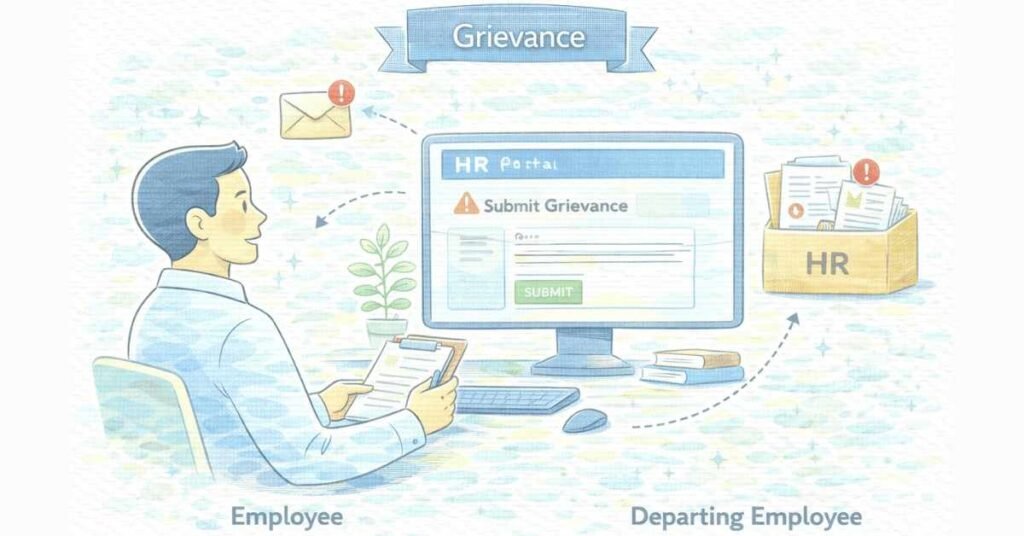
You handle formal grievance processes including receiving and documenting employee grievances, investigating complaints thoroughly and objectively, facilitating grievance resolution per established procedures, communicating outcomes to complainants, tracking grievances to identify patterns, and recommending systemic improvements based on grievance trends.
Grievance systems give employees formal channels to raise concerns, preventing escalation and demonstrating organizational commitment to fairness.
Labor Law Compliance
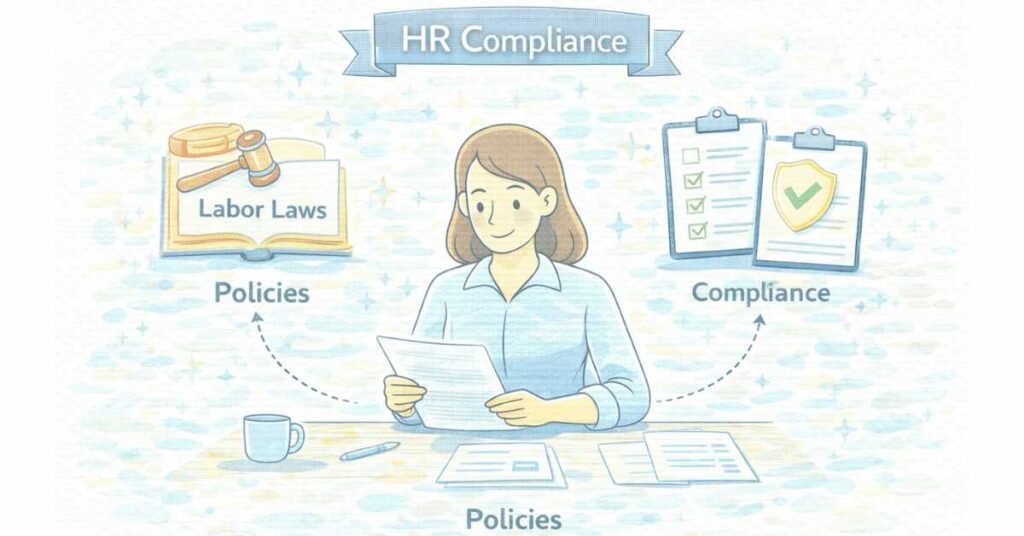
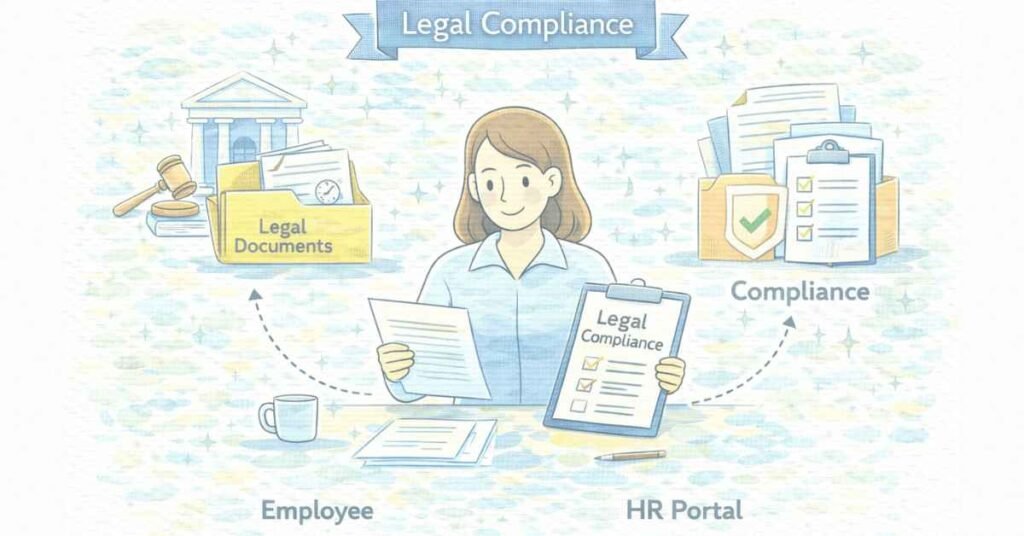
You ensure organizational compliance with employment laws including staying current on labor law changes and court decisions, conducting compliance audits to identify gaps, implementing required practices (wage payments, statutory deductions, mandatory registers), preparing and submitting statutory reports and returns, coordinating with legal counsel on complex matters, defending against labor department inspections, and managing litigation if disputes arise.
Compliance work is detail-intensive and constantly evolving. New laws, court decisions, and regulatory changes require continuous monitoring and adjustment.
Key Indian Compliance Areas:
- EPF and ESI: Ensuring proper registration, contributions, and reporting
- Bonus: Calculating and distributing per Payment of Bonus Act
- Gratuity: Calculating upon employee exits (5+ years service)
- Professional Tax: State-specific tax compliance
- Form 16: Annual tax statements for employees
- Labor Welfare Fund: Contributions in applicable states
- Statutory Registers: Maintaining required employment records[
Union Relations (Unionized Environments)
In unionized settings, you manage labor-management relations including participating in collective bargaining negotiations, interpreting and applying collective bargaining agreements, handling union grievances per established procedures, maintaining productive relationships with union leadership, managing work stoppages or industrial actions, and balancing union commitments with business needs.
Labor relations in India requires understanding the Industrial Disputes Act, Standing Orders, and case law around retrenchment, layoffs, and disputes.

Training and Advisory
You build organizational capability through training managers on performance management and difficult conversations, conducting POSH awareness training and prevention programs, advising leaders on handling employee relations issues, coaching managers through real-time situations, and educating employees about policies, rights, and grievance processes.
Proactive training prevents many ER issues by building managers’ capabilities to address problems early and appropriately.
Data Analysis and Reporting
You track and analyze ER metrics including number and types of complaints/grievances, investigation timelines and outcomes, termination rates and reasons, policy violations by type and frequency, trends suggesting systemic issues, and benchmarking against industry standards.
Data analysis helps identify patterns—if one department has disproportionate complaints, there may be management issues requiring intervention.
A Day in the Life of an ER Specialist
What does this look like practically? Let’s walk through a typical (though demanding) day:
Morning (9:00 AM – 12:00 PM): Your day starts with an urgent call from a department head. An employee was found intoxicated at work yesterday evening. You advise on immediate steps—documenting the incident, sending the employee home safely, arranging alcohol testing if company policy requires, and scheduling a meeting to address the violation. You review the policy on substance abuse to recommend appropriate disciplinary action.
You conduct a scheduled interview for an ongoing investigation into allegations that a manager is showing favoritism in project assignments. You interview a team member who describes specific instances where interesting projects consistently go to certain employees while others receive only routine work. You take detailed notes, remaining neutral and probing for specifics.
You meet with a manager who wants to terminate an employee for poor performance. You review the employee’s file—there’s documentation of one verbal warning but no written warnings or performance improvement plan. You explain that terminating without proper progressive discipline creates legal risk. You coach the manager on implementing a formal PIP (Performance Improvement Plan) with clear expectations, timelines, and consequences.
You spend an hour drafting an investigation report for a completed harassment case. Based on witness testimony and evidence, you conclude that harassment did occur. Your report details findings and recommends termination of the harasser, policy training for the department, and follow-up with the complainant. You carefully word the report knowing it may be reviewed in legal proceedings.
Midday (12:00 PM – 2:00 PM): Over lunch, you review updates to your state’s Shops and Establishments Act that were recently notified. Changes to overtime regulations and working hours affect company policies. You make notes to brief leadership and update the employee handbook.
After lunch, you respond to an employee complaint submitted through the grievance portal. An employee claims their manager criticized them publicly in a team meeting, which they found humiliating. You schedule confidential meetings with both parties to understand what happened and work toward resolution.
Afternoon (2:00 PM – 6:00 PM): You conduct a termination meeting for an employee who failed their probation period. You explain the decision clearly and respectfully, outline the final settlement process (notice pay, leave encashment), and answer questions. The employee is disappointed but accepts the decision. You coordinate with payroll to ensure proper final settlement per law.
You meet with the HR Director and company legal counsel to discuss a former employee’s legal notice claiming wrongful termination. You provide detailed documentation of the performance issues, progressive discipline, and termination process. The lawyer reviews your documentation and concludes the company has strong defense. Your thorough record-keeping protects the organization.
You participate in the Internal Complaints Committee (ICC) meeting for POSH compliance. The committee reviews two complaints filed this quarter—one was substantiated resulting in disciplinary action, another was found to be a misunderstanding. You discuss prevention measures including scheduling refresher training and updating the anti-harassment policy.
Late Afternoon (4:30 PM – 6:00 PM): You conduct a mediation session between two team members who have been in conflict for weeks, affecting team dynamics. Through careful facilitation, you help them express their frustrations, identify misunderstandings, and agree on communication norms going forward. Both leave feeling heard and ready to work together more productively.
Before ending your day, you update your ER case tracking spreadsheet with all open investigations, grievances, and disciplinary actions—tracking status, timelines, and next steps. You review tomorrow’s calendar, which includes two investigation interviews and a labor department inspection requiring prepared documentation.
This represents an intense day. Some days are quieter with mostly advisory work, training, or policy development. Other days involve crisis management when serious incidents occur. The unpredictability and variety keep ER work engaging but also demanding.
Essential Skills for ER Success
What capabilities distinguish successful ER professionals?
Interpersonal and Emotional Intelligence
ER constantly involves intense human interactions requiring ability to build trust quickly with distressed or angry individuals, active listening to truly understand perspectives and concerns, empathy for people’s situations while maintaining objectivity, reading emotional cues and body language, managing your own emotional responses in charged situations, and remaining calm when others are upset or hostile.
ER professionals who lack emotional intelligence struggle because they can’t navigate the emotional complexity inherent in workplace conflicts.
Impartiality and Judgment
Fair outcomes require rigorous neutrality including investigating without preconceived conclusions, evaluating evidence objectively rather than based on relationships or biases, making decisions based on facts and policies rather than emotions, treating all parties fairly regardless of position or popularity, and recognizing your own biases and compensating for them.
Perceived bias destroys ER credibility. Once employees believe ER “always sides with management” or shows favoritism, the function loses effectiveness.
Investigation and Analytical Skills
Workplace investigations require detective work including asking probing questions to uncover facts, identifying inconsistencies in accounts, evaluating witness credibility, gathering and reviewing documentary evidence, analyzing information to determine what most likely happened, and distinguishing between facts, inferences, and opinions.
Strong investigators are naturally curious, detail-oriented, and systematic in their approach.
Communication and Facilitation
ER requires masterful communication including explaining complex legal concepts in accessible language, asking effective questions that elicit useful information, active listening that makes people feel heard, de-escalating emotional situations, facilitating difficult conversations between conflicting parties, writing clear, professional documentation and reports, and delivering unwelcome news (disciplinary actions, terminations) with dignity.
Poor communicators struggle in ER because so much of the work involves high-stakes conversations
Labor Law and Compliance Knowledge
Effective ER requires solid legal foundation including deep knowledge of applicable labor laws (Industrial Disputes Act, Shops and Establishments Acts, POSH Act, etc.), understanding of employee rights and employer obligations, familiarity with case law and precedents, awareness of documentation requirements for legal defensibility, knowledge of statutory compliance requirements, and ability to research new legal developments.
While you’re not a lawyer, you must know enough law to recognize issues requiring legal counsel and to guide managers on compliant practices.
Conflict Resolution and Mediation
Resolving disputes constructively requires identifying underlying interests beyond stated positions, generating creative solutions addressing multiple parties’ needs, facilitating compromises both parties can accept, managing power imbalances between parties, knowing when mediation is appropriate versus when formal action is needed, and building sustainable agreements that prevent recurring conflicts.
These skills develop through training and experience but benefit from natural inclination toward finding win-win solutions.
Documentation and Writing Skills
ER lives or dies by documentation including writing clearly and concisely, documenting factual observations without speculation, creating legally defensible records of investigations and actions, organizing information logically, maintaining consistent documentation standards, and understanding what should and shouldn’t be documented.
Poor documentation undermines even the best ER work. “If it’s not documented, it didn’t happen” is an ER truism.[
Courage and Resilience
ER often requires difficult actions including delivering bad news (terminations, sustained complaints), holding powerful people accountable when they violate policies, maintaining fair processes despite pressure to bend rules, standing firm when pressured to take sides, and managing stress from constant exposure to workplace problems and human suffering.
ER isn’t for people who need to be liked or avoid confrontation. You must have courage to do what’s right even when unpopular.
Confidentiality and Discretion
ER handles extremely sensitive information requiring absolute confidentiality about complaints, investigations, and personal matters, discretion in what you share and with whom, understanding legal limits on confidentiality (when you must report certain issues), resisting gossip or inappropriate information sharing, and maintaining professionalism when you know troubling things about people.
Breaching confidentiality destroys trust and can create legal liability. ER professionals must be trustworthy vaults
Business Acumen and Pragmatism
Strategic ER requires understanding business implications of ER decisions, balancing fairness with organizational needs, considering financial impact of various courses of action, prioritizing issues based on business risk and impact, and understanding when perfect process must yield to urgent business needs.
Pure legalistic ER that ignores business context frustrates leaders. Effective ER professionals balance legal compliance with business pragmatism.
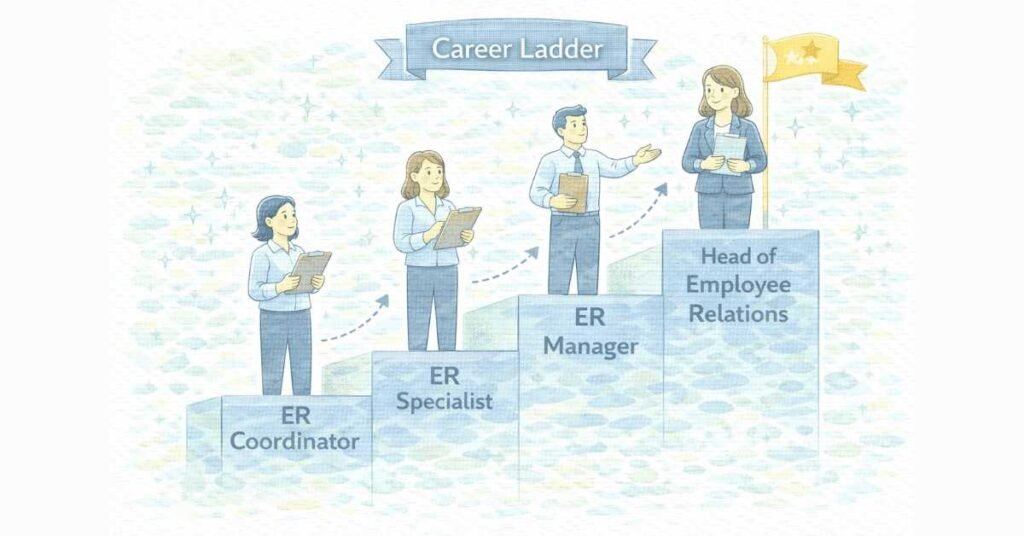
Career Progression in Employee Relations
Understanding typical ER career trajectories helps you plan:
Entry Level: ER Coordinator / HR Assistant (ER Focus) (0-2 Years)
Salary Range: ₹3-6 lakhs annually
Responsibilities: At this level, you support senior ER professionals by maintaining ER case files and documentation, scheduling investigation meetings and coordinating logistics, preparing templates and documentation, tracking ER cases and timelines, assisting with compliance reporting, responding to routine employee questions about policies, and learning ER processes and practices.
This role builds ER fundamentals. Focus on learning employment laws, observing how senior colleagues handle situations, and developing documentation skills.
Early Career: ER Specialist / Employee Relations Analyst (2-5 Years)
Salary Range: ₹6-12 lakhs annually
Responsibilities: You now handle ER cases with guidance including conducting investigations into employee complaints, managing employee grievances through resolution, advising managers on performance and conduct issues, assisting with disciplinary actions and documentation, supporting compliance with labor laws, interpreting policies for employees and managers, conducting exit interviews, and tracking ER metrics and trends.
You’re building credibility as a capable ER professional who can handle sensitive situations.
Mid-Career: Senior ER Specialist / ER Generalist (5-9 Years)
Salary Range: ₹10-18 lakhs annually
Responsibilities: As a senior specialist, you own complex ER matters including leading complex investigations (senior leader involvement, multiple complainants), managing high-risk terminations, conducting labor law compliance audits, advising senior leaders on ER issues, developing ER policies and procedures, managing union relations (if applicable), serving on POSH Internal Complaints Committee, mentoring junior ER staff, and handling litigation support and agency interactions.
You’re recognized as an ER expert who can handle sophisticated challenges independently.
Management: ER Manager / HR Compliance Manager (9-14 Years)
Salary Range: ₹15-25 lakhs annually
Responsibilities: You transition to managing ER functions including leading an ER team (typically 2-5 people), developing ER strategy and priorities, overseeing all investigations and disciplinary actions, managing labor law compliance programs, representing the organization in labor department interactions, partnering with legal on employment litigation, analyzing ER data to identify systemic issues, reporting ER metrics to leadership, and driving culture initiatives around fairness and accountability.
This level requires leadership capabilities and strategic thinking beyond ER execution.
Senior Management: Senior ER Manager / Head of Employee Relations (14+ Years)
Salary Range: ₹20-35 lakhs annually
Responsibilities: You lead ER for large organizations including developing organization-wide ER and compliance strategy, managing multiple ER teams or large teams, representing ER in executive leadership discussions, managing complex labor relations and union negotiations, overseeing compliance across multiple states or countries, driving cultural initiatives on accountability and fairness, managing litigation and agency relationships, and owning all ER outcomes and risks.
You’re a senior leader whose decisions affect organizational culture and legal risk profile.
ER and Compliance Salary Factors
Why do ER salaries vary? Several factors influence compensation:
Experience and Expertise: Years matter, but proven capability handling complex situations matters more. ER professionals with track records of fair investigations, successful litigation defense, or effective union relations command premiums.
Legal Knowledge: Deep understanding of Indian labor law earns significant premiums, often 20-30% above ER generalists with basic legal knowledge. Specialized expertise (industrial relations, POSH, specific state laws) adds value.
Industry: Manufacturing with union relations pays premiums for labor relations expertise. IT services with large workforces need sophisticated ER capabilities. Financial services with regulatory scrutiny values compliance expertise.
Company Size: Large organizations with thousands of employees need sophisticated ER teams and pay accordingly. Organizations with 5,000+ employees typically pay 25-40% more than companies with 500-1,000 employees for equivalent ER roles.
Geographic Location: Metro cities—particularly Mumbai, Bangalore, Gurgaon—pay 30-40% more than tier-2 cities. However, ER roles typically require physical presence (investigations, meetings) making remote work less common than other HR specializations.
Compliance Focus: Roles heavily focused on labor law compliance (monitoring regulations, managing audits, handling government interactions) often earn ₹18-25 lakhs, particularly in complex regulatory environments.
ER Specializations
As you progress, you might focus on specific areas:
Labor Relations (Union Environments)
Labor relations specialists focus on unionized workforces including collective bargaining negotiations, grievance handling per union agreements, managing work stoppages and strikes, maintaining relationships with union leadership, interpreting collective bargaining agreements, and balancing union commitments with business needs.
This specialization exists primarily in manufacturing, public sector, and certain service industries with union presence. It requires deep understanding of the Industrial Disputes Act and Standing Orders.
POSH Compliance and Investigation
POSH specialists focus on sexual harassment prevention and response including serving as ICC members or coordinating ICC activities, conducting POSH training and awareness programs, investigating sexual harassment complaints, ensuring compliance with POSH Act requirements, developing prevention policies and programs, and managing sensitive, high-stakes cases.
With heightened awareness of workplace harassment, POSH expertise is increasingly valued. Some organizations have dedicated POSH roles.
HR Compliance and Audit
Compliance specialists focus on regulatory adherence including monitoring labor law changes across states, conducting compliance audits to identify gaps, managing statutory registrations and filings, coordinating labor department inspections, implementing required practices and documentation, preparing for and managing litigation, and training HR and business on compliance requirements.
Compliance specialists often have legal backgrounds or extensive regulatory knowledge. This specialization offers strong earning potential (₹18-25 lakhs) reflecting its importance.
Workplace Investigations
Some ER professionals specialize in conducting investigations including leading complex, multi-party investigations, training other investigators, developing investigation protocols and best practices, testifying in legal proceedings if needed, and sometimes working as external investigators hired by multiple organizations.
Investigation specialization exists primarily in large organizations or as consulting services.
Challenges in ER Careers
Understanding common challenges helps you prepare:
Emotional Toll: ER constantly exposes you to workplace problems, human suffering, bad behavior, and stressed, angry people. Over time, this takes emotional toll. ER professionals must develop resilience and healthy boundaries or face burnout.
Being Disliked: ER sometimes delivers unwelcome news or holds people accountable. You won’t always be liked or appreciated. People may view you as “HR police” or “management’s enforcer.” This requires thick skin and finding satisfaction in doing what’s right rather than being popular.
Confidentiality Isolation: You know sensitive things you can’t share, even with HR colleagues. This knowledge can be isolating when you can’t discuss difficult situations or defend organizational actions because information is confidential.
No Perfect Solutions: Many ER situations lack clear right answers. You balance competing considerations, make judgment calls with incomplete information, and sometimes choose between bad and worse options. Tolerance for ambiguity is essential.
Legal Pressure: ER decisions carry legal consequences. Mistakes in investigations, discipline, or terminations can result in lawsuits costing lakhs or crores. This responsibility creates pressure.
Constant Regulatory Changes: Labor laws evolve constantly with amendments, court decisions, and new regulations. Staying current requires continuous learning and monitoring.
Hostility and Threats: In serious cases, ER professionals face hostility, threats, or even physical danger from disgruntled employees. While rare, this risk exists particularly during terminations or investigations with serious consequences.
Second-Guessing: Your decisions will be questioned and scrutinized by employees, managers, leadership, lawyers, and sometimes courts or labor departments. You must be able to defend your processes and decisions.
Why Choose an ER Career?
Despite challenges, Employee Relations offers compelling rewards:
Meaningful Impact: ER directly protects people from unfair treatment, creates accountability for bad behaviors, resolves conflicts improving workplace relationships, and ensures organizational integrity. The impact is tangible and important.
Intellectual Challenge: ER involves complex problem-solving, balancing legal requirements with business needs, conducting thorough investigations, and making difficult judgment calls. If you enjoy intellectual complexity, ER provides it.[
Variety: No two ER cases are identical. Every situation involves different facts, different personalities, and different challenges. If you dislike repetitive work, ER offers constant variety.
Justice and Fairness: If fairness matters deeply to you, ER lets you be a force for justice in organizations, ensuring people are treated fairly and holding wrongdoers accountable.
Strong Earning Potential: ER specialists earn solid salaries (₹12-25+ lakhs with experience) reflecting the specialized knowledge and high-stakes nature of the work.
Job Security: Organizations always need ER capabilities, even during downturns. Poor ER creates legal risks organizations can’t afford, ensuring consistent demand for competent ER professionals.
Transferable Skills: ER builds capabilities—investigation, conflict resolution, legal knowledge, judgment—that serve you in law, consulting, general management, or other fields requiring these skills.
Getting Started in ER
How do you break into Employee Relations?
Educational Backgrounds: Many ER professionals studied HR, law, psychology, or business administration. Some practicing lawyers transition into corporate ER roles. What matters more than specific degree is interest in fairness, justice, and helping organizations navigate employee issues.
Entry Paths: Common routes into ER include starting as ER coordinator or HR assistant supporting ER team, transitioning from HR generalist roles with increasing ER responsibilities, moving from HR operations into ER, joining organizations with ER rotational programs, and transitioning from practicing law into corporate ER.
Build Relevant Skills: While preparing for ER roles, develop understanding of labor laws through courses or self-study, conflict resolution through training or practice, investigation skills through any detective-like work, documentation and writing capabilities, emotional intelligence and active listening, and comfort having difficult conversations.
Relevant Certifications: Labor law certificates from institutions like XLRI or IIMs, SHRM-CP or SHRM-SCP for HR foundations, POSH certification for sexual harassment prevention and response, and mediation or conflict resolution certifications.
Gain Exposure: Look for opportunities to observe or participate in ER situations in your current role, volunteer to help with investigations, policy development, or training, shadow experienced ER professionals to learn, and handle employee relations issues even if not your primary role.
Develop Reputation: Build reputation for fairness, confidentiality, sound judgment, and courage to do what’s right. These intangible qualities matter as much as technical knowledge in ER.
Future of Employee Relations
ER is evolving with workplace changes:
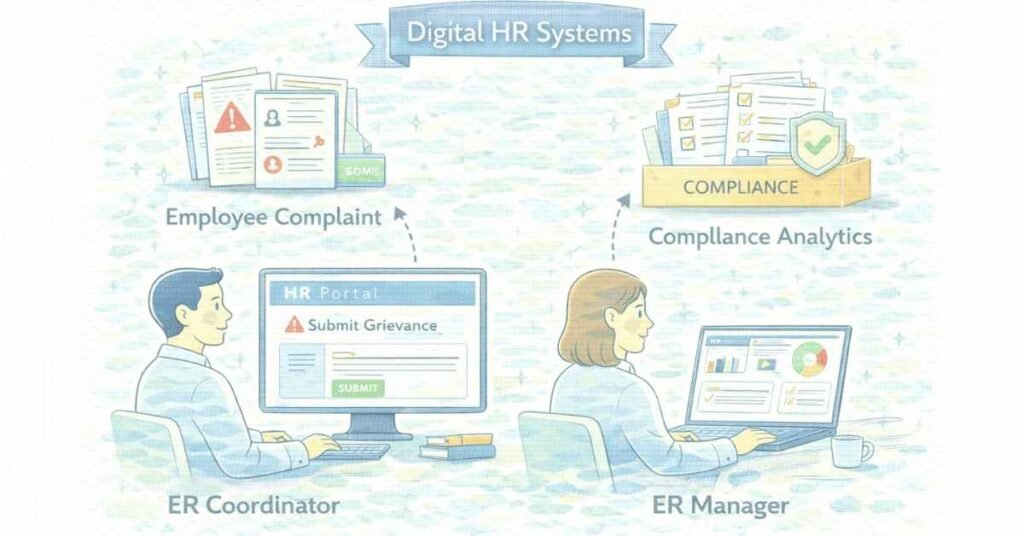
Technology-Enabled ER: Platforms for case management, investigation workflows, and compliance tracking streamline ER processes. Predictive analytics may identify flight risks or patterns suggesting problems. ER professionals must embrace these technologies while maintaining the human judgment central to the work.
Remote Work Complexities: Distributed workforces create new ER challenges in investigating incidents without in-person access, managing relationships across virtual environments, handling conflicts via video rather than face-to-face, and applying policies in work-from-home contexts.
Increased Transparency: Employees increasingly expect transparency about ER processes, outcomes, and organizational actions. ER must balance confidentiality with appropriate transparency.
Focus on Prevention: Progressive ER increasingly emphasizes prevention through training, early intervention, and culture building rather than just reacting to problems.
Data and Analytics: ER metrics help identify patterns requiring systemic interventions. Analytics complement but don’t replace ER’s inherent need for human judgment.
Employee Relations offers a meaningful career for those who value fairness and justice, can handle emotionally intense situations, have courage to make difficult decisions, and want to protect both employees and organizations. You’ll serve as guardian of workplace fairness, investigator of truth, mediator of conflicts, and protector against legal risks.
The most successful ER professionals balance empathy with objectivity, legal knowledge with business pragmatism, systematic process with human judgment, and toughness with compassion. If you’re drawn to ensuring workplaces are fair, if you have courage to hold people accountable regardless of position, and if you find purpose in protecting rights while managing risks—Employee Relations might be your calling.