
TALENT ACQUISITION AND RECRUITMENT CAREERS
Table of Contents
Picture this: A fast-growing startup needs to hire 50 engineers in the next quarter to meet investor commitments. A manufacturing company must replace 30% of its factory workforce due to attrition. A consulting firm wants to build an entirely new practice area requiring specialized talent. Who makes these hiring goals reality? Talent acquisition professionals.
Recruitment isn’t just about posting jobs and waiting for applications to roll in. Today’s talent acquisition specialists are strategic partners who build talent pipelines, compete for passive candidates, create compelling employer brands, and use data to optimize every step of the hiring process. In India’s competitive talent market—especially for in-demand skills in technology, finance, and specialized functions—effective recruiters literally make or break organizational growth.
If you enjoy connecting with people, love the thrill of competitive challenges, and want to see immediate impact from your work, talent acquisition might be your perfect career path. This guide explores what recruiters actually do, the skills that make you successful, realistic salary expectations, and how to build a thriving career in this dynamic field.

What is Talent Acquisition?
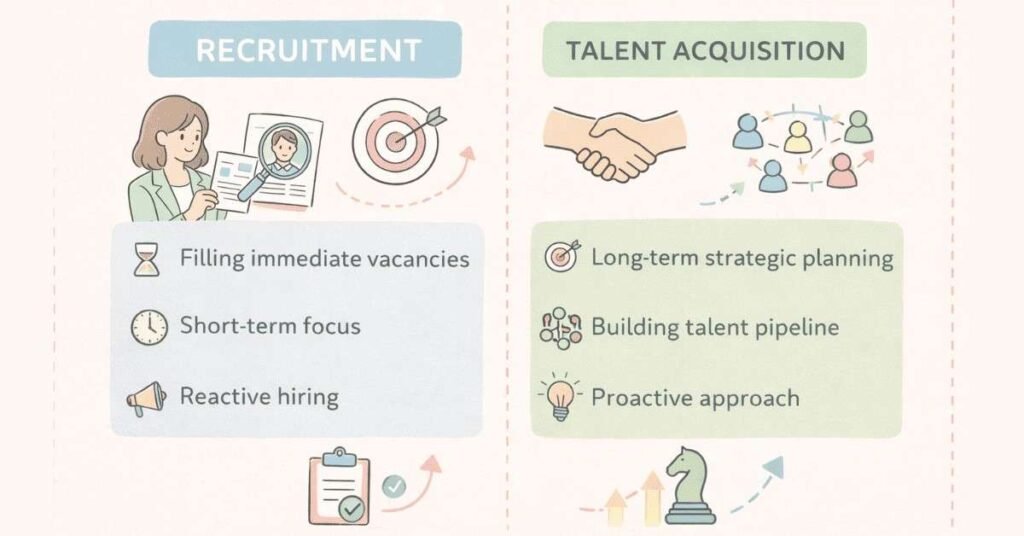
Let’s start by clarifying terminology. Many people use “recruitment” and “talent acquisition” interchangeably, but there are nuanced differences in how organizations use these terms.
Recruitment traditionally refers to filling immediate open positions—reactive hiring to meet current needs. When someone resigns or a new role is approved, recruiters spring into action to find candidates quickly.
Talent Acquisition represents a more strategic, proactive approach—building relationships with potential candidates before positions open, creating talent pipelines for anticipated future needs, focusing on long-term workforce planning aligned with business strategy, and building employer brand to attract top talent continuously.
In practice, most “Talent Acquisition Specialist” roles blend both approaches. You’ll handle urgent hiring needs while also building future pipelines. The distinction matters more in large organizations with separate recruitment (filling positions) and talent acquisition (strategic workforce planning) teams.
For this guide, we’ll use the terms somewhat interchangeably while noting strategic versus tactical dimensions where relevant.
The Talent Acquisition Lifecycle
Understanding the end-to-end recruitment process helps you appreciate what the role entails:

Workforce Planning and Demand Forecasting
Strategic talent acquisition begins before any single job opens. You partner with business leaders to understand future hiring needs based on growth plans, anticipated attrition, and organizational changes. If the sales team plans to expand into three new cities next quarter, you’ll need to anticipate hiring 20-30 sales professionals. If the product team is launching a new initiative, what specialized skills will they need?
This planning enables proactive sourcing rather than scrambling when requisitions suddenly appear.

Job Analysis and Description Writing
When a hiring need emerges, you work with hiring managers to understand what success looks like in the role—not just job duties but the outcomes expected. What problems will this person solve? What skills are truly essential versus nice-to-have? What personality traits fit the team culture?
You then craft compelling job descriptions that attract qualified candidates while accurately representing the role. Poor job descriptions attract wrong candidates or turn off right ones, wasting everyone’s time.

Sourcing and Candidate Attraction

This is where recruitment gets creative and competitive. You can’t just post jobs and wait anymore—the best candidates aren’t actively applying.
Active Sourcing: You proactively search for candidates through LinkedIn searches using Boolean strings, employee referral programs offering incentives, sourcing from competitor companies, campus recruitment at universities and colleges, attending or sponsoring industry events and conferences, and searching resume databases on Naukri, Monster, and Indeed.
Employer Branding: You build your organization’s reputation as a great place to work through maintaining engaging careers pages and social media, sharing employee success stories and testimonials, creating content about company culture and values, participating in employer recognition programs (Best Places to Work), and ensuring positive candidate experiences that generate word-of-mouth.
In competitive markets like technology, candidates choose employers as much as employers choose candidates. Strong employer branding makes your job exponentially easier.

Screening and Assessment
Once candidates apply or express interest, you screen them to identify the best fits. Initial screening involves reviewing resumes and applications, conducting phone or video screening interviews (15-30 minutes), assessing basic qualifications and cultural fit, and evaluating candidate interest and expectations around salary and timeline.
For promising candidates, you coordinate deeper assessments including technical evaluations, case studies or work samples, behavioral interview rounds, team fit conversations, and sometimes psychometric or personality assessments.
Your screening quality determines your hiring manager’s experience. Send only strong candidates, and managers trust your judgment. Send too many weak candidates, and they’ll question your effectiveness or insist on screening everyone themselves, creating bottlenecks.

Interview Coordination and Candidate Management
You orchestrate the interview process, which can involve multiple stakeholders across several rounds. This includes scheduling interviews across busy calendars, briefing interviewers on what to assess and how, ensuring consistent candidate evaluation, providing candidates with preparation materials and logistics, gathering feedback from all interviewers promptly, and keeping candidates engaged and informed throughout.
Candidates often interview with multiple companies simultaneously. Slow, disorganized processes lose great candidates to competitors. Your project management skills directly impact hiring success.

Offer Management and Closing
When the team wants to hire a candidate, you manage offer preparation and negotiation including determining appropriate compensation based on market data and internal equity, preparing formal offer letters with all terms, presenting offers to candidates persuasively, negotiating terms when candidates counter-offer, addressing candidate concerns or questions, and closing candidates before they accept competing offers.
This stage requires sales skills and relationship capital. Candidates you’ve built strong relationships with are more likely to accept your offers even when competitors offer slightly more.
Onboarding Support
Your role doesn’t end when candidates accept. You often support onboarding through managing pre-joining formalities and background checks, maintaining communication until start date to prevent dropouts, coordinating first-day logistics, checking in during initial weeks to ensure smooth transitions, and gathering new hire feedback about the recruitment process.
Candidates who accept offers but don’t show up (“offer dropouts”) waste all your effort. Strong candidate relationships and onboarding support minimize this risk.

Analytics and Continuous Improvement
Throughout this process, you track metrics and identify improvement opportunities including time-to-fill (days from requisition to offer acceptance), quality-of-hire (new hire performance and retention), cost-per-hire (recruitment expenses per position), source effectiveness (which channels produce best candidates), candidate satisfaction scores, and offer acceptance rates.
Data-driven recruiters continuously optimize their processes, allocating time to highest-value activities and abandoning ineffective approaches.

A Day in the Life of a Talent Acquisition Specialist
What does this look like in practice? Let’s walk through a typical day:
Morning (9:00 AM – 12:00 PM): Your day starts reviewing applications that came in overnight—about 40 resumes for three open positions. You quickly screen these, identifying 8 candidates worth phone screening and rejecting the rest with template emails.
You conduct three 20-minute phone screens for a marketing manager position, assessing candidates’ experience, cultural fit, salary expectations, and genuine interest. One candidate stands out—you schedule them for first-round interviews with the hiring manager.
Between screens, you source candidates on LinkedIn for a difficult-to-fill data scientist role. Using Boolean searches (“data scientist” AND (Python OR R) AND “machine learning” AND Bangalore), you identify 15 promising profiles and send personalized InMails introducing the opportunity.
Midday (12:00 PM – 2:00 PM): You have lunch with your hiring manager for the sales team to discuss their evolving needs. They’re now prioritizing candidates with enterprise sales experience rather than SMB. You adjust your sourcing strategy accordingly.[6figr]
After lunch, you update your ATS (Applicant Tracking System) with interview feedback from yesterday’s interviews, moving candidates through the pipeline and sending status updates to those who were rejected.
Afternoon (2:00 PM – 6:00 PM): You extend a job offer over the phone to your top candidate for the software engineering role. They’re excited but want to discuss it with their spouse before accepting. You follow up with a formal offer email and supportive note about why you think they’ll love the team.
You spend an hour in your weekly recruitment team meeting, discussing challenging requisitions, sharing sourcing strategies that are working, and reviewing hiring metrics. Your time-to-fill has increased to 42 days from 35 days last month—you discuss causes and solutions.
You coordinate interview schedules for next week, playing calendar Tetris to find times when candidates and 3-4 interviewers are all available. This takes longer than it should because two interviewers are traveling.
Late Afternoon (4:00 PM – 6:00 PM): You screen three more candidates via phone, check your email and respond to candidate questions, review a hiring manager’s request to adjust a job description, and prepare your daily report showing the number of screens conducted, interviews scheduled, and offers extended.
Before leaving, you check LinkedIn to see if any of your earlier InMails got responses. Two candidates replied interested—you schedule phone screens for tomorrow morning.
This day is relatively smooth. Some days involve crisis management—a candidate accepts another offer hours before their start date, an urgent requisition drops requiring immediate attention, or multiple hiring managers simultaneously escalate that their positions are taking too long.

Essential Skills for Recruitment Success
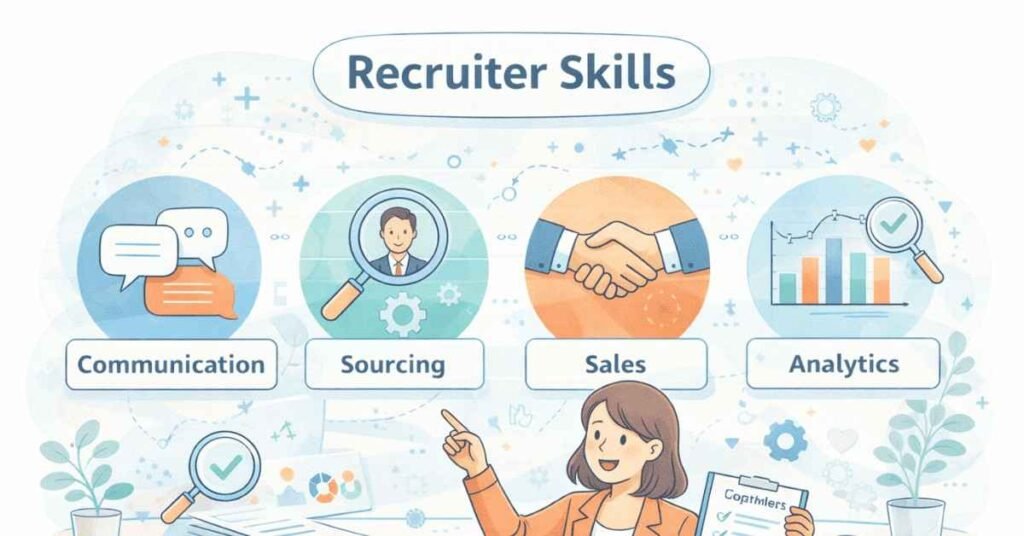
What makes someone an effective recruiter? Here are the capabilities that separate average from exceptional talent acquisition professionals:
Communication and Relationship Building
Recruitment is fundamentally a relationship business. You need to build trust quickly with candidates you’ve just met, communicate persuasively about opportunities and companies, maintain relationships with passive candidates over months or years, collaborate effectively with hiring managers and interviewers, and navigate difficult conversations (rejections, compensation negotiations) with pathy.
Strong recruiters are natural connectors who genuinely enjoy talking with people, remember details about individuals that personalize interactions, follow up consistently without being pushy, and adapt communication styles to different personalities.
Sourcing and Research Skills
Finding candidates who aren’t actively applying requires detective work. Top recruiters master Boolean search techniques for LinkedIn and resume databases, creative sourcing through GitHub, Stack Overflow, Dribbble (for designers), research to identify where target candidates spend time, competitive intelligence about talent at competitor companies, and networking to get referrals and introductions.
This is particularly crucial for hard-to-fill roles in specialized areas like data science, product management, or niche technical skills where qualified candidates are scarce.
Assessment and Judgment
You’re the first filter determining who proceeds in hiring processes. This requires ability to quickly assess candidate qualifications against role requirements, evaluate cultural fit and soft skills during brief interactions, identify red flags in resumes or during conversations, distinguish between candidates who look good on paper versus can actually do the job, and make sound judgments often with incomplete information.
Hiring managers rely on your judgment. Consistently sending strong candidates builds trust and partnership. Sending weak candidates damages credibility.
Sales and Persuasion
Recruiting top talent—especially passive candidates happy in current roles—requires sales skills. You must sell candidates on opportunities and your organization, overcome objections (location, compensation, concerns), persuade candidates to take calls or interviews when they’re not actively looking, close candidates when they have multiple offers, and occasionally convince hiring managers that strong candidates who don’t check every box deserve consideration.
The best recruiters are consultative sellers who understand candidate motivations, position opportunities addressing those motivations, and create win-win situations rather than manipulative tactics.
Organization and Project Management
Recruiters typically manage 15-25 open requisitions simultaneously, each at different pipeline stages with multiple candidates. This requires meticulous organization to track candidates across multiple positions and pipeline stages, manage complex interview schedules across many stakeholders, prioritize competing urgent demands, follow up consistently without dropping balls, and document everything in your ATS for compliance and handoffs.
Disorganized recruiters miss follow-ups, double-book interviews, lose candidates to competitors, and create frustrating experiences for everyone involved.
Data Literacy and Analysis
Modern recruitment is increasingly data-driven. You need to track key recruiting metrics (time-to-fill, source effectiveness, conversion rates), analyze patterns to identify what’s working and what isn’t, use data to make cases for process changes or resource needs, create reports for stakeholders showing recruiting performance, and benchmark your metrics against industry standards.
Recruiters who speak the language of data gain credibility with business leaders and demonstrate strategic value beyond filling positions.
Technical Proficiency
Talent acquisition relies heavily on technology. You’ll need fluency with Applicant Tracking Systems (ATS) like Greenhouse, Lever, Workday, SuccessFactors, or others, LinkedIn Recruiter and its advanced search capabilities, video interviewing platforms like HireVue or Zoom, HRIS integration with recruiting systems, email automation and CRM tools for candidate relationship management, and assessment platforms if your organization uses them.
Tech-savvy recruiters work more efficiently and leverage tools that less proficient colleagues underutilize.
Resilience and Stress Management
Recruitment can be high-pressure and emotionally draining. You’ll face constant rejection (most candidates say no, most applicants are rejected), hiring managers unhappy about slow fills or limited candidate pools, competing urgent priorities pulling you in multiple directions, candidates who ghost after promising interviews or accepting offers, and metrics-driven pressure to fill positions quickly without sacrificing quality.
Successful recruiters develop resilience to bounce back from disappointments, stress management techniques to handle pressure, emotional detachment to not take rejections personally, and persistence to keep sourcing when initial efforts don’t yield candidates.
Career Progression in Talent Acquisition
Understanding the typical career trajectory helps you plan your professional development:
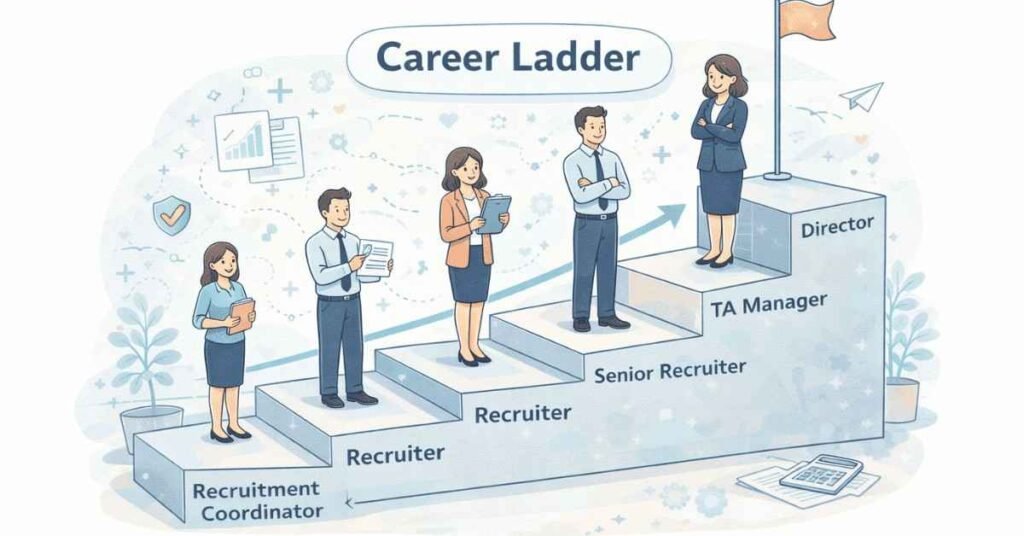
Entry Level: Recruitment Coordinator (0-2 Years)
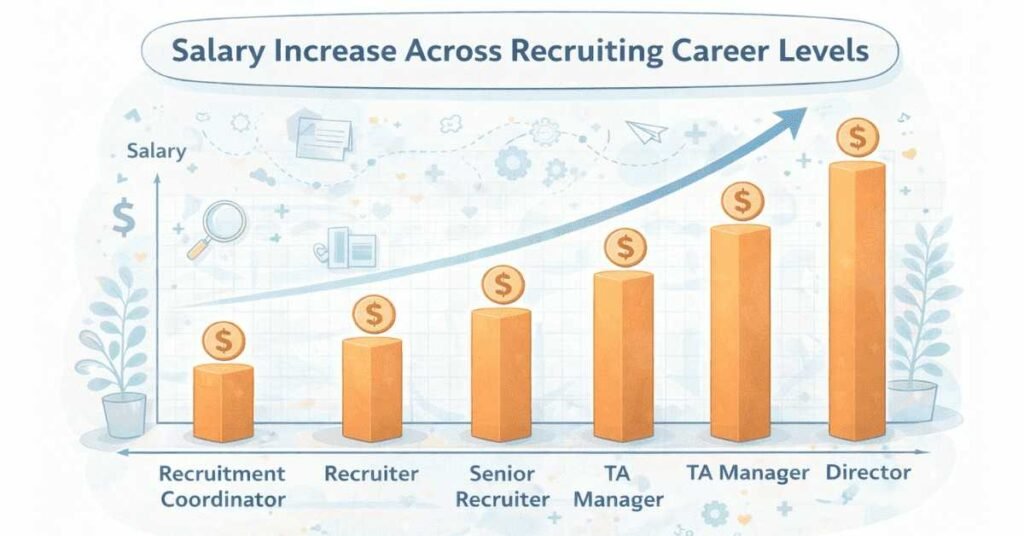
Salary Range: ₹2-4 lakhs annually (₹15,000-35,000 monthly)[entri]
Responsibilities: At this level, you support senior recruiters by scheduling interviews and coordinating logistics, posting jobs to various job boards, conducting initial resume screening, maintaining the ATS with accurate data, communicating with candidates about scheduling and status, and handling administrative recruitment tasks.
This role teaches you recruitment fundamentals and allows you to observe how experienced recruiters work. Focus on learning rather than maximizing compensation at this stage.
Early Career: Recruiter / Talent Acquisition Specialist (2-5 Years)
Salary Range: ₹4-10 lakhs annually
Responsibilities: You now own the full recruitment cycle for assigned requisitions including sourcing and attracting candidates, conducting screening interviews, coordinating interview processes, managing candidate relationships, negotiating offers (with guidance), and tracking and reporting metrics.
You’re building your reputation and demonstrating capability to handle increasing volume and complexity.
Mid-Career: Senior Recruiter (5-8 Years)
Salary Range: ₹10-18 lakhs annually
Responsibilities: As a senior recruiter, you handle the most difficult-to-fill positions requiring specialized sourcing, mentor junior recruiters and coordinators, develop sourcing strategies for hard-to-reach talent pools, partner closely with senior hiring managers, improve recruitment processes and tools, and sometimes represent the company at recruiting events.
You’re recognized as an expert recruiter who can handle any hiring challenge.
Management: Talent Acquisition Manager (8-12 Years)
Salary Range: ₹15-25 lakhs annually
Responsibilities: You transition from individual contributor to people manager, overseeing a team of recruiters (typically 3-8 people), setting team goals and monitoring performance, allocating requisitions across your team, providing coaching and development to team members, partnering with HR and business leaders on hiring strategy, managing recruitment budget and vendor relationships, and driving process improvements and adoption of new tools.
This level requires developing leadership capabilities beyond recruiting expertise
Senior Management: Senior TA Manager / Talent Acquisition Lead (12-15 Years)
Salary Range: ₹22-35 lakhs annually]
Responsibilities: You lead talent acquisition for significant portions of the organization—perhaps all of one region, an entire business unit, or specific functions. You develop organization-wide recruiting strategies, represent talent acquisition in leadership discussions, drive employer branding initiatives, own recruiting metrics and optimization, manage multiple TA teams or large teams, make build-versus-buy decisions for recruitment capabilities, and influence workforce planning aligned with business strategy.
You’re a strategic leader whose decisions affect hundreds of hires annually.
Executive: Head of Talent Acquisition / Director of Recruiting (15+ Years)
Salary Range: ₹25-50+ lakhs annually, significantly higher in high-growth tech companies and unicorns
Responsibilities: As the most senior recruiting leader, you own the entire talent acquisition function, set overall TA strategy and vision, build and lead the complete recruiting team, partner with C-suite on workforce strategy, represent recruiting in executive leadership meetings, manage significant budgets (millions annually in large organizations), drive employer brand strategy, and own all hiring metrics and outcomes.
In some organizations, this role reports to the CHRO. In high-growth companies, heads of talent acquisition sometimes have VP titles and report directly to CEOs, reflecting how critical hiring is to growth strategies.
Salary Determinants in Talent Acquisition
Why do some recruiters earn ₹4 lakhs while others earn ₹40 lakhs? Several factors drive compensation:
Experience and Track Record: Years in recruiting matter, but proven success matters more. Recruiters who consistently meet hiring targets, excel at difficult searches, and develop strong hiring manager relationships command premiums.
Industry and Company Type: Technology companies and startups pay the highest recruiting salaries—typically 30-50% above other sectors. In high-growth tech companies, senior recruiters can earn ₹18-25 lakhs, and heads of TA earn ₹40-60 lakhs or more. Consulting firms and financial services also pay well. Manufacturing, retail, and traditional sectors pay moderately.
Specialization: Recruiters specializing in hard-to-fill areas like technology, data science, product management, or executive search typically earn more than generalist recruiters. Your sourcing expertise for scarce talent makes you valuable.
Geography: Metro cities like Bangalore, Mumbai, Gurgaon, and Pune pay 30-50% more than tier-2 cities. However, remote recruiting roles are changing this dynamic—some companies now offer metro salaries to remote recruiters anywhere.
Company Size and Growth Stage: Large established companies offer stability and structured progression but moderate salaries. High-growth startups and unicorns pay premium salaries plus equity that can be extraordinarily valuable if the company succeeds. However, startup roles come with more pressure and longer hours.
Team Size Managed: Moving into management significantly increases compensation. Managing a team of 5-10 recruiters typically adds ₹5-10 lakhs to your base salary compared to senior individual contributor roles.
Specializations Within Talent Acquisition
As you progress, you might specialize in particular areas:
Technical Recruiting
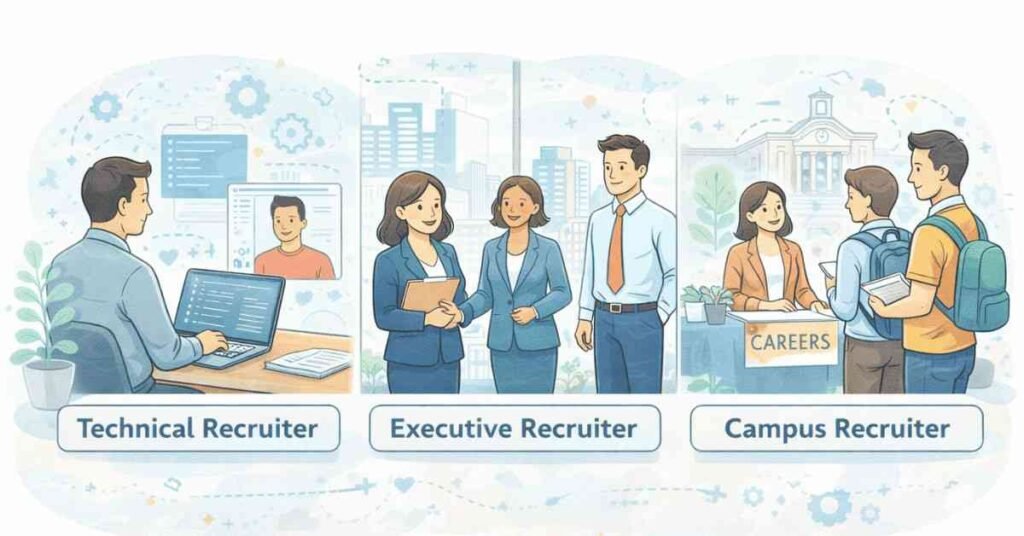
Technical recruiters focus on hiring engineers, developers, data scientists, and other technical roles. This specialization requires understanding technical skills and tools (programming languages, frameworks, technologies), ability to assess technical capabilities during screening, fluency in technical terminology to communicate with candidates and hiring managers, knowledge of where technical talent congregates online and offline, and comfort with the fast-paced, competitive tech hiring environment.
Technical recruiters in Bangalore, Pune, and Hyderabad often earn ₹8-20 lakhs depending on experience, reflecting strong demand for this expertise.
Executive Search
Executive recruiters focus on senior leadership positions—directors, VPs, C-suite executives. This highly specialized work involves building extensive networks of senior executives, conducting confidential searches (current roles often can’t know they’re looking), assessing leadership capabilities and cultural fit at the highest levels, managing complex negotiations with sophisticated candidates, and partnering directly with CEOs and board members.
Executive search often operates on retained search models where companies pay fees upfront for dedicated search efforts, unlike standard contingency recruiting. Successful executive recruiters, often working for specialized search firms, can earn ₹20-50+ lakhs plus commissions.
Campus Recruiting
Campus recruiters manage relationships with universities and hire entry-level talent through coordinating campus recruitment drives, building relationships with placement offices, designing and executing assessment processes for large candidate volumes, representing the company at campus events and presentations, and managing offer processes for dozens or hundreds of students simultaneously.
Campus recruiting requires different skills than experienced hiring—managing high volumes, assessing potential rather than proven experience, and building institutional relationships with colleges.
Diversity Recruiting
Diversity recruiters specialize in building diverse candidate pipelines and inclusive hiring processes through developing sourcing strategies to reach underrepresented groups, partnering with diversity-focused organizations and job boards, training hiring teams on bias reduction, tracking diversity metrics throughout the hiring funnel, and ensuring inclusive candidate experiences.
This emerging specialization is growing as organizations prioritize diversity, equity, and inclusion initiatives.
Employer Branding
Some organizations have dedicated employer brand specialists who focus on building the company’s reputation as an employer through managing careers pages and social media presence, creating content showcasing company culture, coordinating employee testimonials and stories, managing employer review sites (Glassdoor, AmbitionBox), and organizing employer branding events and campaigns.
This role blends talent acquisition, marketing, and communications skills.
Tools of the Trade
Modern recruiters rely on numerous technologies:
Applicant Tracking Systems (ATS)
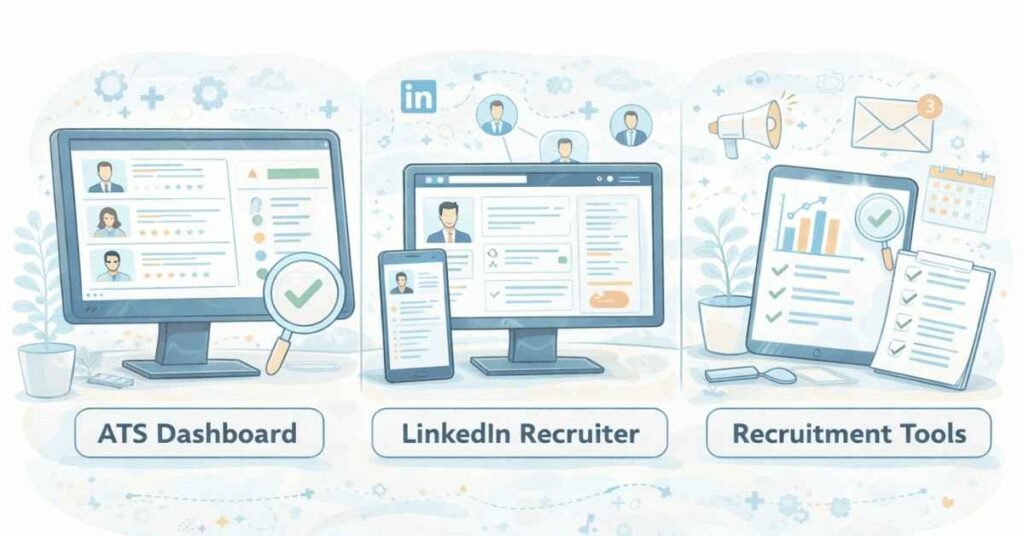
Your ATS is your central platform managing the entire recruiting workflow. Popular systems in India include Workday Recruiting, SAP SuccessFactors, Zoho Recruit, Darwinbox, Lever, and Greenhouse.
Mastering your ATS makes you dramatically more efficient. Learn keyboard shortcuts, automation features, reporting capabilities, and integration with other tools.
LinkedIn Recruiter
LinkedIn Recruiter (the premium recruiter tool, not basic LinkedIn) is essential for most recruiters. It provides advanced search filters beyond basic LinkedIn, ability to save searches and get alerts for new matching profiles, InMail credits to message candidates directly, insights into candidate activity and job search signals, and integration with many ATS platforms.
Becoming a LinkedIn Recruiter power user—mastering Boolean searches, understanding how the algorithm ranks results, crafting InMails that get responses—significantly improves your sourcing effectiveness.
Job Boards and Databases
In India, key platforms include Naukri.com (the dominant job board), LinkedIn Jobs, Indeed, Monster India, Shine.com, and specialized boards for specific industries or roles.
Understanding which boards work best for different roles prevents wasting money on ineffective postings.
Assessment Tools
Many organizations use assessment platforms including HackerRank or Codility for technical assessments, Mettl or Mercer Mettl for aptitude and psychometric tests, video interview platforms like HireVue, and work sample or case study platforms.
Communication and CRM Tools
Recruiting involves constant communication. Tools include email automation platforms for candidate outreach sequences, recruiting CRMs for managing candidate relationships, scheduling tools like Calendly to eliminate back-and-forth, and WhatsApp for candidate communication (very common in India).
Challenges in Talent Acquisition
Recruitment isn’t without difficulties. Understanding these challenges helps you prepare:
Talent Scarcity: For many roles, especially specialized technical positions, there simply aren’t enough qualified candidates for all open positions. You’ll often source for weeks without finding anyone suitable. This can be frustrating, especially when hiring managers pressure you to fill positions faster.
Candidate Ghosting: Candidates who suddenly stop responding to messages or don’t show up for scheduled interviews have become increasingly common. This wastes your time and disrupts hiring schedules.
Offer Dropouts: Candidates who accept offers then don’t join (choosing competitor offers or staying in current roles) are particularly painful after investing significant time in hiring processes.
Hiring Manager Unrealistic Expectations: Some hiring managers want “unicorns”—candidates with every possible qualification at below-market salaries, available to join immediately. Managing expectations requires diplomacy and data.
Competitive Talent Markets: In hot fields like data science or product management, you’re competing with dozens of companies for the same small talent pool. Candidates have multiple offers and leverage. You need exceptional employer branding, candidate experience, and compensation to win.
Economic Fluctuations: Recruitment is cyclical. During growth periods, you’re overwhelmed with requisitions. During downturns, hiring freezes and you worry about job security. Unlike many HR functions, recruiting volume fluctuates dramatically with business conditions.
Metrics Pressure: Many organizations track recruiter productivity intensely—number of screens conducted, interviews scheduled, offers extended. While metrics drive improvement, excessive focus can feel dehumanizing and ignore that some requisitions are simply harder than others.
Emotional Labor: Delivering rejections, managing disappointed candidates, and handling hiring manager frustration takes emotional toll. Recruiters need resilience and healthy boundaries.
Why Choose Talent Acquisition as a Career?
Despite challenges, talent acquisition offers compelling rewards:
Immediate Impact: Unlike many HR functions where impact emerges slowly, recruitment shows immediate results. You source a candidate Monday, they interview Wednesday, receive an offer Friday, and join next month. Your work directly enables organizational growth.
Relationship-Oriented Work: If you energize from meeting new people and building relationships, recruiting provides constant interaction with diverse individuals.[6figr]
Competitive Challenge: Recruitment is inherently competitive—competing with other companies for candidates. If you enjoy competition and thrive under pressure, you’ll find recruiting stimulating.
Strong Earning Potential: Particularly in technology and high-growth companies, recruiting salaries are among the highest in HR. Experienced technical recruiters often earn more than HR managers with similar experience.
Clear Performance Metrics: While metrics create pressure, they also provide clarity. You know whether you’re succeeding—positions filled, time-to-fill, quality-of-hire. This objectivity appeals to people who dislike ambiguity.
Transferable Skills: Recruiting develops capabilities—communication, sales, assessment, networking—that serve you in any career. Many successful entrepreneurs, salespeople, and HR leaders started in recruiting.
Variety: Every candidate is different. Every requisition presents new challenges. If you dislike repetitive work, recruiting offers constant variety.
Getting Started in Talent Acquisition
How do you break into recruiting?
Entry Paths: Many recruiters start as recruitment coordinators or HR assistants with recruiting exposure. Some organizations hire fresh graduates directly into recruiter roles, particularly for campus recruiting. Agency recruiting (working for recruitment firms) is another common entry point offering intensive learning.
Relevant Education: Any bachelor’s degree can lead to recruiting careers. HR, Psychology, or Business degrees provide relevant background, but many successful recruiters studied engineering, liberal arts, or other fields. What matters more than degree is people skills, communication abilities, and hustle.
Build Skills Early: While in college or early in your career, develop relevant capabilities including strong communication and networking, sales or customer service experience (teaches persuasion), event coordination or project management (develops organizational skills), and social media and LinkedIn proficiency.
Start Networking: Connect with recruiters on LinkedIn, ask about their experiences, attend recruiting events or SHRM meetups, and learn about different recruiting specializations to identify interests.
Consider Agency Recruiting: Recruitment agencies (like ABC Consultants, Michael Page, TeamLease, Randstad) hire entry-level recruiters and provide intensive training through high volume. Agency work is demanding but develops capabilities quickly. After 2-3 years agency experience, transitioning to corporate recruiting is common and often comes with significant salary increases.
Highlight Transferable Skills: When applying for recruiting roles, emphasize relevant experience even from non-recruiting jobs—sales achievements, customer service excellence, relationship building, organization and follow-through, and achieving targets under pressure.

Future of Talent Acquisition
Recruiting is evolving rapidly with technology and changing workplace dynamics:
AI and Automation: AI increasingly handles resume screening, candidate sourcing through algorithmic matching, initial candidate interactions through chatbots, interview scheduling automation, and predictive analytics for hiring success.
This doesn’t eliminate recruiters but shifts focus to relationship building, complex candidate assessment, hiring manager consultation, candidate experience design, and strategic workforce planning—all areas requiring human judgment.
Data-Driven Recruiting: Organizations increasingly expect recruiting decisions backed by data—which sources produce best hires, what interview processes predict success, where bias might exist in hiring funnels, and how recruiting metrics compare to benchmarks.
Recruiters who develop analytical capabilities and data literacy will thrive in this environment.
Remote and Global Hiring: Companies increasingly hire remotely, expanding talent pools beyond geographic constraints but also intensifying competition. Recruiters need skills to assess remote work fit, manage virtual hiring processes, and source from global talent markets.
Employer Brand Importance: As candidates have more choices and information, employer reputation matters enormously. Recruiters increasingly partner with marketing on employer branding, manage employer review sites, and design candidate experiences that build reputation.
Gig and Contract Workforce: Organizations increasingly use contractors, freelancers, and gig workers rather than full-time employees. Recruiters might shift from traditional hiring to managing blended workforces and contingent talent platforms.
Talent acquisition offers a dynamic, rewarding career for people who love connecting with others, thrive in competitive environments, and want to see tangible impact from their work. Whether you’re just starting out or looking to grow within recruiting, the field offers clear progression, strong earning potential, and the satisfaction of enabling organizational growth by bringing in great talent.
The most successful recruiters combine genuine curiosity about people with strategic thinking about talent, relationship-building skills with data literacy, and persistence in the face of rejection with empathy for candidate experiences. If that sounds like you, talent acquisition might be your calling.