
MASTER GUIDE

Table of Contents
Introduction:
The legal industry in India is experiencing unprecedented growth, creating thousands of opportunities for fresh graduates and career changers alike. Whether you’re fascinated by courtroom drama, interested in corporate governance, or passionate about protecting people’s rights, the legal field offers diverse career paths that match different personalities and skill sets.upgrad+2
What makes legal careers particularly attractive right now? The numbers tell an interesting story. Fresh law graduates can expect starting salaries between ₹2.16 lakhs to ₹4.8 lakhs annually, while experienced professionals with 10-15 years under their belt earn anywhere from ₹17 lakhs to ₹30+ lakhs per year. But money isn’t everything—legal careers also offer intellectual challenge, social impact, and the satisfaction of solving complex problems that actually matter to people’s lives.shiksha+1
This comprehensive guide walks you through everything you need to know about building a successful career in legal services and compliance. We’ll cover traditional lawyer roles, emerging compliance positions, paralegal opportunities, required qualifications, salary expectations, and practical steps to land your first job. Think of this as your roadmap to understanding where you fit in India’s growing legal ecosystem.
Understanding the Legal Career Landscape
Why Legal Careers Are Booming Right Now
India’s legal sector isn’t just growing—it’s transforming. Economic liberalization has opened doors to international investments, which means more complex business deals that need legal expertise. When a multinational company sets up shop in Bangalore or a startup in Hyderabad raises funding, they need lawyers who understand both Indian and international regulations.shiksha
The rise of technology has created entirely new practice areas. Data privacy laws like India’s Digital Personal Data Protection Act have made compliance officers essential for every tech company. Cybersecurity breaches, intellectual property disputes over software patents, and cryptocurrency regulations are creating jobs that didn’t exist ten years ago.vmls
Here’s another factor driving demand: India’s court system is modernizing. E-filing, virtual hearings, and legal tech platforms are making legal services more accessible, which means more people can afford legal help. This expansion benefits everyone from solo practitioners to large law firms.
Major Career Tracks in Legal Services
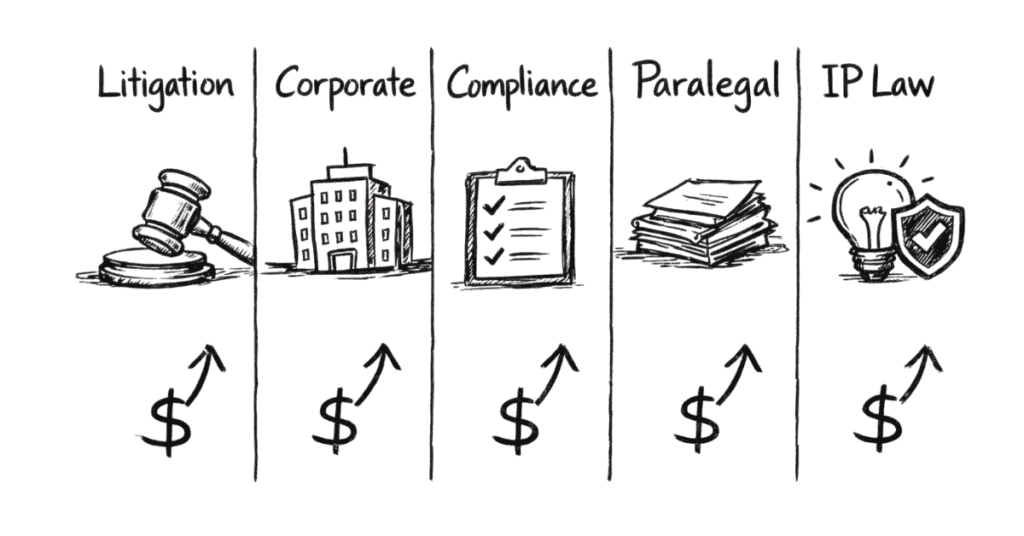
The legal field isn’t one-size-fits-all. You can broadly divide legal careers into five main tracks:
Litigation and Court Practice: This is what most people picture when they think “lawyer”—arguing cases in court, representing clients before judges, and building a practice through word-of-mouth reputation. Litigation lawyers in India earn between ₹4 lakhs to ₹15 lakhs annually, though top advocates charge significantly more. The work demands excellent public speaking skills, quick thinking, and the ability to handle pressure.upgrad
Corporate Legal Departments: Companies hire in-house lawyers to handle contracts, mergers, regulatory compliance, and employment law. Corporate lawyers enjoy stable salaries ranging from ₹6 lakhs to ₹12 lakhs per year for mid-level positions. The environment is less confrontational than courtroom work, with regular hours and office perks like health insurance and bonuses.vmls+1
Compliance and Risk Management: These professionals ensure organizations follow laws and regulations. Compliance officers work in banking, fintech, pharmaceuticals, and tech companies. The role has exploded in importance as regulators crack down on violations. Salaries vary by industry but typically range from ₹5 lakhs to ₹15 lakhs annually.mysarkarinaukri
Legal Support Roles: Paralegals, legal assistants, and legal researchers support lawyers by conducting research, drafting documents, and managing case files. These positions are perfect entry points for law graduates or anyone interested in legal work without becoming a practicing advocate. Entry-level paralegals earn ₹25,000 to ₹35,000 per month.thelegalschool
Specialized Legal Services: This includes intellectual property lawyers, data privacy consultants, contract management specialists, and legal tech professionals. These niche areas often command premium salaries because of their specialized knowledge.vmls+1
Skills That Make You Stand Out
Hard Skills Every Legal Professional Needs
Legal Research: Knowing how to find relevant case law, statutes, and legal commentary efficiently is fundamental. Master legal databases specific to India like Manupatra, SCC Online, and AIR, as well as international platforms like Westlaw if you work with cross-border matters.
Legal Writing and Drafting: Whether you’re writing a contract clause or a court pleading, clarity matters more than fancy language. Good legal writing communicates complex ideas simply, anticipates questions, and protects your client’s interests.
Regulatory Knowledge: Stay current with laws affecting your practice area. Subscribe to legal newsletters, attend webinars, and join professional associations that share regulatory updates.
Technology Proficiency: Modern legal practice requires comfort with legal tech tools—contract management software, e-discovery platforms, legal research databases, and case management systems. Learn Microsoft Office deeply (especially Excel for compliance tracking and Word’s advanced features for document automation).
Soft Skills That Accelerate Your Career
Communication: You’ll explain complex legal concepts to clients who don’t speak “legalese.” Practice breaking down complicated ideas into simple terms without losing important nuances.
Problem-Solving: Legal work involves finding solutions within constraints. Develop the habit of thinking creatively about how to achieve client objectives within legal boundaries.
Ethics and Integrity: Your reputation is your most valuable asset in law. Small ethical lapses can end careers, while consistent integrity builds trust that attracts clients and opportunities.
Time Management: Lawyers juggle multiple matters with competing deadlines. Use project management techniques to stay organized—digital tools like Trello or Asana can help track tasks across different cases or projects.
Business Acumen: Especially for corporate lawyers and compliance officers, understanding how businesses actually operate helps you provide practical legal advice that supports business goals rather than just saying “no” to everything.
Breaking Into Legal Careers: Practical Steps
For Fresh Law Graduates
Step 1: Choose Your Path Early: During law school, take electives and internships aligned with your interests. Want to do corporate work? Intern at companies or corporate law firms. Drawn to litigation? Work with senior advocates during summer breaks.
Step 2: Build Practical Experience: Many law students focus too much on grades and too little on practical skills. Join moot court competitions, legal aid clinics, or pro bono projects. These experiences teach real skills and look impressive on resumes.
Step 3: Network Strategically: Attend legal conferences, join bar association events, and connect with alumni. Many legal jobs aren’t publicly advertised—firms hire through referrals and personal connections.
Step 4: Craft a Strong Resume: Your legal resume should highlight relevant internships, academic achievements, technical skills, and any published work. Include a section on legal software and research tools you’ve mastered.
Step 5: Prepare for Interviews: Legal interviews often include hypothetical scenarios or case discussions. Practice explaining your thinking process, not just providing answers. Research the firm or company thoroughly to ask informed questions.
For Career Changers
Assess Transferable Skills: Your previous career likely developed valuable skills. Engineers bring analytical thinking to patent law, journalists have writing skills perfect for legal content, and business professionals understand commercial contexts that help in corporate roles.
Consider Non-Advocate Roles: If you can’t invest three years in an LLB, explore paralegal positions, compliance roles (many don’t require law degrees), legal operations, or contract management. These positions value relevant experience alongside legal knowledge.
Pursue Targeted Certifications: Short-term certifications in compliance, contract management, or specific legal areas can make you competitive for entry-level positions faster than a full law degree.
Start Where You Are: If you work in tech, explore legal tech roles or compliance positions in tech companies. Your industry knowledge becomes an advantage when combined with legal training.

Salary Expectations Across Legal Careers
Understanding compensation helps you negotiate fairly and plan your career progression. Here’s a realistic picture of what legal professionals earn in India:
Entry-Level Salaries (0-3 Years Experience)
- Litigation Lawyers: ₹2.16-4.8 lakhs annually (self-employed advocates’ income varies widely based on clientele)upgrad
- Corporate Lawyers: ₹6-8 lakhs in mid-sized companiesvmls
- Compliance Officers: ₹4-7 lakhs depending on industrymysarkarinaukri
- Paralegals/Legal Assistants: ₹3-4.2 lakhs (₹25,000-35,000 monthly)thelegalschool
- IP Lawyers: ₹8-10 lakhs due to specialized skillsvmls
- Legal Researchers: ₹3-5 lakhs annually
Mid-Level Salaries (4-10 Years Experience)
- Litigation Lawyers: ₹5-16.6 lakhsupgrad
- Corporate Lawyers: ₹10-20 lakhsupgrad+1
- Compliance Managers: ₹8-15 lakhsmysarkarinaukri
- Senior Paralegals: ₹6-10 lakhsthelegalschool
- IP Lawyers: ₹15-25 lakhsshiksha
- Data Privacy Officers: ₹12-18 lakhsvmls
Senior-Level Salaries (10+ Years Experience)
- Senior Advocates: ₹17-30+ lakhs (top lawyers charge significantly more per case)upgrad
- General Counsel: ₹25-50 lakhs depending on company size
- Chief Compliance Officers: ₹20-40 lakhsmysarkarinaukri
- Senior IP Counsel: ₹20-35 lakhsshiksha
Factors Affecting Salary:
- Location: Metropolitan cities like Mumbai, Delhi, and Bangalore typically pay 20-40% more than tier-2 citiesupgrad
- Industry: Financial services, technology, and pharmaceuticals often pay premium salaries due to complex regulations
- Specialization: Niche areas like IP law, privacy law, and legal tech command higher compensationvmls
Type of Employer: Large law firms and multinational corporations typically pay more than small firms or NGOs
Where Legal Professionals Work
Law Firms
From boutique practices to global firms with hundreds of lawyers, law firms offer diverse environments. Large firms provide structured training, exposure to major transactions, and higher starting salaries. Smaller firms often give juniors more responsibility earlier and diverse experience across practice areas.
Corporate Legal Departments
Companies across industries—technology, manufacturing, banking, e-commerce, pharmaceuticals—maintain in-house legal teams. These roles offer work-life balance, stable income, and deep industry expertise. You become a business partner, not just a legal advisor.shiksha
Government and Public Sector
Government legal departments, public sector companies, regulatory bodies, and state legal services offer job security and opportunities for public service. Salaries may be lower than private sector, but benefits and pension plans add value.mysarkarinaukri
Legal Process Outsourcing (LPO)
LPO companies provide legal services to international clients, especially from the US and UK. These roles involve contract review, legal research, and document analysis. They’re excellent starting points for exposure to international legal practices.
Non-Profits and Legal Aid
NGOs and legal aid organizations serve underprivileged communities. While salaries are modest, these roles offer deep satisfaction from helping those who can’t afford private lawyers. Great for building trial experience if you’re interested in litigation.
Freelance and Consulting
Experienced lawyers increasingly work independently, offering specialized services to multiple clients. This path offers flexibility and potentially higher income, but requires business development skills and financial discipline.

Future Trends Shaping Legal Careers
Legal Technology Integration
Artificial intelligence is automating routine tasks like document review and legal research. Rather than replacing lawyers, technology is changing what lawyers do—shifting focus from manual tasks to strategic advisory work. Legal professionals who embrace technology tools will have significant advantages over those who resist change.vmls
Rise of Compliance Careers
Regulatory complexity is increasing across industries. Every new law—data privacy, consumer protection, environmental regulations—creates compliance jobs. This trend will continue, making compliance one of the fastest-growing legal career paths.mysarkarinaukri
Specialization Becomes Essential
General practice lawyers face increasing competition. Building expertise in niche areas—maritime law, drone regulations, cryptocurrency legal frameworks, space law—creates competitive advantages and commands premium fees.vmls
Alternative Legal Careers Expand
Legal training is valuable beyond traditional practice. Legal tech companies need lawyers who understand both law and technology. Legal project managers optimize how legal services are delivered. Legal operations professionals improve legal department efficiency. These “alternative legal careers” are growing rapidly.
Flexible Work Models
The pandemic proved legal work can happen remotely. More firms and companies now offer hybrid or fully remote options, especially for research, drafting, and compliance roles. This flexibility improves work-life balance and opens opportunities regardless of location.
Common Challenges and How to Overcome Them
High Competition
Challenge: Thousands of law graduates enter the job market annually, creating intense competition.
Solution: Differentiate yourself through specialization, technology skills, or industry knowledge. A law graduate who also understands software development stands out for tech law roles. Continuous learning through certifications and courses shows commitment to professional growth.
Initial Low Earnings
Challenge: Starting salaries, especially for litigators, can be modest.upgrad
Solution: Many successful lawyers started with low earnings while building reputations. Supplement income through part-time legal writing, legal research for established lawyers, or legal tech work. Focus on learning during early years rather than just earnings.
Work-Life Balance
Challenge: Legal work often involves long hours and deadline pressure.
Solution: Set boundaries early. Learn to manage time effectively, delegate when possible, and choose employers whose cultures align with your values. In-house roles and compliance positions typically offer better work-life balance than large law firm litigation practices.
Keeping Up with Regulatory Changes
Challenge: Laws constantly change, requiring continuous learning.
Solution: Develop a learning system—subscribe to legal newsletters in your practice area, set aside time weekly for professional reading, join professional associations that provide updates, and attend relevant webinars and conferences.
Your Next Steps
Building a successful legal career requires strategic planning and consistent effort. Here’s your action plan:
Immediate Actions (This Month):
- Assess your interests and strengths honestly. Do you prefer research or client interaction? Solving technical problems or persuading people? Your answers guide which legal path suits you.
- Research specific roles that match your profile. Read detailed job descriptions and informational interviews with professionals in those roles.
- Identify skill gaps. What do you need to learn to qualify for your target roles?
Short-Term Goals (3-6 Months):
- Pursue relevant courses or certifications addressing your skill gaps.
- Build a professional online presence—create a LinkedIn profile highlighting your legal education, internships, and skills.
- Start networking by attending legal events, joining bar association committees, and connecting with legal professionals on LinkedIn.
- Gain practical experience through internships, volunteer legal work, or assisting practicing lawyers.
Long-Term Strategy (1-3 Years):
- Continuously build expertise in your chosen specialization through advanced courses, certifications, and hands-on experience.
- Develop a professional reputation by publishing articles, speaking at events, or contributing to legal publications.
- Seek mentorship from experienced professionals who can guide your career decisions and open doors to opportunities.
- Regularly reassess your career path. Your interests may evolve, and the legal landscape constantly changes. Stay flexible and willing to pivot when better opportunities arise.
The legal profession offers rewarding careers for those willing to invest in education, develop relevant skills, and remain committed to continuous learning. Whether you’re drawn to courtroom advocacy, corporate advisory, compliance work, or legal support roles, opportunities exist for dedicated professionals. Start with clarity about your goals, take consistent action toward building relevant skills, and remain patient as you build your career step by step.