
What is Environmental Services? Complete Career Overview
Table of Contents
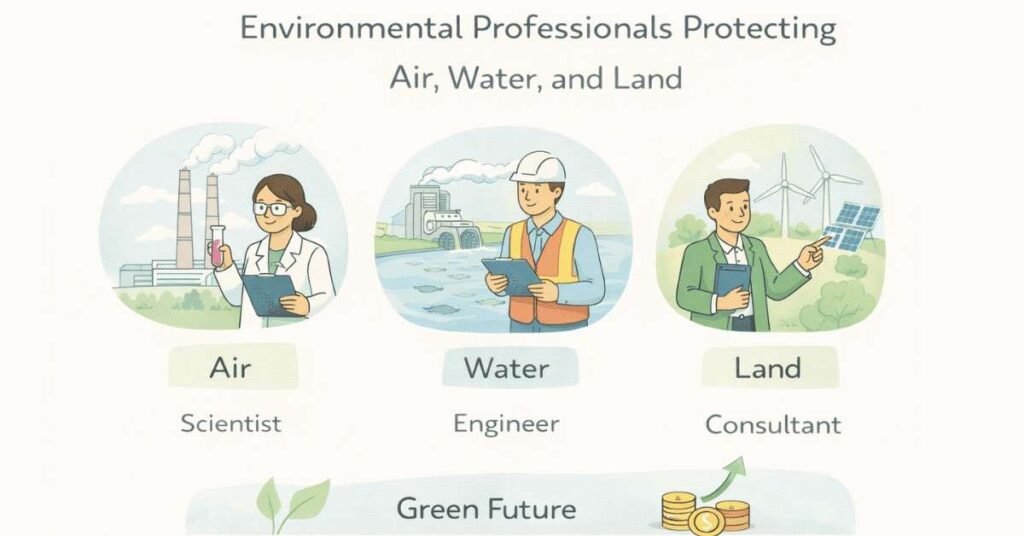
Picture yourself working on a project that prevents a river from getting polluted, or designing a system that turns industrial waste into something useful. Maybe you’re helping a company reduce its carbon footprint or protecting endangered wildlife habitats. This is what environmental services careers look like—real work that creates real impact.
Environmental services has quietly become one of the most promising career fields in India and globally. With over 3,000 job openings in India alone and the environmental testing market expected to reach ₹1,674 crores by 2033, this field offers both purpose and stability. Whether you’re a student exploring career options or someone considering a career change, understanding what environmental services truly means is your first step toward making an informed decision.

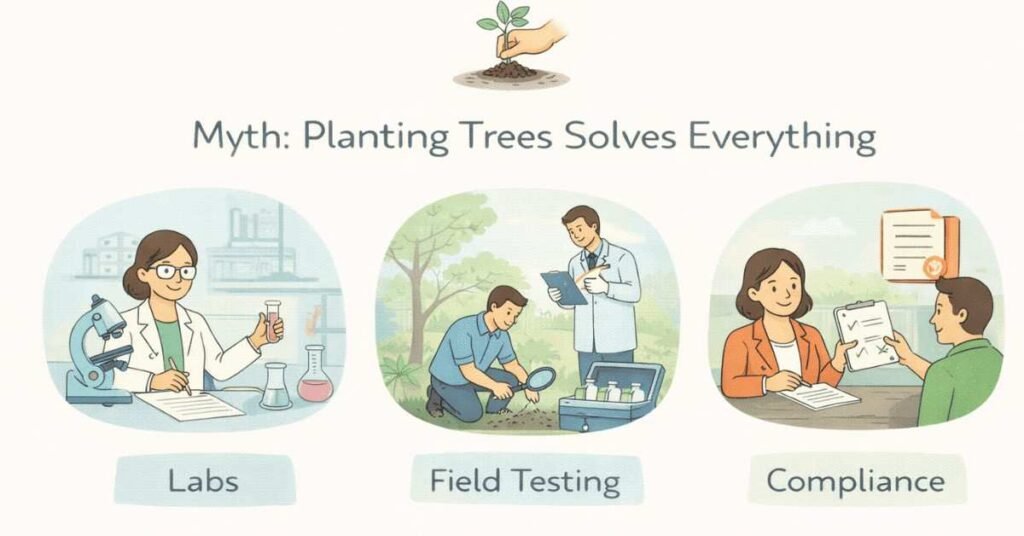
Understanding Environmental Services: More Than Just Tree Planting
When most people hear “environmental careers,” they picture forest rangers or activists holding protest signs. The reality is far more diverse and professionally structured.
Environmental services encompasses various professional activities focused on protecting, preserving, and enhancing the natural environment through practical, technical, and scientific work. Think of it as the intersection where science meets practical problem-solving to address pollution, resource management, climate change, and sustainability challenges.
The field includes several core areas that work together like pieces of a puzzle:
Pollution Control and Monitoring
This involves identifying, tracking, and managing pollution sources across air, water, and soil. Professionals in this area conduct emissions monitoring, manage wastewater treatment systems, and ensure air quality standards are met. For example, when a factory needs to measure its air emissions to comply with Central Pollution Control Board norms, environmental monitoring specialists step in with their testing equipment and expertise.
Environmental Consulting
Consultants provide expert guidance to businesses, government bodies, and organizations on complying with environmental regulations, assessing potential risks, and developing sustainability strategies. They prepare Environmental Impact Assessment reports before major construction projects begin and help companies navigate complex environmental laws.
Waste Management Services
This critical area addresses how we handle everything from household garbage to hazardous industrial waste. Professionals design waste treatment systems, develop recycling programs, and ensure proper disposal that protects both human health and the environment.
Natural Resource Management
These services focus on the sustainable use and conservation of natural resources like water, forests, minerals, and biodiversity. The work ensures that current needs are met without compromising future generations’ ability to meet theirs.
Environmental Restoration and Remediation
When pollution has already occurred—like contaminated soil from old industrial sites or oil spills—remediation specialists work to clean up and restore affected areas to safe, usable conditions.
Environmental Services vs Environmental Science: What's the Difference?
Students often confuse these terms, but understanding the distinction helps you choose the right educational and career path.
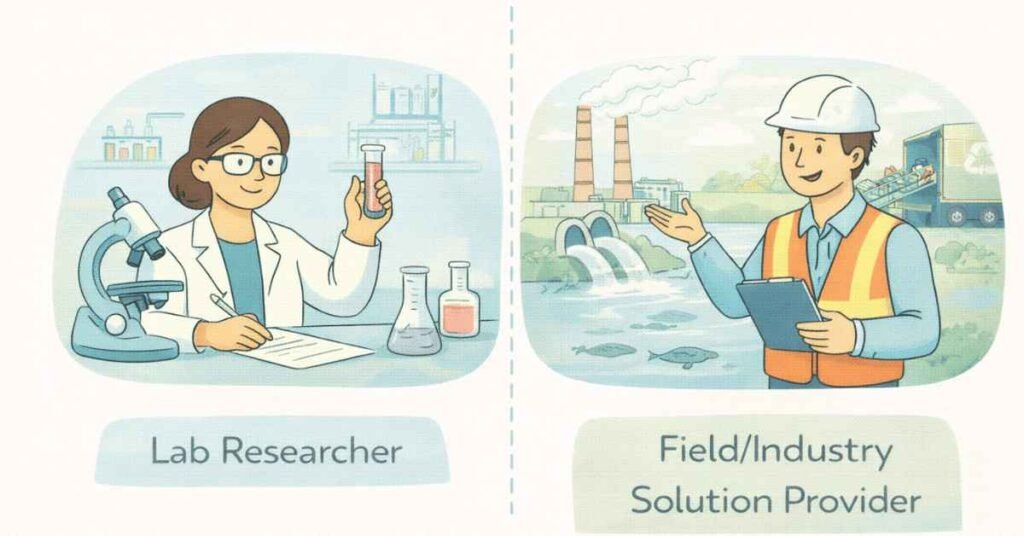
Environmental Science is primarily research and study-focused. Environmental scientists spend considerable time in laboratories testing samples, analyzing data, and forming hypotheses based on information they gather from the environment. They investigate questions like “What pollutants are present in this water source?” or “How is climate change affecting this ecosystem?” Their work generates knowledge and understanding.
Environmental Services, on the other hand, takes a more application-oriented approach. While environmental scientists identify and study problems, environmental services professionals apply that knowledge to create practical solutions. Environmental engineers, for instance, use data from scientists to design pollution control systems, develop waste treatment facilities, and ensure construction projects comply with environmental regulations.
Think of it this way: if environmental scientists diagnose the environmental problem, environmental services professionals prescribe and implement the cure. Both paths are valuable, and they often work together—scientists provide the data, and service professionals turn that data into action.
Your choice between these paths depends on your preferences. If you love laboratory work, research, and discovering new information, environmental science might suit you better. If you prefer hands-on problem-solving, working with clients, and seeing tangible results from your efforts, environmental services could be your calling.

Why Environmental Services Careers Are Growing Rapidly
The environmental services sector isn’t just growing—it’s experiencing explosive expansion driven by several powerful factors that show no signs of slowing down.
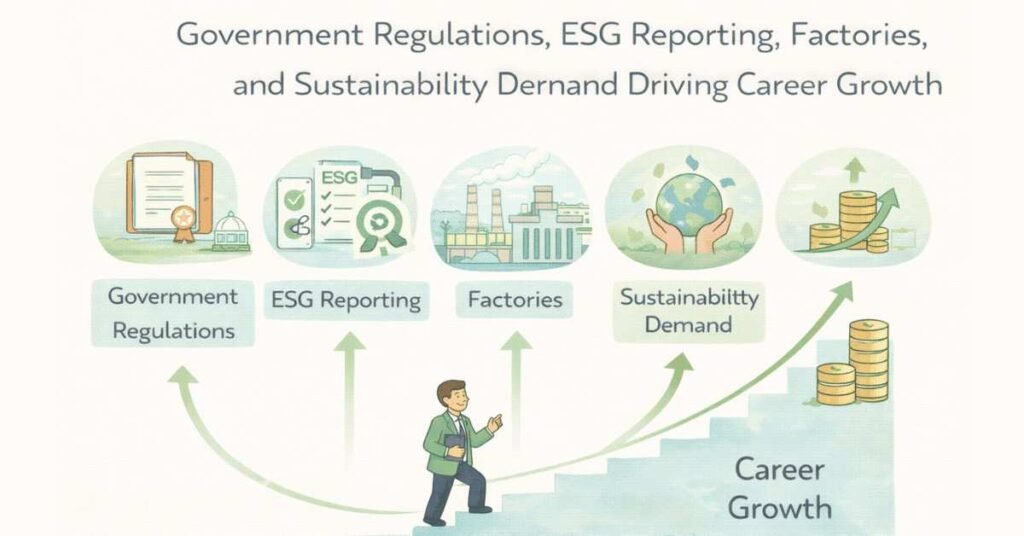
Stricter Government Regulations
India’s environmental regulations have become significantly more stringent over the past decade. The Central Pollution Control Board and State Pollution Control Boards now enforce tighter compliance requirements across industries. Companies can no longer ignore environmental standards without facing serious penalties, creating consistent demand for professionals who understand these regulations and can help organizations stay compliant.
The Environment Protection Act 1986, Air Act, Water Act, and various industry-specific guidelines now require regular monitoring, testing, and reporting. Every factory needs environmental compliance officers. Every construction project needs environmental clearances. Every industry needs regular testing and monitoring—creating thousands of professional positions.
Rapid Industrialization and Urbanization
As India continues its rapid industrial growth and urban expansion, environmental challenges intensify. More factories mean more emissions. More construction means more environmental impact assessments. More people mean more waste to manage.imarcgroup+1
The India environmental testing market alone grew to ₹710 crores in 2024 and is projected to reach ₹1,674 crores by 2033, growing at over 9% annually. This growth translates directly into job opportunities for trained environmental professionals who can handle air quality assessments, water quality monitoring, soil contamination testing, and pollution control.
Corporate ESG Focus
Companies worldwide, including in India, are increasingly focused on Environmental, Social, and Governance (ESG) metrics. Investors now demand transparency on environmental performance, carbon emissions, and sustainability practices. This shift has created entirely new job categories like ESG analysts, sustainability managers, and climate consultants that didn’t exist a decade ago.
Major corporations are establishing dedicated sustainability departments. Consulting firms have expanded their climate change and sustainability services divisions. This corporate attention translates to premium salaries for professionals with the right environmental and business skills.
Growing Public Awareness
Citizens are more environmentally conscious than ever before. People want cleaner air, safer water, and sustainable products. This public pressure pushes both governments and businesses to invest more heavily in environmental services. When communities demand environmental accountability, organizations respond by hiring professionals who can deliver measurable environmental improvements.
International Commitments
India’s commitment to achieving 50% renewable energy capacity by 2030 and reducing carbon emissions intensity is creating massive opportunities in renewable energy, climate consulting, and sustainability services. These national and international commitments require environmental professionals at every level—from field technicians collecting data to policy analysts shaping climate strategies.
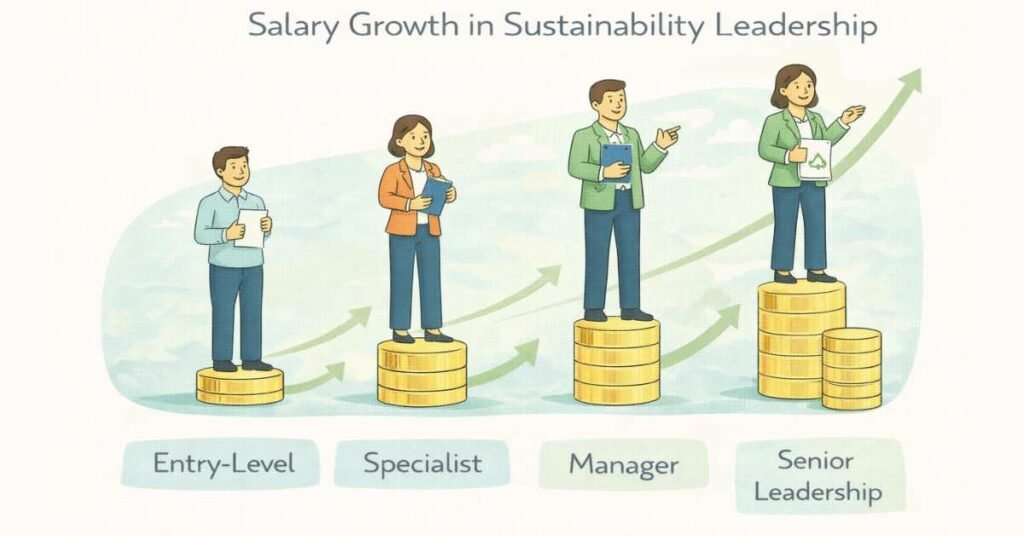
The Reality of Environmental Services Salaries
Let’s address the elephant in the room: money. Many students worry that environmental careers don’t pay well. The truth is more nuanced and actually quite encouraging.
Entry-Level Positions (0-2 years experience)
Starting salaries typically range from ₹3 to 8 lakhs annually, depending on your role, educational qualifications, and employer type. Environmental technicians and field assistants start around ₹3-5 lakhs, while junior environmental consultants and EHS officers can begin at ₹4-7 lakhs. These starting salaries are comparable to other science and engineering fields.
Mid-Career Growth (3-7 years experience)
This is where environmental careers become financially attractive. Environmental scientists earn ₹6-12 lakhs, environmental engineers make ₹8-15 lakhs, and sustainability analysts can earn ₹8-18 lakhs annually. ESG analysts and climate consultants with a few years of experience often command ₹10-22 lakhs, especially in consulting firms and large corporations.6figr
Senior Professional Level (8+ years experience)
Senior environmental consultants earn ₹18-30 lakhs, sustainability managers make ₹20-35 lakhs, and heads of ESG can command ₹30-50 lakhs annually. Chief Sustainability Officers in major corporations can earn ₹40-70 lakhs or more. These figures rival or exceed many traditional corporate positions.
International Comparison
Environmental scientists in the United States earn a median salary of approximately $80,060 (around ₹66 lakhs) annually. After gaining 5-10 years of experience in India, many environmental professionals successfully transition to international opportunities with significantly higher compensation packages.
Sector Variations
Your salary also depends heavily on your employer type. Corporate positions and Big 4 consulting firms typically pay the highest. Government jobs offer moderate salaries but excellent job security and benefits. NGO positions generally pay less but offer meaningful work and unique experiences.
The key insight: while environmental careers may start modestly, they offer strong growth potential, especially as you develop specialized skills in high-demand areas like ESG, climate consulting, or environmental engineering.
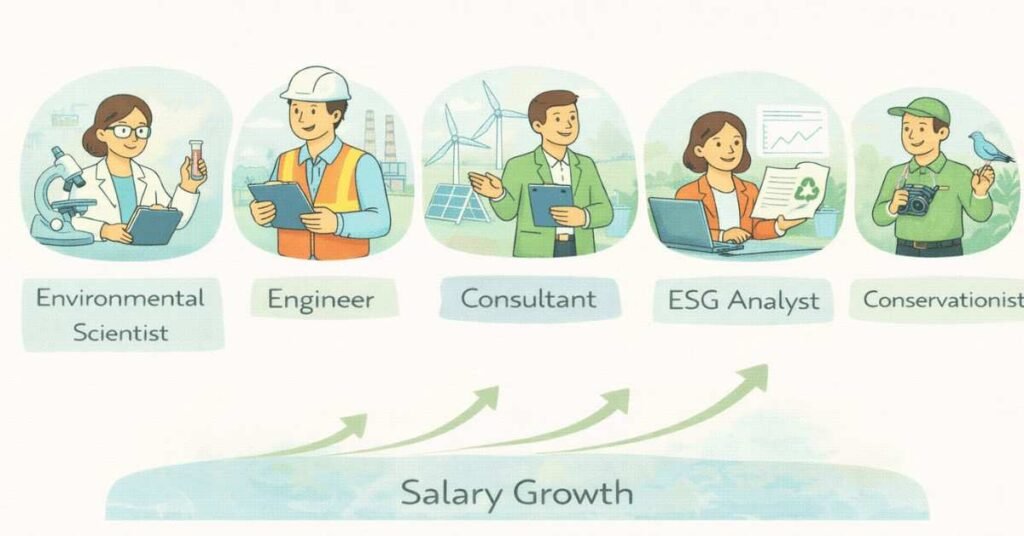
Types of Environmental Services Careers
Environmental services isn’t a single career—it’s an umbrella covering diverse roles that suit different interests and skill sets.
Technical and Scientific Roles
These positions involve hands-on work with environmental data, testing, and monitoring. Environmental scientists collect samples, conduct laboratory analyses, and interpret results. Environmental technicians operate monitoring equipment and maintain testing systems. These roles suit people who enjoy systematic, detail-oriented work with scientific instruments and data.
Engineering and Design Roles
Environmental engineers design practical solutions to environmental problems—wastewater treatment plants, air pollution control systems, waste management facilities, and sustainable infrastructure. This career path requires strong technical and mathematical skills but offers the satisfaction of creating tangible solutions.
Consulting and Advisory Roles
Environmental consultants work with various clients, helping them navigate regulations, prepare environmental impact assessments, and develop sustainability strategies. These roles demand strong communication skills, regulatory knowledge, and the ability to manage multiple projects simultaneously.
Compliance and Regulatory Roles
Environmental compliance officers ensure organizations follow environmental laws and regulations. They conduct inspections, prepare regulatory reports, and serve as liaisons between companies and pollution control boards. These positions suit people who appreciate structure, regulations, and ensuring accountability.
Sustainability and ESG Roles
Sustainability analysts and ESG specialists help organizations measure and improve their environmental performance, prepare sustainability reports, and develop climate strategies. These newer roles blend environmental knowledge with business acumen.
Conservation and Resource Management
Wildlife biologists, forest officers, and conservation specialists work to protect biodiversity and natural ecosystems. These careers often involve fieldwork in natural settings and collaboration with communities.
Who Should Consider Environmental Services Careers?
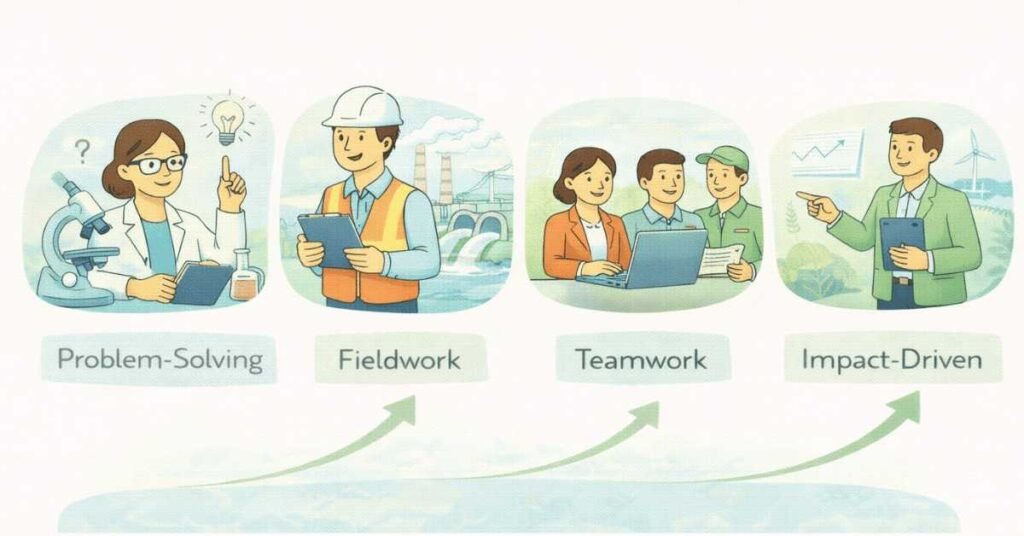
Environmental services attracts people from various backgrounds and interests. You might be a good fit if you:
- Care about making a positive environmental impact while earning a stable living
- Enjoy problem-solving and applying scientific knowledge to real-world situations
- Like the idea of diverse work environments—from laboratories to construction sites to natural areas
- Want a career field with growing opportunities rather than declining demand
- Appreciate work that has clear social value and contributes to community health
- Are comfortable with continuous learning, as environmental regulations and technologies constantly evolve
You don’t need to be a passionate environmental activist to succeed in this field. Many successful environmental professionals are simply competent, detail-oriented people who found a stable career helping organizations solve environmental challenges.
Current Job Market Reality in India
The numbers paint an encouraging picture. LinkedIn shows over 3,000 environmental services job openings in India currently. These positions span multiple sectors—manufacturing, consulting, government, real estate, infrastructure, healthcare, and more.
The environmental testing services market in India is expanding rapidly, driven by increasing pollution levels, stricter enforcement, and growing corporate sustainability commitments. This market growth translates directly to hiring needs for environmental technicians, analysts, consultants, and managers.
Cities like Mumbai, Bangalore, Delhi, Pune, and Hyderabad show the highest concentration of environmental job opportunities, though positions exist across India as every industrial area needs environmental professionals.
The adoption of advanced testing technologies, real-time monitoring systems, and NABL-accredited laboratory services is creating demand for technically skilled professionals who can work with modern environmental monitoring equipment and data systems.
What Environmental Services Work Actually Looks Like
Understanding the day-to-day reality helps you decide if this career suits you.
Environmental professionals rarely sit at desks all day doing the same repetitive tasks. Your work varies significantly based on your specific role, but generally involves a mix of fieldwork, laboratory analysis, report writing, client interaction, and problem-solving.
An environmental scientist might spend Monday collecting water samples from various locations around a factory, Tuesday in the laboratory running tests on those samples, Wednesday analyzing the data and comparing it to regulatory standards, Thursday writing a detailed report of findings, and Friday presenting results to the client and recommending corrective actions.
An environmental consultant might juggle multiple projects simultaneously—preparing an Environmental Impact Assessment for a construction project, helping a manufacturing client develop a waste reduction strategy, conducting a compliance audit at a chemical plant, and attending a meeting with pollution control board officials.a-otc+1
Environmental work requires both technical expertise and soft skills. You need to understand the science and regulations, but also communicate clearly with non-technical stakeholders, manage project timelines, work collaboratively with diverse teams, and sometimes handle challenging field conditions.
The work can be demanding, but most environmental professionals report high job satisfaction because they see tangible results from their efforts—cleaner water, reduced emissions, protected habitats, or improved sustainability practices.
Getting Started: First Steps
If environmental services sounds like the right path for you, here’s how to begin:
In School (Classes 8-12): Follow environmental news and issues to build awareness. Choose Science stream (preferably PCB or PCM) in 11th-12th if possible, as this opens the most options for environmental degrees later.
After 12th: Research degree options carefully. BSc Environmental Science works well for monitoring, research, and consulting paths. BTech Environmental Engineering suits those interested in technical design and industrial applications.
During College: Don’t just focus on grades. Gain practical experience through internships, develop technical skills like data analysis and report writing, and build a professional network through faculty connections and environmental organizations.
After Graduation: Decide whether to enter the job market directly or pursue higher studies. Both paths work—your choice depends on your career goals, financial situation, and interest level in specialization.
The environmental services field welcomes motivated learners from various backgrounds. What matters most is genuine interest, willingness to develop technical skills, and commitment to continuous learning as the field evolves.
Looking Forward: The Future of Environmental Services
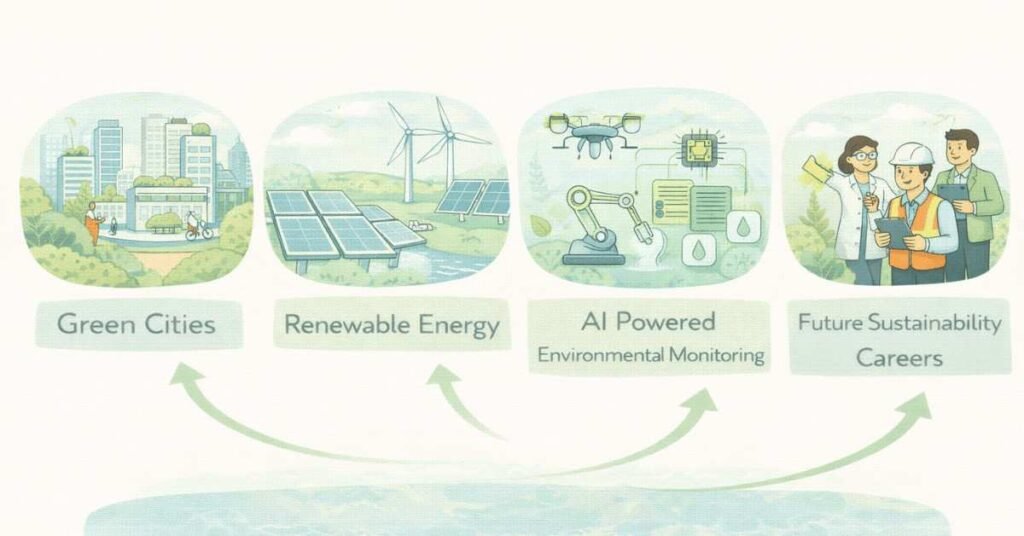
Every indicator suggests environmental services will continue growing as a career field. Climate change isn’t slowing down. Industrial activities will continue requiring monitoring and compliance. Corporate sustainability commitments will expand, not shrink. Government regulations will likely become stricter, not looser.
New specializations are emerging—carbon credit trading, climate risk analysis, circular economy consulting, environmental data science, and renewable energy integration. These evolving areas create opportunities for early adopters who develop expertise in emerging environmental fields.
Technology is also transforming environmental work. Remote sensing, artificial intelligence for environmental monitoring, blockchain for carbon credit tracking, and advanced modeling software are changing how environmental professionals work. Those who combine environmental knowledge with technical skills will find themselves especially valuable.
The path to an environmental services career requires education, skill development, and practical experience, but offers a rare combination: meaningful work that protects communities and the planet, combined with growing job opportunities and competitive compensation.
In our next guide, we’ll explore specific environmental career roles in detail—what environmental scientists, engineers, consultants, and specialists actually do, the skills each role requires, and the realistic salary expectations for different positions. Understanding these specifics will help you identify which environmental services career path aligns best with your interests and strengths.