
Resume Fundamentals for Modern Hiring
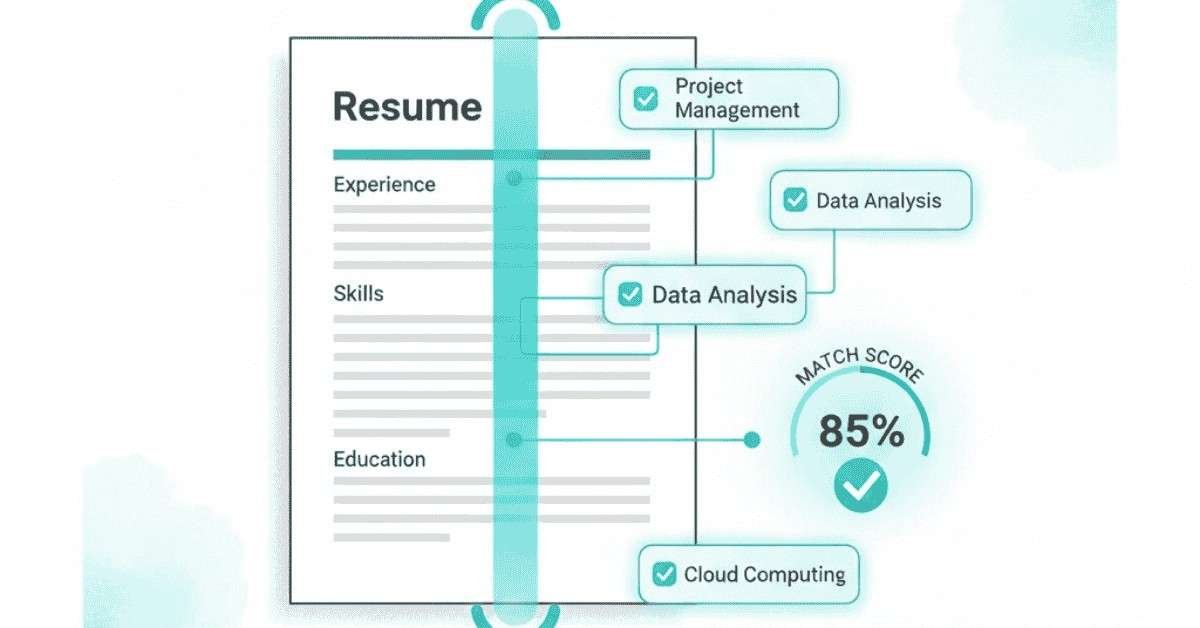
Table of Contents
The Reality Behind the Apply Button
You’ve probably heard the statistic: hiring managers spend only 6 seconds reviewing your resume. But here’s what they don’t tell you—your resume never even reaches a human during those 6 seconds.
Before a single human pair of eyes scans your application, your resume enters a complex filtering system called an Applicant Tracking System (ATS). Think of it as a security checkpoint at an airport. Unless your resume has the right “ticket” (keywords, formatting, structure), you won’t make it past the scanner.
Your resume doesn’t fail because it’s bad. It fails because the robot couldn’t read it. And that’s exactly what we’re fixing here.
“Want More Resume & Hiring Insights? Explore Frontlines Media’s Career Resources
What Exactly Is an ATS?
An ATS is software that companies use to manage recruitment. Large organizations typically receive 200-500 applications for a single job posting. Manually reading each one is impossible. So, they use ATS to:
- Scan resumes for specific keywords and skills
- Filter candidates based on education and experience requirements
- Rank candidates by match score against the job description
- Flag resumes that pass the quality threshold to human recruiters
Companies like Amazon, TCS, Infosys, and IBM use advanced ATS systems. If you’re applying to any reputable company in India, there’s a 70% chance your resume is passing through an ATS first.
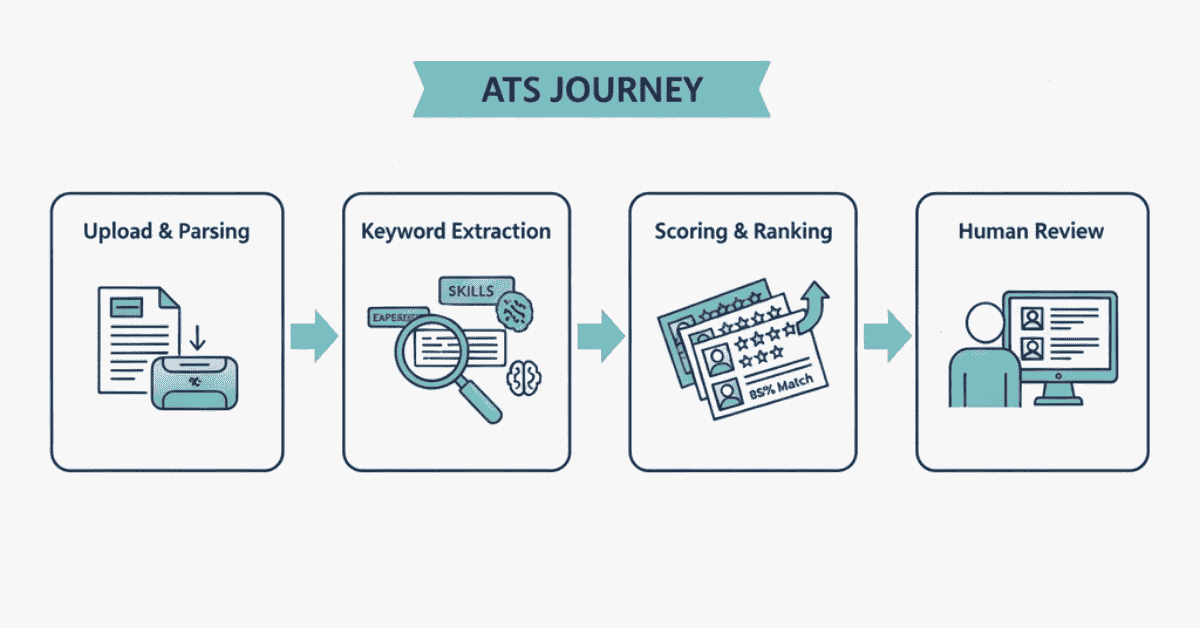
The ATS Journey: What Actually Happens
Let’s walk through what happens when you click “submit” on that job portal:
Stage 1: Upload & Parsing — Your resume gets uploaded and the ATS attempts to “read” it. If your formatting is unusual (graphics, columns, special characters), the system struggles. It’s like trying to read a book written in a different language—technically possible, but most of the information gets lost.
Stage 2: Keyword Extraction — The system pulls out key information: your contact details, job titles, company names, and skills. It then searches for predetermined keywords from the job description.
Stage 3: Scoring & Ranking — Using an algorithm, the ATS scores your resume based on keyword matches, job title alignment, and experience duration. Your score determines if you move to the next stage.
Stage 4: Human Review — Only resumes that pass the threshold (typically top 5-20 candidates) reach a human recruiter.
This is why so many qualified candidates get rejected—not because they’re unqualified, but because the ATS couldn’t properly extract and match their qualifications.
Why Most Resumes Fail the ATS
Here are the most common reasons why resumes get filtered out before reaching a hiring manager:
Wrong File Format — Submitted as .PDF with complex formatting or image-based PDF that can’t be parsed
Missing Exact Keywords — Job description asks for “Python” but your resume only mentions “coding”
Unclear Structure — Information scattered across columns, sidebars, or non-standard sections
Weak Job Title Match — You worked as “Content Developer” but the role asks for “Software Engineer”
Vague Descriptions — Instead of “Managed 5 team members to deliver project by deadline,” you wrote “Worked on various projects”
File Name Issues — Uploaded as “Resume_Final_V3_ACTUAL_FINAL.pdf” instead of “FirstName_LastName_Resume.pdf”
“Upgrade Your Skills for Modern Hiring — Explore Job-Ready Courses →
Resume vs. CV: What's the Difference?
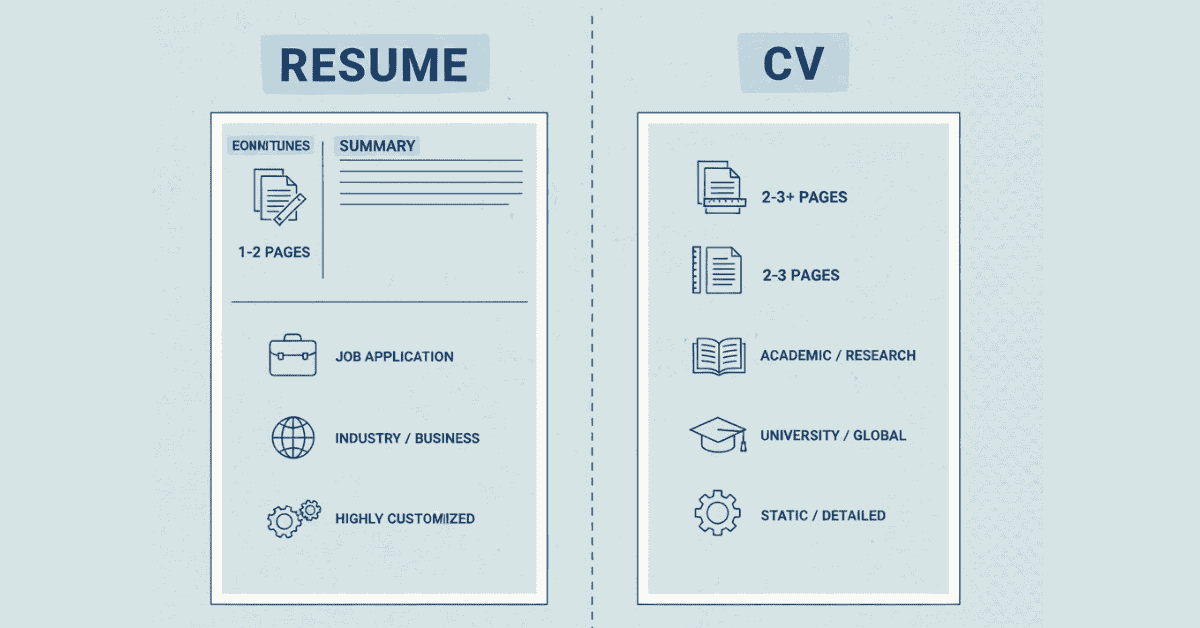
In India, the terms “resume” and “CV” are often used interchangeably, but they have subtle differences:
Resume (1-2 pages):
- Concise summary of work experience, skills, and education
- Tailored specifically for the job you’re applying to
- Preferred in corporate job applications
- Focused on achievements and impact
- Standard in Indian IT and corporate sectors
CV (2-3+ pages):
- Comprehensive career document
- Includes publications, research, certifications, awards
- Common in academic, research, and government positions
- Not typically tailored per application
- Preferred in European and academic contexts
For most job applications in India—whether it’s a startup, corporate company, or placement opportunity—you’ll want a resume, not a CV. The resume format is designed to be ATS-friendly and gets past automated systems more effectively.
When Should You Update Your Resume?
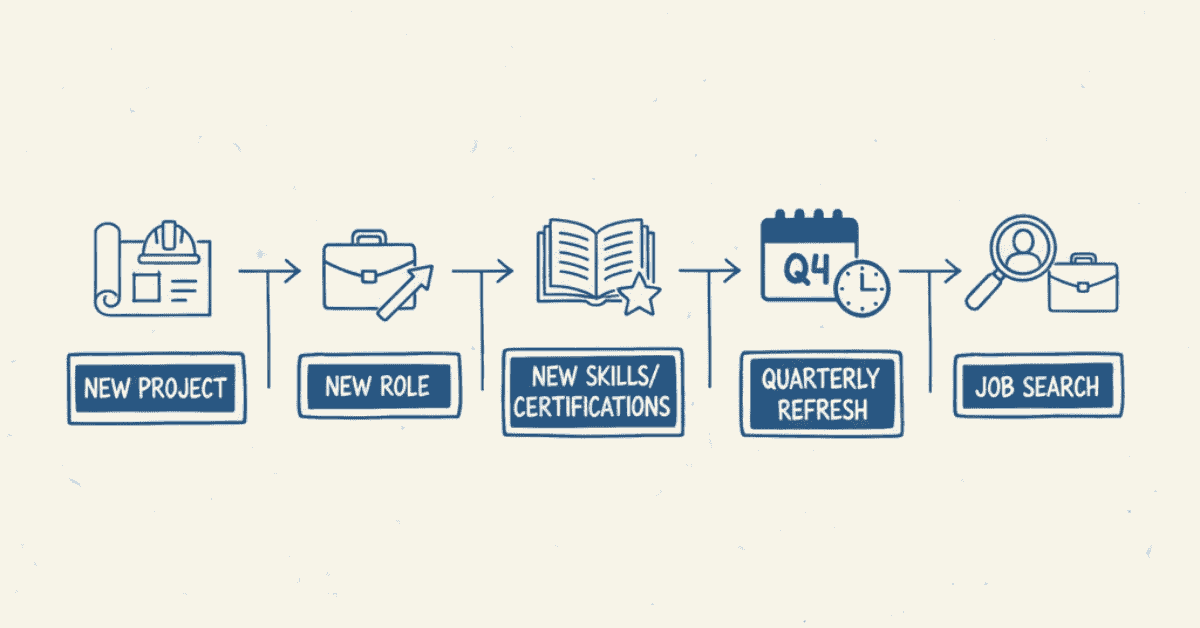
You shouldn’t wait for a job search crisis to update your resume. Here’s when to refresh it:
Every 3-6 Months — Add new projects, achievements, or skills you’ve learned
After Project Completion — Document measurable outcomes while they’re fresh (e.g., “Increased website traffic by 45%”)
When Changing Roles — Update your job title and expand responsibilities
Before a Job Search — Review for relevance to target roles and customize sections
When Acquiring Certifications — Add new skills or course completions immediately
After Feedback — If a recruiter or mentor suggests improvements, incorporate them
The best practice: maintain a “master resume” with all your experiences, then create tailored versions for each application. This keeps everything current without starting from scratch.
Your Action Plan
Start by auditing your current resume. Ask yourself:
- Can it be opened and read properly in all formats?Does it contain keywords from job descriptions you’re interested in?
- Is the structure clear and scannable?
- Are achievements quantified with numbers?
In the next section, we’ll build a resume structure that passes ATS systems while impressing human recruiters.