
Cultural Awareness in Self-Introductions for Global Careers

Table of Contents
Why Cultural Competence in Introductions Is Your Global Career Advantage

Imagine this scenario: You nail your interview with an international company. Your introduction is perfect. But then you notice the interviewer from Singapore seems uncomfortable. Later, you learn that your direct eye contact—which you learned was professional in India—was perceived as disrespectful in their cultural context.
Here’s what most professionals don’t understand: the self-introduction skills that work brilliantly in one cultural context can backfire in another.
In today’s globalized job market, especially in tech, education, and corporate roles, you’re increasingly likely to interview with international panels, work with multicultural teams, or pursue opportunities abroad. Your ability to adapt your introduction across cultural contexts isn’t just courteous—it’s a competitive advantage.
The goal isn’t to abandon your cultural identity. It’s to understand how different cultures perceive professionalism, confidence, hierarchy, and communication—and adjust your presentation accordingly while remaining authentic.
Understanding Key Cultural Dimensions in Business Communication

Before diving into specific cultures, let’s understand the fundamental dimensions that vary across cultures.
Direct vs. Indirect Communication
Some cultures value explicit, straightforward communication (Germany, USA, Australia). Others prefer subtle, indirect communication that respects harmony (many Asian cultures). Your introduction should match the expectation.
Hierarchy and Formality
Some cultures emphasize respect for hierarchy and formal titles (India, Germany, Japan). Others value equality and casual rapport (Scandinavian countries, Australia, startup culture). Your level of formality should align.
Individual vs. Collective Achievement
Western cultures often celebrate personal accomplishments. Eastern cultures may emphasize team contributions and group success. Frame your achievements accordingly.
Time Orientation
Some cultures are punctual and time-conscious (Germany, Switzerland, Japan). Others have a more flexible approach to time (many Latin American, Middle Eastern, and South Asian cultures). This affects how much detail you include.
Emotional Expression
Some cultures view emotional restraint as professional (Northern Europe, East Asia). Others see warmth and emotional expression as building trust (Southern Europe, Latin America, Middle East). Calibrate accordingly.
Self-Introduction Adaptations by Cultural Context

For Interviews with Western Companies (USA, UK, Australia, Northern Europe)
What they value:
- Direct, concise communication
- Personal achievements and individual contributions
- Confidence without humility overdose
- Authenticity and personality
- Clear career progression narrative.
Your introduction should:
- Start with a confident opening (“I’m passionate about…”)
- Focus on individual accomplishments with specific numbers
- Show personality beyond credentials
- Be relatively brief (60-90 seconds)
- End with enthusiasm about the role
Example:
“Hi, I’m Rahul, a digital marketing specialist with 4 years of experience growing startup presence in emerging markets. What excites me is data-driven storytelling—I increased organic traffic for three companies by an average of 150% by understanding customer psychology. I’m drawn to your company because you’re disrupting the EdTech space in markets where digital access is still a challenge, and that alignment with my values is exactly what I’m looking for in my next role.
What to AVOID:
- Being too modest (“I’m just learning…” or “I might not be qualified…”)
- Over-emphasizing team contributions at the expense of your rol
- Long-winded storytelling
- Excessive formality.
For Interviews with Asian Companies (India, Singapore, Japan, South Korea, Malaysia)
What they value:
- Respect for hierarchy and experience
- Balanced acknowledgment of team contributions
- Academic credentials and formal qualifications
- Professional formality
- Clear respect for authority figures.
Your introduction should:
- Start with appropriate greeting/respect signals
- Mention educational background prominently
- Balance individual and team achievements
- Show respect for organizational structure
- Express willingness to learn and grow
- Be slightly more formal in tone
Example:
“Good morning, sir/ma’am. Thank you for this opportunity. I’m Priya, and I hold a B.Tech in Computer Science from JNTU Hyderabad. I’m currently working as a Junior Software Developer at Tech Solutions for the past 2 years. During this time, I’ve been part of a team that developed three successful mobile applications used by over 100,000 users. While my individual contributions included backend development and API optimization, I’m proud of what our cohesive team accomplished. I’m particularly drawn to your organization’s commitment to innovation and would be honored to contribute to your team’s objectives.
What to AVOID:
- Excessive casual language or humor
- Downplaying your qualifications
- Being too self-promotional
- Neglecting to show respect for the interviewer.
For Interviews with Middle Eastern/Latin American Companies
What they value:
- Personal relationships and warmth
- Emotional intelligence and communication
- Respect for hierarchy but with personal connection
- Stories and context about your journey
- Balance of professionalism and personality.
Your introduction should:
- Include warm greeting and genuine engagement
- Share some personal context or story
- Show emotional investment in the role
- Acknowledge the importance of relationships in business
- Show enthusiasm and genuine interest
Example:
“Hello! Thank you so much for taking the time to meet with me—I really appreciate it. I’m Arun, and I’ve had quite a journey in project management. I started in IT services, but what really drew me to this field was seeing how good project leadership can transform not just deliverables, but the entire team’s experience. I spent the last 5 years managing teams across different projects, and what I’m most proud of isn’t just the projects we completed on time, but the professional relationships we built. Your company’s reputation for valuing team culture is exactly why I’m excited about this opportunity.
What to AVOID:
- Being overly formal or distant
- Rushing through without personal connection
- Ignoring the relational aspect of business.
For Interviews with Startup/Tech Culture (Regardless of Location)
What they value:
- Authenticity and personality
- Innovation and creative thinking
- Growth mindset and learning attitude
- Casual professionalism
- Problem-solving examples
- Entrepreneurial spirit.
Your introduction should:
- Be conversational and natural
- Show personality beyond credentials
- Emphasize learning and adaptability
- Include what excites you about innovation
- Use accessible language (avoid jargon)
Example:
“Hey! I’m Sneha. So, I actually started my career thinking I’d be an engineer forever, but then I got obsessed with understanding why people use products the way they do. That curiosity led me to product management, where I’ve been for 3 years now. I love the intersection of technology and human psychology. At my current startup, I led the product pivot that increased user retention by 45%. But honestly, what I learned matters more than that number—it taught me that assumptions are expensive. That’s why I’m excited about your company—you’re asking questions about user needs that most competitors aren’t even considering.
What to AVOID:
- Being unprofessional despite the casual tone
- Using too much slang
- Appearing flaky or uncommitted.
Eye Contact Across Cultures
One of the most misunderstood aspects of cross-cultural communication is eye contact.
Western cultures (USA, UK, Northern Europe, Australia):
60-70% eye contact = confidence and honesty
Avoiding eye contact = dishonesty or nervousness.
Many Asian cultures (India, China, Japan, Southeast Asia):
Prolonged direct eye contact = disrespect or challenge to authority
Respectful eye contact = occasional contact with frequent glancing away
Middle Eastern and Latin American:
Moderate eye contact = respect and engagement
Excessive eye contact = aggression.
Your strategy:
- Research the specific culture of your interviewer
- Adjust eye contact to be respectful without violating your cultural norms
- Make initial eye contact when greeting
- Maintain periodic eye contact during key points
Glance away occasionally to show respect
Formality Levels Across Cultures
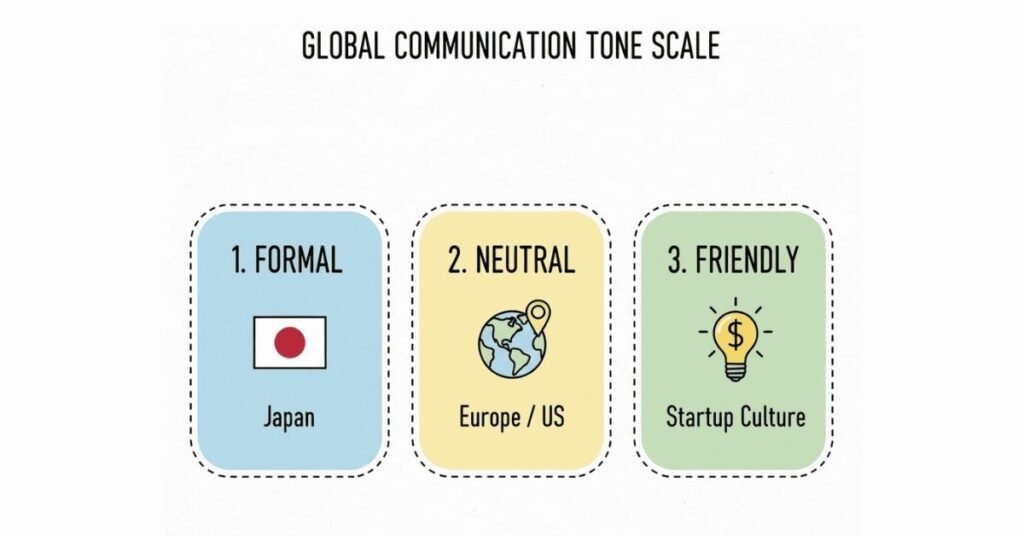
Highly Formal Contexts:
Japan, Germany, India (traditional companies), Singapore, South Korea
Use: Titles, last names, formal language, professional distance
Moderately Formal:
Most corporate environments worldwide
Use: Mix of professional and personal, first names accepted, some warmth.
Casual:
USA tech startups, Australian companies, Scandinavian businesses, creative industries
Use: First names, conversational tone, personality visible.
Your approach:
- When in doubt, start more formal—you can always relax
- If called by first name, reciprocate
- Match the formality level of the interviewer
- If unsure, ask: “Should I call you Mr./Ms. [name] or would you prefer [first name]?”
How to Reference Your Cultural Background Authentically
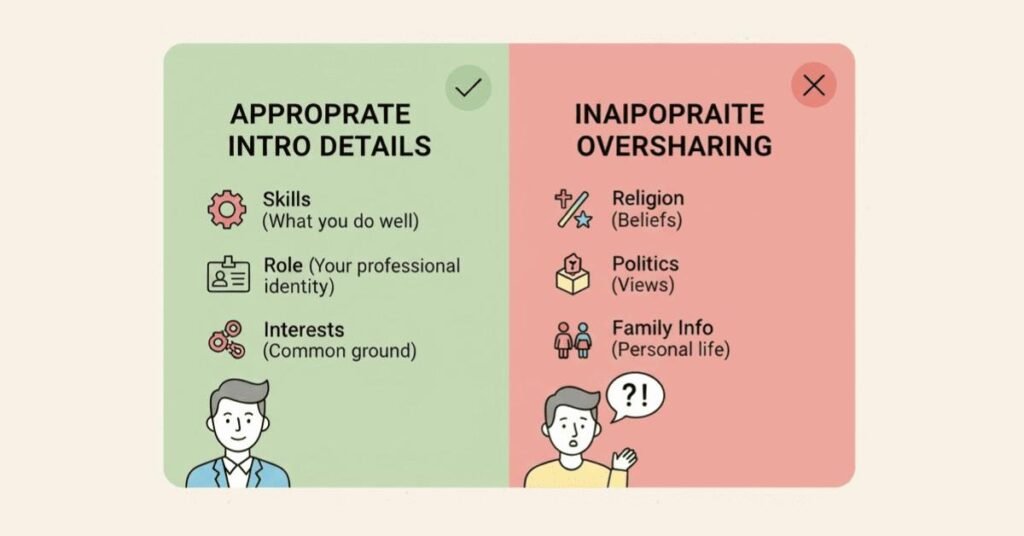
Many candidates worry: Should I mention my Indian background? My regional identity? My family influence?
The answer: Yes, but strategically and authentically.
Good cultural references:
- “Growing up in a family where education was paramount…”
- “In my culture, community service is deeply valued, which is why…”
- “Having worked in Hyderabad’s tech ecosystem, I understand…”
- “My family’s entrepreneurial background taught me…
Awkward cultural references:
- Stereotyping your own culture
- Using culture as an excuse (“In my culture, we’re always late…”)
- Overexplaining traditions the audience already understands
- Using cultural reference that seems tangential.
The test:
Does this cultural reference help them understand your professional perspective or values? If yes, include it. If it’s just a curiosity factor, skip it.
Common Cross-Cultural Mistakes

Mistake #1: Assuming One Introduction Fits All
You perfect an introduction for your Indian corporate interviews, then use it unchanged for a Silicon Valley startup interview. It won’t work.
Fix: Create 2-3 versions tailored to different cultural contexts.
Mistake #2: Overcorrecting and Losing Authenticity
You research German business culture, then introduce yourself in an overly stiff, emotionless way that doesn’t match your actual personality.
Fix: Adapt style, not substance. Stay true to who you are while respecting cultural norms.
Mistake #3: Making Assumptions Based on Company Name
You assume “Google India” operates exactly like “Google USA.” It doesn’t. Local culture influences business culture significantly.
Fix: Research the specific office location and team composition.
Mistake #4: Ignoring Power Distance
Treating a Japanese CEO with the same casual equality as you would an Australian startup founder creates discomfort.
Fix: Understand hierarchical expectations and show appropriate respect.
Mistake #5: Using Humor Without Understanding Context
Humor is culturally specific. What’s hilarious in the USA might offend in Japan. What’s acceptable in UK might seem unprofessional in India.
Fix: In cross-cultural situations, use humor cautiously or not at all until you understand the relationship.
Your Cultural Adaptation Preparation Plan
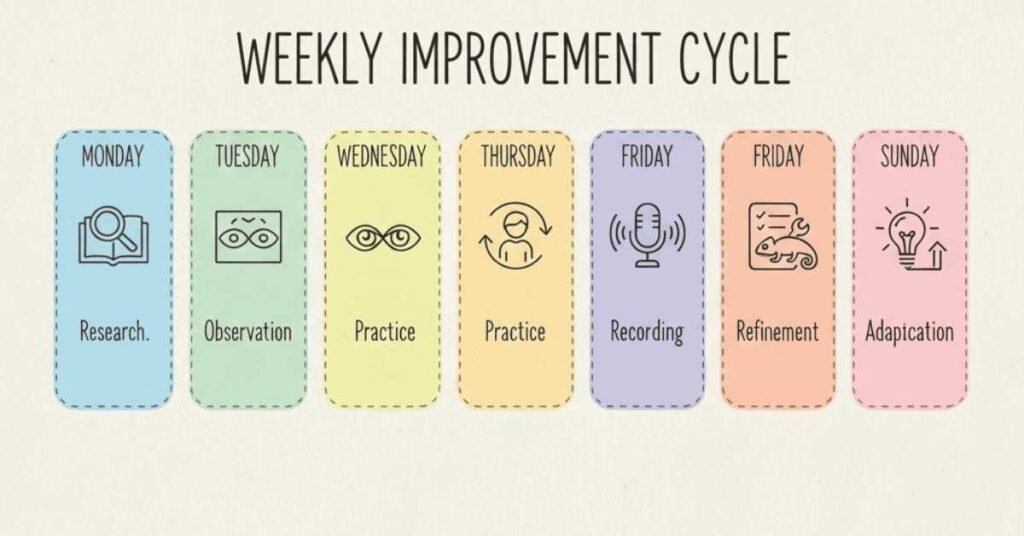
Before Any International Interview:
Day 1: Research the company’s location and primary office culture
Day 2: Identify the cultural context (Western, Asian, Middle Eastern, Latin American, Startup, etc.)
Day 3: Research specific cultural norms:
- Eye contact expectations
- Formality level
- Communication style (direct vs. indirect)
- Hierarchy expectations.
Day 4: Adapt your introduction:
- Adjust tone and formality
- Reframe achievements appropriately
- Prepare cultural bridges if relevant
- Check eye contact strategy
Day 5: Practice with someone from that culture if possible
Day 6: Get feedback: Does it feel authentic while respecting cultural norms?
Day 7: Visualize the interview with cultural awareness in mind
The Bigger Picture: Cultural Intelligence Is Career Capital
In an increasingly global workforce, cultural fluency isn’t a nice-to-have—it’s essential. Companies actively seek professionals who can bridge cultural divides, work with international teams, and adapt to diverse environments.
When you demonstrate cultural awareness in your introduction—respecting hierarchy, matching communication style, showing understanding of local business norms—you immediately signal that you’re a globally-minded professional.
This isn’t about abandoning your culture. It’s about being respectfully fluent in multiple cultural contexts.
The candidates who succeed globally are those who understand this: Your authenticity combined with cultural respect is your greatest introduction asset.
Master cultural adaptation, and you don’t just get more job offers—you build a career with genuine global reach and impact.