
10 Self-Introduction Mistakes That Cost You Job Opportunities
Table of Contents

The 30-Second Mistake That Ruined a Perfect Interview
Rajesh had everything going for him. Perfect resume. Strong technical skills. Three rounds cleared. But when the final interviewer asked, “Tell me about yourself,” he froze for a second, then launched into a five-minute speech about his family background, childhood hobbies, and why his father wanted him to become an engineer.
The interviewer’s eyes glazed over within seconds. Rajesh didn’t get the job.
Sound familiar? Here’s the uncomfortable truth: most candidates lose job opportunities not because they lack skills, but because they mess up their self-introduction. That first 60-90 seconds shapes everything that follows. Get it wrong, and even your best answers later won’t fully recover the damage.
After analyzing hundreds of fresher interviews and speaking with recruiters across Hyderabad and Bangalore, I’ve identified the 10 most common—and most costly—self-introduction mistakes. More importantly, I’ll show you exactly how to fix them.
Mistake #1: Reciting Your Resume Word-for-Word

What it looks like:
“I completed my B.Tech from ABC College in 2024 with a CGPA of 8.2. I did my intermediate from XYZ Junior College with 92%. My 10th class percentage was 88%…
Why it kills your chances:
The interviewer already has your resume in front of them. When you just repeat it, you’re essentially saying, “I have nothing interesting to add beyond this paper.” It shows zero creativity and suggests you didn’t bother preparing.
The fix:
Use your introduction to bring your resume to life with context, achievements, and personality. Instead of listing your degree, explain what you learned and how you applied it.
“I recently graduated in Computer Science, where I developed a strong foundation in Java and cloud technologies. What really excited me was building a campus placement tracker that helped 200+ students organize their interview schedules—it taught me how code can solve real problems.
Mistake #2: Starting with Your Family Background

What it looks like:
“My father is a businessman, my mother is a homemaker. I have one elder brother who works in IT and one younger sister who is studying medicine. We live in a joint family…
Why it kills your chances:
This isn’t a matrimonial interview. Recruiters want to know about your professional capabilities, not your family tree. Every second spent talking about your siblings is a second not spent proving why you’re valuable to the company.
The fix:
Keep family mentions brief and only when relevant. If your parents run a business and it shaped your entrepreneurial mindset, mention it in one sentence. Otherwise, skip it entirely.
When it’s okay:
“Growing up watching my mother manage her tailoring business taught me the importance of customer relationships—which is why I’m passionate about client success roles.
Mistake #3: Being Too Vague and Generic
What it looks like:
“I’m a hardworking, dedicated person who loves learning. I’m a team player who can also work independently. I’m passionate about technology and innovation.
Why it kills your chances:
These are empty words. Everyone claims to be hardworking and passionate. Without specific examples, you sound exactly like the 50 other candidates the interviewer met this week.
The fix:
Replace vague adjectives with concrete proof. Don’t tell them you’re hardworking—show them the result of your hard work.
Better version:
Instead of: “I’m a quick learner”
Say this: “When my internship required me to learn React within two weeks, I completed three online projects and was contributing to the team’s codebase by day 10.
Mistake #4: Talking Only About Academics
What it looks like:
“I studied Computer Science. I learned C, C++, Java, Python, DBMS, Operating Systems, Computer Networks, and Data Structures. I scored 8.5 CGPA in my degree.
Why it kills your chances:
Academic knowledge is expected—it’s the baseline, not your selling point. Interviewers want to know how you’ve applied your knowledge beyond classroom assignments.
The fix:
Connect your academics to real-world application. Talk about projects, internships, competitions, or even self-learning initiatives that demonstrate initiative.
Better version:
“My Computer Science degree gave me strong technical foundations, but what really developed my skills was building a food delivery chatbot during my final year. It involved integrating APIs, managing databases, and handling real-time user queries—and taught me more about problem-solving than any textbook could.
Mistake #5: Sounding Robotic and Over-Rehearsed
What it looks like:
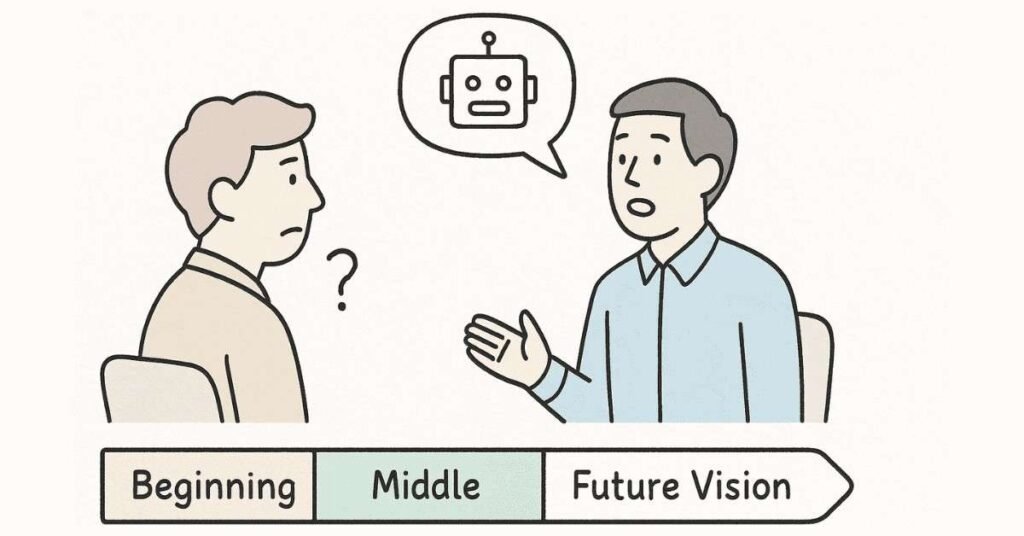
You deliver your introduction in a monotone voice, without pauses, like you’re reading from an invisible teleprompter. Your words are perfect but lifeless.
Why it kills your chances:
When you sound mechanical, you appear inauthentic. Interviewers wonder: “If this person can’t naturally talk about themselves, how will they communicate with clients or teammates?
The fix:
Practice your introduction enough to feel confident, but not so much that you’ve memorized it word-for-word. Aim for a conversational tone like you’re explaining your background to a senior colleague over coffee.
Pro tip:
Record yourself practicing. If it sounds like you’re giving a speech rather than having a conversation, you’ve over-rehearsed. Add natural pauses. Vary your tone. Let some spontaneity show through.
Mistake #6: Going On and On (The Rambling Problem)

What it looks like:
You start with your education, then jump to your hobbies, then talk about your internship, then mention your final year project, then discuss your career goals, then add something about your strengths… five minutes later, you’re still talking.
Why it kills your chances:
Rambling signals poor preparation and inability to communicate concisely—both major red flags. You’ve also used up all your material in one answer, leaving nothing interesting for the rest of the interview.
The fix:
Structure your introduction with clear sections and stick to 60-90 seconds maximum for most interviews. Practice with a timer until you can naturally deliver a complete, compelling introduction within that timeframe.
Simple structure:
Name + Current Status (5 sec) → Education + Key Skills (15 sec) → Relevant Experience/Projects (30 sec) → Why This Role (10 sec) → Closing (5 sec) = 65 seconds total.
Mistake #7: Negative Language and Apologetic Tone
What it looks like:
“I’m not very experienced, but I’m willing to learn. I know I don’t have much to offer right now. My marks aren’t great because I was dealing with some issues…
Why it kills your chances:
When you highlight your weaknesses upfront, you’re doing the interviewer’s job for them. Why should they believe in you if you clearly don’t believe in yourself?
The fix:
Frame everything positively. Focus on what you have learned and what you’re ready to contribute, not what you lack.
Reframe negatively:
Instead of: “I don’t have much experience”
Say this: “As a fresher, I’ve actively built practical experience through three internships and five hands-on projects”
Instead of: “My CGPA is low because…”
Say this: “During my degree, I prioritized practical learning—I completed two industry certifications and contributed to an open-source project”
Mistake #8: Poor Body Language That Contradicts Your Words
What it looks like:
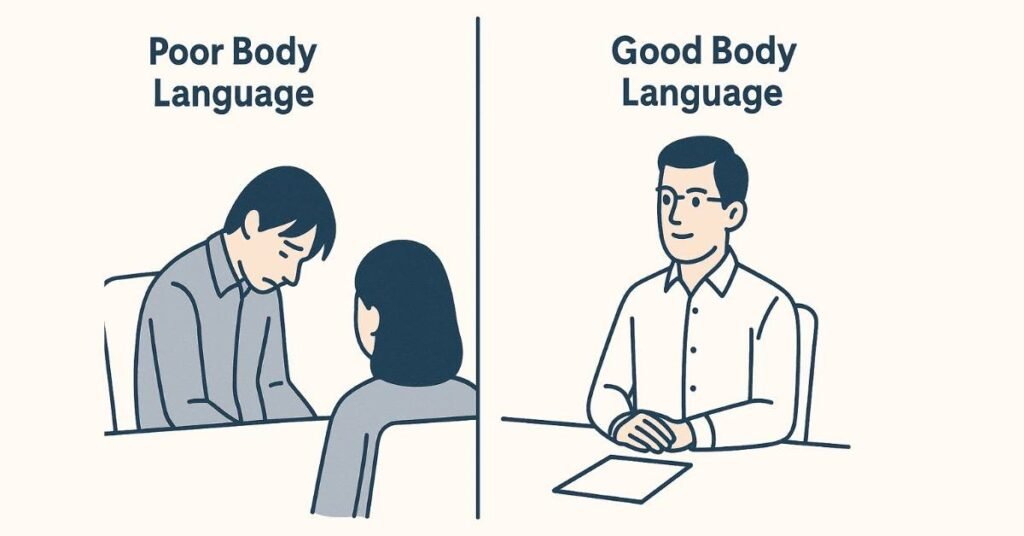
You say you’re confident, but you’re avoiding eye contact, fidgeting with your pen, slouching in your chair, or speaking in a barely audible voice.
Why it kills your chances:
Nonverbal communication accounts for over 55% of how people perceive you. When your body language contradicts your words, interviewers trust what they see over what they hear.
The fix:
Before speaking:
- Sit up straight with shoulders back
- Place both feet flat on the floor
- Keep hands visible (on the table or lap)
- Take one deep breath to calm nerves
While speaking:
- Maintain eye contact 60-70% of the time
- Avoid crossing arms (looks defensive)
- Use gentle hand gestures to emphasize points
- Smile naturally when appropriate
- Keep nervous habits in check (no pen clicking, hair touching, or knee bouncing).
Mistake #9: Not Researching the Company Before Introducing Yourself
What it looks like:
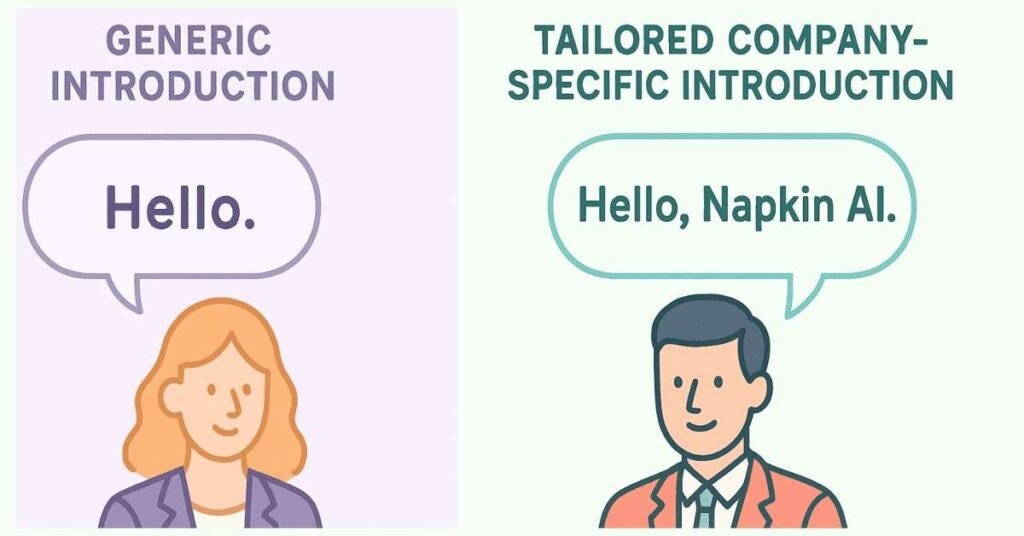
You give a generic introduction that could work for any company in any industry. You don’t mention why you’re specifically interested in this role at this organization.
Why it kills your chances:
It signals lack of genuine interest. The interviewer thinks: “This person probably applied to 100 companies and has no idea what we actually do.
The fix:
Spend 15 minutes researching the company before your interview. Then, tailor the closing of your introduction to show alignment.
Generic ending:
“I’m looking for a software developer role where I can learn and grow.”
Tailored ending:
“I’m particularly excited about your company’s work in fintech solutions. I noticed your recent product launch in digital payments, and having worked on a payment gateway project during my internship, I’d love to contribute to innovations in this space.
Mistake #10: Showing Overconfidence Instead of Confidence
What it looks like:
“I’m the best candidate you’ll interview for this role. I can do this job better than anyone. I don’t really need training—I already know everything required.
Why it kills your chances:
There’s a fine line between confidence and arrogance. Overconfidence makes you appear unteachable, disrespectful of others’ expertise, and likely to be difficult to work with.
The difference:
- Confidence: “I can do this” with room for improvement
- Overconfidence: “Only I can do this” with no room for feedback
The fix:
Project confidence through calm competence, not loud claims. Show confidence by discussing what you’ve achieved, then demonstrate humility by expressing genuine interest in learning from the team.
Balanced approach:
“I’ve built a strong foundation in digital marketing through my degree and two internships where I managed social media campaigns. I’m confident in my ability to contribute from day one, and I’m equally excited to learn from your experienced team about enterprise-level strategies.
How to Actually Fix These Mistakes (Action Steps)
Reading about mistakes isn’t enough. Here’s your recovery plan:
Week 1: Write and Structure
- Write three versions of your introduction (30, 60, and 90 seconds)
- Get feedback from a friend or mentor
- Eliminate all the mistakes we discussed above.
Week 2: Practice Out Loud
- Record yourself giving your introduction
- Listen objectively—does it sound natural?
- Practice with a timer until it feels conversational.
Week 3: Real-World Testing
- Try your introduction at informal networking events
- Ask friends to mock-interview you
- Adjust based on what feels awkward.
Before Every Interview:
- Research the specific company (15 minutes minimum)
- Customize your introduction’s closing
- Practice once out loud to warm up.

Remember: Your Introduction Opens Doors
Here’s what most people don’t realize: a strong self-introduction doesn’t just answer the first question—it controls the entire interview direction. When you introduce yourself strategically, you’re steering the conversation toward your strengths.
The mistakes we covered aren’t about being perfect. They’re about being prepared, authentic, and strategic. Every recruiter understands nervousness. What they’re evaluating is whether you can communicate your value clearly despite those nerves.
Start today. Identify which of these 10 mistakes you’re currently making. Write a better version of your introduction. Practice it until it feels natural. Then watch how differently interviewers respond when you walk into that room with clarity and confidence.
Your next opportunity is waiting. Don’t let a fixable mistake stand between you and your dream job.