
Essential GD Communication Skills
Table of Contents
Blog Content:
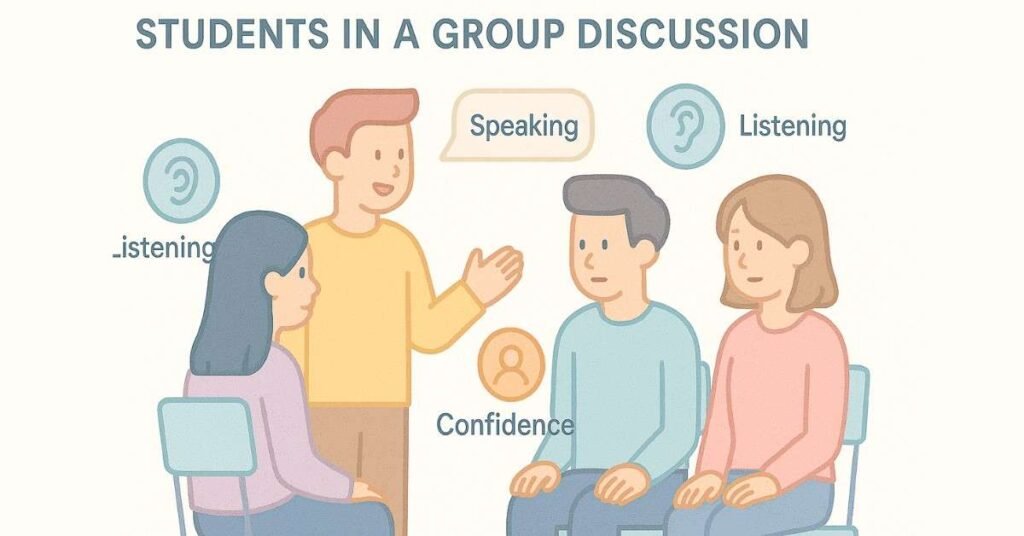
Here’s a frustrating scenario: You think of a brilliant idea during a GD. You raise your hand. But by the time you get a chance to speak, three other people have already shared similar points, and the topic has moved on. Your brilliant idea is now irrelevant.
This happens to thousands of students every year. But it’s not because their ideas were bad—it’s because their communication skills weren’t sharp enough.
Communication in a Group Discussion isn’t just about speaking. It’s about listening, timing, clarity, and confidence. Let’s break down each one.
1. Active Listening: The Skill Nobody Talks About
Most GD candidates are thinking about what they want to say instead of listening to what others are saying. This is the biggest mistake.
Here’s the reality: Companies care less about how many times you speak and more about how meaningfully you contribute. And meaningful contribution comes from really understanding what others said.
How to practice active listening:
Before speaking, ask yourself:
- What is this person trying to say?
- Do I agree or disagree? Why?
- Can I add something new to their point?
- Does my comment make sense after what they said?
Real-world example:
Weak response: Person A says, “Social media helps connect people.” You immediately respond, “But social media wastes time.” You didn’t listen to Person A’s full point—you just countered it.
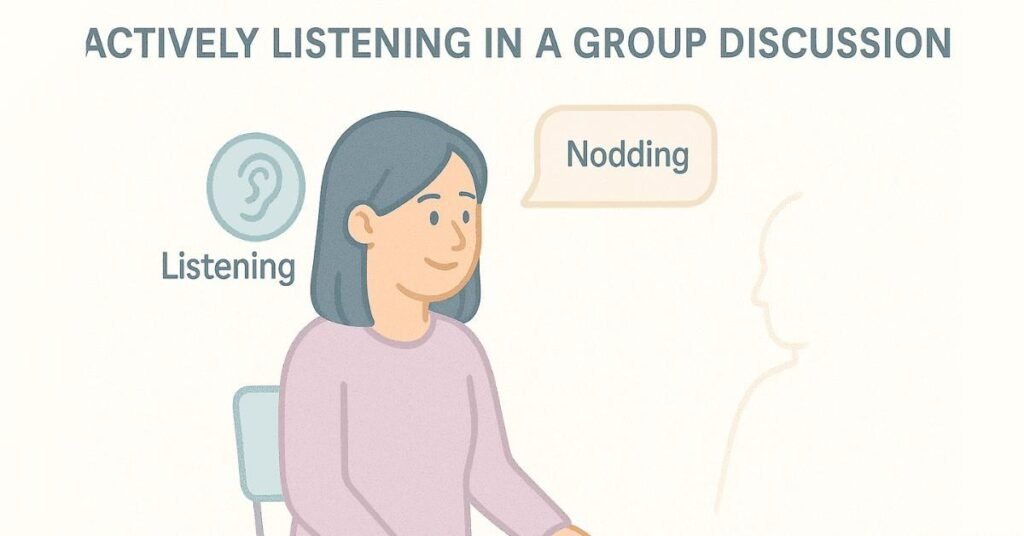
Strong response: Person A says, “Social media helps connect people.” You listen, nod, and respond, “I see your point about connectivity. But I’d add that this connectivity is useful for certain groups—like activists organizing movements—while it can be harmful for teenagers seeking validation through likes. So it’s situational.”
You see the difference? In the second example, you heard Person A, then added depth. Companies love this.
🔍 Explore structured learning resources for communication improvement →
2. Clarity and Conciseness: Say More by Saying Less
In a GD, you typically have 2-3 minutes at most to make your point while 10 other people wait for their turn. Rambling gets you nowhere.
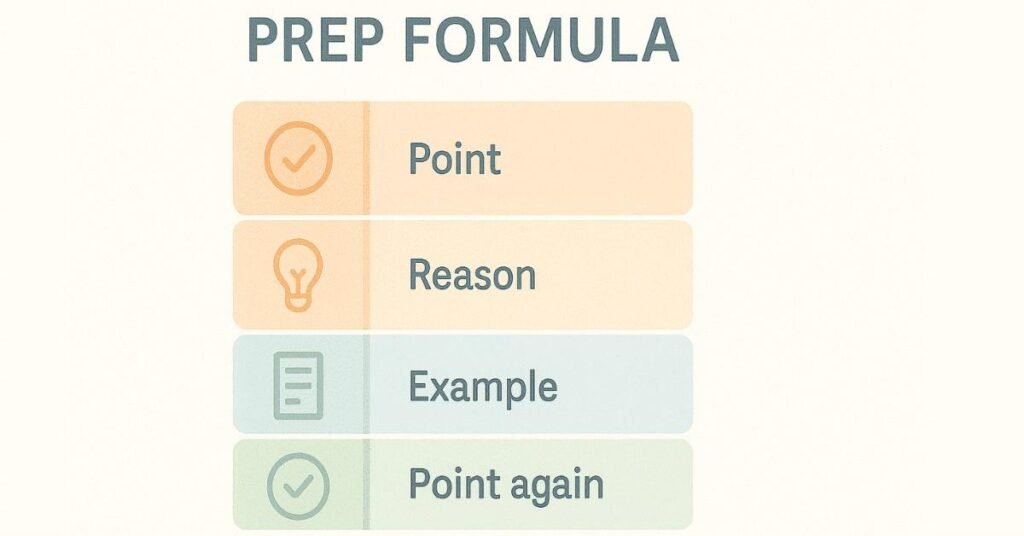
The PREP Formula for clarity:
- P = Point (Your main idea in one sentence)
- R = Reason (Why you believe this)
- E = Example (A real-world case)
- P = Point (Conclude with your main idea again)
Example:
Weak: “I think artificial intelligence is really changing things, you know? Like, companies are using it for everything now. There’s ChatGPT, and companies like Amazon use it for recommendations. It’s changing jobs. Some jobs will disappear but new jobs will come. I mean, look at the industrial revolution. Technology always creates new opportunities.”
Strong (using PREP):
“AI will create more jobs than it eliminates. Why? Because every technology revolution has followed this pattern. During the industrial revolution, manual jobs decreased by 40%, but factory jobs, machinery maintenance, and new industries created 100x more jobs. Similarly, AI will replace repetitive tasks but create demand for AI trainers, ethics specialists, and new job categories we don’t even know about yet. So I believe net job growth will be positive.”
See? The strong version is shorter, clearer, and more convincing.
📘 Discover more preparation guides and learning content →
3. Body Language: What You Don't Say Speaks Louder
Experts say 55% of communication is body language, 38% is tone, and only 7% is actual words.
In a Group Discussion, this matters a lot. You could say intelligent things, but if you’re slouching and whispering, recruiters won’t be impressed.
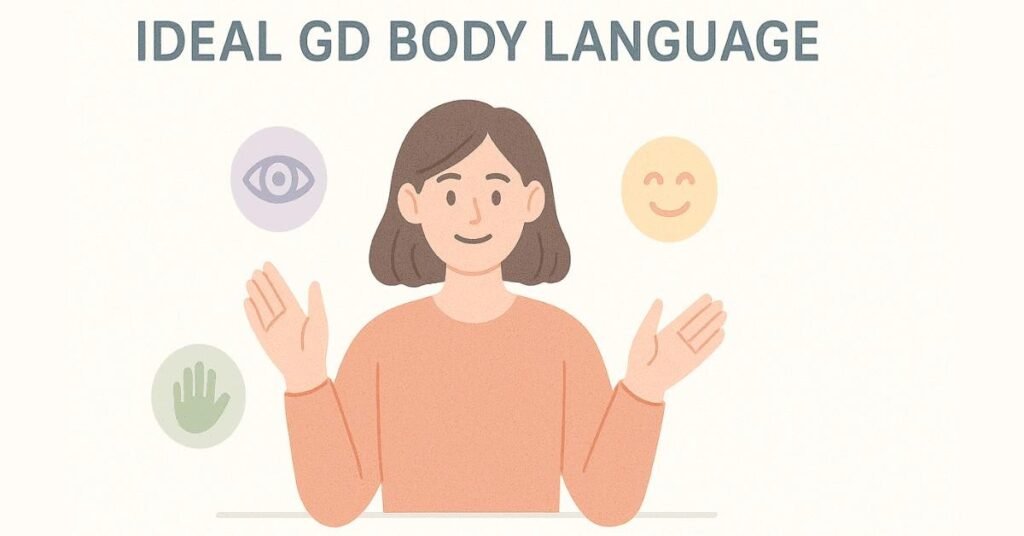
Do’s for body language:
- Sit upright with your back against the chair
- Make eye contact with people when speaking and listening
- Nod when you agree with someone (shows you’re listening)
- Use hand gestures when explaining complex ideas (makes it easier to follow)
- Maintain a neutral or positive facial expression
Don’ts:
- Don’t cross your arms (looks defensive)
- Don’t stare at your notes constantly (looks unprepared)
- Don’t tap your pen nervously (shows anxiety)
Don’t look only at the moderator (ignore others even if they’re “in charge”)
📂 Access complete learning materials designed for performance enhancement →
4. Managing Nervousness and Speaking Confidently
Here’s the secret: Everyone in that room is nervous.
Even the person who seems super confident? They’re probably terrified inside. But they’ve learned to manage it.
How to manage nervousness:
- Take a deep breath before speaking. Seriously. One deep breath calms your nervous system.
- Speak slightly slower than normal. Nervous people speak fast. Slowing down makes you sound more confident.
- Pause instead of using filler words. Don’t say “uh,” “like,” “you know.” Instead, pause for a second. Pauses make you sound thoughtful.
- Remember: If you mess up a sentence, just continue. No one cares if you stumble once. They care if you recover well.
Real talk: Your nervousness will show. That’s okay. Recruiters expect it. What they’re looking for is whether you can still function despite being nervous. If you’re shaking but making good points? You still might succeed.
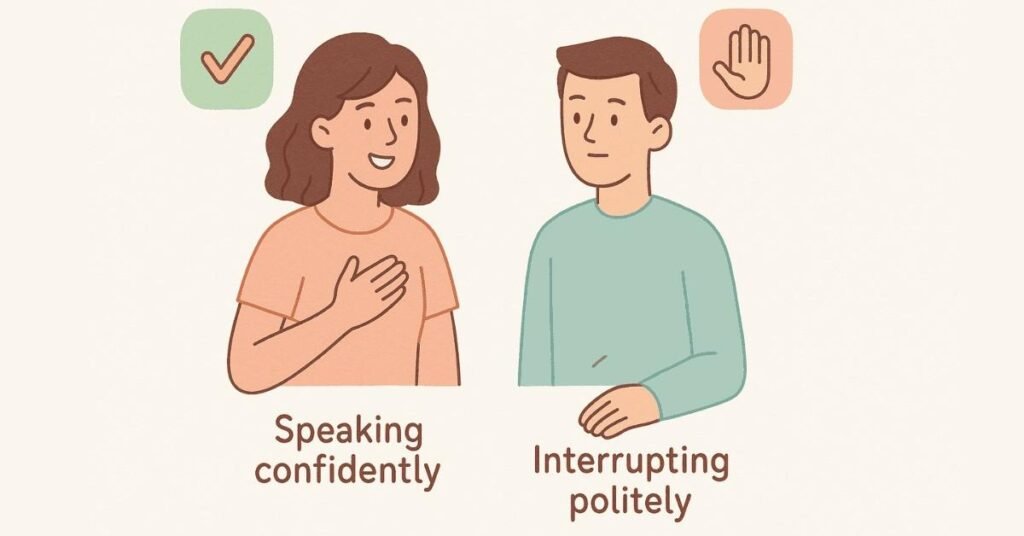
5. Interrupting Respectfully: Timing Is Everything
In a GD, sometimes you need to jump in. But there’s a right way and a wrong way.
Wrong way: “Wait wait wait, you’re completely wrong because…” (This sounds aggressive)
Right way: “That’s a good point. I’d like to add something…” or “I see what you mean. But I think there’s another angle…” (This sounds respectful)
When to jump in:
- When someone makes an incomplete point and you can complete it
- When the conversation goes off-topic and you can bring it back
- When there’s a natural pause and you have something valuable to add
- When someone finishes speaking and there’s quiet for 2 seconds
When NOT to jump in:
- When someone is clearly in the middle of a sentence
- When you just want to hear yourself talk
- When your point has already been made by someone else
Key Takeaway
Communication in a GD is a skill, and skills improve with practice. You don’t need to be a natural speaker. You need to be intentional about listening, clear about your ideas, confident in your body language, and respectful to others. These four elements will make you stand out in any Group Discussion.
Practice these with friends, and you’ll notice an immediate difference in how you come across.