
The software testing landscape is evolving faster than ever. With new tools, technologies, and industry demands emerging regularly, it’s essential for testers to stay updated. In this blog, we break down the manual vs automation vs full stack debate with a clear and beginner-friendly comparison. You’ll discover the key differences, career opportunities, current industry demand, essential tools, and real-world examples for each testing path.
Whether you’re a beginner exploring the field or someone planning a career switch, you’ve likely faced this important question:
“Should I learn Manual Testing, Automation Testing, or Full Stack Testing?”
By the end of this guide, you’ll have a solid understanding of manual vs automation vs full stack testing—helping you choose the right direction for your career in software testing.
What Is Manual Testing?
Definition
Manual testing is testing software without automation tools. Testers verify the functionality, UI, and user experience by manually running test cases.
Key Skills Required
- Writing test cases and test scenarios
- Business logic understanding
- Tool usage like Jira, TestRail
- Good analytical and communication skills
Industry Metrics
- Manual testing positions went down by 20% between 2022 and 2024 (Naukri.com report)
- Yet 40% of firms still use manual testing for UI, usability, and exploratory testing
- Manual testers are still required in healthcare, insurance, and banking, where detailed validation is key.

Dreaming of a High-Paying career in tech?
Start learning online with Frontlines Edutech where Java, Python, Testing, and more are made simple and beginner-friendly!
Begin your journey today and turn your dreams into success.
What Is Automation Testing?
Definition
Automated testing is the process of coding scripts via tools to test software automatically. It is time-saving, precise, and conducive to continuous testing in DevOps pipelines.
Popular Tools Used
- Selenium, Cypress for UI Testing
- Postman, REST Assured for API Testing
- JUnit, TestNG for Unit Testing
- Jenkins, GitHub Actions for CI/CD
Industry Metrics
- 65% of organizations currently prefer automation-skilled testers (World Quality Report 2024)
- Automation saves 40–60% of testing effort
- Automation-skilled testers earn 25–30% more than manual testers
What Is Full Stack Testing?
Definition
Full Stack Testing is a sophisticated method where testers are taught to test in all layers of an application frontend, backend, APIs, database, and integrations.
It’s similar to a multi-skilled tester who has knowledge of the entire software pipeline.
Tools and Technologies
- Frontend: Selenium, Playwright, Cypress
- API: Postman, REST Assured
- Backend & DB: Java, SQL, MongoDB
- CI/CD: Jenkins, Docker, Git
Industry Metrics
- 70% of IT companies are recruiting for “Full Stack QA” or “SDET” positions
- Full-stack testers in firms have 35% fewer production bugs
- Full-stack test engineers’ jobs increased by 60% in India during 2023–24 (LinkedIn).
Clearly, understanding the full manual vs automation vs full stack landscape is crucial before you choose your learning path.
Side-by-Side Comparison: Manual vs Automation vs Full Stack
| Feature / Skill | Manual Testing | Automation Testing | Full Stack Testing |
| Tools Required | None or Minimal | Selenium, Postman, etc. | Multiple (UI, API, CI/CD) |
| Coding Knowledge | Not required | Required (Java, Python) | Strongly Preferred |
| Scope of Testing | UI and Functionality | UI, API, Performance | UI, API, DB, backend, CI/CD |
| Job Trend | Declining slowly | Stable to High Demand | Rising Fast |
| Salary Range (India) | ₹3–6 LPA | ₹6–10 LPA | ₹8–15 LPA or more |
| Ideal For | Freshers, Non-Coders | Coders, UpSkillers | Advanced testers, SDETs |
This comparison will help you decide whether to focus on manual vs automation vs full stack based on your goals.
Which Testing Type Should You Learn First?
If You Are a Complete Beginner (Non-IT Background)

Begin with Manual Testing to:
- Get to know the software flow
- Learn bug tracking, test case writing
- Get comfortable with your basic footings
Then shift to automation frameworks such as Selenium, and then to full stack if you wish to progress quicker.
If You Know Basic Programming
Dive into Automation Testing straight away. Learn:
- Selenium or Cypress for UI testing
- Postman or REST Assured for API
- Unit testing with Java or Python
After 6–8 months, shift to full-stack testing positions.
If You Want a High-Growth Career
Pursue Full Stack Testing from the beginning if:
- You’re serious about QA as a long-term career
- You want to enter SDET roles or DevOps QA teams
- You’re willing to learn both coding and tools
In the modern testing world, companies increasingly expect testers to know manual vs automation vs full stack concepts, not just one.
Job Roles and Career Opportunities
Popular Job Titles
- Manual Tester / QA Analyst
- Automation QA Engineer
- Full Stack QA / SDET
- Test Automation Lead
- DevTestOps Engineer
Salary Trends (India 2025)
| Role | Avg. Salary |
| Manual Tester | ₹3.5–5.5 LPA |
| Automation Tester | ₹6–10 LPA |
| Full Stack Tester | ₹9–15 LPA+ |
| SDET (Sr. Level) | ₹15–25 LPA |
Learning manual vs automation vs full stack skills can directly affect your salary and growth path.
Real-World Use Cases
IT Services Companies (e.g., TCS, Infosys, Wipro)
- Begin with manual testing for projects
- Subsequently, the transition to automation projects
- Currently constructing full-stack QA teams in Agile projects
Product Companies (e.g., Flipkart, Zoho, Swiggy)
- Prefer applicants who can test UI + APIs + backend logic
- Frequently deploy Cypress, Postman, SQL, and CI/CD tools in combination
These trends indicate that it is imperative to understand manual vs automation vs full stack to fulfill industry demands.
Tools You Should Start Learning
Manual Testers
- Jira or Bugzilla
- TestRail or Excel for test cases
Automation Testers
Full Stack Testers
- All of the above, plus:
- CI/CD: Jenkins, GitHub Actions
- DB: SQL, MongoDB
- DevOps basics: Docker, Kubernetes.
How Frontlines Edutech Can Help You
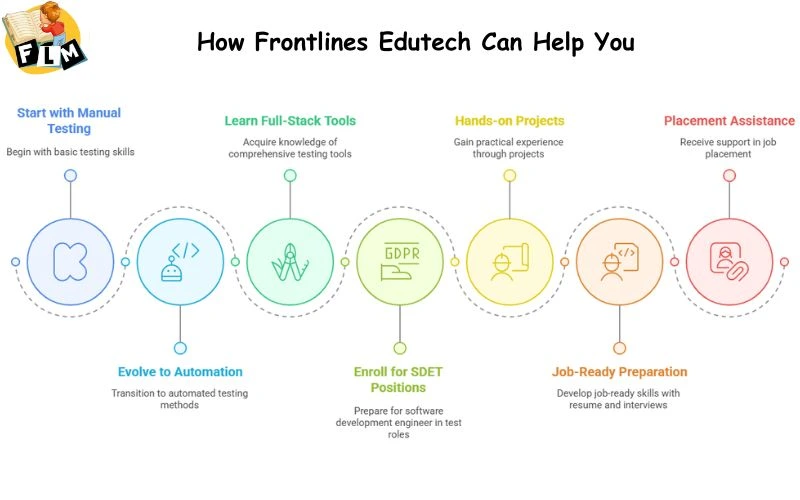
At Frontlines Edutech, we assist Telugu-speaking professionals and students:
- Begin with manual testing and evolve to automation
- Learn real-time full-stack testing tools in a step-by-step manner
- Enroll for SDET positions with hands-on projects
- Become job-ready with a resume, mock interviews, and placement assistance
Our courses are designed keeping in mind industry trends and recruiter preferences.
Final Thoughts
The software industry does not need isolated testers anymore. Be it a fresher or an experienced QA, the industry needs multi-talented testers. So do not select any one of these, develop your foundation in manual vs automation vs full stack testing in a sequential manner.
Suggested Articles:
-
What Is Full Stack Testing? A Beginner-Friendly Guide
-
Why Full Stack Testing Is the Future of Software Testing
-
Is Full Stack Testing a Good Career Option in 2025?
Launch Your Career with Frontlines Edutech’s Full Stack Testing Online Course
Why Join?
- No coding needed – beginner-friendly
- In-demand QA skills with ₹5–12 LPA salary potential
- Complete testing journey in one course
Course Starts: 2nd June 2025
Timings: 8:00 PM – 9:00 PM (Live Daily)
Duration: 4 Months | Language: Simple Telugu
What You’ll Learn:
- Manual Testing + Agile + SQL
- API Testing with Postman
- Selenium Automation with Java
- DevOps: Git, Jenkins & CI/CD
This Course Includes:
- 10+ Real-Time Projects
- Resume & Interview Support
- Daily Assignments & Downloadable Notes
- Course Completion Certificate
Unlock your future with FLM’s Full Stack Testing Course
Limited Seats Only – Enroll Now!
Visit: frontlinesedutech.com | Click Here to Enroll
WhatsApp: 8333077727