
Navigating the legal system in India is always tough, especially if you are on a tight budget. The rising costs of legal services have put it out of reach for many people to find affordable legal representation without letting go of quality. It goes without saying that, regardless of whether it’s a case of property dispute, a consumer grievance, or a family matter, if you know where to look and what to consider, it makes all the difference. Lets drive into how this provides actionable tips specific to the Indian laws with which you may employ to obtain affordable legal aid.
Understanding the Cost of Legal Representation in India
Legal costs in India would differ depending upon a case that is being heard and relied on a lawyer’s experience and the place. For example:
- A lawyer with years of experience in metro cities like Mumbai or Delhi can well charge between ₹5,000 to ₹10,000 per hour.
- Prices are more modest and at a range of ₹1,000 to ₹3,000 per hour in smaller towns and semi-urban areas.
- For the categories of property disputes, divorce and similar cases, charges would include filing charges, consultancy fees, etc.
- Knowing the cost components beforehand will enable controlling the budget to find an inexpensive legal representation option.
Why Affordable Legal Representation Matters
Legal cases in India take years to complete due to procedural delays. The costs increase with time, and affordability is always a concern for most litigants. Access to justice for people at all levels of society without diluting the case outcome is made possible by affordable services.
Tips for Finding Affordable Legal Representation
1. Leverage Free or Low-Cost Legal Aid Services
India has a robust framework in place to provide legal aid for those who cannot afford private representation.
Legal Services Authorities: Under the Legal Services Authorities Act, 1987 The authority provides free legal services to the economically weaker sections through state and district legal services authorities.
Eligibility: These services are for the women, children, and SC/ST categories and some categories earning below ₹3 lakhs an annum.
How to Access: Visit the nearest legal aid office or apply online through platforms like NALSA.
2. Approach Law Schools and Universities
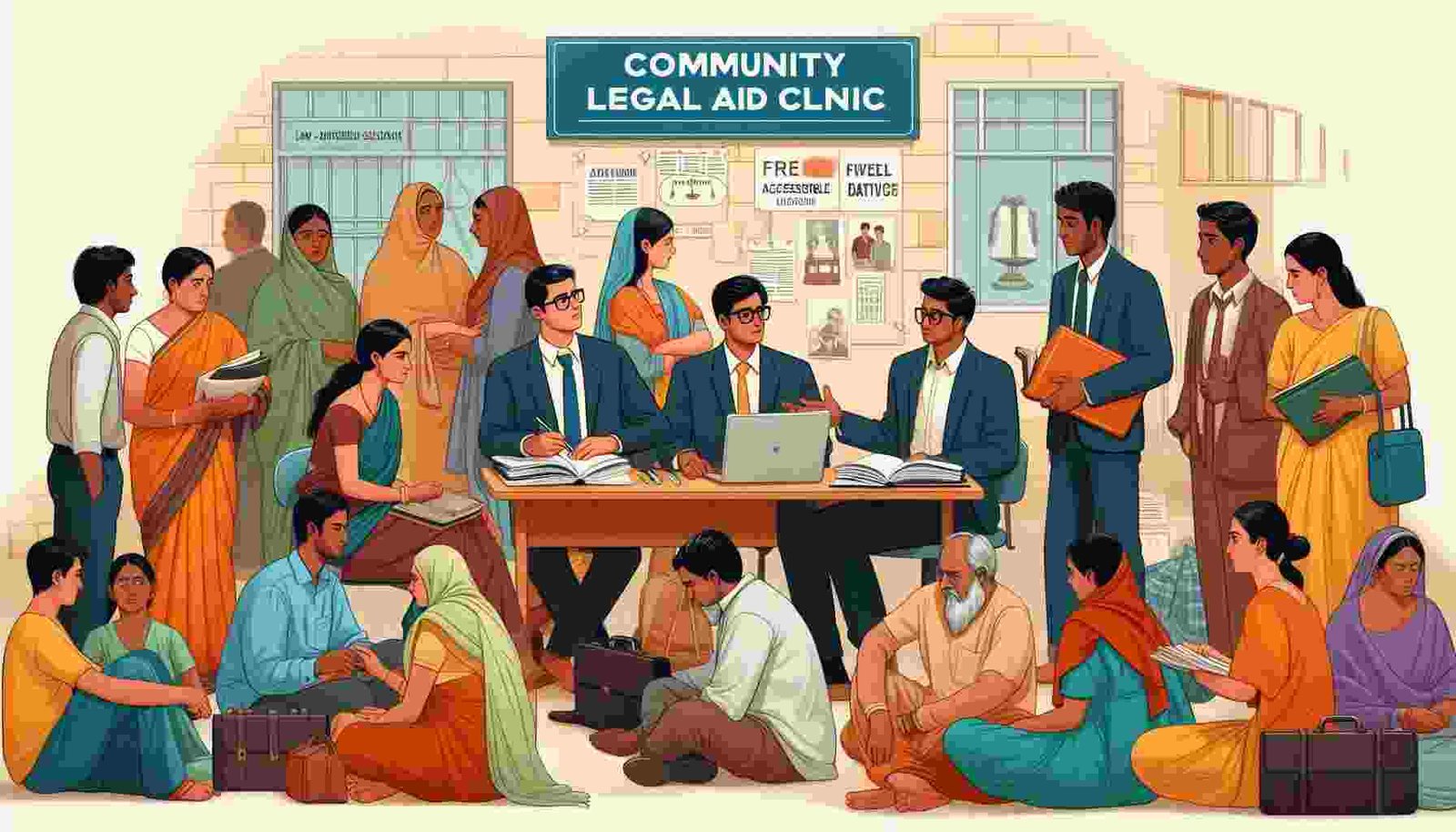
Many Indian law schools also have legal aid clinics where students offer free or low-cost legal advice under the supervision of faculty.
Benefits: you get assistance from young lawyers who want to cut their teeth.
For instance, NLUs across different states are quite active in community outreach work.
Limitation: Clinics only have easy or even non-complex cases to deal with.
3. Negotiate lawyer fees
Contrary to most people’s beliefs, legal fees are often negotiable in India.
Flat Rates Vs Hourly rates: Opt for Flat rates wherever possible to avoid runs away cost.
Pro bono services: Many lawyers accept cases without charging any fees, or at a low cost. Many of them are public interest cases.
Payment Plan: Propose installing the loan with instalments to smoothen financial stress.
4. Leveraging on Online Legal Platforms
The digital transformation created availability in the legal sector, offering affordable legal service online.
Platforms: The following websites connect users with affordable lawyers from across India: VakilSearch, LawRato, and MyAdvo.
COST EFFECTIVE: The online consultations will be from as low as ₹500 for a start-up consultancy.
Convenience: Such websites also provide with transparent pricing and reviews.

5. Explore Alternative Dispute Resolution (ADR)
ADR methods like mediation and arbitration can significantly avoid litigation costs because they do not involve lengthy court proceedings.
How It Works: Cases are resolved out of court with the assistance of a neutral mediator or arbitrator.
Cost Factor: You still pay for attorneys’ fees but at a more favorable cost because you may close them immediately.
Applications: ADR is well suited to family disputes, consumer complaints, and commercial matters.
6. Research community-based legal services
Many NGOs and community-based organizations provide free or low-cost legal assistance.
Examples:
SEWA (Self Employed Women’s Association) offers legal counseling for woman workers.
Mazdoor Kisan Shakti Sangathan (MKSS) helps rural communities in launching labor and land issues.
How to Find Them: Search online or ask around in local community centers.
7. Select a Local Lawyer
Hiring a lawyer from your locality can significantly reduce travel and consultation costs.
Advantages: They are, therefore better informed about the local law and courts to make the case fast.
Tips for finding: Ask friends, family, or community leaders for some recommendations.
8 Free Legal Helpline Dial
India has numerous helpline numbers for giving free legal advice.
Examples
NALSA Toll-free number: 15100 is provided to offer free legal aid services.
Women can access help with domestic violence and related issues by dialing 181.
Red flags to avoid in the hunt for low-cost attorney services
Definitely, it has to be affordable, but not at the expense of quality. Be alert for these warning signs:
Unrealistically low fees: If it sounds too good to be true, it probably is.
Qualifications: verify whether he is an enrolled member and registered with the Bar Council of India.
Poor Communication: Select a lawyer who clearly communicates and is responsive.
Role of Technology in Reducing Legal Costs
Technology has transformed service delivery throughout the legal fraternity in India. Document Automation: Legal Desk tool reduces the cost of drafting legal documents.
Virtual Court Hearings: Virtual Courts after Lock Down saves travel cost to litigants.
AI Powered Chatbots: Tools like Loio and DoNotPay help free or for very low prices with your legal questions.
Case Studies: Implementing Affordable Legal Representation
Case 1: Divorce attorney advocating for a survivor of domestic violence.
A lady from Uttar Pradesh got free legal aid under the state’s legal services authority. Such a case settled in just six months and saves nearly ₹50,000 in lawyers’ fees.
Case 2. Resolve a property dispute by mediation
A Chennai-based family could settle a property dispute using ADR. They went through the hassle of saving ₹1.5 lakhs to avoid court litigation and concluded within three months.
The Indian Constitution itself makes for free legal services to people who cannot afford it. It is under Article 39A that was incorporated through the 42nd Amendment Act of 1976 as a part of the Directive Principles of State Policy (DPSP).
Major features of Article 39A include:
Objective
This is to ensure that no citizen is denied justice due to economic or other handicaps.
Provisions:
The state shall provide free legal aid to the economically weaker sections.
Legal services should, therefore, be available uniformly so that equal justice can be accorded.
Implementation Mechanisms:
Article 39A enacted the Legal Services Authorities Act, 1987, for setting up free legal aid in India.
Legal Services Authorities Act, 1987
This Act led to the formation of institutions like:
National Legal Services Authority NALSA: Co-ordinates legal aid schemes all over India.
State and district legal services authorities: The term involves legal aid at the state and district level.
Under this framework:
Women, children, SCs/STs persons, labourers, persons affected due to natural calamity and other such identified persons who are entitled for free legal aid.
Other programs available include people earning below a level of annual income, varying by state.
Some real life examples of free legal aid services
Free legal aid on toll free: 15100 This Helpline is from the National Legal Services Authority.
Lok Adalats: They have come up under the Act to ensure speedy, low cost settlements through mediation and conciliation of disputes.
Free Legal Aid Support by Judicial
The judiciary had from the very beginning highlighted the constantly increasing need for legal aid:
Hussainara Khatoon v. State of Bihar, (1979): Supreme Court held that the Right to free legal aid is a ‘right’ under Article 21 Right to Life and Personal Liberty.
Khatri II v. State of Bihar, (1981): The court considered the view that the state is under an obligation to provide gratuitous legal aid to poor accused persons especially in the trial.
Conclusion: Justice for all
The free legal aid accords under Article 39A manifest the commitment of India in matters of equality and bringing justice to all. It stands to be an important tool in terms of bridging the gap of being economically deprived and the legal system for bringing justice to the purse of all.
Access to justice should never be in favor for the rich alone. Since free legal aid services and other forms of online platforming, methods of ADR, and community resources are available, availing of affordable legal representation is very much possible in India. Remember, proper research and the right questions keep you proactive in handling your case, and that’s the path to success. So, be it small or large, these tips lead you through to cost-effective solutions that do not sacrifice quality at all
For More Information : Click Here