
Master the 30-60-90 Seconds Self-Introduction Formula
Table of Contents

Why Timing Your Introduction Changes Everything
Ever noticed how some people introduce themselves and everyone leans in, while others talk for five minutes and people start checking their phones? The difference isn’t just what they say—it’s how long they take to say it.
Here’s something most career guides won’t tell you: there’s no one-size-fits-all introduction. The perfect self-introduction changes based on the setting. A 30-second pitch that works at a networking event will fall flat in a formal interview. And that detailed 90-second story that impresses hiring managers? It’ll lose people at a career fair.
Research shows that introductions exceeding 90 seconds reduce listener engagement by 30%. But introductions shorter than 30 seconds often don’t provide enough substance to be memorable. The solution? Learn three versions of your introduction and know exactly when to use each one.
Let’s break down the 30-60-90 second formula that top recruiters actually recommend.
The 30-Second Introduction: Your Quick Impact Statement

Think of your 30-second introduction as your professional headline. It’s punchy, memorable, and leaves people wanting to know more.
When to use it:
- Networking events where you’re meeting multiple people quickly
- Career fairs with long queues behind you
- Casual professional encounters (elevator rides, coffee breaks)
- LinkedIn connection requests or brief email introductions.
The Formula:
Opening (5 seconds): Name + Current Status
“Hi, I’m Priya, a final-year computer science student at JNTU Hyderabad.
Value Statement (15 seconds): What you do + One standout skill or achievement
“I specialize in Python development and recently built a college attendance tracking app that’s now used by over 1,000 students across three departments.
Forward Hook (10 seconds): What you’re looking for or why you’re here
“I’m exploring software developer roles where I can apply my backend development skills to solve real-world problems.
Total: Approximately 30 seconds or 75 words.
Real Examples:
For Freshers:
“Hello, I’m Rahul, a recent MBA graduate specializing in digital marketing. During my internship at XYZ Agency, I increased their Instagram engagement by 50% using data-driven content strategies. I’m looking to join brands that value creativity backed by analytics.
For Experienced Professionals:
“Hi, I’m Anjali, a project manager with four years in the IT sector. I’ve successfully delivered 12+ cross-functional projects on time and under budget. I’m interested in leadership roles where I can mentor teams and drive strategic initiatives.
Notice how both examples avoid unnecessary details. No life history. No hobbies. Just pure professional value in under 30 seconds.
The 60-Second Introduction: Your Interview Standard
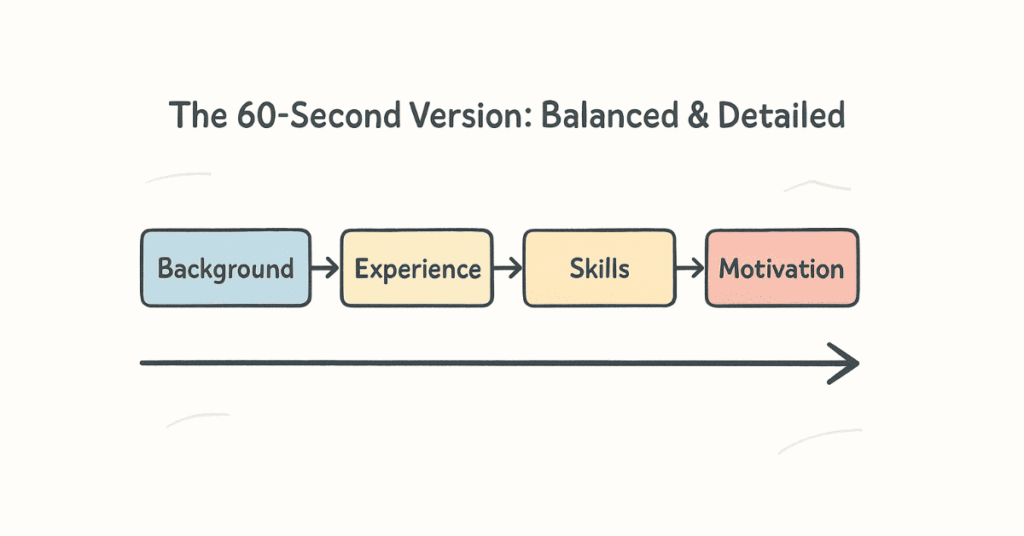
The 60-second version is your workhorse introduction—detailed enough to showcase your value, but concise enough to maintain interest. This is what most interviewers expect when they say, “Tell me about yourself.
When to use it:
- Job interviews (first question)
- Virtual interviews and video calls
- Formal networking meetings
- Professional presentations before speaking
- When someone specifically asks about your background.
The Formula:
Opening Hook (10 seconds): Professional identity with years of experience
“I’m Karthik, a data analyst with three years of experience turning complex datasets into actionable business insights.
Education + Relevant Context (10 seconds): Your academic background tied to skills
“I hold a degree in Statistics from Osmania University, where I developed strong expertise in SQL, Python, and Tableau.
Professional Experience (25 seconds): 2-3 specific achievements with impact
“In my current role at ABC Tech, I automated reporting processes that saved the team 15 hours weekly. I also identified revenue opportunities worth ₹2 lakhs through customer behavior analysis, which helped increase our quarterly sales by 18%.
Cultural Bridge (10 seconds): Why you’re interested in this opportunity
“I’m particularly drawn to your company’s focus on AI-driven analytics because it aligns perfectly with my skills in machine learning applications.
Closing (5 seconds): Open the door for dialogue
“I’d love to hear more about the specific challenges your team is facing.
Total: 60 seconds or approximately 140-150 words.
Common Mistakes in 60-Second Introductions:
❌ Starting with “I was born in…” or personal background
✅ Start with your current professional identity.
❌ Saying “I’m not very experienced but…”
✅ Frame your growth positively: “I’ve rapidly developed skills in..
❌ Being vague: “I’m good at problem-solving”
✅ Give proof: “I reduced customer complaints by 40% through systematic troubleshooting.
The key to a great 60-second introduction? Practice until it feels conversational, not rehearsed. Record yourself and aim for a speaking pace of 120-140 words per minute—not too fast, not too slow.
The 90-Second Introduction: Your Detailed Storytelling Version
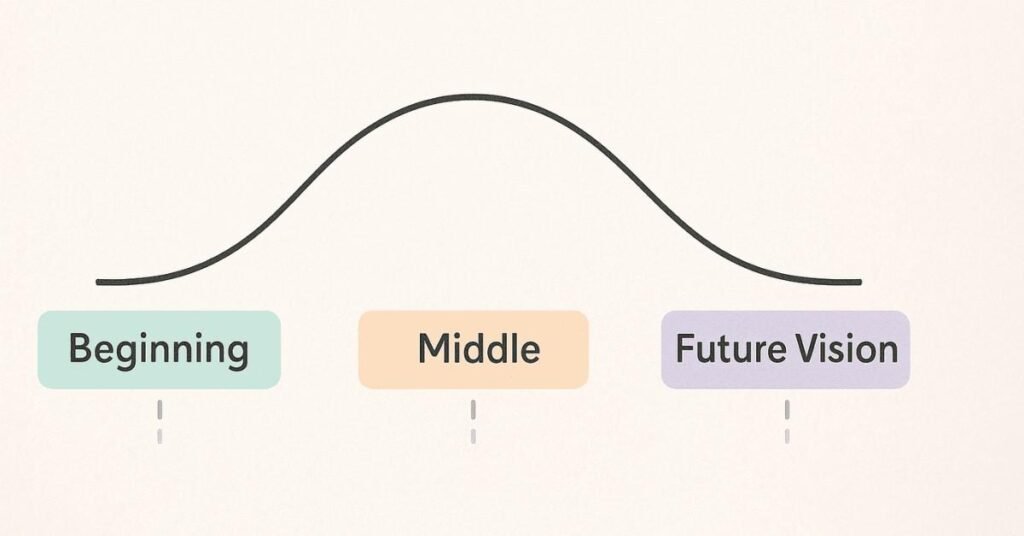
The 90-second introduction is where you can actually tell a mini-story. It’s the most detailed version, reserved for situations where people genuinely want to understand your journey.
When to use it:
- Final-round interviews with senior leadership
- Panel interviews where multiple people are listening
- Professional conferences when you’re a speaker
- Mentorship or advisory meetings
- LinkedIn video introductions or About sections.
The Formula:
Strong Opening (10 seconds): Hook with your unique professional identity
“I’m Sneha, and I’ve spent the last five years helping educational technology companies scale their digital presence from zero to millions of monthly impressions.
Background Journey (15 seconds): Briefly explain how you got here
“My journey started unexpectedly—I was a mechanical engineering student who discovered my passion for content strategy during a college magazine project. That curiosity led me to pursue digital marketing professionally.”
Core Expertise (20 seconds): What you’re known for with examples
“I specialize in SEO strategy and content marketing. At my current company, Frontlines Edutech, I’ve built our organic traffic from 500 to 50,000 monthly visitors. I’ve also trained a team of five content creators who now produce high-converting educational content.
Key Achievements (20 seconds): 2-3 specific wins with measurable results
“One campaign I’m particularly proud of increased our student enrollments by 35% by targeting local keywords in Telugu and English. We also partnered with 20+ colleges across Telangana and Andhra Pradesh, creating a network that serves over 10,000 students annually.
Values and Motivation (15 seconds): What drives you professionally
“What excites me most is democratizing quality education. I believe every student, regardless of background, deserves access to career-building skills.
Closing with Purpose (10 seconds): Why this conversation matters
“That’s why I’m here today—to explore how my experience in educational technology can contribute to your mission of expanding digital learning across India.
Total: 90 seconds or approximately 180-200 words.
This version allows you to show not just what you’ve done, but why it matters. It reveals your personality, values, and motivation beyond just credentials.
How to Choose the Right Length Every Time
Still confused about which version to use? Here’s a simple decision tree:
Ask yourself:
- How much time do I have? If people are standing or there’s a queue, go with 30 seconds
- What’s the setting? Formal interviews deserve 60-90 seconds; casual networking needs 30.
- Who’s listening? Junior recruiters typically want 60 seconds; senior leaders appreciate 90-second depth.
- What’s the goal? If you’re sparking interest, use 30. If you’re building trust, use 60-90.
Practice Strategies That Actually Work
Knowing the formulas is step one. Making them sound natural is where most people struggle. Here’s how to practice effectively:
Write all three versions down completely. Don’t try to memorize—understand the structure.
Record yourself on your phone. Listen back and notice where you sound robotic or rushed.
Practice with a timer. You’ll be surprised how long 60 seconds actually feels when you’re talking.
Get feedback from friends. Ask them: “What do you remember about me after hearing this?
Adjust your pace. Aim for natural breathing pauses after key points—it gives listeners time to absorb.
Test in real situations. Use your 30-second version at casual meetups before trying it at important events.
The Secret Advantage
Here’s what mastering the 30-60-90 formula really does: it gives you control. Instead of fumbling through introductions or rambling nervously, you know exactly what to say, how long to take, and how to adapt on the spot.
When the interviewer says, “Keep it brief,” you have your 30-second version ready. When they say, “Tell me more about your background,” you seamlessly expand to 60 or 90 seconds. You’re not guessing—you’re choosing strategically.
And that confidence? That’s what makes people remember you long after the conversation ends.
Start today. Write your three versions. Practice them out loud. Time yourself. Then watch how differently people respond when you introduce yourself with clarity and purpose.
Your introduction is your first impression—make every second count.
